Training More, Catching More Colds? A Full Breakdown of Exercise and Immune Dysregulation: Overtraining-Induced Immunosuppression, Recovery, and Nutritional Strategies
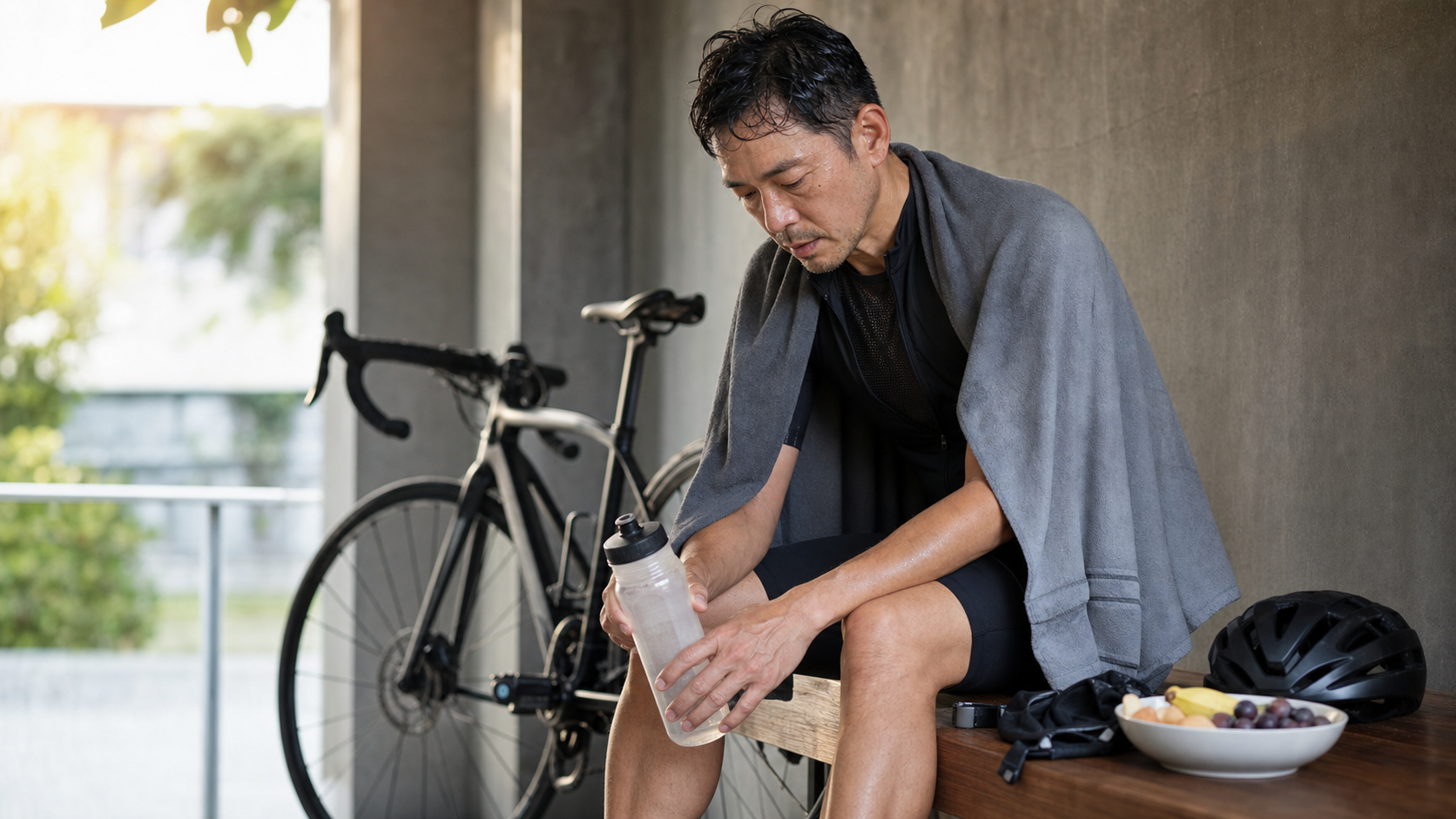
Why Does Training Harder Sometimes Mean Getting Sick More Often?
I once coached an amateur cyclist named A-Kai, in his early forties, a tech-industry engineer. On weekends he’d regularly ride up Yangmingshan and Fengguizui, and his annual goal was to complete a full Wuling climb. That year he pushed hard, ramping his weekly training volume from 150 km all the way up to 320 km, and his power did improve—his FTP climbed from 220 watts to 258 watts. By all accounts, things were moving in the right direction. But when he came to see me, he looked terrible and said: “Coach, something’s off lately. My fitness is clearly better, but I’ve caught a cold four times in three months. My throat keeps getting phlegmy, I can’t sleep enough no matter what, and a week before the race I ran a fever and had to DNS the whole thing.”
I’ve seen this script too many times. It’s not just cycling—dedicated runners, triathletes, and swimmers all run into it—when training volume hits a certain threshold, the immune system starts to “leak.” Many people instinctively assume that exercise always makes you stronger and less prone to illness. That’s true for people who do “regular moderate-intensity exercise,” but for those in the “long-duration, high-intensity, insufficient-recovery” camp, the story flips.
In this article, I want to lay out “exercise and immune dysfunction” clearly: from the physiological mechanisms, to how overtraining crushes immunity, to concrete, actionable recovery and nutrition strategies. I’ll try to use the same practical tone I use with my athletes, giving you things you can put to use tonight, rather than a pile of jargon you’ll forget the moment you finish reading.
1. Conceptual Foundation: Exercise and Immunity Follow a “J-Curve”
In exercise immunology, there’s a classic concept called the J-shaped curve. It describes the relationship between “exercise volume” and “risk of upper respiratory tract infection”:
- Completely sedentary people: Immune function is average, and infection risk sits at a baseline level.
- People who do regular moderate-intensity exercise: Immunosurveillance improves, and the risk of upper respiratory tract infection is lower than in sedentary people. This is the sweet spot where exercise genuinely protects health.
- People with chronic high-volume, high-intensity training and insufficient recovery: Risk is actually higher than in sedentary people. The curve hooks upward here, forming the tail of the J.
A-Kai’s problem was that he unknowingly jumped from the “moderate” zone into the “excessive” zone, without any supporting recovery.
What Is the “Open Window”?
This is the key to understanding the whole picture. Research has found that after a long-duration, high-intensity endurance effort (typically defined as lasting over 90 minutes), multiple immune defenses are suppressed for several hours: including natural killer (NK) cell activity, T-cell and B-cell function, upper respiratory neutrophil function, and salivary immunoglobulin A (salivary IgA—the first line of defense at mucosal surfaces) levels all drop.
This window of weakened defenses is called the “open window.” Depending on the immune marker in question, the literature suggests this infection-prone window can last anywhere from 3 hours to 72 hours after exercise. In other words, the moment you finish a four- or five-hour epic ride, get home, and step out of the shower—that’s exactly when viruses are best positioned to sneak in.
This also explains another common observation: in the 1 to 2 weeks following a marathon or long-distance event, athletes show a significantly higher rate of upper respiratory infections. Over a two-to-three-week major competition, roughly 7% of athletes will get sick at least once, and about half of those cases are respiratory-related. A-Kai’s fever and DNS a week before his race was, to some extent, a replay of this mechanism—he was still forcing long miles before the event, repeatedly pushing himself into the open window.
Coach’s note: The open window doesn’t mean you “can’t” do long rides. It’s a reminder that the hours to days after a long session are the period when you need to take extra care of your body—not the time to push through extra training or stay up late.
2. How Overtraining Gradually Crushes the Immune System
The open window from a single long session is “acute” and recoverable. The real problem is chronic accumulation—when your long-term training load exceeds your recovery capacity, you slide toward what’s called Overtraining Syndrome (OTS).
From “Functional Fatigue” to “Overtraining Syndrome”
Training is essentially a cycle of “breakdown—repair—supercompensation.” Moderate fatigue is normal, even necessary for progress. The problem arises when recovery can’t keep up, and things deteriorate along this line:
| Stage | Typical State | Time Needed to Recover | Performance Change |
|---|---|---|---|
| Acute fatigue | Normal soreness and tiredness after a hard session | A few hours to 1–2 days | Brief dip, returns after good sleep |
| Functional overreaching (FOR) | Deliberate heavy training block | Several days to just over a week | Short-term dip, then supercompensation rise |
| Non-functional overreaching (NFOR) | Fatigue accumulates, performance stalls | Several weeks to several months | Plateau or decline, supercompensation disappears |
| Overtraining syndrome (OTS) | Neuroendocrine dysregulation, prolonged recovery | Several months, longer in severe cases | Marked decline, frequent illness |
Overtraining syndrome is considered a neuroendocrine dysregulation. Typical signs include: worse race performance, inability to maintain previous training volume, persistent fatigue, disturbed sleep, low mood, and—the focus of this article—frequent illness.
What’s Actually Happening at the Immune Level?
While elite athletes generally aren’t clinically “immunodeficient” patients, research does show that during periods of chronic high-intensity training, multiple immune parameters are suppressed:
- Reduced neutrophil function: These cells are key players in fighting bacteria and clearing pathogens.
- Lower serum and salivary immunoglobulin concentrations: Especially mucosal IgA. Here’s a contrast worth remembering—acute excessive exercise may briefly raise IgA, but chronic overtraining makes IgA drop. In other words, the occasional hard session is fine; long-term grinding is what breaks down the mucosal defense line.
- Lower natural killer cell counts: This weakens the first-line clearance of virus-infected cells.
The Stress Hormone: The Double-Edged Sword of Cortisol
Cortisol plays a pivotal role here. The cortisol that rises after exercise “redistributes” highly cytotoxic immune cells out of the bloodstream and into tissues, briefly reducing the number of immune sentinels circulating in the blood. Meanwhile, elevated circulating stress hormones (cortisol, catecholamines) and prostaglandin E2 tend to push the immune response toward the Th2 (humoral, anti-inflammatory-leaning) side and suppress Th1 (cell-mediated immunity, the main force against viruses and bacteria).
In plain terms: chronic high-stress training shifts your immune system from “actively patrolling and catching the bad guys” mode toward a more “passively appeasing” mode, suppressing the frontline capacity to fight viruses and bacteria. That’s why overtrained people are especially prone to repeated colds, slow-healing wounds, and minor illnesses that drag on for a long time.
Important clarification: The link between overtraining and hypothalamic-pituitary-adrenal (HPA) axis dysregulation is not yet 100% settled in science—the data are inconsistent. So treat the mechanisms above as a “reasonable overall picture,” not a one-size-fits-all formula. Individual variation is large.
3. Practical Methods: How to Train to Improve Without Training Your Immunity Into the Ground
Now that the mechanisms are covered, let’s get to what you can actually apply. The most honest thing about immunity is this—it’s almost entirely determined by the balance between “training load vs. recovery.” You can’t just pile on training and ignore recovery. Here’s the framework I actually use with my athletes.
1. Use “Monitoring Markers” to See Warning Signs Early
Overtraining is insidious because it creeps up on you like a frog in slowly boiling water. Rather than waiting until you develop a fever and have to abandon a race, spend two minutes each day recording a few simple markers. This is the chart I had A-Kai use:
| Monitoring Marker | How to Measure | Warning Signs | Meaning |
|---|---|---|---|
| Morning Resting Heart Rate (RHR) | Measure while lying flat for 1 minute upon waking, unit bpm | 5–10 bpm above baseline for several consecutive days | Autonomic nervous system insufficiently recovered |
| Heart Rate Variability (HRV) | Morning measurement via watch/app | Consistently and significantly below personal baseline | Body under high stress, poor recovery |
| Sleep Quality | Subjective score 1–10 | ≤ 5 points for several consecutive days, frequent waking | Core recovery compromised |
| Subjective Fatigue | Score 1–10 upon waking | Consistently high, feeling more tired the more you sleep | Accumulated fatigue |
| Mood/Motivation | Record in one simple sentence | Loss of interest in training, irritability | Early psychological signs of OTS |
| Illness Frequency | Record every minor cold | 3+ times per season or recurring sore throat | Immune system already suppressed |
The key isn’t any single day’s number—it’s the trend. One day of low HRV is nothing; a week of it means you need to stop and think. If your morning heart rate is 7–8 bpm higher than usual for three or four consecutive days, paired with poor sleep and low motivation, that’s your body sounding the alarm.
2. Principles for Arranging Training Load
Endurance training has a very practical rule of thumb: roughly 80% of your training volume should be easy, low-intensity work (at a pace where you can chat while riding), and only about 20% should be moderate-to-high intensity. The problem with many amateur riders is exactly the opposite—they want to ride fast every time they get on the bike, turning every session into a “moderately hard” grey zone: plenty of volume, plenty of intensity, but never enough recovery. This “moderate-intensity trap” is an immune killer.
A few specific principles:
- Conservative weekly training volume increases: When adding new training volume, don’t spike it week over week—give your body time to adapt. A-Kai jumping from 150 to 320 km in three months was far too aggressive.
- Schedule recovery weeks: Every 3–4 weeks, plan a recovery week with reduced volume (e.g., down to 50–60% of normal) so supercompensation can actually occur.
- Don’t follow a long ride with a hard session: After a ride of 4+ hours, take at least a full rest day or very easy active recovery the next day, avoiding hard efforts during the open window.
- Follow through with a proper taper: In the 1–2 weeks before a major event, gradually reduce volume while maintaining a bit of intensity stimulus. This both peaks performance and lets your immune system bounce back before race day, preventing the pre-race collapse A-Kai experienced.
A Sample Immune-Friendly Weekly Schedule
Many people ask me: “So how should I actually structure my week?” Below is a sample week I adjusted for A-Kai that’s more immune-friendly (using an advanced rider training ~8–10 hours per week with a race goal as an example). The key isn’t the mileage numbers themselves, but the distribution of intensity and the deliberate space left for recovery.
| Day | Session Content | Intensity Zone | Coach’s Notes |
|---|---|---|---|
| Monday | Full rest or 30 min easy walk/stretching | Recovery | Golden repair day after the weekend long ride—don’t get itchy |
| Tuesday | 60–75 min easy ride (able to chat) | Low intensity (Z2) | Build aerobic base, don’t cross into the red |
| Wednesday | Intervals: main set 4×5 min near threshold | Moderate-high intensity | One of only two quality stimuli all week |
| Thursday | 60 min easy ride or full rest | Low intensity/Recovery | Decide based on HRV—if the data is bad, rest |
| Friday | 45–60 min easy ride plus a few short sprints | Mostly low intensity | Keep leg feel, don’t create fatigue |
| Saturday | Long ride 2.5–3.5 hrs (Yangmingshan/Beiyi) | Low–moderate intensity | Most important session of the week; nutrition must be on point |
| Sunday | 90 min easy ride or active recovery | Low intensity | Avoid hard efforts the day after a long ride during the open window |
See the pattern? Only one truly high-intensity session all week (Wednesday), the weekend long ride is deliberately kept at low-to-moderate intensity, and everything else is easy riding and recovery. This “polarized” distribution is precisely designed to avoid the immune-damaging “moderate-intensity trap.” A-Kai’s old problem was that he rode at moderately hard effort five out of seven days—enough volume, enough intensity, but his body was perpetually in a half-recovered state.
Reminder: This is just a template, not gospel. Adjust dynamically based on your fitness, recovery status, and life stress. On days when HRV is poor, sleep is bad, or work is overwhelming, rest when you need to—treat the schedule as a tool, not a shackle.
3. Recovery Is Part of Training, Not an Optional Reward
Sleep offers the highest return on investment of any recovery method—bar none. Adults are recommended 7–9 hours per night, and serious athletes should aim for the upper end. Chronic sleep deprivation directly raises cortisol and suppresses immunity. Many people in Taiwan finish work late and try to squeeze in training time, only to sacrifice sleep—this is putting the cart before the horse.
Other practical recovery methods:
- Post-training nutrition window: Within 30–60 minutes after a long ride, consume carbohydrates plus protein (dosages will be covered in the nutrition section later).
- Active recovery: Easy swimming, walking, stretching—promote circulation without adding load.
- Stress management: Work stress, family stress, and training stress all draw from “the same account.” Your body doesn’t distinguish whether cortisol came from your boss or your training plan. With Taiwan’s high-pressure work culture, this point is often underestimated.
How Taiwan’s Climate and Environment Affect the Immune Open Window
Taiwan’s training environment has several very local variables that can amplify or shorten the risk of the open window, and they deserve special attention:
- Hot, humid summers: Taiwan summers routinely hit 33–36°C with high humidity, making thermoregulation and dehydration stress during long rides greater than in temperate climates. Dehydration itself exacerbates the stress hormone response, making the open window more pronounced. During summer long rides, be diligent with hydration and electrolytes—don’t underestimate the sodium you’re sweating out.
- Cold, wet winters in the north: Yangmingshan and Beiyi are cold and damp in winter, and body temperature drops sharply on long descents. Finishing a ride soaked in sweat and then getting rained on is exactly the moment you’re most likely to catch a chill. I always require my athletes to carry a dry thermal layer on the bike—put it on before long descents and change out of wet clothes immediately upon returning to the parking spot.
- High altitude (Wuling, Hehuan Mountain): The altitude itself is an additional physiological stress, compounded by extreme temperature swings between day and night. For classic climbs like the west route up Wuling, double down on open-window care—plan your mountain nutrition, warmth, and post-descent recovery in advance.
- Air quality (PM2.5): In certain seasons and regions of Taiwan, air quality is poor. Doing large volumes of high-intensity outdoor training on bad air days places extra burden on the respiratory system—consider switching to an indoor trainer or reducing intensity.
None of this is meant to scare you off from riding—it’s a reminder that: the same long ride, under Taiwan’s humid heat or damp cold, poses a bigger challenge to your immune system than you might think. Factor environmental variables into your planning, nail your nutrition, warmth, and recovery, and you can defend the open window more reliably.
4. Nutrition Strategy: Guarding the Frontline of Immunity
Nutrition is the area of exercise immunology with the most solid research and the one you have the most control over. The core logic is simple: don’t force your body to endure heavy training loads while running on insufficient energy and key nutrients. The larger the energy deficit and the lower the carbohydrate intake, the more pronounced the exercise-induced stress hormone response and immune suppression.
1. Carbohydrate Intake During and After Training—Don’t Push Through on an Empty Stomach
Consuming carbohydrates during prolonged exercise can blunt the rise in cortisol and reduce exercise-induced immune suppression. This is one of the more well-supported strategies in current sports nutrition.
| Scenario | Recommended Approach (Range, Not a Precise Prescription) | Purpose |
|---|---|---|
| Sessions longer than 90 minutes | ~30–60 g carbohydrates per hour (sports drink/energy gel/banana) | Maintain blood glucose, dampen cortisol response |
| 30–60 minutes after a long/high-intensity session | ~1.0–1.2 g carbohydrates per kg body weight, plus ~0.3 g protein per kg body weight | Replenish glycogen, initiate repair, shorten the open window |
| Daily total protein | ~1.4–2.0 g per kg body weight, spread across meals | Support repair and immune cell synthesis |
| Daily total energy | Sufficient to match training load; avoid chronic Low Energy Availability (Low EA) | This is the foundation of immunity |
Using A-Kai at 72 kg as an example: post-long-session carbohydrate intake would be roughly 72–86 g (about a bowl-plus of rice, or two bananas plus a sports drink), and protein around 20-some grams (one chicken breast or one scoop of whey). This is easy to manage in Taiwan—a chicken leg bento with some of the fried items removed, plus a tea egg, covers the refueling window well enough.
2. Micronutrients: More Isn’t Better—Just “Don’t Be Deficient”
The vitamins and minerals needed for immunity are numerous, but the key is avoiding deficiencies within a balanced diet, not loading up on high-dose supplements.
| Nutrient | Relationship to Immunity/Exercise | Common Status in the Taiwanese Population |
|---|---|---|
| Vitamin D | Involved in immune regulation; deficiency is linked to higher infection risk | Often low in those who are sedentary indoors or use thorough sun protection; a blood test can confirm |
| Iron | Deficiency affects oxygen transport and immunity; but excess iron supplementation is harmful | Female athletes and long-distance runners are more prone to deficiency; supplement only after testing |
| Zinc | Involved in immune cell function | A balanced diet is usually sufficient; avoid long-term high-dose self-supplementation |
| Vitamin C | Antioxidant; may offer slight benefit under extreme conditions | A balanced intake of fruits and vegetables is usually enough; very high doses show no clear additional benefit |
Please remember this: long-term use of high-dose single antioxidant supplements (e.g., very high-dose vitamin C/E) may actually interfere with the normal adaptive signals from exercise. A natural, balanced diet (adequate fruits and vegetables, quality protein, whole grains) is almost always superior to handfuls of pills. Eating out is convenient in Taiwan, but it’s easy to fall short on vegetables and overdo refined carbohydrates—that’s what most people should fix first. Rather than obsessing over supplements, start by adding one serving of vegetables to each meal and swapping half your rice for brown rice.
3. Probiotics and the Gut
Some studies have explored whether probiotic supplementation may help reduce the incidence of upper respiratory tract infections in athletes, with mechanisms possibly related to gut microbiota and mucosal immunity. There is some positive evidence in this direction, but individual responses vary greatly and product quality is inconsistent—it’s not a miracle cure. Rather than pinning your hopes on a single supplement, focus on getting enough dietary fiber and fermented foods (yogurt, miso, kimchi) to keep the gut environment in good shape.
Compliance reminder: All dosages above are general educational reference ranges. If you have a chronic condition, are taking medication, or are considering higher-dose supplements, please consult a physician or dietitian first—especially with iron supplements, as supplementing in the wrong direction can be harmful.
5. Common Mistakes and How to Fix Them
I’ve seen these pitfalls in my athletes far too many times. Let me break them down one by one.
Mistake 1: “I’ll train through a cold because I’m afraid of losing fitness”
This is the most dangerous one. A simple guideline to follow is the “neck rule”:
- Symptoms above the neck (mild runny nose, scratchy throat, no fever, decent energy): you may do very easy, short-duration activity, listen to your body, and stop at any time.
- Symptoms below the neck or systemic (fever, body aches, cough with phlegm, muscle weakness, palpitations): rest completely—do not train.
Training with a fever is absolutely contraindicated—the risk of myocarditis during a viral infection is a real health threat, not just a scare tactic. When A-Kai had a fever before his race and wanted to push through, I told him directly to withdraw. Missing one race is a small matter; something going seriously wrong is not. A few days off when you’re sick won’t destroy your fitness, but pushing through will drag the illness out longer and can even lead to serious consequences.
Mistake 2: “Only looking at training data, not recovery data”
Many people have watches full of power, pace, and mileage numbers, yet never look at sleep or HRV. Training load and recovery are two sides of the same coin. If you only watch the accelerator and never the fuel gauge, the engine will eventually blow. The fix is the monitoring table from earlier—include recovery metrics on your dashboard.
Mistake 3: “Using lots of supplements to replace the fundamentals”
Swallowing a pile of vitamins, probiotics, and antioxidants while not sleeping enough, eating out with severely inadequate vegetables, and running a chronic energy deficit. Supplements add “marginal gains,” not “the foundation.” The foundation is sleep, adequate energy, a balanced diet, and stress management. If the foundation collapses, no supplement can save it.
Mistake 4: “Completely ignoring life stress outside of training”
Work deadlines, family issues, chronic anxiety—these all draw from the same cortisol account. I’ve had athletes whose training plans were perfectly reasonable, yet they kept getting sick. When I asked, it turned out work had exploded during that period, with late nights every day. The training wasn’t the problem—total stress was off the charts. The fix: during high-stress life phases, proactively dial training volume down. Don’t fight your body head-on.
Mistake 5: “Cramming extra training right before a race”
In the one to two weeks before a race, training can only add limited fitness, but it can cause significant fatigue and immune suppression. The right approach is to taper properly, showing up on race day with full energy reserves and an immune system that can hold the line.
6. Actionable Advice for Different Training Levels
For beginners training 2–4 times per week
The good news is—you’re in the sweet spot of the J-curve. Regular moderate-intensity exercise is actively lowering your infection risk. What you need to do isn’t worry about training your immune system into the ground, but rather:
- Progress gradually; don’t rush to spike your training volume.
- Sleep enough, eat a balanced diet, and turn the fundamentals into habits.
- Learn to distinguish between “normal training soreness and fatigue” and “abnormal persistent exhaustion.”
For intermediate athletes training 5–10 hours per week with race goals
You’re the group that needs the most vigilance, because you have both the capacity and the motivation to push yourself too far.
- Start tracking morning heart rate, HRV, sleep, and subjective fatigue—watch the trends.
- Implement a deload week every 3–4 weeks; don’t skip it.
- Refuel seriously after long sessions and sleep seriously—treat the open window as a real priority.
- Taper properly before races; don’t add extra training at the last minute.
For those already showing warning signs (frequent illness, slow recovery)
If you’re already like A-Kai back then—repeated colds, sleeping more but feeling more tired, performance plateauing or declining, low mood—treat this as a clear stop-loss signal:
- Cut volume significantly or schedule a full recovery period first. This isn’t weakness; it’s professionalism.
- Examine the three pillars: sleep, nutrition, and life stress.
- Seek medical evaluation: recurrent infections and persistent fatigue can also stem from other health factors (e.g., anemia, thyroid issues, other underlying conditions). Taiwan’s NHI makes it easy to see a doctor—a family medicine or sports medicine clinic can run basic assessments and blood tests if needed. Don’t play doctor and tough it out on your own.
A-Kai’s outcome was a good one. I had him cut his volume entirely for six weeks, sleep a full 8 hours every night, adjust his eating-out habits so every meal included vegetables, and taper properly before the race. Three months later, he not only stopped catching colds, but he finished the Wuling climb successfully, and his FTP even edged up a bit further. Real progress is built on the premise that you can train consistently and healthily.
7. Quick Self-Checklist (Save This for Reference)
- [ ] Have I noticed a significant increase in colds this past season, or minor illnesses that keep recurring and won’t go away?
- [ ] Has my morning resting heart rate been consistently elevated for several days? Has my HRV been persistently low?
- [ ] Am I chronically getting less than 7 hours of sleep, or do I still feel tired even after sleeping?
- [ ] Am I spending every ride/run in that “moderately hard” gray zone?
- [ ] Have I gone the past 3–4 weeks without scheduling any recovery weeks?
- [ ] After long workouts, am I properly refueling with carbohydrates, protein, and getting enough sleep?
- [ ] Is my current life/work stress high, without me dialing back my training volume accordingly?
- [ ] Am I still pushing extra hard in the one or two weeks before a race?
If you checked 3 or more items, it’s time to seriously review your training–recovery balance.
8. Frequently Asked Questions (FAQ)
These are the questions students most often message me after class. I’ve compiled them here for you.
Q1: My throat feels itchy the day after every long ride. Is my immune system failing?
That brief dry, itchy throat after a long workout is often related to a temporary weakening of the mucosal defense during the open window, combined with heavy mouth breathing during exercise drying out the upper respiratory tract. Occasionally happening once and clearing up after a day or two of rest is usually normal. But if it happens every time and frequently turns into a real cold, then you need to look at whether your overall training volume exceeds your recovery capacity. What to do: Prioritize post-long-workout nutrition, warmth, and sleep, and observe for two to three weeks.
Q2: Can taking Vitamin C or effervescent tablets prevent colds?
For the vast majority of people with a balanced diet, aggressively taking high doses of Vitamin C has very limited preventive benefit, and extremely high doses could even interfere with training adaptations. Instead of spending money on effervescent tablets, focus on getting enough sleep and eating enough fruits and vegetables. Supplements are the icing on the cake, not the cake itself. If you really want to supplement, first confirm whether you have an actual deficiency (e.g., check Vitamin D via blood test). Supplement only if deficient, and only up to adequate levels.
Q3: I’m a woman who runs long distances and cycles. I often feel especially tired and catch colds easily. What should I watch out for?
Female endurance athletes need to pay special attention to iron levels and overall energy intake. Chronic low energy availability (Relative Energy Deficiency in Sport, RED-S) can simultaneously affect hormones, bone health, and immunity. If your periods become irregular, you experience persistent fatigue, or you get sick repeatedly, these are important warning signs. I recommend seeing a doctor and getting blood tests for ferritin and other markers—don’t blindly self-supplement with iron.
Q4: After getting vaccinated or recovering from a cold, how long before I can resume normal training?
The general rule for colds is: After symptoms have completely resolved, start with easy, short sessions and gradually progress back to your original volume. Don’t jump straight back into your big training plan the same day you feel better. If you had a fever, return to training more conservatively and slowly, and watch for unusual heart palpitations or extreme fatigue—if these occur, seek medical evaluation. For post-vaccination situations, follow medical professional advice.
Q5: If I ride indoors on a trainer, does that mean I avoid the open window problem?
The open window is a physiological response to exercise itself, unrelated to whether you’re indoors or outdoors—a high-intensity session or a trainer workout exceeding 90 minutes will still temporarily suppress immunity. The advantage of indoor training is avoiding external variables like air quality, cold and damp conditions, and rain, but the principles of post-workout recovery, nutrition, and sleep apply exactly the same.
Q6: How do I know if I’m just “simply fatigued” or “actually overtraining”?
The simplest way to tell is by timescale: Simple fatigue noticeably improves after a good night’s sleep or a day or two of rest. Overtraining means you’re still tired, performance is still poor, and you’re still getting sick even after several days or one to two weeks of rest. When you find that “no matter how much you rest, you can’t bounce back,” combined with low mood and loss of motivation, you need to be highly alert and consider seeking help from a coach or sports medicine professional.
Conclusion: Treat Immunity as a Training Teammate, Not an Enemy
The relationship between exercise and immunity boils down to one sentence: Moderate, regular exercise protects you; excessive training without recovery harms you. The difference isn’t how hard you push, but whether you give your body equivalent recovery. The open window reminds us to treat ourselves well after every long workout; the J-curve reminds us not to push the sweet spot into the danger zone; monitoring markers let us hit the brakes before a breakdown; nutrition and sleep are the foundation that guards your immunity.
If you’re the type of person who is “so dedicated you train yourself into the ground,” I want to say this to you—knowing when to stop and when to recover is what truly makes you an expert. A-Kai took an entire season to learn this lesson. I hope reading this helps you avoid some of that unnecessary struggle.
Next time you finish a long ride, get home, and feel that tired but satisfied moment, remember: this is your golden window to eat well, sleep well, and take good care of yourself—not the time to stay up binge-watching shows or squeeze in an extra session. Your immune system will repay you with “not getting sick and being able to keep improving.”
This article is for educational purposes and does not replace individual diagnosis and treatment advice from physicians, physical therapists, or nutritionists. If you have a chronic condition (such as diabetes, hypertension, or heart disease) or are taking medication, please ensure your training and nutrition strategies are individualized and discussed with your healthcare team before implementation.
References
- Upper respiratory tract infections and exercise — PubMed: https://pubmed.ncbi.nlm.nih.gov/8553291/
- The open window of susceptibility to infection after acute exercise in healthy young male elite athletes — PubMed: https://pubmed.ncbi.nlm.nih.gov/20839496/
- Overtraining, Excessive Exercise, and Altered Immunity — Sports Medicine (Springer): https://link.springer.com/article/10.2165/00007256-200333050-00002
- Hormonal aspects of overtraining syndrome: a systematic review — PMC: https://www.ncbi.nlm.nih.gov/pmc/articles/PMC5541747/
- Probiotic Supplements Beneficially Affect Tryptophan–Kynurenine Metabolism and Reduce the Incidence of Upper Respiratory Tract Infections in Trained Athletes — PMC: https://www.ncbi.nlm.nih.gov/pmc/articles/PMC5133134/
Related Reading
- Immunosuppression from Overtraining in Cycling: A Guide to Cold Prevention and Training Volume Adjustment
- Exercise and Immunity: Moderation is Best—A Coach’s Guide to the J-Curve and That “Open Window”
- The Cyclist’s Immune System: Cold Prevention Strategies Under High Training Volume
- Protecting the Cyclist’s Immune System: Health Management Under High Training Volume
西進武嶺 免費訓練分析服務 Intervals | 練不夠還是練過頭?你哪一種類型選手?AI模型告訴你! | 備戰神器 | 公路車 訓練 | CT Yeh
4 年前
一日北高/長距離團騎 常見問題補充篇 / 組團或跟團的眉角 / 壯車友容易被瘦車友慢性拉爆 / 原來屁股痛可能是這個原因...? / 風場配速法 / 公路車 / CT Yeh
2 年前
FTL 與 SYB 車隊專訪 西進武嶺 實用攻略分享! 2小時 如何練?!你不知道的眉角!新手準備武嶺必看 EP1 | 實力派女車友 | 精華版 | 公路車 | CTYeh
4 年前
西進武嶺 自製新版AI配速表產生器 x 賽前攻略 抱佛腳! 沒有功率計也可以產生配速表嗎?有什麼其他眉角賽前要注意的呢? | 西進武嶺 / 東進武嶺 KOM 攻略 | 公路車 | CT Yeh
4 年前
宇老大滿貫 順騎挑戰失敗 掛彩收場 | 單車險能賠嗎? | 公路車
5 年前
西進武嶺 8000名單車友數據分析 PART1 | 從新手到高手數量/瓦數/推力比/FTP推力比/功率計使用率 大解析 | 公路車 | CTYeh
5 年前
Never Stop 西進武嶺 前後雙機 完整全程錄影 訓練台 實境
8 年前
風櫃嘴時間 預測西進武嶺時間?13000名車友統計數據分析告訴你 !
5 年前