Getting More Tired the More You Train Isn't About Lack of Effort: A Complete Coach's Guide to Identifying Chronic Fatigue, Overtraining, and Recovery
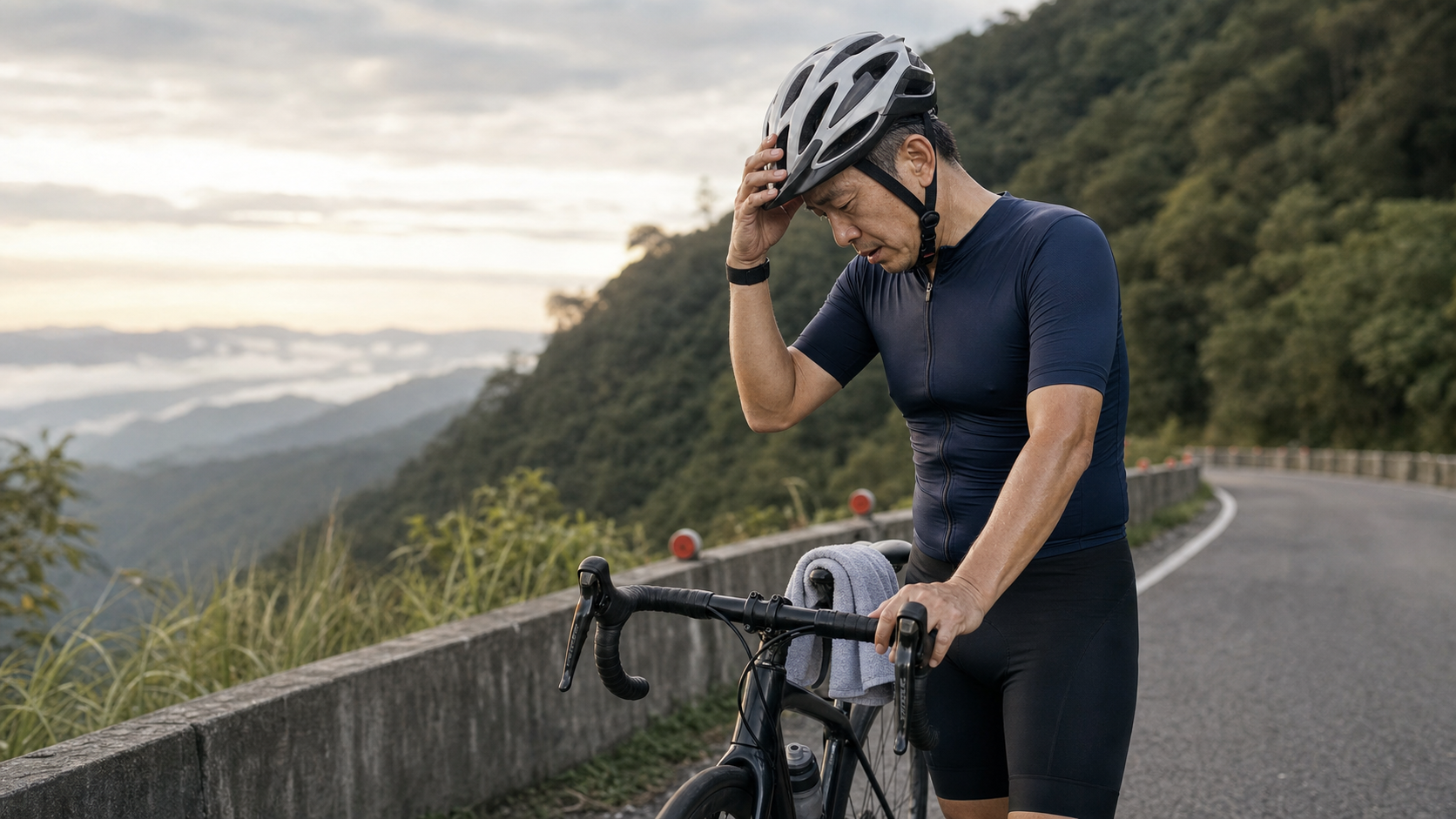
It Started with a Student Who “Got Slower No Matter How Hard He Trained”
I once coached a student who left a deep impression on me—let’s call him A-Xian. He was in his early forties, worked in the Hsinchu Science Park, rode Fengguizui every weekend, and occasionally took on the challenge of Wuling. For a while, he told me: “Coach, I’ve been training really hard lately, adding volume every week, but my performance is getting worse instead. I’m getting more and more out of breath on climbs, and I can’t sleep well at night.” He thought the problem was that he “wasn’t trying hard enough,” so he secretly added two more interval sessions on his own. Three weeks later, not only had his power dropped by nearly 15%, but he’d also caught two minor colds in a row—he felt completely drained, like a dead battery.
That time, I didn’t give him a new training plan. Instead, I told him to cut his training volume in half and go see a family doctor for blood work. This article is my attempt to fully organize what I explained to him back then, along with the observations I’ve accumulated over the years coaching athletes at various levels and general fitness enthusiasts. Because “training harder but getting more tired” is far too often mistaken for a willpower issue, when in reality, it’s more often your body sending you a distress signal.
Chronic fatigue is a term that gets thrown around loosely. In clinics, at the gym, and in cycling team group chats, what people call “chronic fatigue” can refer to three completely different things. Figuring out which one you’re dealing with is the starting point for everything that follows. This article isn’t meant to scare you; it’s meant to give you a set of identification and recovery protocols you can use at home, as well as the red lines for knowing “when to stop and see a doctor.”
Let me start with a statement that might challenge your intuition: In the world of endurance sports, “rest” is not the opposite of training—it’s part of training. Progress never happens at the moment you’re pushing the pedals; it happens during the time you rest, sleep, eat well, and let your body repair itself. Many people think of training as a linear relationship—“the more you do, the more you improve”—but the real curve has a ceiling. Beyond a certain point, adding more volume won’t make you stronger; it will actually set you back. The core of this article is to help you find that “sweet spot” and to detect it early when you’re about to cross the line.
First, Let’s Establish the Concepts: Three Kinds of “Fatigue” Can’t Be Treated the Same
Acute Fatigue
This is the simplest and healthiest kind of tiredness. You did a long ride or a set of high-intensity intervals today; the next day your legs feel heavy, you’re low on energy, and you don’t really feel like getting back on the bike. That’s all completely normal. This kind of fatigue usually subsides within 24 to 72 hours with sleep, proper nutrition, and some easy movement. It’s actually evidence that your training is working—your body is repairing and getting stronger. Not having this kind of fatigue might actually mean you’re not training hard enough.
Functional and Non-Functional Overreaching
When you deliberately increase your training load for several consecutive weeks, your performance will initially decline. This is called “overreaching.” If it’s managed properly, your performance will bounce back—or even surpass your previous level—after one to two weeks of rest. This is called functional overreaching, and it’s the “break down first, then supercompensate” approach that many advanced training plans deliberately design.
But if your performance doesn’t come back after rest and takes weeks to barely recover, it becomes non-functional overreaching. This is already a yellow light, meaning you’ve overdone it, and your body’s ability to adapt can’t keep up with the stress.
Overtraining Syndrome (OTS)
This is the most severe end of the spectrum. According to the joint consensus statement from the European College of Sport Science (ECSS) and the American College of Sports Medicine (ACSM), overtraining syndrome is a condition caused by training load chronically exceeding the body’s recovery capacity. Its hallmarks are chronic fatigue, persistent performance decline, low mood, and decreased resistance to infection (meaning you get recurrent colds easily). The biggest difference from ordinary fatigue is that true overtraining syndrome often requires weeks to months of rest to recover from, and it’s frequently accompanied by hormonal, immune, and psychological dysregulation. Currently, it remains a diagnosis of exclusion—no single blood test or examination can confirm it with 100% certainty; other physiological conditions must first be ruled out.
Here’s a quick comparison chart I often show my students:
| Item | Ordinary Fatigue | Non-Functional Overreaching | Overtraining Syndrome |
|---|---|---|---|
| Time needed for recovery | 24–72 hours | Days to weeks | Weeks to months |
| Performance changes | Recovers after rest | Recovers slowly after rest | Long-term, persistent decline |
| Mood | Generally normal | Slightly irritable | Noticeably low, irritable, loss of motivation |
| Sleep | Normal or better | Starting to worsen | Poor sleep, unrefreshing even after sleeping |
| Infection frequency | No change | Occasional | Recurrent upper respiratory infections |
| Resting heart rate | Stable | Slightly elevated | Persistently high or abnormally low |
| Attitude toward training | Wants to train | A bit lazy | Resistant, fearful, unmotivated |
Please note: these three are a continuous spectrum, not three separate boxes. Today’s ordinary fatigue, if you ignore it and keep pushing the volume, can slide into non-functional overreaching in two to three weeks, and then into overtraining syndrome a few weeks after that. A-Xian was exactly in that yellow-light zone when he added extra intervals on his own, which is why he deteriorated so quickly.
The More Important Distinction: Is This Really “Training-Induced Fatigue”?
This is the point I want to emphasize most in this entire article. Many people who think they’re overtraining actually aren’t overtraining at all—they have an overlooked physiological or medical reason holding them back. As a coach, my biggest fear is treating a student who actually has iron deficiency, hypothyroidism, or sleep apnea as if they were overtraining and just adjusting their training plan, thereby delaying proper medical care.
Common Medical Causes That Masquerade as “Overtraining”
The following conditions can all cause long-term fatigue and declining athletic performance, and they won’t get better just by reducing training volume and resting—they require medical evaluation:
- Iron deficiency or iron-deficiency anemia: This is one of the most common hidden killers among endurance athletes. Literature reviews indicate that the prevalence of iron deficiency in endurance athletes is roughly 20% to 50% in women, with men also reaching significant rates. Athletes have higher iron needs and losses than the general population due to heavy sweating, shedding of intestinal and skin cells, and red blood cell destruction from repeated foot strikes. Women, vegetarians, and runners with high training volumes are particularly high-risk groups. It’s worth noting that for athletes, the reference standard for ferritin may need to be higher than the general population (e.g., above 40–50 ng/mL) to effectively catch iron deficiency that truly impacts performance.
- Hypothyroidism: Feeling cold, weight gain, dry skin, slow heart rate, feeling like you’re moving in slow motion.
- Sleep apnea: You sleep eight hours and still feel tired; your partner complains you snore loudly and stop breathing in your sleep.
- Depression or anxiety disorders: Loss of motivation, loss of interest—these symptoms heavily overlap with the psychological symptoms of overtraining and are very hard to distinguish on your own.
- Post-infectious fatigue: Including the lingering fatigue after colds, flu, COVID-19, EB virus, and other infections.
- Blood sugar and metabolic issues: Diabetes, thyroid, adrenal, and other endocrine problems.
ME/CFS Is a Different Story
There’s a term that’s easily confused with overtraining: Myalgic Encephalomyelitis/Chronic Fatigue Syndrome (ME/CFS). It’s a symptom-based diagnosed illness whose core features include unexplained, persistent, severe fatigue; unrefreshing sleep; cognitive dysfunction (commonly called “brain fog”); and musculoskeletal pain.
Its most critical and alarming feature is Post-Exertional Malaise (PEM): after physical or mental exertion, symptoms worsen disproportionately, and this worsening is often delayed (you might feel fine during the activity, then crash the next day or the day after). The duration can vary, sometimes dragging on for days to weeks.
This is extremely important because the treatment direction for ME/CFS is almost the opposite of overtraining. Overtraining usually improves with reduced volume and gradual recovery; but for ME/CFS patients with clear post-exertional malaise, the traditional “gradually increase exercise” approach can actually make the condition worse. So if you find that “every time I exercise, I completely crash the next day and it lasts a long time,” this is beyond what a coach can handle—please seek medical attention and let a physician evaluate you.
A simple way to remember it: Training hard and feeling tired, but rest helps → more likely a training issue; no matter how much you rest, it doesn’t get better, or one bout of activity causes a long crash → prioritize seeing a doctor, don’t keep adjusting your training plan on your own.
What’s Actually Happening in Your Body: The Physiology of Overtraining
Many students ask me: “Why does training too much actually ‘break’ the body? Isn’t it true that the more you push, the stronger you get?” This needs to be explained from the basic logic of stress and recovery.
Training is essentially controlled stress. Every high-intensity stimulus creates micro-damage—minor tears in muscle fibers, depletion of glycogen, and disruption of hormonal and neurological systems. During the subsequent rest period, the body repairs this damage, and it repairs it to be slightly stronger than before. That’s what’s called “supercompensation.” What makes training improve you isn’t the damage itself, but the quality recovery that follows the damage.
Here’s the problem: when stress comes fast and furious, and the time and resources for recovery (sleep, nutrition, psychological downtime) are insufficient, damage accumulates, repairs never quite catch up, and the body enters a state of chronic imbalance. Common physiological changes at this point include:
- Autonomic nervous system imbalance: The sympathetic nervous system (fight-or-flight) stays chronically overactive, while the parasympathetic system (rest and digest) is suppressed. As a result, you’ll see elevated resting heart rate, decreased heart rate variability, shallower sleep, and poorer digestion.
- Disrupted endocrine axis: Chronic stress affects the hypothalamic-pituitary-adrenal hormonal axis. Research shows that overtrained individuals may not show obvious abnormalities in baseline hormone levels, but their hormonal responses become blunted in standard stimulation tests. This is why overtraining is “hard to diagnose with a single blood draw.”
- Suppressed immune function: This explains why overtrained people are especially prone to recurrent colds and slow wound healing. A-Xian catching two colds in a row was a classic manifestation of this mechanism.
- Central fatigue: It’s not just the muscles that are tired; the brain’s motivational system gets dragged down too, so you lose enthusiasm for training. This is an important early psychological signal.
Understanding this mechanism, you’ll realize: Recovery isn’t “wasted time”; recovery itself is part of training. Without recovery, all your previous efforts are just digging a hole.
Practical Tools: How to Monitor Your Body’s Condition Yourself
Now that the concepts are covered, let’s get to something you can use immediately. You don’t need an expensive lab. By tracking a few simple metrics over the long term, you can hit the brakes early at the yellow-light stage.
Daily Self-Monitoring Checklist
I recommend my students spend one minute each morning using a phone notepad or training app to record a few numbers. The key isn’t the absolute value on any single day, but the trend of deviation from your own baseline.
| Monitoring Item | How to Measure | Warning Signal |
|---|---|---|
| Morning resting heart rate | Measure for 1 minute before getting out of bed | 5–10 bpm or more above baseline for several consecutive days |
| Heart rate variability (HRV) | Use a compatible watch/chest strap, morning measurement | Consistently below your personal baseline range for multiple days |
| Sleep quality | Subjective 1–10 scale | Consistently low, unrefreshing sleep |
| Subjective muscle soreness | Subjective 1–10 scale | Soreness that lingers and won’t go away |
| Mood/motivation | Subjective 1–10 scale | Noticeable resistance to training |
| Body weight | Measure at a fixed time, fasted | Unexplained drop over a short period |
A reminder here: metrics like HRV have huge individual variation and measurement noise. A single day’s reading is meaningless—you need to look at the 7-day rolling average trend, and always interpret it in combination with your subjective feelings. Numbers are a supplement; how your body feels is the main character.
Using a “Training Log” to Catch Load Imbalance
Besides body signals, you should also record how much training is “coming in.” The simplest method is to multiply your Rate of Perceived Exertion (RPE, on a 1–10 scale) by the training duration in minutes after each session to get a “training stress score.” Add up the weekly totals. If one week spikes dramatically (e.g., more than 20–30% above the previous week), that’s a high-risk period for injury and overtraining.
What the body can handle is progressive stress, not sudden spikes. A lot of cyclists in Taiwan don’t have a problem with training too much on a regular basis; their problem is “not training all week, then going out and hammering 200 km on the weekend or during a holiday.” This pattern of extreme swings between weeks is actually the most likely to cause problems.
Blood Tests You Can Ask Your Doctor About
If you’ve decided to see a doctor, going in with some direction will make the visit more efficient. Here’s a list of common reference markers to give you a foundation for discussion with your physician. Please note: these values are for educational reference only. Actual interpretation and reference ranges must be based on your lab report and your doctor’s professional judgment; standards also vary between laboratories.
| Test Item | Why It’s Relevant | General Reminder for Seeking Medical Interpretation |
|---|---|---|
| Hemoglobin (Hb) | Anemia directly impairs oxygen-carrying capacity and endurance | Low levels require physician evaluation of the cause of anemia |
| Ferritin | Reflects body iron stores | Cut-off points for endurance athletes are often higher than the general population |
| Thyroid-stimulating hormone (TSH) | Hypothyroidism causes fatigue and cold intolerance | Abnormalities require endocrine evaluation |
| Blood glucose / HbA1c | Rules out metabolic issues like diabetes | Elevated levels require further investigation |
| Liver and kidney function | Rules out other systemic issues | Abnormalities require physician follow-up |
| Vitamin D | Deficiency is linked to fatigue and immune suppression | Many people in Taiwan have low levels |
The purpose of this table isn’t for you to play doctor yourself, but to help make your communication with your physician more focused. Remember, values need to be viewed within the overall clinical context. Scaring yourself over a single red flag or self-supplementing without guidance are both unwise.
How to Recover: From Reducing Volume to Rebuilding
If your self-assessment shows you’ve hit the yellow or even red light, how should you recover? I use a phased framework with my students, and I’ll share it with you here.
Phase 1: Hit the Brakes (Weeks 1–2)
The sole task of this phase is to stop the bleeding. Don’t think about “how can I recover while maintaining fitness”—that’s being greedy. Here’s what to do:
- Cut training volume directly to 30–50% of your usual amount, and drop all intensity to the easy aerobic zone.
- Completely remove all high-intensity intervals and races.
- Increase sleep to 7–9 hours per night, and take naps if needed.
- Review your nutrition: make sure you’re eating enough total calories and carbohydrates. A lot of fatigue is actually caused by chronic under-fueling (what sports science calls “Relative Energy Deficiency in Sport,” or RED-S).
Phase 2: Rebuild the Foundation (Week 3–6 and beyond)
Once your sleep, mood, and resting heart rate start to stabilize, you can slowly add training back. The principle is volume first, intensity second, and only change one variable at a time. Here’s a reference framework for cyclists in the recovery phase (adjust based on individual circumstances):
| Week | Training Volume (relative to normal) | Intensity Focus | High-Intensity Sessions per Week |
|---|---|---|---|
| Weeks 1–2 | 30–50% | Pure easy aerobic | 0 |
| Weeks 3–4 | 50–70% | Mostly easy aerobic | 0 |
| Weeks 5–6 | 70–85% | Add tempo rides | 0–1 |
| Weeks 7–8 | 85–100% | Gradually add intervals back | 1–2 |
This timeline is just a reference skeleton. For true overtraining syndrome, recovery may need to be measured in months—you can’t rush it. I often tell my students: If you spent three months breaking yourself down, don’t expect to fix yourself in three days.
Daily Levers During Recovery
Beyond the training plan, these daily factors have a better return on investment than any supplement:
- Sleep is the most powerful legal performance enhancer, bar none.
- Eat enough, eat well, especially carbohydrates and protein. Don’t try to force fat loss while you’re fatigued.
- Manage life stress: Work, family, and financial stress all add to the same “stress bucket.” Your body can’t tell whether the stress comes from intervals or from overtime at work.
- Socializing and relaxation: Stepping away from training appropriately actually helps your nervous system reboot.
Nutritional Details During Recovery
Nutrition is where I want to spend a bit more time, because too many people do the exact opposite of what they should during a fatigue period. Here are a few specific directions:
- Don’t force fat loss while fatigued: Chronic energy deficiency (RED-S) is itself a major contributor to chronic fatigue. When the body is in an energy deficit, it prioritizes sacrificing repair, immune, and hormonal functions. During recovery, first make sure you’re eating enough total calories. Fat loss can wait until you’re in better shape.
- Carbohydrates are the fuel for recovery: Glycogen is the primary energy source for high-intensity exercise. If glycogen stores are chronically under-filled, fatigue will linger. Make sure your main meals on training days include adequate quality carbs like rice, noodles, and sweet potatoes.
- Distribute protein across every meal: Repairing muscle requires protein, and research suggests that “evenly distributing it across three meals” is more effective than “concentrating it in one meal.” A palm-sized portion of protein (meat, fish, eggs, tofu, soy milk) at each meal is a simple, easy-to-remember portion guide.
- Hydration and electrolytes: Especially in Taiwan’s hot, humid environment, dehydration directly amplifies feelings of fatigue. Hydrate regularly before, during, and after training. For long sessions or heavy sweating, also replenish electrolytes like sodium.
- Supplements aren’t a magic bullet: Chasing expensive supplements before getting sleep, total calories, carbs, and protein right is putting the cart before the horse. If the foundation isn’t solid, even the most expensive supplements will have limited effect.
I often use this analogy: recovery is like charging your phone. Sleep, eating enough, and hydrating are the charging cable; supplements are at best a portable power bank. If the charging cable isn’t even plugged in, carrying a power bank around is useless.
Common Mistakes and Corrections
These are the landmines I’ve repeatedly seen over the years. Almost every overtraining case has stepped on at least one or two of them.
Mistake 1: Treating fatigue as a lack of effort, and therefore adding more volume. This is the most deadly vicious cycle. Correction: When fatigue persists for more than a week accompanied by declining performance, your first reaction should be “reduce,” not “add.”
Mistake 2: Only looking at training, ignoring life. Staying up late, eating nutritionally imbalanced restaurant food, and high work stress all draw from the same recovery budget. Correction: Plan sleep and nutrition as part of your training, not as an afterthought.
Mistake 3: Not scheduling deload weeks. Many people train at full capacity for months on end without ever scheduling a “deload week.” Correction: Schedule a deload week every 3–4 weeks, cutting volume by 30–40% to let your body absorb the preceding training.
Mistake 4: Ignoring nutrition and iron, especially for women. Correction: Endurance athletes with long-term fatigue, pale complexion, and especially heavy breathing on climbs—particularly women and vegetarians—should see a doctor to check hemoglobin and ferritin. Don’t self-supplement with iron (excess iron supplementation has risks and requires physician evaluation).
Mistake 5: Popping painkillers and pushing through fatigue. Correction: Painkillers just mask the signal; the problem remains. When it’s time to rest, rest.
Mistake 6: Not knowing whether to “train through it” or “see a doctor.” Correction: If any item on the “Red Line Checklist” below appears, see a doctor first. Stop guessing.
Actionable Advice for Readers at Different Levels
For Beginners Just Starting Out
Your biggest risk isn’t training too little—it’s progressing too fast and increasing volume too aggressively. Here are three principles for you:
- Don’t increase weekly training volume by more than about 10%, giving your body time to adapt.
- Schedule at least 1–2 completely rest days or very easy activity days per week.
- Learn to tell the difference between “muscle soreness (normal)” and “joint pain, unusual exhaustion (dangerous).” When in doubt, take a step back. Stepping back is always cheaper than pushing through.
For Advanced Enthusiasts with Some Foundation
You already know how to build volume. The next thing to learn is active recovery and periodization:
- Start tracking your morning resting heart rate and HRV trends to establish your own baseline.
- Deliberately schedule deload weeks, writing them into your training plan rather than waiting until your body forces you to rest.
- Get a basic health check-up at least once a year, including hemoglobin and ferritin, especially before preparing for Wuling or long-distance challenges.
For Those Who Suspect They Might Be Overtraining
Please follow this sequence:
- First, reduce volume for 1–2 weeks and observe your body’s response.
- If you improve significantly after reducing → it’s probably a training issue; follow the recovery framework and ease back in.
- If you don’t improve after reducing, or one bout of activity causes a long crash → see a doctor. Don’t keep adjusting your training plan on your own.
Practical Reminders for Taiwan
Finally, a few practical tips specific to Taiwan’s sports environment.
Climate and hydration: Taiwan’s summers are humid and hot. High humidity makes it harder for your body to dissipate heat, and dehydration and electrolyte loss amplify fatigue. During summer training, make sure to nail your hydration and electrolyte strategy, avoid the midday hours, and take advantage of early morning or evening. For long climbs like Wuling or Fengguizui, be aware of the significant temperature differences between the base and the summit.
Eating out: Eating out is convenient in Taiwan, but it’s easy to end up with too many carbs and not enough protein and vegetables. Those with high training volumes need to be intentional about getting enough protein (a palm-sized portion of meat, eggs, or soy products at each meal) and plenty of seasonal fruits and vegetables. Long-term nutritional imbalance is a hidden driver of chronic fatigue.
Accessing medical care: Taiwan’s National Health Insurance is convenient and relatively affordable—that’s our advantage. For long-term fatigue, starting with a family medicine visit for basic blood work (CBC, ferritin, thyroid, liver/kidney function, blood glucose) is a very cost-effective first step. If you have palpitations or chest tightness, then see a cardiologist; if you suspect sleep issues, look into a pulmonology or sleep center. Don’t put off seeing a doctor just because “it’s only fatigue.” Getting blood drawn early doesn’t cost much, but it could save you months of spinning your wheels. I’ve seen too many students tough it out because they felt “embarrassed to see a doctor for being tired,” only to let a small problem become a big one. It’s a real shame. In Taiwan, seeing a doctor is a very accessible resource—use it. Don’t fight with your own body.
Another Case Study: Thought It Was Overtraining, But It Wasn’t
Let me share a contrasting story with you. Xiao-Ting was a female runner in her thirties preparing for her first half marathon. Her training was actually quite disciplined—no volume spikes, and she had rest days scheduled. But she told me she’d been especially breathless on climbs lately, her heart rate was mysteriously spiking at the same pace she used to run, and her complexion was pale. She briefly wondered if she was overtraining.
If we’d followed the “overtraining means reduce volume” formula, she probably would have cut back and rested, then been confused about why nothing improved. But because her training load wasn’t high at all, this “fatigue” didn’t match her training volume. I immediately suggested she go to a family doctor for blood work rather than rushing to change her training plan. The results came back: iron deficiency with low ferritin. After physician evaluation, she started iron supplementation and adjusted her diet—she was a regular eater of restaurant food and didn’t consume much vegetables or red meat. Once she fixed her diet, she felt noticeably better within a few weeks.
I’m sharing this case to remind you of a key point: “Fatigue” and “training volume” need to match up. If you’re not training much but you’re unreasonably exhausted, the answer often isn’t in your training plan—it’s in some physiological aspect of your body. In such cases, the most professional thing to do isn’t to obsess over your training plan yourself, but to hand the problem to the right person—a physician. Sometimes, a coach’s value lies precisely in knowing “this isn’t my call.”
FAQ
Q: On rest days, should I do absolutely nothing, or is some light activity better?
A: Both are fine, depending on your level of fatigue. In general, “active recovery”—like a very easy 30-minute ride, a walk, or stretching—can promote blood circulation and help flush out metabolic waste, and usually feels better than lying completely still. But if you’re clearly overtired, then schedule a true complete rest day. The principle is: easy activity should be easy enough that “you can talk without getting out of breath.” The moment you secretly speed up, it’s no longer recovery.
Q: Can coffee or stimulants get me through fatigue?
A: Caffeine can temporarily mask the feeling of fatigue, but it’s masking the “signal,” not solving the “problem.” If you need more and more caffeine to get through training, that itself is a warning sign. Occasional use before key workouts or races is fine, but using it to chronically push through fatigue will only delay your discovery that your body is already asking for help.
Q: How do I know how much to cut back and how long to rest?
A: There’s no one-size-fits-all formula, but there’s a useful guideline: Cut back until “you start missing training, your body feels light, and your resting heart rate returns to baseline.” For mild fatigue, a few days might be enough; for true overtraining syndrome, it could take weeks to months. Better to rest two extra days than to rest one day too few and fall right back into the hole.
Q: Isn’t recovery just naturally slower as you get older? Should I just accept it?
A: Age does slow recovery slightly, but that doesn’t mean you should just accept it—it means you need to allocate more intelligently. Older athletes need to pay even more attention to sleep, protein intake, and the spacing between training sessions. Many cyclists in their fifties and sixties who still ride well aren’t relying on brute force; they’re doing recovery better than younger athletes.
Q: Won’t cutting back make me lose all the fitness I worked so hard for?
A: This is the most common anxiety, and also the most unnecessary. Short-term (one to two weeks) reductions in volume cause very little fitness loss, and often, because fatigue is eliminated, your “performance actually looks better.” What truly sets you back is being forced into a long layoff after pushing yourself to the breaking point. Timely deloading protects fitness; it doesn’t throw it away.
When You Must Stop and See a Doctor (Red Line Checklist)
If any of the following occurs, stop increasing your training load on your own and seek medical attention promptly:
- Fatigue persists for more than two weeks and doesn’t improve with reduced volume.
- Chest pain, chest tightness, palpitations, fainting, or extreme shortness of breath during or after exercise.
- Chronically abnormal resting heart rate (too high or too low) accompanied by discomfort.
- Unexplained significant weight loss.
- Recurrent infections or prolonged low-grade fever.
- Persistently low mood, loss of interest, or negative thoughts.
- Symptoms severely and persistently worsen after any activity (be alert to post-exertional malaise).
This list isn’t meant to make you paranoid; it’s meant to draw a clear line for you: within the line, coaching and self-adjustment can help; once you cross it, hand the baton to medical professionals. That’s the responsible way to treat yourself.
Conclusion: Slowing Down Is How You Go Further
Back to A-Xian’s story. He eventually followed the advice, cut his volume, went to the family doctor for blood work, and found his ferritin was low. After physician evaluation, he started iron supplementation and adjusted his diet and training rhythm. Three months later, not only was his power back to his original level, but he’d also set a new personal best. He told me: “So back then, it wasn’t that I wasn’t pushing hard enough—I just never gave my body a chance to repair.”
Exercise is a lifelong pursuit. The truly impressive people aren’t those who can push themselves to the absolute limit in a single moment; they’re the ones who can improve steadily over the long term and still get on the bike with joy decades later. Learning to distinguish fatigue, respecting your body’s signals, resting when you should, and seeing a doctor when you should—these seemingly “slowing down” actions are the key to going further.
Next time you feel like “the more I train, the more tired I get,” don’t rush to blame yourself for not trying hard enough. Stop, and listen to what your body is trying to tell you. A truly mature athlete isn’t the one who never rests; it’s the one who knows when to hit the brakes and has the courage to do it. Practice recovery as a skill, respect it, and you’ll find that you not only ride further, but you also ride longer and with more joy. That, in my view, is the athletic life most worth pursuing.
This article is for educational purposes and cannot replace individual diagnosis and treatment advice from a physician, physical therapist, or nutritionist. If the article mentions any disease or supplement, please consult a qualified medical professional based on your individual circumstances. Do not self-diagnose or self-medicate.
References
- Prevention, diagnosis, and treatment of the overtraining syndrome: joint consensus statement of the European College of Sport Science and the American College of Sports Medicine — https://pubmed.ncbi.nlm.nih.gov/23247672/
- Overtraining Syndrome: A Practical Guide (PMC) — https://pmc.ncbi.nlm.nih.gov/articles/PMC3435910/
- Post-exertional malaise in daily life and experimental exercise models in patients with ME/CFS — https://www.ncbi.nlm.nih.gov/pmc/articles/PMC10725970/
- What Endurance Athletes Should Know About Iron Deficiency Anemia and Ferritin Screening (USA Triathlon) — https://www.usatriathlon.org/articles/training-tips/what-endurance-athletes-should-know-about-iron-deficiency-anemia-and-ferritin-screening
Related Reading
- Identifying and Recovering from Training Burnout: A Coach’s Guide to Reading Your Body’s Distress Signals
- The Science of Recovery: Adaptation Happens When You Rest
- Training Monotony and Training Stress: Reading Your Body’s Early Warning Signs of Overtraining
- A Complete Guide to Overtraining Syndrome: From Functional Fatigue to the Warning Signs and Recovery Time of True Overtraining
西進武嶺 免費訓練分析服務 Intervals | 練不夠還是練過頭?你哪一種類型選手?AI模型告訴你! | 備戰神器 | 公路車 訓練 | CT Yeh
4 年前
一個測試有沒有認真練車的方法😂 #公路車
10 個月前
FTL 與 SYB 車隊專訪 西進武嶺 實用攻略分享! 2小時 如何練?!你不知道的眉角!新手準備武嶺必看 EP1 | 實力派女車友 | 精華版 | 公路車 | CTYeh
4 年前
一日北高/長距離團騎 常見問題補充篇 / 組團或跟團的眉角 / 壯車友容易被瘦車友慢性拉爆 / 原來屁股痛可能是這個原因...? / 風場配速法 / 公路車 / CT Yeh
2 年前
CT 喇低賽) 單車 比賽總是沒照片? 攝影師的觀點大公開 姿勢就是力量! 請加速1.25倍收看
7 年前
單車AI教練!全新 ChatGPT4o 幫你分析訓練成果!排武嶺課表,分析騎車姿勢! 太神了! / 公路車 / CT Yeh / feat. 緯緯
2 年前
CT趣訪 西進武嶺 2小時組 EP2 全村的希望 蔣緯緯! 訓練菜單&技巧公開 |公路車 |CT Yeh
4 年前
如果Pogačar騎西進武嶺可以多快?會破2嗎?各種情況深度推估探討 / 公路車 / CT Yeh
2 年前