The Behavioral Science of Building Exercise Habits: Why You Don't Lack Willpower—You Lack Design
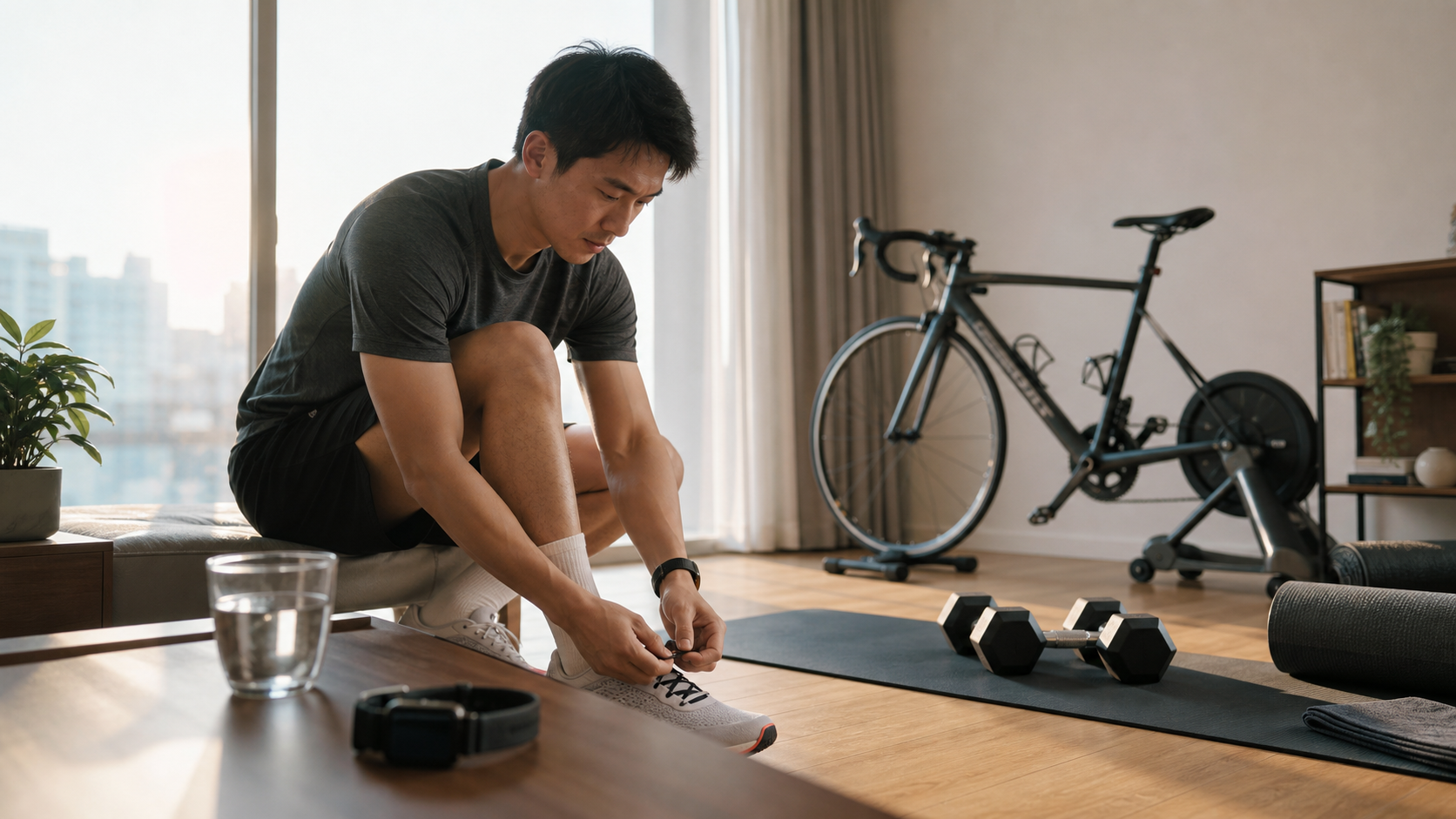
Opening: The Engineer with “Three-Minute Enthusiasm”
I’ve coached athletes for over fifteen years and met all kinds of people, but one case—an engineer from Hsinchu Science Park—stands out in my memory. When he came to see me, he opened his phone and showed me eight fitness apps, two heart rate watches, a dusty spin bike, and three expired gym memberships. He said dejectedly, “Coach, is my willpower just especially weak? I can never last more than two weeks.”
I only asked him one question: “What’s the last habit you successfully built?” He thought for a moment and said, “Brushing my teeth, I guess.” I said, “Right. Brushing your teeth never requires willpower, does it? You don’t ‘struggle’ in the morning over whether to brush. So what we need to do is make exercise as automatic as brushing your teeth.”
That’s the core of what we’re discussing today. Most people think they can’t stick with exercise because they lack willpower, but behavioral science tells us that what truly sustains a habit is never willpower—it’s environmental design and behavioral automation. Willpower is a consumable; it depletes with use. But once a habit forms, it barely costs any mental energy. In this article, I’ll combine fifteen years of practical coaching experience with exercise physiology and behavioral science concepts to give you a blueprint for habit formation that actually works in the real world.
Part 1: How Do Habits Actually Form?
“21 Days to Form a Habit” Is an Urban Legend
Let’s first debunk the most widespread myth. You’ve certainly heard that “it takes 21 days to form a habit”—a claim written into nearly every self-help book. But this is actually a misattribution—it originated from a plastic surgeon’s clinical observation of patients adapting to their new appearance, which was then repeatedly simplified and distorted as it spread.
The team that actually studied this systematically was Phillippa Lally’s group at University College London (UCL). They tracked a group of participants, each of whom chose a new health behavior (some chose simple ones like “drink a glass of water with lunch,” others chose difficult ones like “run for 15 minutes before dinner”), and recorded daily whether they did it and how “automatic” it felt.
The results were illuminating: On average, forming a habit—making a behavior automatic—takes about 66 days, but individual variation is huge, ranging from 18 to 254 days. In other words, there’s no magic number. The simpler the behavior and the easier it integrates into existing life, the faster it forms; the more complex and effortful (like running), the longer it takes.
What does this mean for us? Don’t invalidate yourself with “I’ve lasted 21 days and it still feels like a struggle.” For many people, a relatively effortful behavior like exercise may take two to three months or even longer to become truly automatic. You haven’t failed; you’re just still on the normal habit-formation curve.
The Habit Loop: Cue, Routine, Reward
Behavioral science breaks habits down into a loop. Understand it and you can start redesigning it:
- Cue: The signal that triggers the behavior. It could be a time (after work), a place (passing the gym), a preceding action (changing clothes), an emotion (stress), or another person (a friend messaging to schedule a ride).
- Routine: The actual action performed—the exercise itself.
- Reward: The feedback the brain receives after the behavior—a sense of accomplishment, relaxation, social connection, or seeing progress in your data.
When this loop repeats enough times, the brain automatically binds the “cue” to the “routine,” forming what’s called automaticity. At that stage, you see the cue and act almost without thinking, just like brushing your teeth.
I often tell my clients: Designing a habit is essentially designing your cues and ensuring a reward you genuinely care about follows the behavior. Take care of those two ends, and the “routine” in the middle becomes the least of your worries.
Why Is Exercise Particularly Hard to Automate?
Exercise has several inherent disadvantages that make it harder to build than “drinking water with lunch”:
- Delayed reward: A bubble tea delivers sweetness and satisfaction instantly; but the benefits of exercise—improved physique, better fitness, reduced chronic disease risk—often take weeks or even months to appear. The brain is short-sighted; it prefers immediate rewards.
- High effort threshold: Exercise requires changing clothes, commuting, sweating, and enduring breathlessness and soreness. Each of these “frictions” is trying to talk you out of it.
- Unstable cues: Eating and sleeping have fixed physiological cues; exercise doesn’t. You have to create your own.
Understanding these three disadvantages means the practical strategies that follow are essentially about tackling each one: shortening reward delay, lowering the effort threshold, and establishing stable cues.
Willpower Is a Consumable—This Has Scientific Support
Let me add one more concept, because it will overturn many people’s assumptions about “persistence.” Our self-control capacity is more like a muscle than a switch—it fatigues. Throughout the day, you make countless decisions at work, suppress countless urges to lose your temper, and resist afternoon sweets. By evening, your self-control is largely depleted.
This explains an incredibly common phenomenon: why so many people are “full of resolve in the morning but surrender by night.” It’s not that you have less backbone at night; it’s that your willpower genuinely gets used up over the course of the day.
This leads to two very practical takeaways:
- The more a plan relies on willpower, the more fragile it is. Since willpower is finite, once it’s gone, it’s gone. So we should make exercise as “automatic” as possible, so it doesn’t consume willpower.
- If your willpower is weakest in the evening, don’t schedule exercise in the evening. I often ask clients to move exercise to the time of day when their willpower is most abundant—usually the morning, or right after work before they collapse at home. Choose the right time slot, and you’re cooperating with a version of yourself that still has energy.
I had a client who was a nurse working rotating shifts; she couldn’t stick with it at first. We discovered she always scheduled exercise after coming home from the night shift—the most depleted moment of her day. We changed it so she exercised for 20 minutes right after waking up, before even touching her phone. Her success rate doubled immediately. Same person, same willpower—just a different time slot, and the results were worlds apart. That’s the power of design.
Part 2: Environmental Design—Make the Right Behaviors Easy, the Wrong Behaviors Difficult
If you can remember only one sentence from this article, I hope it’s this: You don’t fight your environment with willpower; you design your environment to save willpower.
Behavioral science has a core concept called “friction.” Every small obstacle that makes a behavior more troublesome is friction. The human brain unconsciously takes the path of least resistance. So the strategy is simple: Minimize the friction of what you want to do, and maximize the friction of what you don’t want to do.
Concrete Ways to Reduce Exercise Friction
| Friction Source | High Friction (Discourages You) | Low-Friction Design (Gets You Out the Door) |
|---|---|---|
| Gear preparation | Workout clothes buried in the back of the closet, socks need hunting | Lay out the full outfit by the bed or entryway the night before |
| Commute distance | Chose a gym 40 minutes from home | Choose a venue within 10 minutes of home or work |
| Decision cost | Deciding “what to train today” every morning | Pre-set a weekly schedule; just follow it without thinking |
| Environmental temptations | Sofa facing the TV, remote in hand | Yoga mat in the living room, spin bike placed along your walking path |
| Starting obstacles | Need to pump tires, find cycling shoes, check routes before riding | Bike hung up, tire pressure maintained, regular routes saved on your phone |
With my engineer client, the first thing we did wasn’t scheduling workouts—it was redesigning his entryway. I had him move the spin bike from the corner of the room to the living room, directly in his path when he walked in from work; his shoes and towel went in a basket next to the bike. Just that change alone took his weekly rides from 0 to 3. He later joked, “I didn’t become more disciplined at all—that bike just kept staring at me.”
That’s the power of environmental design. When you reduce the steps needed to “start exercising” from seven to one, the behavior happens on its own.
Increasing Friction for Bad Habits
Conversely, if you want to reduce a competing behavior (like collapsing on the sofa scrolling your phone after work and missing your exercise window), add friction to it:
- Take the batteries out of the TV remote and put them in a drawer
- Move entertainment apps to the last page of your phone and turn off notification badges
- Don’t sit down when you get home; change into workout clothes immediately
These may seem trivial, but whether a behavior happens often hinges on that 20-second “should I start?” window. Smooth that 20 seconds for your future self, and your success rate will be astonishingly high.
Environmental Design for the Taiwanese Context
Taiwan’s environment has unique opportunities and challenges; design should be adapted to local conditions:
- Humid, hot, and rainy climate: Summer afternoons often bring thunderstorms, and July–August temperatures frequently exceed 35°C. Outdoor exercise should be done either early morning or early evening. I usually recommend clients prepare a “Plan B”—switch to indoor options (sports centers near riverside parks, a home spin bike, or bodyweight training) when it rains or is too hot—so the weather is no longer an excuse for “not exercising today.”
- Facility resources: Taiwan actually has no shortage of exercise venues. Municipal sports centers in every county and city are affordable and air-conditioned; riverside bike paths (Xindian River and Dahan River in Greater Taipei, Dongfeng in Taichung, Shanshan River in Tainan) are flat, safe, and suitable for beginners; school tracks are open in the evenings. Use the one closest to you—don’t add friction by commuting half an hour for a “better venue.”
- Eating-out culture: Taiwan’s convenient dining-out options also make nutrition easy to derail. I’ll address this in the common mistakes section later.
Part 3: Practical Methods—“Scheduling” Habits into Your Life
Enough theory—let’s get to work. Here are the core tools I actually use with my clients.
Tool 1: Habit Stacking
The most effective way to create a cue is to “stack” the new habit onto an existing one. The formula is:
After I finish [existing habit], I will [do new habit].
Because the existing habit is already automatic, it naturally serves as a stable cue. Here are some real examples:
- “After I brush my teeth in the morning, I’ll change into workout clothes and do 10 minutes of bodyweight training.”
- “After I clock out and walk out of the office, I’ll head straight to the sports center (instead of going home first).”
- “After I finish washing the dinner dishes, I’ll do 20 minutes on the spin bike.”
The key is that the cue must be specific, clear, and triggerable. “Exercise when I have time” is not a cue, because “having time” never happens automatically. “After brushing my teeth” is a cue.
Tool 2: The Two-Minute Rule—Start First, Perfect Later
The biggest enemy for beginners isn’t intensity; it’s “starting.” So I often ask clients to shrink their goals to something absurdly small during the habit-formation phase: small enough that you cannot fail.
- The goal isn’t “ride 40 km”; it’s “put on your cycling jersey and wheel the bike out the door.”
- The goal isn’t “run 5 km”; it’s “put on your running shoes and walk to the end of the street.”
Sounds too easy? That’s exactly the point. During habit formation, what matters is the ‘frequency’ and ‘consistency’ of the behavior, not the volume of any single session. You need to first wire the neural circuit of “cue → start exercising” in your brain; intensity can be added later. And once people start, they usually do more than the minimum goal—the truly hard part is always that first step.
Tool 3: Progressive Schedule (Beginner Cycling Example)
Many people go too hard at the start—sore legs by day three, quitting by day five. The worst thing during habit formation is pushing your body to the point where you hate exercise. Here’s a sample eight-week schedule I give to complete beginners who want to build a cycling habit (intensity based on the “talk test”—able to speak short sentences while riding but not sing, roughly corresponding to moderate intensity):
| Week | Frequency | Duration per Session | Intensity | Weekly Focus |
|---|---|---|---|---|
| Weeks 1–2 | 3 times/week | 20 minutes | Easy (can chat comfortably) | Build the “change clothes → head out” cue link; speed doesn’t matter |
| Weeks 3–4 | 3 times/week | 30 minutes | Easy to slightly moderate | Fix the time slot; let the body get used to the rhythm |
| Weeks 5–6 | 3–4 times/week | 40 minutes | Moderate (edge of talk test) | Add one slightly longer ride; experience “a bit breathless but manageable” |
| Weeks 7–8 | 3–4 times/week | 45–60 minutes | Moderate, with a few harder efforts mixed in | Start experiencing the positive feedback of “feeling great after exercise” |
The design logic of this table: the first four weeks focus on ‘frequency’ and ‘consistency’; only in the last four weeks do we gradually add ‘duration’ and ‘intensity.’ By week eight, most clients no longer need to push themselves much, because the brain has started registering the reward of “feeling refreshed after exercise.”
By the way, the WHO physical activity guidelines recommend that adults accumulate at least 150 to 300 minutes of moderate-intensity aerobic activity per week, or 75 to 150 minutes of vigorous-intensity activity, plus muscle-strengthening activities involving all major muscle groups on two or more days per week. The table above lands near that lower bound by weeks seven and eight—but you don’t need to hit the target on day one. Any amount of exercise is far better than zero, and gradually building up is what’s most sustainable.
Tool 4: Move the Reward Forward
As mentioned earlier, exercise’s inherent disadvantage is delayed reward. So we need to artificially create immediate rewards and move them to the moment of the behavior or right after it:
- Temptation bundling: Only watch a certain show or listen to a certain podcast while exercising. Want to hear the next episode? Get on the spin bike.
- Visualize progress: Put a calendar on the wall and mark a big X every time you complete a session. The “streak you don’t want to break” is itself a powerful reward.
- Post-exercise small pleasures: Treat yourself to an iced Americano after a ride, or a nice hot shower. Let the brain associate exercise with pleasure.
Part 4: Persistence Strategies—How Not to Be Defeated by Interruptions
Interruptions are inevitable during habit formation: business trips, illness, overtime, rain, low moods. The key to long-term persistence isn’t ‘never missing a session’—it’s ‘how quickly you return after a break.’ In my years of observation, this is the biggest dividing line between those who succeed and those who quit.
The “Never Miss Twice” Principle
This is the rule I emphasize most with my clients: Missing once is fine, but never miss twice in a row.
Missing one day is an accident; missing two days starts becoming a “new pattern.” A single interruption won’t destroy a habit, but if you let one missed day spiral into “well, this week is ruined, I’ll start again next week,” that’s the real killer. A single lapse has a negligible impact on a long-term habit—what’s truly fatal is giving up on yourself after the lapse. So I ask clients to focus on “coming back tomorrow” rather than regretting yesterday.
Prepare a “Minimum Version” for Low-Energy Days
No one can be full of energy every day. Rather than forcing yourself to complete a full workout on days when you’re exhausted (and then feeling guilty when you can’t), design a “minimum viable version” in advance:
| State | Full Version | Minimum Version (Keep the Habit Alive) |
|---|---|---|
| High energy, plenty of time | Ride 60 minutes at moderate intensity | — |
| A bit tired, short on time | — | Ride 15 minutes easy, or 10 minutes of bodyweight exercises |
| Sick, extremely fatigued | — | Just put on workout clothes and stretch for 5 minutes |
The key point: Even if you only do the minimum version, you maintain the continuity of the “I exercised today” loop. Keep the loop intact, and the habit survives. When your condition returns, you just add the intensity back—you don’t rebuild from zero.
A Contrast of Two Cases: The Difference Isn’t Grit
I want to use a contrast between two clients to help you see concretely the difference between “design” and “willpower.” Details have been adjusted to protect privacy, but the situations are real.
| Aspect | Xiao Chen (Quit After Three Weeks) | A-Mei (Still Riding After a Year) |
|---|---|---|
| Initial motivation | “This time I’ll rely on sheer willpower!” | “I’m going to design a system that doesn’t require forcing myself.” |
| Goal setting | Wanted to ride 30 km every day from day one | First two weeks: only aimed to “change clothes, head out, move for 15 minutes” |
| Cue | “Ride when I have time and motivation” | “Change shoes after work and head straight to the riverside” |
| Environment | Bike buried behind clutter on the balcony | Bike hung in the entryway path, gear in a basket beside it |
| When it rains | “Can’t ride today, oh well” | Activates Plan B—switches to 15 minutes on the indoor spin bike |
| After missing a day | “This week is ruined, I’ll start next week” | “Never miss twice”—comes back the next day as usual |
| Three months later | Bike gathering dust again; thinks their willpower is weak | “Feels off if I don’t ride for three days” |
Can you see it? The two people probably had similar willpower—the difference was entirely in system design. Xiao Chen bet everything on something that depletes; A-Mei handed success over to an environment and set of rules that don’t consume willpower. This isn’t a talent issue; it’s a method issue—and methods can be learned.
A Weekly Planning Template: Schedule the “When” First, Then the “What”
Many people plan exercise by first thinking “what should I train” without locking down “when will I train.” The result is a beautiful plan that never finds time to happen. My order is always the opposite: First, block out exercise time slots on your calendar like important meetings; then fill in the content.
Here’s a sample weekly template for a busy office worker. The focus isn’t intensity but “fixed time slots, built-in flexibility, and recovery”:
| Day | Time Slot | Content | Notes |
|---|---|---|---|
| Monday | Morning | Easy ride or brisk walk, 30 minutes | Start the week easy to lower the psychological barrier |
| Tuesday | — | Rest / reduce sitting | Take stairs, get up more often |
| Wednesday | After work | Moderate-intensity ride, 40 minutes | Stacked after the “change shoes after work” cue |
| Thursday | — | Rest or 10 minutes of stretching | Minimum version is fine |
| Friday | Morning | Moderate intensity, 40 minutes | Time slot with more willpower available |
| Saturday | Morning | Longer ride, 60 minutes + social | Meet friends; strengthen the social reward |
| Sunday | — | Complete rest | Recovery is part of training |
You don’t need to copy this table exactly; the point is the method: fix time slots first, include recovery days, schedule more effortful sessions during high-willpower periods, and embed cues and social rewards. Once the “when” is locked down, the “what” becomes much easier.
The Shift in Identity
The deepest and most enduring persistence strategy is a shift in identity. Behavioral science has found that when a behavior transforms from “something I do” into “who I am,” its stability increases dramatically.
- “I’m trying to lose weight” → “I’m a person who exercises”
- “I force myself to ride” → “I’m a cyclist; riding is part of who I am”
Every time you go out to exercise, you’re casting a vote for yourself: “This is the kind of person I am.” Once the votes accumulate enough, the identity solidifies. At that stage, exercise no longer needs a reason—because not exercising feels “unlike yourself.” My engineer client said to me around month four: “Coach, if I don’t ride for three days now, I feel off.” I knew then—he’d made it.
Part 5: Common Mistakes and Corrections
Having coached so many clients, I’ve found that failure patterns are highly repetitive. If I lay out these pitfalls clearly, you can avoid them.
Mistake 1: Setting Goals Too Big at the Start
“I’m going to run 10 km every day!”—then sore legs by day three and quitting. This is the most common way to die.
Correction: During the habit-formation phase, do the opposite—make goals so small they can’t fail. Better “10 minutes every day for a month” than “one hour every day for three days.” Frequency and consistency matter far more than the volume of any single session.
Mistake 2: Tying Exercise to “Motivation”
“I’ll start when I feel motivated.” The problem is that motivation is an emotion—it comes and goes. You can’t rely on it for the long haul.
Correction: Rely on systems and cues, not motivation. Schedule exercise into fixed time slots, stack it after existing habits, and make it “do it when the time comes” rather than “do it when I feel like it.”
Mistake 3: All-or-Nothing Thinking
“I don’t have time to run the full 5 km today, so I might as well not run at all.” This binary thinking makes you miss countless opportunities for “imperfect but done.”
Correction: Embrace the minimum version. Ten minutes of exercise is still exercise—better than zero minutes. Keeping the loop unbroken matters far more than pursuing perfection every single time.
Mistake 4: Ignoring Nutrition and Recovery, Pushing Through to Injury
This is especially common in Taiwan. With a dining-out lifestyle, protein intake is often insufficient and refined carbs and sugary drinks are excessive. No matter how diligently you train, if recovery can’t keep up, your fitness and mood will plateau, and over time you may even feel more exhausted. Some people also train daily without giving the body time to recover, ending up either overtrained or injured.
Correction:
- Prioritize sleep: Adults are generally recommended about 7 to 9 hours per night. Without enough sleep, recovery and appetite regulation both go out of balance, and you’ll have less energy to exercise.
- Mind your protein: When eating out, consciously add a protein source (chicken breast, tofu, boiled eggs, unsweetened soy milk). For generally active adults, protein intake often falls in the range of about 1.2 to 1.6 grams per kilogram of body weight per day (actual needs vary by individual).
- Cut back on sugary drinks: A full-sugar hand-shaken drink can easily be several hundred kcal—this is the easiest calories to cut.
- Schedule recovery days: Plan 1 to 2 days of complete rest or light activity per week. It’s not laziness; it’s a necessary part of getting stronger.
Here’s a “nutrition concept comparison table” I often give to clients who eat out frequently, mapping common self-sabotaging behaviors to corrective directions (portion sizes and values are general principles; adjust based on your own body weight, training volume, and health status, and consult a nutritionist if needed):
| Common Situation | Why It Holds You Back | Corrective Direction |
|---|---|---|
| Breakfast is just bread + milk tea | Nearly zero protein, big blood sugar swings, easily fatigued by mid-morning | Add an egg or a glass of unsweetened soy milk to get protein in |
| Bento box: lots of rice, little vegetables and meat | Excess refined carbs, insufficient protein and fiber | Halve the rice, add some blanched vegetables, choose whole-cut meat as the main dish |
| Not eating after exercise, then binge-eating at night | Missed the recovery window; uncontrolled calorie intake in the evening | After exercise, have an easily digestible protein + carb snack |
| One full-sugar hand-shaken drink daily | Often several hundred kcal, canceling out much of your exercise burn | Switch to half-sugar or sugar-free, or swap for unsweetened tea or sparkling water |
| Only remembering to hydrate right before bed | Dehydration impairs recovery and next-day performance | Hydrate regularly before/after exercise and throughout the day; don’t wait until you’re thirsty |
Mistake 6: Only Thinking About “Adding Exercise” Without Addressing “Prolonged Sitting”
Many people assume that 30 minutes of daily exercise is all they need, ignoring that they spend the other 15 hours glued to a chair. The consensus in behavioral science and public health is increasingly clear: prolonged sitting is an independent health risk—even if you exercise regularly, long periods of inactivity can offset some of the benefits.
Correction: Beyond “regular exercise,” deliberately cultivate “reducing sitting time.” Get up and move every 30 to 60 minutes—refill your water, take a few steps; use a standing desk, take the stairs instead of the elevator, pace while on the phone. These don’t count as “exercise,” but their cumulative metabolic and health benefits are real, and they barely consume willpower—they’re inherently low-friction micro-habits.
Mistake 5: Only Watching the Scale, Ignoring Other Feedback
Many people fixate on the scale, but body weight is affected by water, muscle, and gut contents, and fluctuates wildly in the short term, easily causing discouragement.
Correction: Diversify your feedback. Besides weight, also track: whether the same hill feels less breathless, sleep quality, mood, waist circumference, and whether your heart rate (bpm) at the same intensity has dropped. These often reflect progress earlier and more truthfully than the scale.
Part 6: Actionable Advice for Readers at Different Levels
Everyone starts from a different point. I’ll divide readers into three categories and give you your first step.
If You’re a Complete Beginner
Your only task is to build frequency, not chase intensity.
- Choose a venue within 10 minutes of home or work, or just do bodyweight training at home.
- Use habit stacking to attach a cue: “After I change shoes when I get home, I’ll head out and move for 15 minutes.”
- For the first two weeks, only aim for “getting out the door”—speed, distance, and duration don’t matter.
- Buy a calendar; mark a big X every time you complete a session and enjoy the streak.
- Remember: failing to stick with it is usually not weak willpower—it’s poor environmental design. Go back to Part 2.
If You’re a Serial Restarter
You have a foundation, but you always burn out after three minutes of enthusiasm. Your key is persistence strategies.
- Honestly examine: how did you interrupt your habit last time? Identify your breaking point (usually business trips, weather, or self-abandonment after a single lapse).
- Adopt the “never miss twice” principle; focus on “quickly returning after an interruption.”
- Prepare a minimum version and a Plan B for your breaking points in advance (indoor when it rains, just 15 minutes on busy days).
- Start practicing the identity shift: from “I’m trying to lose weight” to “I’m a person who exercises.”
If You Already Exercise Regularly and Want to Level Up
Your habit is already formed; it’s time to systematically progress.
- Introduce a more structured schedule with moderate intensity variation (intervals, climbs), but change only one variable at a time.
- Take recovery and nutrition seriously—treat sleep, protein, and rest days as part of training.
- Use data to track trends (heart rate, power in watts, pace), but don’t get held hostage by single-day numbers; look at weekly and monthly trends.
- Find a community or training partner. Social connection is the most underrated long-term persistence factor—when you have someone else involved, your adherence rate rises significantly.
Frequently Asked Questions (FAQ)
Q: I really don’t have time. What should I do?
A: First, stop looking for “one big block of time.” Both research and practice support that breaking exercise into several 10-minute segments yields comparable effects and health benefits. Get off the bus one stop early and walk, take the stairs during your lunch break, ride for 15 minutes after dinner—fragmented time adds up surprisingly fast. Time isn’t usually “found”; it’s “designed.”
Q: I’ve been exercising for weeks, but it still feels like a struggle and hasn’t become automatic.
A: Completely normal. As mentioned earlier, forming a habit takes about 66 days on average, with a range of 18 to 254 days, and effortful behaviors like exercise tend to be on the longer end. You haven’t failed; you’re still on the normal curve. Keep maintaining the frequency, and automaticity will come.
Q: Do I have to join a gym or buy expensive gear?
A: Absolutely not. Bodyweight training, walking or jogging along the riverside, or a second-hand spin bike at home are all enough to start. The simpler the gear and venue—the lower the friction—the easier it is to build the habit. Once the habit is stable and you’re sure you’ll continue, then it’s not too late to invest.
Q: Is it too late to start exercising in middle age? Will it hurt my body?
A: Starting at any age has benefits. However, if you have cardiovascular disease, diabetes, hypertension, joint issues, or are older and have been inactive for a long time, be sure to consult a physician for an assessment before starting, and begin with low-intensity, progressive methods. Taiwan’s National Health Insurance makes medical access convenient—use that resource to have a professional evaluate your individual situation. It’s much safer than guessing on your own.
Conclusion: What You Lack Isn’t Willpower—It’s a Design
Let’s return to the engineer from the beginning. He went from “eight apps, zero rides” to someone who “feels off if he doesn’t ride for three days.” Along the way, we gave no motivational speeches, never shouted “you need to try harder.” All we did was: reduce the friction of getting out the door, stack exercise after existing habits, create immediate small rewards, and agree on ‘never miss twice.’
This is the gentlest and most practical gift behavioral science offers us: You don’t need to become a person with more willpower; you just need to become a person who understands design better. Willpower runs dry, but good systems don’t. Design your environment well, connect your cues, move your rewards forward—then leave the rest to time and repetition.
Give yourself 66 days—or even longer, that’s fine too. Don’t force yourself to grit through it; instead, each day, smooth the path a little more for your future self. Until one day you realize that not exercising feels wrong. That’s when you’ll understand: habits are never built by enduring—they’re built by nurturing.
Now, go put your running shoes somewhere you’ll pass on your way out tomorrow. That’s your first step.
This article is educational content and does not replace individual diagnosis or treatment advice from a physician, physical therapist, or nutritionist. If you have cardiovascular disease, diabetes, hypertension, or other chronic conditions, please consult a qualified medical professional for an individualized assessment before starting a new exercise program.
References
- University of Surrey — Does it really take 66 days to form a habit? We asked the expert, Dr Pippa Lally:https://www.surrey.ac.uk/news/does-it-really-take-66-days-form-habit-we-asked-expert-dr-pippa-lally
- UCL News — How long does it take to form a habit?:https://www.ucl.ac.uk/news/2009/aug/how-long-does-it-take-form-habit
- WHO — Guidelines on physical activity and sedentary behaviour:https://www.who.int/europe/publications/i/item/9789240014886
Related Reading
- The Science of Habit Formation: How to Automate Training Without Relying on Willpower
- Maintaining Long-Term Motivation: Why We Always Have Three-Minute Enthusiasm, and How to Design an Exercise System That Doesn’t Depend on Willpower
- Motivation Runs Dry, Habits Don’t: Using Behavioral Design to Survive Training Slumps
- How to Build a Swimming Habit: The Transition from Occasional Dips to Regular Training
西進武嶺 免費訓練分析服務 Intervals | 練不夠還是練過頭?你哪一種類型選手?AI模型告訴你! | 備戰神器 | 公路車 訓練 | CT Yeh
4 年前
FTL 與 SYB 車隊專訪 西進武嶺 實用攻略分享! 2小時 如何練?!你不知道的眉角!新手準備武嶺必看 EP1 | 實力派女車友 | 精華版 | 公路車 | CTYeh
4 年前
一個測試有沒有認真練車的方法😂 #公路車
10 個月前
戰略) Zwift Race 如何咬在第一集團 如何評估自己要開多少推力 (請開1.5倍速看)
7 年前
靠單車減肥35公斤 心得分享與整理
7 年前
CT趣訪 西進武嶺 2小時組 EP2 全村的希望 蔣緯緯! 訓練菜單&技巧公開 |公路車 |CT Yeh
4 年前
#公路車 #Fitting 靠人工智慧APP 幫你調整單車
6 年前
3D 列印車褲墊 / 舒適改善? / 無痕 x 分區壓縮 / ATK & Decider系列 / JE22黑科技 / #公路車 #CTYEH
11 個月前