Exercise and Quality of Life: What the Evidence Says About How Regular Exercise Improves Daily Function and Well-Being
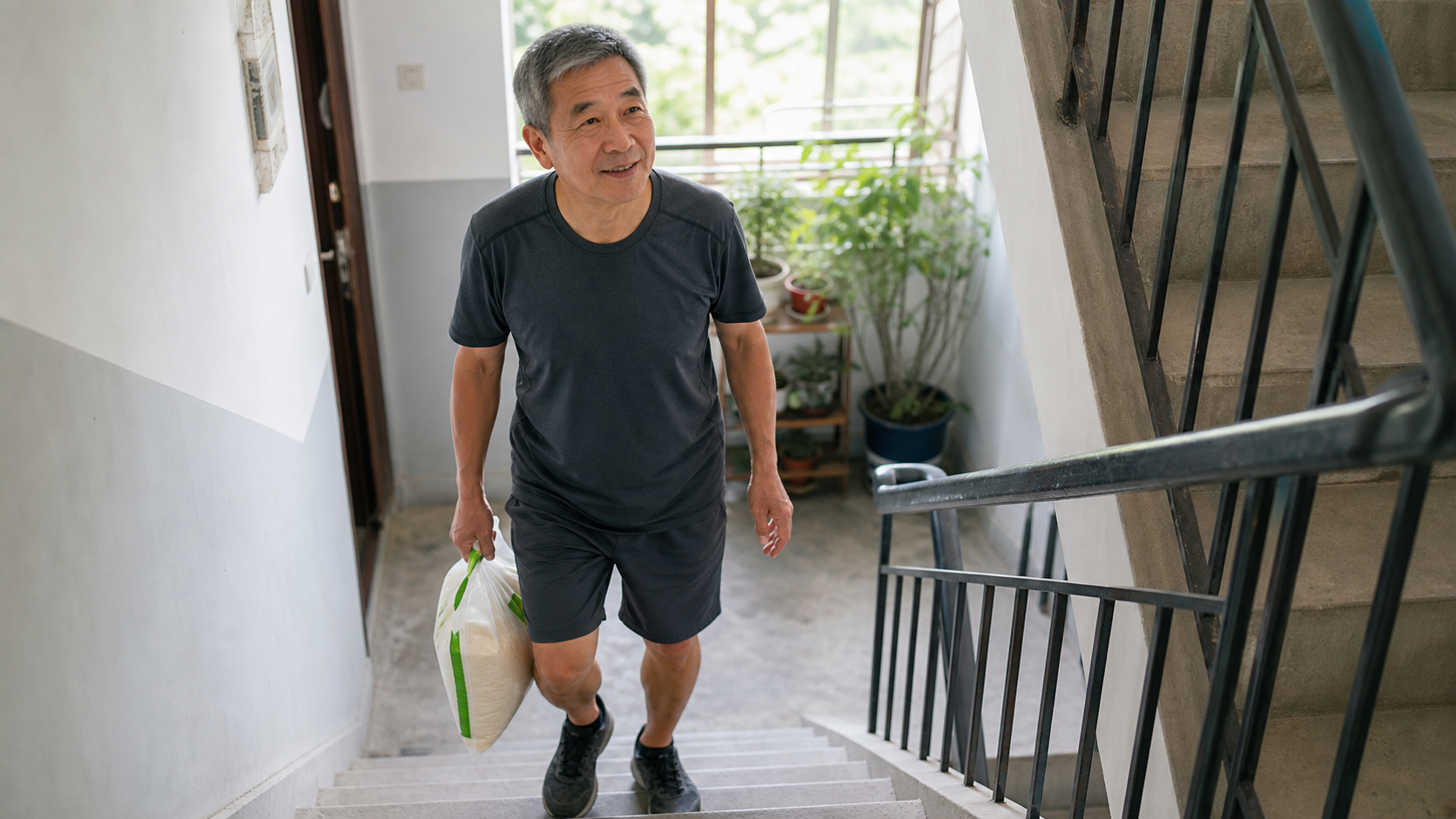
Starting with a 62-Year-Old Student’s Staircase
I’ve been in the fitness industry for about fifteen years now. Over the years, what impresses me most isn’t who improved their VO₂ max by how much, or who pushed their Functional Threshold Power (FTP) up by a few more watts—it’s the everyday, life-related moments.
A few years ago, a 62-year-old student, Mr. Chen, came to see me. He wasn’t chasing performance goals. His opening line was: “Coach, lately when I carry a bag of rice up to the fourth floor, I have to stop twice to catch my breath. I don’t want to live like this.” He had no chronic disease diagnosis; his blood pressure and blood sugar were still borderline. But he clearly felt he was “declining”—not on the sports field, but in daily life. Climbing stairs, squatting down to tie shoelaces, carrying his grandchild, lower back soreness after long scooter rides—these everyday actions were one by one becoming difficult.
I told him: our goal isn’t to turn you into an athlete, but to let your 62-year-old body easily handle what a 62-year-old should be able to do, with energy to spare. Six months later, he carried the same bag of rice and walked all four floors without stopping. He turned to me with a smile: “So it turns out I wasn’t getting old—I just hadn’t moved in too long.”
What this article wants to discuss is something many people underestimate: the true value of exercise lies not just in extending lifespan, but in improving the “quality of living”—what we call Quality of Life (QoL). I’ll do my best to use evidence-backed concepts, combined with my actual experience coaching students, to give you a method that’s sustainable and delivers visible results.
1. First, Let’s Clarify What “Quality of Life” Means
Many people talk about exercise only in terms of “losing X kilograms” or “running at X pace.” But quality of life is a more complete concept, encompassing at least several dimensions:
- Physical function: Can you easily complete daily actions—walking, climbing stairs, carrying heavy objects, standing for long periods, squatting down and standing up.
- Energy and fatigue: Do you have energy during the day, or do you feel so tired by afternoon that you just want to lie down?
- Emotion and psychology: Levels of anxiety and low mood, stress resilience, sleep quality.
- Social participation: Do you have the physical capacity to travel, accompany family, and join activities, rather than being confined at home by your body?
- Self-efficacy: Your sense of control over and confidence in your own body.
Note that among these five dimensions, only the first is directly related to “fitness numbers.” The other four are almost entirely subjective feelings. This is why many people have normal health check-up numbers yet feel like they’re “not living well.” What’s remarkable about exercise is that it can simultaneously leverage all five dimensions.
Why Daily Function Quietly Declines
The human body follows a very honest principle: use it or lose it. Without deliberate maintenance, muscle mass begins to decline year by year from around age 30; by middle and older age, the rate of loss accelerates. In medicine, this is the precursor to sarcopenia. The same applies to cardiorespiratory fitness, balance, and joint mobility.
The decline is gradual, which is why many people don’t notice it. When someone like Mr. Chen reaches the point of “needing two stops to carry rice,” it’s actually the moment when years of accumulated physical decline finally cross a threshold he can perceive. The good news is—this decline curve can be dramatically reversed by starting exercise at any age. This isn’t just motivational talk; it’s a physiological phenomenon supported by extensive research.
2. What the Evidence Says: The Relationship Between Exercise, Health, and Well-Being
There are several things I’ve read in the literature and repeatedly verified in my students that deserve a serious, detailed look. Here I’ll only include content with traceable sources, and I’ll give ranges rather than pretending to be precise.
1. Global Exercise Guidelines: A Very Low Bar
The World Health Organization (WHO) recommends that adults accumulate 150 to 300 minutes of moderate-intensity aerobic activity per week, or 75 to 150 minutes of vigorous-intensity aerobic activity, or an equivalent combination of both; additionally, at least 2 days per week of muscle-strengthening activities involving all major muscle groups.
Note that this bar is actually not high. Spreading 150 minutes across a week works out to about 20-plus minutes per day of activity where you’re “slightly breathless but can still talk”—brisk walking, easy cycling, and household chores all count. Many people assume they need to train until they’re exhausted for it to work, and that misconception scares them off.
2. Dose and Mortality Risk: The First Step Is the Best Value
In meta-analyses on physical activity and all-cause mortality, a key concept is the dose-response curve: the steepest slope of health benefit occurs when moving from “sedentary” to “somewhat active.” Beyond that, benefits continue to accumulate with more activity, but the marginal benefit gradually plateaus.
Let me put some of the numbers I found into a table so you can feel the difference:
| Weekly moderate-to-vigorous activity | Relative all-cause mortality risk (vs. lowest activity group) |
|---|---|
| ~150 minutes | Hazard ratio ≈ 0.86 (~14% reduction) |
| ~300 minutes | Hazard ratio ≈ 0.74 (~26% reduction) |
| Highest activity group (total activity) | Hazard ratio ≈ 0.65 (~35% reduction) |
(Figures are hazard ratio ranges from meta-analyses; individual variation is large, so use these only to understand the trend)
The key message from this table is: if you’re currently completely inactive, the step with the highest “return on investment” is taking that first step. Going from 0 to 150 minutes pays off far more than going from 300 to 450 minutes. This is great news for busy Taiwanese office workers—you don’t need to start training like a triathlete. Simply moving regularly already captures most of the benefit.
3. Emotional and Psychological Effects: Not Mysticism, but Observable Results
Many people have felt exercise’s benefits for mood firsthand, and the literature shows consistent evidence in the same direction. In randomized controlled trials and related studies on depressive symptoms, regular aerobic exercise has been observed to improve mood and alleviate symptoms of depression and anxiety. Some studies had participants engage in regular group walking or aerobic exercise, and after several weeks, they showed significant improvements on depression and anxiety scales.
I want to honestly add a caveat: these studies vary in participants and interventions, and effect sizes differ. Exercise is not a panacea, and it cannot replace professional treatment. But treating exercise as part of the “infrastructure” of emotional health is both reasonable and worthwhile. If you’re currently receiving psychiatric or psychological treatment, exercise is an excellent “bonus”—but be sure to discuss it with your healthcare team, and never stop medication or replace treatment with exercise on your own.
4. Why Exercise Makes People “Live Better”: Several Physiological Mechanisms
I don’t like to make effects sound mystical. Let me explain a few relatively well-supported mechanisms in plain language, so you know what sweating actually changes:
- Cardiovascular and metabolic: Regular aerobic exercise increases the volume of blood pumped per heartbeat, improves vascular elasticity and insulin sensitivity. As a result, climbing the same four flights of stairs, your heart doesn’t need to beat as fast and you’re less breathless. This is the underlying reason Mr. Chen “stopped panting.”
- Muscle and bone: Strength training stimulates muscle fibers and bone mass, maintaining strength and bone density. This directly translates to carrying heavy objects, standing steadily, and being less prone to falls and injuries.
- Nervous system and mood: Exercise triggers the release of a cascade of neurotransmitters related to mood and reward, combined with the sense of “I did it” mastery that regular exercise brings. Long-term, this creates a positive emotional cycle.
- Sleep: Appropriate physical activity during the day typically leads to falling asleep faster and sleeping more deeply at night; better sleep then stabilizes your energy, mood, and appetite the next day—a self-reinforcing virtuous cycle.
5. Don’t Overlook “Prolonged Sitting” as an Independent Risk
In recent years, exercise science has increasingly emphasized: “being active” and “not sitting too long” are two different things. You might seriously exercise for an hour in the morning, but then sit at a desk, in a car, and on a sofa for over a dozen hours. Prolonged inactivity itself is an independent health risk.
My advice to office-worker students is simple: every 30 to 60 minutes of sitting, stand up and move for 2 to 3 minutes—get a glass of water, walk to the restroom, do a few bodyweight squats in place. Think of exercise as the “big rocks” and reducing sitting time as the “sand that fills the gaps.” Do both together, and the results are complete.
3. Practical Methods: A Framework You Can Actually Stick With
Now that the concepts are covered, here is what I actually use with my clients. I break down the exercise prescription into four pillars, all of which are essential:
- Aerobic (Cardio): Improves energy, endurance, and cardiovascular health.
- Strength: Combats muscle loss; crucial for quality of life in middle and older age.
- Balance and Mobility: Prevents falls and maintains joint flexibility.
- Recovery (Sleep, Diet, Stress): Often overlooked, but determines whether the first three can be sustained.
Three Weekly Schedules for Different Starting Points
The three schedules below correspond to different levels. Please “honestly” choose where you are now, not where you imagine yourself to be. It’s better to start from an underestimation than to crash from the beginning.
Schedule A: Sedentary / Complete Beginner (Focus on Getting Moving)
| Day | Content | Time / Intensity |
|---|---|---|
| Mon | Brisk walk or easy cycling | 20 min, able to talk, slightly breathless |
| Tue | Bodyweight strength (squats, sit-to-stand, wall push-ups) | 15 min |
| Wed | Rest or walk | As desired |
| Thu | Brisk walk or easy cycling | 20 min |
| Fri | Bodyweight strength + stretching | 15 min |
| Sat | Outdoor activity (hillside hike, riverside cycling) | 30–40 min, easy |
| Sun | Complete rest | — |
Schedule B: Has a Foundation (Wants to Progress Further)
| Day | Content | Time / Intensity |
|---|---|---|
| Mon | Aerobic (cycling / running / swimming) | 40 min, moderate intensity |
| Tue | Strength (lower body focus, add weight) | 40 min |
| Wed | Easy aerobic or rest | 30 min |
| Thu | Intervals (short sprints + recovery alternated) | 30 min incl. warm-up |
| Fri | Strength (upper body + core) | 40 min |
| Sat | Long aerobic (long ride or hike) | 60–90 min |
| Sun | Rest + stretching / mobility | 20 min |
Schedule C: Older Adults (55+, Focus on Function and Safety)
| Day | Content | Focus |
|---|---|---|
| Mon | Brisk walk | 25–30 min, maintain cardio |
| Tue | Strength (sit-to-stand, wall squats, resistance bands) | Preserve muscle mass |
| Wed | Balance training (single-leg stand, heel-to-toe walk) | Prevent falls |
| Thu | Brisk walk or easy stationary cycling | 25–30 min |
| Fri | Strength + mobility | Joint flexibility |
| Sat | Outdoor walk or gentle hill hike | Mood + social |
| Sun | Rest | Full recovery |
How to Gauge Intensity: You Don’t Need a Heart Rate Monitor
Many clients get nervous when they hear “intensity,” but there’s a very intuitive way to judge it:
| Intensity | Talk Test | Perceived Exertion (1–10) | Approximate Heart Rate |
|---|---|---|---|
| Easy | Can sing | 3–4 | Lower |
| Moderate | Can talk, cannot sing | 5–6 | Moderate (slightly breathless) |
| High | Can only speak short phrases | 7–8 | Higher (noticeably breathless) |
For the vast majority of people looking to improve their quality of life, spending most of your time in the “moderate” zone is the way to go. High intensity is a garnish, not the main course. If you wear a sports watch, you can roughly equate moderate intensity to “60–70% of your maximum heart rate.” You can estimate your max heart rate using “220 minus your age” as a very rough starting point, but individual variation is large. Being breathless, able to talk but not sing, is often more reliable than staring at the bpm number.
4. Recovery and Nutrition: The Foundation That Supports Long-Term Exercise
Exercise isn’t just about that one hour of “moving.” The remaining 23 hours of recovery are equally critical. I’ve seen too many people with beautifully planned schedules who crash because they don’t sleep enough or eat properly.
Protein: The Key to Maintaining Muscle in Middle and Older Age
For adults looking to maintain or increase muscle mass, common general recommendations for protein intake fall roughly in the range of 1.2 to 1.6 grams per kilogram of body weight (those with high activity levels or older adults often need the higher end), and it’s best distributed across three meals. For example, a 70 kg client needs approximately 84 to 112 grams of protein per day. These numbers provide a range; actual needs vary from person to person. Those with kidney disease should especially consult a doctor or dietitian first and not self-adjust.
Eating out is convenient in Taiwan, so hitting the target isn’t actually difficult. The “Local Eating-Out Protein Estimation Table” below is a reference I often give to clients:
| Common Taiwanese Foods | Approximate Protein (per serving) |
|---|---|
| One egg | About 6–7 g |
| A cup of unsweetened soy milk (450 ml) | About 12–15 g |
| A serving of chicken breast (one piece from a buffet) | About 20–25 g |
| A box of soft tofu | About 8–10 g |
| A slice of salmon | About 20 g |
| The chicken leg from a braised chicken leg bento | About 20–25 g |
The meal-planning logic is simple: add an egg or a glass of soy milk at breakfast, and pick one clear protein main dish for lunch and dinner. Reaching your daily target isn’t hard. Many clients initially think they’re “eating enough,” but after actually tracking for a week, they discover a serious shortfall—especially at breakfast, which often consists only of bread or a rice ball, with almost no protein. Filling in the breakfast protein gap is often the easiest and highest-value step. Besides protein, don’t neglect fruits, vegetables, whole grains, and other whole foods. A balanced diet is the long-term foundation; don’t neglect other nutrients for the sake of one.
Sleep and Hydration
- Sleep: Most adults need 7 to 9 hours per night. When you don’t get enough, exercise performance, appetite control, and emotional stability all suffer. I often tell clients: “If you can only change one thing, fix your sleep first.”
- Hydration: Taiwan’s summers are hot and humid. Cycling along the riverside or running in the mountains causes heavy sweating. Dehydration can make you think “I’m just having a bad day,” when you’re really just short on fluids. Sip water before, during, and after exercise. For prolonged, heavy sweating, consider drinks with electrolytes.
5. Local Taiwan Context: Fitting Exercise into Real Life
No matter how good the schedule, it’s meaningless if it doesn’t fit into your life. Given Taiwan’s environment, I have a few very practical suggestions.
Dealing with Hot, Humid Weather
Taiwan’s summers are hot and humid, and exercising outdoors at noon carries high risk. I usually suggest:
- Schedule outdoor exercise for early morning or after evening, avoiding the high-temperature window from 10 a.m. to 4 p.m.
- On muggy days, move indoors: gyms, stationary bikes, and swimming pools are all good options. Swimming is gentle on the joints and especially suitable for those who are heavier or have knee discomfort.
- If you experience dizziness, nausea, lack of sweating, or confusion—signs of heatstroke—stop immediately, cool down, and seek medical help. Don’t push through.
Making the Most of Local Facilities
Taiwan actually has decent exercise resources: riverside bike paths in every city and county, urban green belts, suburban mountain trails (like the Four Beasts Mountains and Elephant Mountain in Taipei, and the many mountain trails across the country), and public sports centers are all low-barrier options. Finding a place that’s “on your way and easy to reach” is more sustainable than finding one that’s “the most scenic but requires an hour’s drive”—convenience determines staying power.
Medical Care and Individualization: Making Good Use of the NHI System
Taiwan’s National Health Insurance makes seeing a doctor convenient, and that’s a precious resource. If any of the following apply to you, I strongly recommend consulting a physician before starting a new exercise program:
- You have a history of chronic conditions such as heart disease, high blood pressure, or diabetes.
- You’ve experienced chest tightness, chest pain, unusual breathlessness, dizziness, or fainting during exercise.
- You’re older, haven’t exercised in a long time, and plan to undertake higher-intensity training.
Chronic illness is not a contraindication to exercise; in many cases, regular exercise is an important part of managing the condition—but the intensity, method, and monitoring must be individualized, and that should be left to your medical team, not to general rules found online. This article provides general principles, not a prescription tailored to you personally.
6. Common Mistakes and Corrections
Over the years, I’ve found that eight out of ten cases of “getting stuck” fall into the following categories. Check them out—how many apply to you?
Mistake 1: Starting Too Hard, Too Fast
What it looks like: The “three-minute passion” type. Week one, training two hours every day. Week two, sore legs and burnout. Week three, gone.
The fix: Make “frequency” your first goal instead of “intensity.” Your mission for the first month isn’t to get exhausted from training, but to show up consistently. Better to do a little less each time, but let your body learn that “exercise is part of life.” Once the habit is formed, gradually increase the intensity.
Mistake 2: Only Doing Cardio, Never Strength Training
What it looks like: Only running, only cycling, and zero strength training sessions.
The fix: Especially past middle age, strength training is a lifeline for your quality of life. It directly determines whether you can lift heavy things on your own, squat down and stand up, and prevent falls. At least twice a week, even if it’s just 15 minutes of bodyweight or resistance band work, the long-term payoff is enormous.
Mistake 3: Confusing Soreness with Injury, and Injury with Soreness
What it looks like: Normal delayed onset muscle soreness (DOMS) after exercise scares you into not moving again; or you push through sharp, persistent joint pain.
The fix: Learn to tell the difference. Muscle soreness, tightness, or dull aches usually ease within a day or two and allow normal activity; sharp joint pain, swelling, restricted movement, or pain that worsens with activity is your body’s alarm—rest, observe, and see a doctor if necessary. When in doubt, err on the side of caution.
Mistake 4: Ignoring Recovery, Treating Fatigue as “Not Trying Hard Enough”
What it looks like: The more you train, the more tired you get, poor sleep, irritability, performance declining instead of improving—yet you think you’re just not working hard enough, so you add more volume.
The fix: This is often a sign of overtraining or insufficient recovery. What you need isn’t to add more, but to cut back, catch up on sleep, and eat well. Exercise is the stress; recovery is where you get stronger.
Mistake 5: Chasing Perfection, Giving Up Completely After One Break
What it looks like: A business trip, a cold, or overtime causes you to miss a few days, and you think “the plan is ruined,” so you drop the whole thing.
The fix: Accept that life will naturally have interruptions. Missing three days isn’t failure; it’s just missing three days. Your ability to get back on track matters more than perfect execution. I often tell my clients: the goal isn’t a hundred consecutive days; it’s a lifetime.
7. Actionable Advice for Readers at Different Levels
Finally, let’s condense the whole article into a step you can start today.
If You Barely Exercise
Your only task this week: move three times, 20 minutes each, at moderate intensity. A brisk walk or an easy bike ride works. Don’t think about training plans, don’t buy gear, don’t research nutrition. Just let your body get reacquainted with “regular activity.” You’ll quickly notice you’re less out of breath on the stairs and sleeping more soundly—these small signals will, in turn, fuel your motivation.
If You Have Some Base Fitness
This month’s focus: fill in the gaps in “strength” and “recovery.” Many people get enough cardio but are missing these two pieces. Add two strength sessions per week and take sleep seriously. Also start paying attention to whether you’re getting enough protein. You’ll feel a noticeable boost in your everyday “functional strength.”
If You’re Older or Have a Chronic Condition
Consult your doctor first for personalized advice before starting. Medical care is easily accessible in Taiwan, so make good use of it. In terms of direction, focus on strength, balance, and regular low-to-moderate intensity cardio. Safety first, progress gradually. Your goal isn’t to compare numbers with younger people, but to maintain a body that can take care of itself, go on trips, and be there for your family.
8. Another Case Study: 38 Years Old, Overworked, Anxious and Sleeping Poorly
Besides the older Mr. Chen, I’d like to share another case that many urban dwellers will find relatable—38-year-old Yi-Jun (a representative scenario). She’s a project manager in the tech industry, constantly working overtime. When she came to me, her main complaint wasn’t “I want to lose weight” or “I want to get bigger,” but: “I get irritated easily lately, I toss and turn at night unable to sleep, and I’m exhausted during the day, but my health checkup report shows nothing major wrong.”
This is a classic case of “numbers are normal, but quality of life is declining.” Her problem wasn’t a specific disease, but an overall imbalance: prolonged sitting, high stress, almost no regular exercise, and fragmented sleep.
I didn’t give her a rigid training plan; instead, I first cut down her expectations. Our starting point was just two things:
- Three times a week, 25 minutes of brisk walking in the evening or cycling along the riverside, at an intensity where you “can talk, but are slightly breathless.”
- Get up and walk for two minutes for every hour of sitting, and move your pre-bed phone scrolling earlier.
For the first two weeks, she didn’t feel much change in her fitness, but she reported: “I’m sleeping better.” That’s crucial—sleep is often the first thing to improve and the most encouraging signal to keep going. After about a month, she proactively said she wanted to add some strength training because she “was starting to feel like she had energy.” After three months, her sleep, emotional stability, and daytime energy had all clearly improved. She only lost two or three kilos, but her quality of life visibly came back.
I share this case not to say that exercise can “cure” anxiety or insomnia—it can’t, and if symptoms are severe, you must see a doctor. What I want to emphasize is: exercise as the foundational infrastructure for quality of life often shows its effects first in how you “feel,” not on the scale. If you always measure the effectiveness of exercise by your weight, you’ll likely underestimate it and give up on it easily.
9. How to Know You’re “Making Progress”: Tracking Quality of Life
Many people measure exercise results only by the scale or running speed, which misses the point—especially when we’re talking about “quality of life,” which mostly lives in places the scale can’t measure. I recommend clients spend five minutes each month self-checking these “functional life indicators”—far more meaningful than staring at the scale.
| Indicator | How to Observe | What Progress Looks Like |
|---|---|---|
| Climbing stairs | Breathlessness and leg fatigue after 3-4 flights | Going up in one go, faster recovery |
| Lifting heavy things | Carrying groceries, moving water jugs, holding kids | Easier, less lower back strain |
| Sleep | How fast you fall asleep, number of nighttime awakenings | Falling asleep easier, sleeping more deeply |
| Daytime energy | Whether you feel like lying down in the afternoon | Steady energy, fewer afternoon crashes |
| Mood | Frequency of irritability or low mood | Better stress resilience, more stable mood |
| Resting heart rate | Pulse measured right after waking (beats/min) | Slightly lower as cardiovascular fitness improves |
The purpose of this table is to break down the abstract “feeling better” into visible signals. When you notice you’re not out of breath on the stairs, you don’t need to nap in the afternoon, and you sleep better—these are the real evidence that exercise is improving your life. Body composition changes are a side benefit, not the only report card.
I also often remind people: progress isn’t linear. Some weeks you’ll feel stagnant or even regress, which is normal—it might just be poor sleep, work stress, or your body adapting. Look at the long-term trend; don’t get held hostage by weekly fluctuations. Getting through those seemingly uneventful plateaus is often the prelude to the next leap forward.
A Very Practical Mindset: Lower the Bar to “Absurdly Low”
The most common sticking point for clients is “lack of motivation.” My solution is counterintuitive—lower the minimum threshold for each session to something laughably easy. Not “run five kilometers today,” but “just put on your running shoes and step out the door for five minutes.” The magic is that once people get moving, eight or nine times out of ten they’ll do more than the minimum; and even if you only do the five minutes, you’ve maintained the identity of “I’m someone who exercises.”
Identity is far more reliable than willpower. When exercise becomes “something people like me just do,” you no longer need to battle yourself every day. This is the psychological lever I’ve seen work best for long-term adherence.
“Stack” Exercise onto Existing Habits
Another useful technique is “habit stacking”: attach your new exercise to an old habit you already do. For example, “after I get to my community gate after work, I walk a loop along the riverside before going inside,” “after brushing my teeth, I do ten squats,” or “during the two minutes the coffee machine is brewing, I do wall push-ups.” The old habit becomes the cue for the new one—you don’t need to remember extra; the action happens naturally. This is far more reliable than relying on an alarm reminder.
I also often ask clients to do one thing: physically lower the barrier to exercise. Lay out your running shoes and clothes by the door the night before; put the indoor bike somewhere you can see it, not stuffed in storage. Humans are lazy creatures—if you add two steps to something, the chance of it being abandoned skyrockets; conversely, if you remove two steps, the chance of it being done clearly increases. Design your environment so that “getting moving” becomes the path of least resistance.
Find a Partner or Community
The last underestimated but powerful factor is social connection. When you train alone, it’s easy to quit during a slump; with scheduled partners, a club, or friends who ride or hike together, you’ll show up because you don’t want to “stand people up.” Taiwan actually has plenty of cycling clubs, running groups, and community exercise classes, and the barrier to entry is low. The social aspect of exercise itself is part of your quality of life—you’re not just working out; you’re also maintaining relationships and expanding your social circle. This is also why group exercise often provides an extra layer of emotional benefit compared to working out alone.
10. FAQ
These are the questions students ask me most often and the most practical ones—all compiled for you here.
| Common Question | My Short Answer |
|---|---|
| What if I don’t have time to exercise? | Break it up. Three 10-minute sessions and one 30-minute session have similar benefits. Brisk walking during your commute and taking the stairs all count. |
| Do I have to go to a gym? | No. Bodyweight squats, sit-to-stands, resistance bands, brisk walking, and riverside cycling can build a great foundation at home or outdoors. |
| Is it okay to exercise on an empty stomach? | For light, low-intensity, short-duration exercise, most people are fine on an empty stomach; for longer or higher-intensity sessions, it’s better to eat some easily digestible carbs first. If you have conditions like diabetes, be sure to consult your doctor first. |
| Do I have to eat protein after a workout? | “Getting enough total daily protein, spread across three meals” matters more than the “golden 30-minute window” after exercise, so don’t stress too much about that timing. |
| Am I too old to start strength training? | No, you can—and you should. Starting strength training at any age yields improvements in strength and function, as long as you progress gradually and pay attention to form and safety. |
| Is exercising every day too much? | It depends on intensity. Low-intensity activity every day is fine; moderate-to-high intensity requires rest days for your body to recover. |
| Can I still exercise if my knees are bad? | Usually yes, but you need to choose the right activities (swimming and cycling are more joint-friendly) and get a medical evaluation. Not moving at all actually weakens the surrounding muscles further. |
Conclusion: The Goal of Exercise Isn’t Getting Stronger—It’s Living Well
Back to Brother Chen and that bag of rice. The change over six months wasn’t some earth-shattering training program; it was simply consistency, progression, covering both cardio and strength, and recovering properly—none of these fundamentals are glamorous. But what it bought him was regaining a sense of control over his own body, and that ease of climbing four flights of stairs in one go.
In fifteen years in this field, I’ve become increasingly certain of one thing: the most precious output of exercise isn’t fitness data—it’s quality of life. It’s waking up with energy, not getting tired easily during the day, feeling more emotionally stable, having your body listen to you, and being able to live the life you want at sixty or seventy. That’s what we’re really earning through our sweat.
So, stop waiting for “someday when I have time or when the mood is right” to start. Your condition won’t improve on its own; it only gets better gradually after you start moving. Just move for 20 minutes today—it doesn’t need to be perfect or intense; just start. Your body is honest: give it regular stimulus and adequate recovery, and it will repay you bit by bit with better energy, steadier emotions, and more responsive limbs. This reward will stay with you well into old age. That’s what we’re truly pursuing: not just living longer, but living better.
This article is for educational purposes and does not replace individual diagnosis or treatment advice from a physician, physical therapist, or nutritionist. If you have a chronic condition or experience discomfort during exercise, please seek medical attention and obtain a personalized assessment.
References
- WHO Guidelines on Physical Activity and Sedentary Behaviour: https://www.ncbi.nlm.nih.gov/books/NBK566046/
- World Health Organization 2020 guidelines on physical activity and sedentary behaviour (PMC full text): https://pmc.ncbi.nlm.nih.gov/articles/PMC7719906/
- Dose–response relationship between physical activity and mortality: https://pmc.ncbi.nlm.nih.gov/articles/PMC7448980/
- Dose-Response Relationship of Physical Activity with All-Cause Mortality among Older Adults: An Umbrella Review: https://www.jamda.com/article/S1525-8610(23)00835-6/fulltext
- Effectiveness of Group Physical Exercise in Treating Major Depressive Disorder: https://pmc.ncbi.nlm.nih.gov/articles/PMC10968232/
Related Reading
- The Science of Exercise and Longevity: Evidence for Extending Lifespan, Optimal Doses, and a Lifestyle You Can Maintain for Life
- Exercise for Older Adults: A Complete Prescription for Extending Healthy Lifespan—A Coach’s 15 Years of Practical Notes
- Exercise and Stress Management: A Coach Helps You Use Physiological Mechanisms and Daily Exercise Prescriptions to Ride Stress Back into a Controllable Range
- The Truth About Exercise and Weight Management: Can Exercise Actually Help You Lose Weight? A Coach Clarifies the Division of Labor Between Exercise and Diet
西進武嶺 免費訓練分析服務 Intervals | 練不夠還是練過頭?你哪一種類型選手?AI模型告訴你! | 備戰神器 | 公路車 訓練 | CT Yeh
4 年前
16/02/16 - 夜訪中社路 緩慢進步中
10 年前
一個測試有沒有認真練車的方法😂 #公路車
10 個月前
靠單車減肥35公斤 心得分享與整理
7 年前
2019 柯P 超越北高 第一集團實錄 (11小時實錄請參考另一部影片) 一日雙城 一日北高 NeverStop Taiwan Long Distance Cycling Challenge
7 年前
福隆鐵人團練隨拍
8 年前
實景訓練台) 彰化經典百K 高強度喵團 90分鐘 跟著一起練功 2019 Indoor workout Changhua Classic 100 Taiwan
7 年前
[教學] Premiere 影片 手震 修正 教學 防抖 單眼 影像 GoPro 穩定 Video Stabilization
8 年前