Can You Still Exercise with a Bad Stomach? A Safety Management Guide for Exercise and Gastrointestinal Diseases
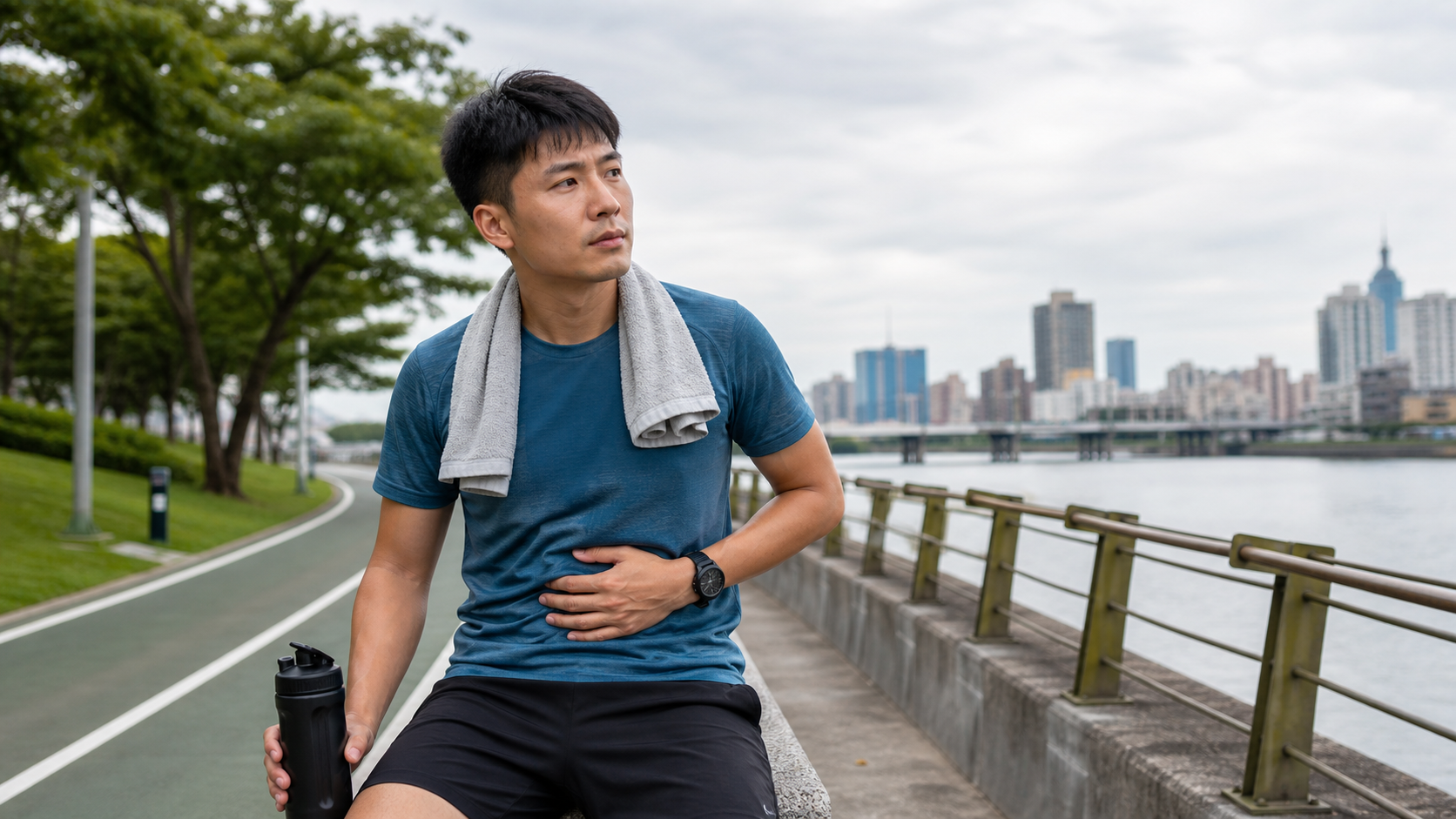
Starting with a Trainee Who Was Afraid to Exercise
In my decade-plus of working with athletes, I’ve encountered all kinds of physical conditions, but one type of trainee’s hesitation has always stood out to me—those with “bad guts.”
A few years ago, there was a male trainee in his early forties; let’s call him A-Hong. He had been diagnosed with inflammatory bowel disease (IBD, a form of Crohn’s disease). In the past, every time he exercised, he worried it might trigger abdominal pain or send him running to the bathroom. Once, he even had to urgently find a convenience store mid-ride. From then on, he had a love-hate relationship with exercise. His opening line when he first came to me was: “Coach, with a gut like mine, am I just destined to never exercise in this life?”
I told him very seriously: No, and in fact, it’s quite the opposite. For the vast majority of people with digestive system diseases, moderate, regular exercise is not only safe, but it may also be a key part of helping you manage your condition and improve your quality of life. The point has never been “should I exercise or not,” but rather “how to exercise smartly.”
In this article, I want to organize the concepts and methods I’ve developed with trainees over the years. Whether you have IBD, irritable bowel syndrome (IBS), or you’re just a regular exerciser who easily gets an upset stomach from running or cycling, you’ll find something you can use right away. A note upfront: this is an educational sharing; any disease management should follow your primary physician’s guidance. What I offer here is the “exercise-side” perspective.
Foundational Concepts: What Does Exercise Actually Do to the Digestive System?
To plan safe exercise, you first need to understand what happens to your gut during physical activity. There are two forces at play here—one is benefit, the other is risk. Our goal is to amplify the benefits and minimize the risks.
On the Benefit Side: Regular Exercise Is a Long-Term Investment in Your Gut
Taking inflammatory bowel disease as an example, recent systematic reviews and meta-analyses generally indicate that regular moderate-intensity exercise offers multiple benefits for IBD patients. Summarizing the consensus from the research, the potential benefits of exercise include:
- Reducing overall inflammation levels and improving immune regulation
- Improving quality of life, which is the most consistent and strongest signal in the research
- Improving body composition (body fat, muscle mass) and bone health
- Reducing fatigue, improving mood, and alleviating depressive tendencies
- Influencing the gut microbiota, making the flora more diverse and healthier
An important point: for IBD patients with mild to moderate active disease, studies have not found that moderate-intensity exercise worsens the condition or aggravates symptoms. This is a huge reassurance for those who have been afraid to move. Of course, this is a “population-level research conclusion,” not a guarantee that you personally will be fine, so “individualization” is always the prerequisite.
On the Risk Side: Exercise-Induced Gastrointestinal Syndrome
On the other hand, exercise itself does impose immediate physiological stress on the gut. In sports science, this has a name: “Exercise-Induced Gastrointestinal Syndrome,” or Ex-GIS for short.
The key mechanism is splanchnic blood flow redistribution. When you exercise, your body prioritizes blood flow to the working muscles, heart, and skin (for heat dissipation), so blood flow to the gastrointestinal tract is significantly reduced—what’s known as “intestinal hypoperfusion.” The higher the intensity, the longer the duration, the hotter the weather, and the more inadequate your hydration, the more pronounced this becomes. When the gut is ischemic for a prolonged period, mucosal barrier function declines and intestinal permeability increases, leading to all sorts of discomfort.
In endurance sports, these gastrointestinal symptoms are actually very common. Literature reviews indicate that the proportion of endurance runners experiencing exercise-related GI symptoms ranges widely, depending on the study methodology, from about 30% to 90%. Common symptoms include:
- Upper GI: bloating, belching (burping), heartburn/GERD, nausea, vomiting
- Lower GI: abdominal distension, cramping, diarrhea, urgent bowel movements, needing to use the bathroom
- In rare severe cases, even bloody stools (at which point you should stop and seek medical attention—don’t push through)
This is also why the colloquial term “runner’s trots” is so well-known. The up-and-down impact of running combined with visceral ischemia makes the lower GI particularly prone to trouble.
Going deeper, the causes of exercise-induced GI symptoms are a “multifactorial” interplay, roughly falling into four categories:
- Physiological factors: reduced splanchnic blood flow, elevated core body temperature, hormonal and nervous system stress responses
- Mechanical factors: repeated jarring of abdominal organs with each stride during running, postural compression of the gut
- Nutritional factors: what you eat before and after exercise, its concentration, fiber and fat content, and whether hydration is adequate
- Psychological factors: pre-race anxiety and nervousness, which directly affect the gut via the brain-gut axis
Understanding these four categories is useful because it tells us: there are actually many levers we can adjust. You can’t completely eliminate the changes in splanchnic blood flow during exercise (that’s a physiological inevitability), but you can choose lower-impact activities to reduce mechanical jarring, optimize pre-exercise meals, and practice relaxation to lower psychological triggers. That’s where “smart exercise” has room to work.
So the overall logic becomes clear: Regular exercise is a long-term friend of the digestive system, but a single bout of overly intense exercise can be a short-term enemy. What we need to do is remove those “overly intense” elements.
Why “Dose” Is the Key of Keys
I often tell trainees that exercise for the gut is like medication for the body—the right dose is medicine; the wrong dose is poison. The same thing (exercise) at low to moderate doses brings anti-inflammatory effects, improved microbiota, and stress relief; but once you push the dose to extreme endurance levels like ultramarathons or Ironman, the gut experiences prolonged deep ischemia, which may actually cause mucosal damage. This isn’t to say you shouldn’t do long distances; it’s to help you understand: the more you stack distance and intensity, the more refined your GI risk management needs to be.
Interestingly, research also reminds us that “more isn’t necessarily better.” One review noted that for IBD patients, walking more than about 1.5 hours a day didn’t lead to further significant improvements in quality-of-life scores. In other words, past a certain point, the marginal benefit of adding more volume is very low, yet it may increase the burden on the gut. This is the empirical footnote for the “moderate-dose sweet spot”—find the amount that gives you noticeable benefits without causing trouble, and that’s the right one.
Exercise Approaches for Different Digestive Conditions
Digestive system diseases are actually a large group of different conditions, and exercise strategies can’t be one-size-fits-all. Below, I’ll give you a general direction based on the most common categories. Again, these are general principles; your individual management should follow your physician’s guidance.
Inflammatory Bowel Disease (IBD: Crohn’s Disease, Ulcerative Colitis)
The defining feature of these diseases is the oscillation between “active” and “remission” phases. Remission is the golden training window, where you can normally accumulate moderate-intensity exercise and resistance training, which helps with long-term inflammation control and bone health (many patients have low bone density issues). During flare-ups, rest and medical care take priority. Some patients have undergone intestinal surgery or have an ostomy, and need to pay special attention to intra-abdominal pressure and equipment choices during exercise—this part absolutely needs to be confirmed with your medical team regarding the feasible range of movements.
Irritable Bowel Syndrome (IBS)
IBS doesn’t involve structural inflammation, but it’s highly correlated with the “brain-gut axis” and stress. For these trainees, the greatest value of exercise is often stress relief. Regular, gentle aerobic activity (cycling, walking, swimming) combined with breathing and relaxation often works better than pushing hard in training. Diet-wise, the low-FODMAP concept helps some people, but this requires guidance from a dietitian—don’t experiment on your own to the point of nutritional imbalance.
Gastroesophageal Reflux Disease (GERD)
What these people fear is “intra-abdominal pressure” and “posture.” Supine positions, bending over, and intense core work with breath-holding and straining can all worsen reflux. The strategy is: avoid large meals 2–3 hours before exercise, steer clear of high-fat and high-acid foods, choose activities where the upper body is more upright (seated cycling is very friendly), and avoid prolonged breath-holding and straining in core training.
Constipation-Type Issues
This group is actually the beneficiary of exercise. Regular aerobic and core abdominal activity can promote intestinal motility, and combined with adequate hydration and (when remission allows) dietary fiber, many people see improvement simply from “starting regular exercise.”
| Condition | Primary Exercise Consideration | Relatively Friendly Exercises | Special Notes |
|---|---|---|---|
| IBD | Distinguish active/remission phase | Cycling, swimming, walking, resistance | Bone density, range of motion for ostomates |
| IBS | Stress relief, regularity | Walking, cycling, yoga, swimming | Stress management matters more than intensity |
| GERD | Intra-abdominal pressure and posture | Upright cycling, walking | Don’t exercise right after meals, avoid breath-holding and straining |
| Constipation issues | Promote motility | Aerobic + core, walking | Pair with hydration and fiber |
Practical Approach: How to Structure a Gut-Friendly Exercise Plan
Now that the concepts are covered, let’s get down to business. Here is the framework I actually use with my clients.
Step 1: First Determine Whether You’re in a “Stable Phase” or a “Flare-Up Phase”
This is the most important dividing line, especially for conditions like IBD that have distinct active/remission phases. Pushing through a flare-up only makes things worse for everyone.
| Status | Body Signals (Illustrative) | Exercise Strategy |
|---|---|---|
| Remission/Stable | Regular bowel movements, no significant abdominal pain or bloody stool, normal energy | Schedule regular exercise normally, progress gradually |
| Mild Active Phase | Occasional bloating, slightly increased bowel frequency, energy still okay | Reduce intensity, shorten duration, focus on low-impact activities |
| Significant Flare-Up | Frequent diarrhea, abdominal pain, bloody stool, fever, weight loss | Pause training, prioritize medical care, resume only after recovery |
Please note that the “body signals” in the table above are just common examples; actual assessment should rely on your physician and objective indicators like blood tests and fecal calprotectin. Don’t play doctor with yourself.
Step 2: Focus on Moderate Intensity and Low Impact
Based on the general direction of exercise recommendations from various countries, most adults are advised to accumulate about 150 minutes of moderate-intensity aerobic exercise per week (e.g., 5 days a week, 30 minutes each), or about 75 minutes of vigorous-intensity aerobic exercise per week, plus resistance training twice a week. For the gastrointestinal disease population, I make two adjustments to this baseline: lean toward moderate intensity and lean toward low impact.
Why low impact? Because the “up-and-down jarring” mentioned earlier is one of the mechanical factors that triggers lower GI symptoms. For people with sensitive guts, I typically prioritize recommending:
- Cycling/Spinning: Seated and stable, no vertical impact—this is the top choice for the GI population, which is also why this article is filed under cycling-health
- Swimming/Water exercise: Zero impact on the whole body, and the hydrostatic pressure of water provides a gentle massaging effect
- Brisk walking, power walking, hiking: Low barrier to entry, easy to start, and the most common activity among IBD patients in research
- Resistance training: Seated or lying machine exercises are especially good; avoid breath-holding and straining that excessively increases intra-abdominal pressure
Running isn’t off the table, but for those who are particularly sensitive, I’d rank it later, adding it only after the gut has been “trained” to be more stable.
This also incidentally explains why cycling is so gut-friendly. When you ride, your torso is relatively stable, without the continuous up-and-down impact of running, so the abdominal organs aren’t constantly jostled; the seated position also lets you control the intensity yourself—tired? Slow down, ease off, and drop to a very low load at any time. For someone still rebuilding the confidence that “exercise is safe,” that controllability is itself the best entry condition. Taiwan’s riverside cycling path system is very complete—flat, shaded, and with restrooms along the way—making it almost a purpose-built training ground for the GI population.
Step 3: Control Intensity with the “Talk Test”
How do you gauge intensity? My favorite thing to teach clients is the “talk test,” which requires no equipment, paired with heart rate as a reference.
| Intensity Level | Talk Test | Approximate Heart Rate Reference (bpm) | Suitable For |
|---|---|---|---|
| Low intensity | Can sing comfortably | ~50–60% of max HR | Just recovered from illness, restarting |
| Moderate intensity | Can speak full sentences but is breathless | ~60–75% of max HR | Main zone for the GI population |
| High intensity | Can only say a few words | ~75–85%+ of max HR | After stabilization, as occasional accents |
Max heart rate can be roughly estimated as 220 minus your age (e.g., about 180 bpm for a 40-year-old), but this is only an estimate—individual variation is large, and anyone with cardiovascular concerns should get a physician’s evaluation first. For the GI population, I make “moderate intensity” the home base of training, with high-intensity intervals as an occasional seasoning rather than the daily main course—because the higher the intensity, the more pronounced the intestinal ischemia.
Step 4: A Four-Week Beginner Program for the GI Population
The following is the starting template I often give clients like A-Hong who “want to start but are scared,” primarily using cycling and walking. Adjust the actual days and times based on your physician’s advice and your own responses.
| Week | Frequency per Week | Main Content | Duration per Session | Intensity |
|---|---|---|---|---|
| Week 1 | 3 times | Indoor cycling or flat walking | 20 minutes | Mostly low intensity |
| Week 2 | 3–4 times | Cycling + one seated resistance session | 25–30 minutes | Low to moderate |
| Week 3 | 4 times | Cycling or swimming + two resistance sessions | 30–40 minutes | Moderate |
| Week 4 | 4–5 times | Combined aerobic + resistance, can add short hills | 40 minutes | Moderate, occasionally push higher |
Keep 5 minutes of warm-up and 5 minutes of cool-down for every session. If your gut clearly protests in any given week, step back to the previous week’s volume—don’t push through. Progress comes from accumulation, not from toughing it out.
Fueling and Diet: The Variable Most Closely Linked to GI Symptoms
Honestly, many GI issues during exercise don’t stem from the exercise itself, but from “what you ate and when you ate it.” This is even more critical for the GI population.
Pre-Exercise Dietary Principles
In research, many endurance athletes with GI symptoms proactively avoid certain foods. A survey of runners showed they commonly avoid high-fiber foods, dairy, and some meats and seafood to reduce discomfort during exercise. This gives us a practical takeaway: the meal before exercise should prioritize “easy digestion” over “maximum nutritional completeness.”
Here’s the pre-meal comparison I give clients; both timing and content can be fine-tuned to individual tolerance:
| Time Before Exercise | Recommended Approach | Try to Avoid |
|---|---|---|
| 3–4 hours before | A normal meal: white rice/noodles, low-fat protein | Heavy fried foods, extremely spicy, excessive fiber |
| 1–2 hours before | Easy-to-digest small carbs (toast, banana) | High-fat, high-fiber, dairy (if you’re sensitive) |
| Within 30 minutes | Eat little or nothing, focus on hydration | Excess caffeine, carbonated drinks, overly sweet concentrated drinks |
I want to specifically flag the Taiwan context here: we eat out a lot, and a breakfast shop’s egg crepe with a large iced milk tea, or fried chicken as a pre-workout meal, are all gut landmines. If you’re riding or running in the morning, choose a light, easy-to-digest combination for the previous meal and save the heavy flavors for after exercise.
Hydration and Electrolytes—Especially in Taiwan’s Humid, Hot Weather
Taiwan’s summers are humid and hot, which compounds the problem of low intestinal perfusion—dehydration reduces splanchnic blood flow further and raises core body temperature, making GI symptoms more likely to erupt. Here’s how I recommend approaching hydration:
- Start hydrating in small, frequent sips 2 hours before exercise; don’t wait until you’re thirsty
- Take small sips every 15–20 minutes during exercise; add electrolytes for longer sessions or heavy sweating
- Highly concentrated sugary drinks are especially hard to absorb during intestinal ischemia and may actually trigger diarrhea—the more diluted, the better
- After exercise, check urine color; if it’s close to pale yellow, you’re roughly adequately hydrated
Supplements and Medication: Conservative, Then More Conservative
Many people immediately think of probiotics, glutamine, or other supplements when they hear about gut issues. Honestly, these “might” help some individuals, but the strength of evidence varies, and for patients with active diseases taking medication, any supplement can have interactions. My stance is simple: Before taking any supplement, ask your physician or dietitian first. Especially for IBD and IBS patients who often have prescription medications, don’t let a jar of supplements bought online disrupt your treatment.
What to Do When You Feel Unwell During Exercise? An On-the-Spot Triage Guide
No matter how thorough the plan, occasionally your gut will act up mid-workout. Instead of pushing through or panicking, it’s better to establish an instinct for “on-the-spot triage.” The table below is what I teach my athletes for making quick judgments—simple and easy to remember.
| Current Symptom | Possible Cause | What to Do On the Spot | Need to See a Doctor? |
|---|---|---|---|
| Mild side stitch | Breathing rhythm, exercising too soon after a meal | Slow down, take deep breaths, press on the affected side | Usually not |
| Bloating, nausea | Eating too much, drink too concentrated, intensity too high | Lower intensity, stop eating, sip water | Seek evaluation if it persists |
| Urgent need to defecate | Reduced intestinal blood flow + vibration | Lower intensity, switch to low-impact, find a restroom, don’t hold it in | Report to doctor if it recurs |
| Obvious abdominal cramping | Multiple factors, possibly overexertion | Stop exercising, rest and observe | Seek medical attention if severe or persistent |
| Bloody stool, fever, severe pain | Warning signs | Stop immediately | Seek medical attention as soon as possible |
The key principle is simple: The further down the table your symptoms go, the more you should shift from “adjusting” to “stopping and seeking medical care.” Pushing through will never make you stronger; it will only keep you sidelined longer.
Common Mistakes and Corrections
Over the years, I’ve seen too many athletes fall into the same traps. Here are the most common ones, along with directions for correction.
Mistake 1: Pushing Through a Flare-Up with “At Least Get Some Movement”
Ironically, the most dedicated athletes often make this mistake. Even during a flare-up, when diarrhea has left them exhausted, they feel that “not moving means losing all progress.”
Correction: During a flare-up, your body needs repair, not stimulation. At this time, complete rest or very light activity (like a few minutes of walking) is all you need. Treat training as a “pause button,” not a “cancel button.” Once your condition stabilizes, any lost fitness can be regained within a few weeks.
Mistake 2: Making High-Intensity Intervals Your Daily Staple
HIIT is popular, but for those with gut issues, daily high-intensity training means daily deep ischemia (reduced blood flow) to the gut.
Correction: Limit high-intensity sessions to one or two times per week at most, and focus the rest on moderate intensity. You’ll find that your fitness becomes more stable in the long run, and your gut will cause fewer problems.
Mistake 3: Eating Too Much, Too Greasy, or Too Spicy Before Exercise
This is the number one pitfall for people who eat out in Taiwan. Going for a run right after finishing a big meal like a “small intestine wrapped in large intestine” (a local sausage-rice sausage snack) will naturally cause your gut to rebel.
Correction: Think of “a hearty meal” and “the pre-training meal” as separate things. Before training, eat small, eat light, and eat easily digestible foods. Save the hearty meal for the recovery period after exercise.
Mistake 4: Not Exercising at All, Missing Out on Long-Term Benefits
This is the opposite of the first mistake—being so afraid that you don’t exercise at all. As a result, your fitness, mood, and quality of life all decline, which is counterproductive for long-term disease management.
Correction: Start with the gentlest forms (10 minutes on an indoor bike, a walk in the park) to help your body rebuild the experience that “exercise is safe.” Confidence is built through practice.
Mistake 5: Ignoring “Warning Signs” and Forcing Yourself to Train
This is the most dangerous one. Persistent bloody stool, severe abdominal pain, chest tightness during exercise, unexplained rapid weight loss, fever—these are not “training discomfort”; these are your body calling for help.
Correction: If these signs appear, stop exercising immediately and seek medical attention. With Taiwan’s National Health Insurance, seeing a gastroenterologist or family doctor is convenient and easy. Don’t let small warning signs turn into big problems.
Actionable Advice for Readers at Different Levels
Everyone starts from a different point, so I’ve divided the advice into three categories. Find where you fit.
For Beginners: “Sedentary, Newly Diagnosed, and Still Scared”
- This week’s only goal is: to start. Find an indoor bike or step outside for a 10–15 minute walk
- Choose low-impact, controllable environments (indoors, a park near a restroom) to build a sense of safety first
- Keep the pre-exercise meal light, and carry water with you
- Count “having moved” as a success; don’t chase intensity
- Before starting, talk to your primary physician about your exercise plan—safest that way
For Intermediate Athletes: “Already Have an Exercise Habit, but Often Held Back by Gut Issues”
- Start a “gut diary”: record what you ate before exercise, what time you ate, and your symptoms that day. Within two to three weeks, you’ll identify your personal triggers
- Focus your main training on moderate intensity, and limit high-intensity intervals to one or two times per week
- In hot weather, train early in the morning or move indoors; don’t battle Taiwan’s afternoon heat
- For long rides or runs, use more diluted electrolytes instead of high-concentration sugary drinks
For Advanced Athletes: “Want to Challenge Long Distances and Endurance Races”
- “Gut training” is a real form of training: during your regular long sessions, practice the exact nutrition and hydration plan you’ll use on race day to get your gut accustomed to it
- For the night before and the breakfast on race day, use foods you’ve “tested many times and know are safe.” Never try anything new on race day
- If you experience bloody stool or severe cramping, withdraw from the race. Your finishing position is far less important than your gut health
- If you have IBD or other chronic gut conditions, thoroughly discuss any long-distance challenge with your physician beforehand
Snapshots of Two Practical Cases
Let’s return to A-Hong from the beginning. We started with 20-minute sessions on an indoor bike, three times a week. For the first two weeks, he was still anxious, but because he was at home and close to a restroom, he dared to move. By the fourth week, he could ride continuously for 40 minutes with only mild discomfort. What pleased him most wasn’t the fitness gain, but the sense of control—“so I actually can.” Three months later at his follow-up, his fatigue and mood had improved—of course, this is his personal experience and doesn’t mean everyone will have the same result. His disease management still primarily relies on his medical team.
A-Hong also did something I really appreciated: he started keeping a “gut diary.” Before each session, he noted what he ate, what time he ate, how long he rode, and whether he felt any discomfort. Three weeks later, we reviewed the records together and found his triggers were actually quite specific—if his previous meal included iced milk or was too greasy, he’d likely have trouble that day. After switching to a light breakfast, the frequency of symptoms dropped noticeably. This process of “finding your own triggers” is a hundred times more useful than me just handing him a list of rules.
Another case was a female office worker with IBS. Her issue was diarrhea triggered by stress. Instead of increasing her training load, we focused on “regular, gentle” walking and cycling, along with breathing and relaxation techniques. For her, a large part of exercise’s value was stress relief—and stress is one of the biggest triggers for IBS. She later said that the months she exercised regularly were the calmest her gut had been in years.
It’s worth mentioning that she initially thought, “If I’m going to exercise, I might as well go big,” and scheduled high-intensity workouts. That actually made her diarrhea more frequent. Only after we cut the volume and switched to moderate intensity did her symptoms stabilize. This again confirms the “dosage” concept mentioned earlier—for her, less was more.
These two snapshots illustrate the same point: An exercise prescription must be tailored to “this specific person.” There is no one-size-fits-all answer.
FAQ
These are the questions athletes ask me most often, compiled here for you.
Q1: Will exercise definitely make my gut condition worse?
No. For IBD patients with mild to moderate disease activity, studies have not found that moderate-intensity exercise worsens the condition. What you should truly avoid is “pushing through a flare-up” and “single sessions that are too intense.” Moderate, regular exercise is actually a long-term ally. But this is a population-level conclusion; your individual response still needs to be observed and reported to your doctor.
Q2: I always need to run to the restroom when I exercise. Does that mean I’m not suited for exercise?
No. “Needing to go when you exercise” is common and is mostly related to reduced intestinal blood flow, vibration, and what you ate before exercise. Start with low-impact activities (cycling, swimming), eat light and easily digestible food before exercise, and choose environments close to a restroom. Most people see significant improvement within a few weeks.
Q3: Is it better to exercise on an empty stomach in the morning or after eating?
There’s no standard answer; it depends on your gut. Some people with sensitive guts feel better doing low-intensity exercise fasted; others get hypoglycemic and dizzy. The principle is: for low intensity and short duration, fasting is usually fine; for long duration and high intensity, you need some easily digestible carbohydrates as a base. Experiment, record, and find your own version.
Q4: Can drinking sports drinks actually cause diarrhea?
It’s possible. If a commercially available sports drink is too concentrated, it can be especially hard to handle when intestinal blood flow is reduced and absorption capacity drops, which can actually trigger diarrhea. When you need to replenish electrolytes during long exercise, diluting the drink and sipping it slowly is much gentler than chugging a whole large bottle of a concentrated one.
Q5: I’m taking medication for gastrointestinal issues. What should I watch out for when exercising?
The most important thing to remember: Don’t stop or adjust your medication on your own to accommodate your exercise. Medication adjustments are your doctor’s job. On the exercise side, what you can do is schedule your workouts to avoid discomfort during peak drug effects, and keep a record of symptoms to report back to your doctor. Also, ask your doctor or pharmacist before taking any supplements while on medication.
Q6: Taiwan summers are so hot. Can people with gastrointestinal conditions still exercise outdoors?
Yes, but avoid the hottest times of day. Going out in the early morning or evening, or switching to indoor cycling or an indoor pool, are all good options. Heat and dehydration amplify the problem of reduced intestinal blood flow, so in summer you need to be even more diligent about hydration. Don’t push yourself to do long distances in the midday heat.
Quick Self-Check Checklist
Take ten seconds before exercising to ask yourself:
- Am I in a stable phase or a flare-up today? If it’s a flare-up, rest.
- Was my last meal light and easy to digest? If it was too greasy or too spicy, postpone or lower the intensity.
- Am I well hydrated? Is it hot out?
- Is today’s intensity plan reasonable? I’m not doing high intensity every day again, am I?
- Are there any warning signs like blood in the stool, severe pain, or chest tightness? If so, stop and see a doctor.
Making a habit of these five questions can help you avoid more than 90% of your problems. I often tell my athletes that the ten seconds this checklist takes buys you peace of mind for the entire workout and long-term consistency—and consistency is the foundation of all training results. People with gastrointestinal conditions especially need this kind of “predictable rhythm,” because the more your body knows what’s coming next, the less likely your gut is to be startled. Save it in your phone’s notes app, stick it on the fridge, or set it as a reminder in your training app—whatever works. The point is to make it a reflex before you head out the door.
Conclusion: Treat Exercise as a Long-Term Partner for Your Gut
Digestive system diseases sound scary, but they are never the end of exercise. Quite the opposite—intelligently planned exercise can be a major help in managing your condition and reclaiming your quality of life. The key always comes down to a few words: individualized, moderate intensity, low impact, easy to digest, and listen to your body.
If you’ve ever stood at the starting line like A-Hong, torn between love and fear, here’s what I want to tell you: you don’t have to get it all right at once. Just start with those 10 minutes today. Your gut, like your body, can be gently trained. You don’t need to compare yourself to others over who rides farther or runs faster. There’s only one thing you need to compete with—whether today, you took a little better care of yourself than yesterday. It’s fine to go slow on this path. Going steady and going long is what truly makes you a winner.
Finally, a serious reminder: This article is educational content and cannot replace individual diagnosis and treatment advice from a physician, physical therapist, or nutritionist. For any exercise plan involving IBD, IBS, diabetes, heart disease, or other conditions, be sure to discuss it with your primary care physician first and adjust it to your individual situation. Medical care is easily accessible in Taiwan—make good use of it, and let both professionals and exercise be on your side.
References
- Exercise in patients with inflammatory bowel diseases: current perspectives (PMC): https://pmc.ncbi.nlm.nih.gov/articles/PMC5743119/
- Physical Activity Improves Quality of Life in Patients With Inflammatory Bowel Disease: A Systematic Review and Meta-Analysis (PMC): https://www.ncbi.nlm.nih.gov/pmc/articles/PMC12861554/
- Unlocking the Power of Physical Activity in Inflammatory Bowel Disease: A Comprehensive Review (PMC): https://pmc.ncbi.nlm.nih.gov/articles/PMC11699989/
- Being Active with Inflammatory Bowel Disease — Exercise is Medicine (PDF): https://exerciseismedicine.org/wp-content/uploads/2021/04/EIM_Rx-for-Health_IBD.pdf
- Exercise-Induced Gastrointestinal Symptoms in Endurance Sports: A Review of Pathophysiology, Symptoms, and Nutritional Management (MDPI): https://www.mdpi.com/2674-0311/2/3/21
- Dietary restrictions in endurance runners to mitigate exercise-induced gastrointestinal symptoms (PMC): https://pmc.ncbi.nlm.nih.gov/articles/PMC7288429/
Related Reading
- Exercise and Gut Health: Turning Your Gut Microbiome into Your Sixth Muscle—Exercise Prescriptions from Gut Bacteria to Gut Diseases
- Gut Training for Running: How to Train Your Gut to Digest Fuel While Running
- Gut Training: Why Your Gut Needs Training Too, and How to Handle GI Discomfort During Races
- IBS and Athlete Nutrition: A Complete Guide to Low-FODMAP, Gut Health, and Pre-Race Eating
一日北高常見問題大集合 | 攻略 | 路線 | 訓練 | 補給 | 自行車 單車 | 一日雙城 | 雙塔 | TWB北高360 | 屁股痛
6 年前
約騎爆笑地獄梗 大腸怎麼了🤣 #公路車 #cycling
3 年前
一日北高/長距離團騎 常見問題補充篇 / 組團或跟團的眉角 / 壯車友容易被瘦車友慢性拉爆 / 原來屁股痛可能是這個原因...? / 風場配速法 / 公路車 / CT Yeh
2 年前
靠單車減肥35公斤 心得分享與整理
7 年前
Never Stop 西進武嶺 前後雙機 完整全程錄影 訓練台 實境
8 年前
[教學] Premiere 影片 手震 修正 教學 防抖 單眼 影像 GoPro 穩定 Video Stabilization
8 年前
4K 東眼山 x 水蜜桃冰沙 百人單車約騎! 操完再吃冰 多爽快
7 年前
摔車後補裝備: 好市多新款單車安全帽& Specialized Romin 北高整路屁股都不痛的坐墊 | 一千元居然有MIPS | CT Yeh | 公路車
4 年前