When Feet Turn the Gears, They Also Hold Back the Disease: A Complete Coaching Guide to Exercise and Parkinson's Disease
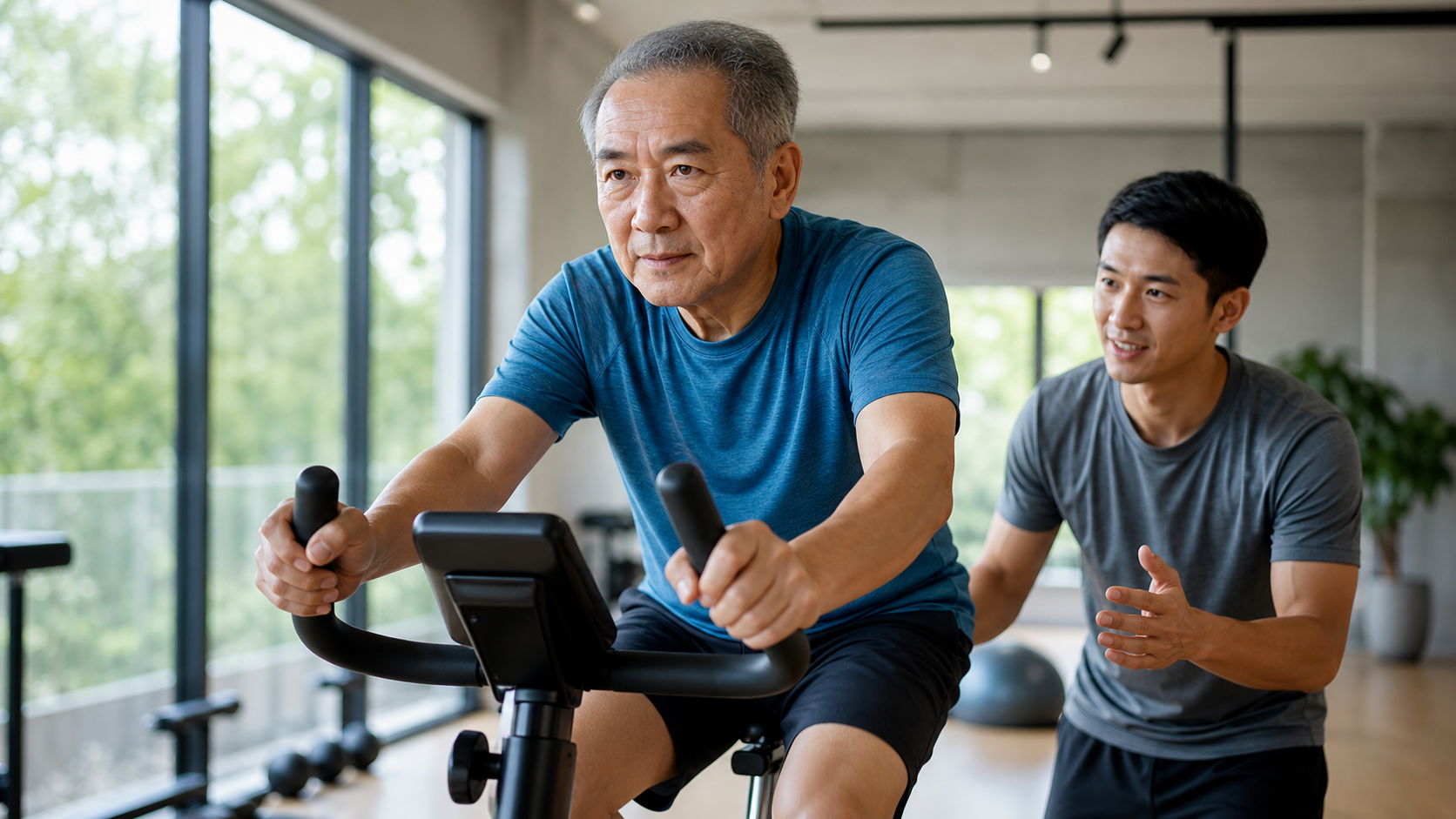
Opening: Mr. Chang, the Man Who Refused to Get Off His Bike by the Riverside
The first client I ever coached with Parkinson’s Disease (hereinafter referred to as Parkinson’s) was Mr. Chang, 64 years old. On the first day, his wife half-pushed, half-persuaded him to come. His face showed the classic “masked face”—frozen expression, reduced blinking, shuffling steps, arms barely swinging, and a slight tremor in his right hand at rest. Before he sat on the spin bike, he said something to me that I still remember to this day: “Coach, this disease of mine only gets worse. What’s the point of exercise?”
Three months later, it was the same Mr. Chang. One Saturday morning, after he had ridden for forty minutes along the Xindian River bike path, I asked him to get off and rest. He smiled and said, “Let me ride ten more minutes. When I’m pedaling, I feel like I’m still a normal person.”
That sentence actually contains the two most important things in a Parkinson’s exercise prescription: the symptom improvement during exercise is real, and what long-term, regular training might change is far more than you think. In this article, I want to give you the complete picture—the concepts and practices I’ve accumulated from over a decade of coaching clients at all levels, plus continuously reading exercise physiology and neuroscience literature. Whether you’re a patient yourself, a caregiver, or an adult child wanting to do more for your parents, you’ll find actionable steps you can start today.
Let me state the most important conclusion first: In the treatment of Parkinson’s, exercise is not “maintenance you do when you have time”—it is one of the core prescriptions, on par with medication. This isn’t a motivational slogan; it’s a consensus in neuroscience that has grown increasingly solid over the past decade.
Concepts and Scientific Foundations: Why Exercise Is So Critical for Parkinson’s
What Actually Happens in Parkinson’s
In the simplest terms: Parkinson’s occurs when the dopamine-producing nerve cells in a brain region called the “substantia nigra” gradually die off, leading to a dopamine deficiency. Dopamine acts like the lubricant and signal transmitter for body movement. When it runs low, four core symptoms appear—resting tremor, bradykinesia (slowness of movement), muscle rigidity, and postural and balance instability.
Medication (such as levodopa) works by supplementing or mimicking dopamine. This is extremely important—you must take it properly and never stop on your own. But medication supplies a “chemical substance”; it cannot supply “motor capacity” or “neural plasticity.” And that’s exactly what exercise provides.
The Potential Benefits of Exercise, Viewed on Two Levels
The first level is the immediate effect: like Mr. Chang experienced, during and for several hours after exercise, movements become smoother, stiffness decreases, and mood improves. This is related to exercise promoting the release of dopamine and other neurotransmitters, as well as increased blood flow and body temperature. Many clients describe it as a “re-oiling” sensation.
The second level—and the more exciting one—is the long-term impact on neuroprotection and disease progression. Both animal studies and human trials point in the same direction: regular, sufficient, and moderately intense aerobic exercise may promote brain-derived neurotrophic factors (such as BDNF), improve the efficiency of the dopamine system, and even be associated with slower symptom progression.
Here I need to be completely honest: “Whether exercise can truly slow disease progression” remains an active research frontier, with no 100% definitive conclusion yet. But the directional evidence is strong enough that neurologists and physical therapists worldwide have made exercise a standard recommendation.
Two Research Threads Worth Knowing
There are two lines of research that I think patients and caregivers will find helpful to know about, because they directly affect “what you should do.”
The first is the concept of forced exercise on a stationary bike. Researchers used specially modified spin bikes that could “drive” the cadence, having patients pedal at a higher cadence than their usual pace, assisted by a motor. They observed improvements in core symptoms such as tremor, bradykinesia, and rigidity. This gives us an important insight: “speed/rhythm” itself may be a key variable—not just “as long as you’re moving.” Related clinical trials (such as the CYCLE trial) are systematically comparing this (see references at the end).
The second involves a large trial on exercise intensity. SPARX3 is a Phase III randomized controlled trial that divided newly diagnosed Parkinson’s patients who had not yet started medication into moderate-intensity (approximately 60–65% of max heart rate) and high-intensity (approximately 80–85% of max heart rate) treadmill exercise groups, four times per week, tracked over two years, to see whether higher intensity is associated with slower disease progression. The core question of this trial is very practical: “Does intensity make a difference, and if so, how much?”
Together, these two threads point to the most important practical principle of this article: For Parkinson’s, exercise cannot just be a casual walk or light movement—“intensity” and “rhythm” are likely the keys to therapeutic benefit. Of course, intensity must be built up gradually and under safe conditions.
Neuroplasticity: Why “Training Right” Matters More Than “Training a Lot”
I want to spend a bit more time here explaining a concept that is often overlooked—neuroplasticity. The brain is not a fixed hard drive; it retains a certain capacity to “rewire” itself throughout life. Parkinson’s is a degenerative disease, but that doesn’t mean the brain has completely lost its capacity for adaptation. The reason exercise is thought to have neuroprotective effects lies at its core in its potential to promote this plasticity.
I often use this analogy with my clients: medication is like “adding fuel” so the car can run right now; exercise is like “maintaining the engine and paving the road” so the car can run longer and smoother in the future. You need both—neither is dispensable.
Several mechanisms by which exercise promotes neuroplasticity have been discussed. Let me put them in plain language:
- Increased neurotrophic factors: Regular aerobic exercise may raise levels of factors in the brain that promote the survival and connection of nerve cells.
- Improved efficiency of the dopamine system: Even if the dying cells can’t be saved, the remaining cells may be “trained” to work more efficiently.
- Improved cerebral blood flow and metabolism: Exercise increases brain blood flow and improves energy metabolism, providing overall benefits to neural health.
- Anti-inflammatory and antioxidant effects: Regular exercise is thought to help reduce chronic inflammation, which is linked to the process of neurodegeneration.
I want to emphasize the honesty principle once again: many of these mechanisms come from animal models and early human studies, and the exact magnitude of clinical effects is still under investigation—no overpromising. But taken together, these mechanisms are enough to explain why “exercise” is moving closer and closer to the center of the Parkinson’s treatment map.
The Gap Between “Doing It” and “Doing It Right”
Many family members ask me: “My dad goes downstairs for a walk every day. Is that enough?” My answer is usually: “Walking is better than not walking, but if he’s capable of more, we can do better.” The key lies in dosage (frequency, duration, intensity). Just as medication has a dosage, so does exercise. Too low a dose may only maintain “not declining too fast” without capturing those more aggressive benefits. That’s why this article spends so much time teaching you how to gauge intensity and how to structure a training plan.
What Exercise Can Do for Each of the Four Core Symptoms
Parkinson’s symptoms are not all the same, and different exercise elements target different symptoms. Let me give you the full picture in a table first, then explain each one.
| Core Symptom | Most Relevant Exercise Element | Practical Focus |
|---|---|---|
| Bradykinesia (slowness) | Aerobic + rhythm training | Increase cadence, follow a metronome or music |
| Muscle rigidity | Large-range movement + stretching | Exaggerated big movements, full joint range of motion |
| Postural and balance instability | Balance and agility training | Tai Chi, weight shifting, turning practice |
| Tremor | Aerobic + relaxation | Regular aerobic exercise, avoid excessive tension |
For “Bradykinesia (Slowness of Movement)”
Bradykinesia is one of the most frustrating symptoms of Parkinson’s—difficulty initiating movement, slow movements, and daily tasks becoming laborious. Aerobic exercise, especially rhythmic cycling, is very helpful for this. In class, I often play music or use a metronome, having clients pedal to the beat. Many report that “following the beat, my feet seem to know how to move better.” This “external cueing” is a very important technique in Parkinson’s rehabilitation.
For “Muscle Stiffness”
Stiffness (rigidity) makes the whole body feel tight and joints feel stuck. Large-range-of-motion training and thorough stretching are the mainstays. I ask trainees to deliberately “make movements bigger and more exaggerated” — for example, after cycling, stretch to the point of mild tension (not pain), lengthening the shortened muscle groups.
For “Posture and Balance Instability”
This is the item requiring the most caution and the one that most directly affects safety. Balance and agility training is the core, but it must be done in a safe environment (with handrails, with someone present). Tai Chi’s weight shifting and slow turns are very suitable for Parkinson’s.
For “Tremor”
Tremor is relatively difficult to “eliminate” directly through exercise, but regular aerobic exercise combined with relaxation often stabilizes the overall condition. Some trainees report that the sense of distress from tremor decreases after exercise. Let’s not overstate it: exercise is not about “curing” tremor, but about improving overall function and quality of life.
The Four Pillars of Parkinson’s Exercise
Having worked with trainees for many years, I tend to break down the Parkinson’s exercise prescription into four pillars. Miss one, and the results are diminished.
| Pillar | Primary Goal | Representative Activities | Recommended Frequency |
|---|---|---|---|
| Aerobic Endurance | Cardiopulmonary fitness, neuroplasticity, mood | Spin bike / indoor cycling, brisk walking, treadmill | 3–5 times per week |
| Resistance Training | Strength, preventing sarcopenia, supporting posture | Machines, resistance bands, body weight | 2–3 times per week |
| Balance and Agility | Fall prevention, turning, gait | Tai Chi, single-leg stance, direction changes | 2–3 times per week |
| Amplitude and Flexibility | Counteracting “moving smaller and smaller,” stretching | Large-amplitude training, stretching, yoga | Nearly every day |
Pillar One: Aerobic Endurance (Focus of This Article)
For the Parkinson’s population, I particularly favor indoor cycling / spin bike as the primary aerobic modality, for very practical reasons:
- Safety: Seated pedaling carries a far lower fall risk than a treadmill or outdoor running, making it very friendly for those whose balance is already affected.
- Controllable: Cadence, resistance, and heart rate can all be quantified, making progression and tracking easy.
- Rhythm: Pedaling has a natural rhythmic quality, which specifically addresses Parkinson’s “difficulty initiating movement and loss of rhythm.”
- Weather-independent: Taiwan’s summers are hot and humid, the plum rain season lingers, and winters are damp and cold. Indoor cycling lets you train consistently all year round without falling off the wagon.
If physical capacity and balance allow, outdoor cycling (for example, the riverside bike paths across Taiwan) is certainly excellent — Mr. Chang greatly enjoyed riverside riding in his later stage. But the threshold for outdoor riding is balance and safety, which we will discuss in detail later in the safety section.
Pillar Two: Resistance Training
People with Parkinson’s often have concurrent sarcopenia and reduced movement amplitude. Strength training maintains daily functions such as standing up, climbing stairs, and carrying objects, while also supporting posture and indirectly reducing falls. The key is large muscle groups, full range of motion, and progressive overload — there is no need to pursue bodybuilding-style heavy loads.
Pillar Three: Balance and Agility
Falls are one of the things people with Parkinson’s fear most — a single hip fracture can undo all efforts. Tai Chi is widely regarded in research and clinical practice as beneficial for balance in Parkinson’s, and in Taiwan, people practice it in parks every morning, making it accessible and highly social. I strongly recommend it as part of balance training.
Pillar Four: Amplitude and Flexibility
Parkinson’s has a cruel characteristic: movements tend to become “smaller and smaller.” So there is an entire training philosophy that deliberately uses exaggerated, large-amplitude movements to counteract this — taking bigger steps, swinging arms widely, speaking louder. This type of “big movement” training combined with stretching effectively combats stiffness and withdrawal.
Practical Approach: A Follow-Along Program
The program below is designed with indoor cycling as the primary aerobic modality, integrating the other three pillars. Please note: this is an educational example — before actual implementation, individual conditions must be assessed by a neurologist and physical therapist.
Determining Intensity: Three Simple Indicators
No expensive equipment needed — first learn to gauge intensity with these three indicators:
| Intensity | Rating of Perceived Exertion (RPE 1–10) | Talk Test | Approximate Heart Rate Reference |
|---|---|---|---|
| Easy (warm-up) | 2–3 | Can sing comfortably | 50–60% of max HR |
| Moderate | 4–6 | Can talk but not sing | 60–70% of max HR |
| High | 7–8 | Can only say a few words | 75–85% of max HR |
Max heart rate can be roughly estimated with “220 − age” (e.g., about 155 bpm for a 65-year-old), but people with Parkinson’s often take medications that affect heart rate, or have different cardiovascular conditions — this formula is only a starting point, not an absolute rule. I trust the “talk test” and RPE more because they reflect the body’s actual load at that moment. Wearing a heart rate strap or watch is even better, allowing data and perceived effort to cross-reference each other.
Twelve-Week Progressive Program (Indoor Cycling Focus)
| Phase | Weeks | Aerobic (Cycling) | Resistance | Balance / Amplitude |
|---|---|---|---|---|
| Building the Habit | Weeks 1–4 | 3 times/week, 15–25 min each, mainly moderate intensity | 2 times/week, resistance bands / body weight | 5–10 min daily stretching + single-leg stance |
| Increasing Volume | Weeks 5–8 | 3–4 times/week, 25–35 min each, add short intervals | 2–3 times/week, progressive load | 2 times/week Tai Chi or balance class |
| Increasing Intensity | Weeks 9–12 | 4 times/week, 30–40 min each, including high-intensity intervals | 3 times/week | Maintain 2–3 times/week |
A Typical “Increased Intensity” Cycling Session (About 35 Minutes)
- Warm-up 8 minutes: Easy pedaling at about 60 rpm, RPE 2–3, letting the body gradually “oil up.” People with Parkinson’s need more patience during warm-up than the average person, since movement initiation is inherently slower.
- Main set 20 minutes (intervals): 2 minutes of moderate-to-high intensity (RPE 6–7, cadence raised to 70–80 rpm) + 2 minutes of easy recovery, repeated for 5 sets. Deliberately “raising cadence and maintaining rhythm” is the key point here, echoing the rhythm concept mentioned earlier.
- Cool-down 7 minutes: Gradually ease down, finishing with upper-body and hip stretches.
This approach of “raising cadence and adding intensity through intervals” translates the two key variables of “rhythm” and “intensity” from the research into something achievable with equipment anyone can buy. There is no need to pursue expensive, specially designed forced-exercise spin bikes — the key is that you can steadily and regularly keep your body working in a rhythmic, appropriately intense manner.
One-Week Integrated Example (For Stable, Moderate-Level Individuals)
| Day | Main Activity | Key Content |
|---|---|---|
| Monday | Cycling intervals | Warm-up + 5 interval sets + cool-down, about 35 min |
| Tuesday | Resistance + amplitude | Large muscle group resistance + big-movement training |
| Wednesday | Tai Chi / balance | Balance, turning, gait |
| Thursday | Steady-state cycling | Moderate-intensity continuous pedaling for 30 min |
| Friday | Resistance + stretching | Resistance + thorough stretching |
| Saturday | Outdoor ride or brisk walk | Riverside ride (with companion) or brisk walk |
| Sunday | Rest / light stretching | Walking, stretching, mental relaxation |
Nutrition, Hydration, and the Taiwan Context
For exercise to be effective, energy and hydration must keep up — especially since Taiwan’s hot, humid climate is a hidden challenge.
Hydration and Electrolytes
Some people with Parkinson’s have orthostatic hypotension, or medications affect fluid regulation — dehydration increases the risk of dizziness, fatigue, and even falls. The principles are simple:
- Drink about 300–500 ml of water 1–2 hours before exercise.
- Drink 100–200 ml every 15–20 minutes during exercise.
- In Taiwan’s summer, even indoors with air conditioning, when sessions exceed 30 minutes and sweating is noticeable, alternate with an electrolyte-containing sports drink.
Energy and the Reality of Eating Out
Many of my students eat all three meals out. I don’t ask them to overhaul their diet completely; instead, I give them a few actionable principles:
| Scenario | Recommended Approach |
|---|---|
| 1–2 hours before exercise | An easily digestible carbohydrate, such as a rice ball, sweet potato, or banana |
| 30–60 minutes after exercise | Protein + carbohydrates, such as a tuna and egg toast with unsweetened soy milk |
| Common protein deficiency | A palm-sized portion of protein per meal (eggs, tofu, chicken, fish) |
Here’s a particularly important detail regarding Parkinson’s: For patients taking levodopa, consuming large amounts of protein simultaneously with medication may affect drug absorption. This involves the timing of medication and meals, which falls under individualized medical care. Please be sure to discuss this with your neurologist or pharmacist; do not adjust based on this article on your own. This is not a one-size-fits-all recommendation.
Taiwan’s Venue and Environmental Advantages
Taiwan is actually a very suitable place for Parkinson’s patients to exercise: gyms and community sports centers are widespread and affordable, and most have indoor stationary bikes; riverside bike paths in various cities and counties are flat and safe; and morning tai chi groups in parks are readily available and free. By making good use of these resources, the cost of implementation can be kept very low.
Safety: The One Thing That Cannot Be Compromised in Parkinson’s Exercise
I’ve dedicated a separate chapter to safety because, for the Parkinson’s population, a single serious fall can negate months of effort. The following are the safety principles I adhere to when training my students.
Medical Clearance Before Exercise
Before starting any exercise program with intensity, it is essential to have an evaluation by your neurologist (and a cardiologist if necessary). Pay special attention to:
- Whether you have orthostatic hypotension (dizziness upon standing) — this affects safety during and after exercise.
- Cardiovascular conditions and medications — these affect the upper limit of intensity.
- Current balance and fall risk — this determines which activities to choose.
- Cognitive function status — this affects whether more companionship and a simplified program are needed.
Safety Checklist for Environment and Equipment
| Item | Safe Practice |
|---|---|
| Cardio equipment | Prioritize recumbent bikes with back support that are easy to get on and off |
| Floor | Non-slip, clutter-free, well-lit |
| Handrails | A fixed, graspable support in the balance training area |
| Companionship | It’s best to have someone nearby during training for moderate to severe cases |
| Hydration | Keep water within easy reach to avoid getting up mid-session and risking a fall |
| Phone | Carry it on you for emergencies |
Special Reminders for Outdoor Riding
Many patients long to return to outdoor cycling, and I fully understand and support this feeling — as long as safety measures are in place. Here are some practical suggestions:
- First build up your fitness and cadence stability indoors before considering going outdoors.
- If your balance is significantly affected, seriously consider a tricycle or a tandem bike to greatly reduce the risk of tipping over.
- Choose flat riverside paths with little traffic and few pedestrians, and avoid peak hours.
- Always have someone ride with you, and wear a helmet.
- In Taiwan’s summer, avoid the midday heat; early morning or evening is better. Watch for dehydration and signs of heatstroke.
When to Stop Immediately
If any of the following occur during exercise, stop immediately and seek medical attention as appropriate: chest tightness or pain, unusual shortness of breath, dizziness or feeling faint, cold sweats, noticeably irregular heartbeat, or sudden instability or weakness. It’s better to be conservative than to push yourself. Medical care is easily accessible in Taiwan; if in doubt, see a doctor.
Another Case Study: Auntie Lin, Who Stopped Moving Entirely for Fear of Falling
Besides Mr. Chang, I’d like to share a contrasting case — seventy-year-old Auntie Lin. After her Parkinson’s diagnosis, she nearly fell at home one day and became extremely fearful from then on, spending almost the entire day sitting. Her family was also afraid something might happen, so they simply didn’t let her do anything. When she came to see me six months later, she had visibly lost muscle strength and struggled just to stand up — a classic “fear of falling → immobility → greater weakness → higher fall risk” vicious cycle.
Our approach wasn’t to tell her to jump into high-intensity exercise, but rather:
- Start with a recumbent bike to minimize fall risk and rebuild her confidence that “I can move safely.”
- Do weight-shifting and standing exercises in an environment with handrails, with family present throughout.
- Progress gradually, making small increases every two weeks as appropriate.
Three months later, Auntie Lin could stand up from a chair steadily on her own and complete a full set of balance exercises while holding the handrail. She told me, “It turns out I wasn’t unable to move — I was bound by fear.” I often use this case to remind caregivers: Overprotection can sometimes be more harmful than the risk of exercise itself. The right answer isn’t “don’t move,” but “move smartly, within safe limits.”
Common Mistakes and Corrections
These are the most common issues I see when training students and observing caregivers.
Mistake 1: Intensity Too Low — “Just Moving Around”
This is the most common mistake. Many patients or family members think “as long as I’m walking, that’s good enough,” so they take a slow ten-minute walk every day. Walking is certainly better than not moving, but if your fitness and medical condition allow, training with “intensity” is likely the key factor. Correction: Under safe and medically cleared conditions, gradually bring the intensity into the zone where “you’re breathless and can only speak a few words.”
Mistake 2: Fear of Falling, So Afraid to Do Anything
Fall risk is a real concern, but letting fear stop you from eating entirely only accelerates the decline of strength and balance, creating a vicious cycle. The right approach isn’t to avoid moving, but to choose the right activities: use a recumbent bike as your main cardio, do balance training with handrails or with someone present — control the risk rather than eliminating exercise altogether.
Mistake 3: Ignoring “Range of Motion”
Focusing only on cardio and not training large movements allows movements to become progressively smaller. Correction: Deliberately incorporate exaggerated, large-range movements and stretching into every session to counteract this shrinking.
Mistake 4: Not Aligning Training with “Medication Timing”
A Parkinson’s patient’s motor ability fluctuates throughout the day with medication effects (the so-called on/off phenomenon). Exercising during the “on” period, when medication is working well, is usually smoother, safer, and more effective. Correction: Discuss with your doctor and schedule your main training sessions during the times when your medication effect is most stable.
Mistake 5: Losing Momentum After the Initial Enthusiasm
This is the number one enemy of any exercise prescription, and it’s especially critical for Parkinson’s, because it’s a disease where benefits only appear with long-term consistency. I’ve organized my correction strategies into a table:
| Reason for Giving Up | Coach’s Solution |
|---|---|
| Too lonely doing it alone | Join patient support groups, have family ride with you, take community classes |
| Goals too vague | Set quantifiable small goals (e.g., cadence, time) |
| Weather interference | Make indoor cycling your main activity; weather becomes irrelevant |
| Can’t see progress | Track weekly; let the numbers speak |
| Bad days | Allow reduced volume but never zero; just do a little |
Actionable Advice for Readers at Different Stages
Newly Diagnosed, Mild Symptoms
You hold the most valuable assets in your hands: time and relatively intact physical capacity. This is the golden period for building exercise habits.
- Start aerobic exercise 3–4 times a week immediately, gradually moving intensity toward moderate-to-high.
- Simultaneously build a foundation of resistance and balance training.
- Treat exercise as just as important as taking medication and schedule it into your calendar. Don’t wait until symptoms worsen and regret not starting earlier.
Moderate Stage, Noticeable Motor Impairment
What you need is a balance between safety and consistency.
- Use a recumbent bike as your primary cardio, progressing gradually within your tolerance.
- Balance training must be done with handrails or with someone present.
- Align training times as much as possible with your “on” periods when medication is working well.
- Seriously consider getting an individualized assessment from a physical therapist to create a tailored program.
Advanced Stage or Significantly Affected Balance
Safety always takes precedence over intensity.
- Outdoor riding requires careful evaluation; switch to a tricycle or indoor equipment if necessary.
- All training should ideally have a professional or family member present.
- Shift your goal from “improvement” to “maintaining function, slowing decline, and preserving quality of life” — that in itself is a huge victory.
A Note to Caregivers
Your role matters more than you think. Accompanying, encouraging, and moving together is often more effective than any perfect training plan. You don’t need to be a coach—just being the person who “pedals alongside them for forty minutes” is enough. At the same time, please take care of your own body and mind. If you collapse, no one else can take over.
A few practical tips to make “exercising together” sustainable:
- Tie it into existing routines: Attach exercise to activities that are already fixed in your schedule (e.g., after dinner, on clinic-visit days). It’s easier to build a habit this way.
- Lower the barrier to starting: Keep the equipment somewhere visible and within easy reach. That small act of putting on your sneakers is often the hardest step to get past.
- Track and give feedback: Use a small notebook or your phone to jot down the time, cadence, and how you felt each session. Making progress “visible” is the best fuel for staying the course.
- Make use of community: Across Taiwan, there are Parkinson’s support groups and related association activities. Moving together, having company, and cheering each other on will keep you going far longer than going it alone.
A “Getting Started Checklist” for the Whole Family
If you want to walk away from today’s reading with just one thing you can do right away, here it is condensed into a checklist:
| Step | What You Can Do Today |
|---|---|
| 1 | Schedule a neurology follow-up and tell your doctor, “I want to start exercising” |
| 2 | Find the nearest recumbent bike (at home, a sports center, or a gym) |
| 3 | Put it on the calendar: do it 3 times this week, pedaling lightly for 10 minutes each time |
| 4 | Prepare a logbook and write down the time and how you felt each session |
| 5 | Find a family member or friend to be your “move together” partner |
Don’t underestimate these five steps. Brother Zhang and Aunt Lin both started from just such an unremarkable first step.
Frequently Asked Questions (FAQ)
Q: If I’m taking medication, do I still need to exercise?
A: Yes, absolutely. Medication replenishes dopamine; exercise trains motor ability and offers potential neuroprotection. The two play different roles and cannot replace each other.
Q: Could exercise make my symptoms worse by tiring me out?
A: Exercise at an appropriate intensity usually makes movements smoother both during and after the session. Excessive fatigue should of course be avoided—the principle is “you can recover by the next day, and it doesn’t disrupt your daily life.” On bad days, reduce the volume but don’t drop it to zero.
Q: Do I have to ride a bike? Can I run or swim instead?
A: Yes, you can. This article focuses on cycling because it’s safe, controllable, and rhythmic, making it especially suitable for those whose balance is affected. Any aerobic activity you enjoy, can sustain, and is safe is a good choice.
Q: How long until I see results?
A: The immediate “lubricated” feeling may appear the very same day. Improvements in fitness and symptoms typically require weeks to months of consistent accumulation. This is a marathon, not a sprint.
Q: When should I stop and see a doctor?
A: If you experience chest pain, severe shortness of breath, dizziness or near-fainting, a clearly abnormal heart rhythm, or a sudden inability to stand steadily during exercise, stop immediately and seek medical attention. Medical care is easily accessible in Taiwan and National Health Insurance coverage is comprehensive. When in doubt, err on the side of caution and see a doctor first.
Q: What if I don’t have exercise equipment at home and can’t afford a gym?
A: You can absolutely start at zero cost. Brisk walking is the easiest aerobic entry point; a resistance band costing a few hundred NT$ can provide full-body resistance; and park tai chi groups are free and come with company. Equipment is a bonus, not a barrier. If you want the stability and safety of a recumbent bike, the public sports centers in every city and county offer affordable rates—well worth using.
Q: Can I buy supplements on my own to “protect my nerves”?
A: Please leave that question to your doctor. Many supplements claiming to “protect nerves” have weak evidence and may interact with Parkinson’s medications. Any supplement should be discussed with your neurologist or pharmacist first—don’t add anything on your own. The most solidly evidence-based “health protection” is actually regular exercise and a balanced diet itself.
Q: My symptoms are already quite severe. Is it too late to start?
A: It’s not too late. Even for those with moderate-to-severe disease, the goal of exercise can shift from “improvement” to “maintaining function, slowing decline, and preserving quality of life”—these are extremely valuable in themselves. The key is choosing safe activities, having company, and progressing gradually. Aunt Lin’s case is the best example.
Q: Can exercise replace medication?
A: No, absolutely not. Exercise is a “partner” to medication, not a “substitute.” Please take your medication as prescribed and never stop or reduce it on your own.
Conclusion: Pedal the Control Back into Your Own Hands
Back to Brother Zhang. Two years later, his disease is of course still there, he still takes his medication, and his movements are still slow when the medication wears off. But he rides steadily every week, attends his monthly follow-ups, and has held the line on his weight and muscle strength. His wife says he “has much more energy as a person.” Once he told me: “This disease has taken a lot from me, but when I exercise, I feel like I’m still holding the steering wheel.”
That is the core message I want to leave with every reader: Parkinson’s will take some things away, but what you can actively do is more than you think. Regular, sufficient, and adequately intense exercise is one of the few things “you can do for yourself, and it very likely actually works.”
There’s no need to wait for the perfect plan, the perfect equipment, or the perfect weather. Today, start by sitting on an indoor bike and pedaling lightly for ten minutes. Find that rhythm of your feet turning the gears again—what you’re pushing down on may not just be the pedals, but also more days of walking well, moving well, and living well.
This article is educational content and cannot replace individual diagnosis and treatment advice from a physician, physical therapist, or nutritionist. Exercise and medication planning for Parkinson’s disease is highly individualized; please be sure to discuss it with your neurology care team before proceeding.
References
- SPARX3 Phase III Exercise and Parkinson’s Disease Progression Trial Study Protocol (Trials, Springer): https://link.springer.com/article/10.1186/s13063-022-06703-0
- SPARX3 Trial Overview (American Parkinson Disease Association): https://www.apdaparkinson.org/article/sparx3-trial-researches-whether-exercise-can-slow-parkinsons-progression/
- CYCLE Forced-Exercise Trial Methodology (BMC Neurology): https://bmcneurol.biomedcentral.com/articles/10.1186/s12883-015-0313-5
- Preliminary Study on Parkinson’s Disease and Forced Exercise (PMC): https://www.ncbi.nlm.nih.gov/pmc/articles/PMC3703838/
Related Reading
- When Anxiety Comes Knocking: A Coach on How Exercise Helps You Pedal Your Tense Nerves Back to a Normal Cadence
- Exercise and Stroke: A Complete Exercise Prescription from Prevention to Rehabilitation—Clinical Notes from an Exercise Science Consultant
- Exercise, Depression, and Anxiety: Turning Sweat into Your Natural Antidepressant
- The Science of Exercise and Longevity: The Evidence for a Longer Life, Optimal Doses, and a Lifestyle You Can Maintain for a Lifetime
一日北高/長距離團騎 常見問題補充篇 / 組團或跟團的眉角 / 壯車友容易被瘦車友慢性拉爆 / 原來屁股痛可能是這個原因...? / 風場配速法 / 公路車 / CT Yeh
2 年前
一日北高常見問題大集合 | 攻略 | 路線 | 訓練 | 補給 | 自行車 單車 | 一日雙城 | 雙塔 | TWB北高360 | 屁股痛
6 年前
摔車後補裝備: 好市多新款單車安全帽& Specialized Romin 北高整路屁股都不痛的坐墊 | 一千元居然有MIPS | CT Yeh | 公路車
4 年前
Never Stop 西進武嶺 前後雙機 完整全程錄影 訓練台 實境
8 年前
#PUSHBIKE 原來這麼好玩! 小朋友 滑步車 初體驗 超可愛
6 年前
CT 喇低賽) 武嶺牽車 才是王道 西進牽車四小時內秘訣 攝手位置 如何判斷 防抽筋小秘訣
7 年前
單車 一日北高 ( 雙城 ) 肥宅雙人瘋狂行 紀錄片 REACTO
10 年前
一個測試有沒有認真練車的方法😂 #公路車
10 個月前