Exercise and Stroke: A Complete Exercise Prescription from Prevention to Rehabilitation — Clinical Notes from an Exercise Science Consultant
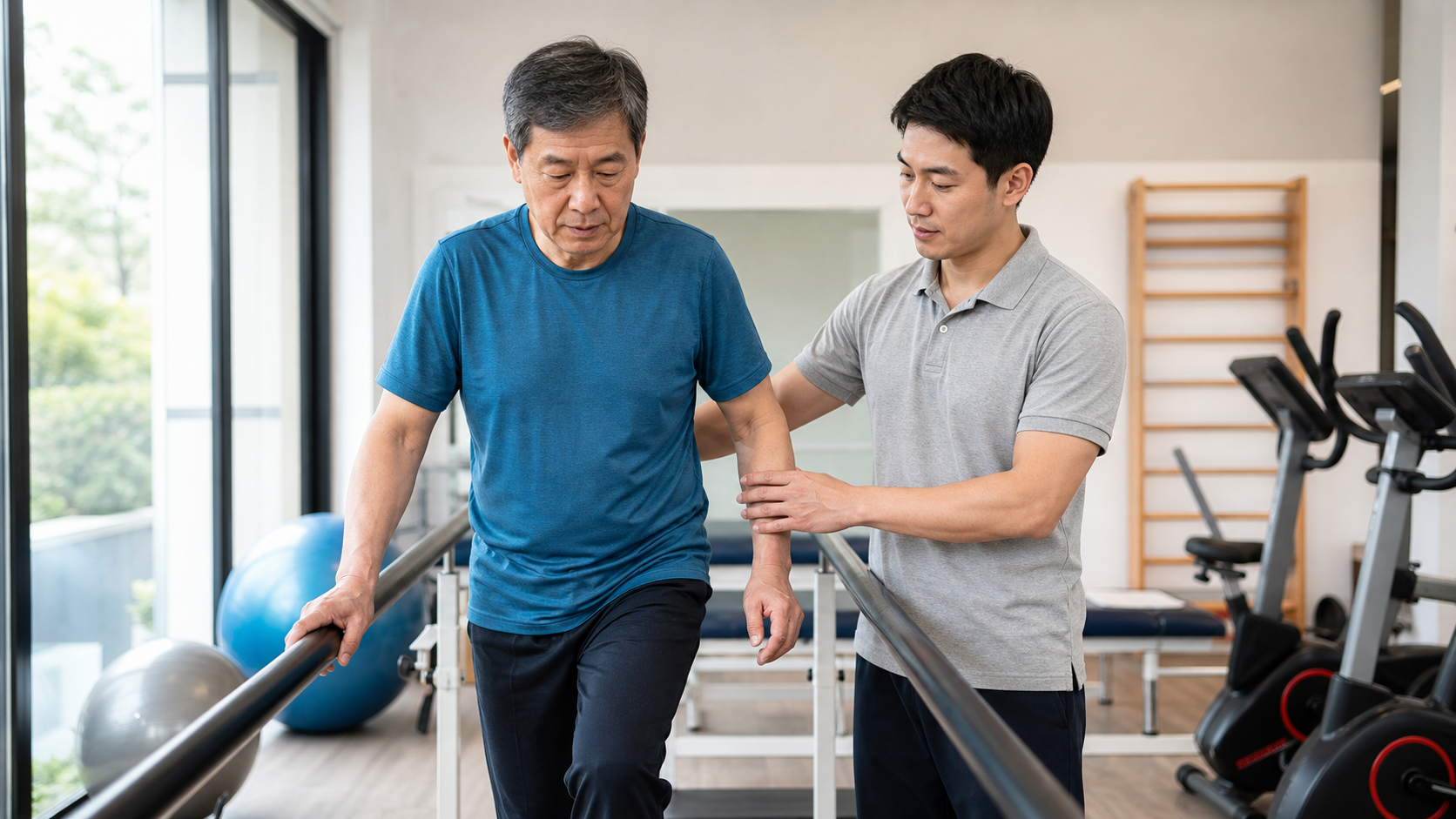
Opening: The Two Types of People I See in the Rehabilitation Room
Having coached exercise for many years, stroke has never been just a term from a textbook to me. What stands out most are two of my clients.
One is Mr. Chen, 62, a retired tech executive whose health check-up report was a sea of red flags—systolic blood pressure hovering around 150 mmHg long-term, overweight, and almost completely sedentary. His reason for coming to me was simple: his wife was afraid he would have a stroke. Over the course of a year, we took him from being winded after walking 300 meters to being able to ride continuously for two hours along the riverside bike path, and his blood pressure stabilized with a combination of medication adjustments from his doctor and exercise.
The other is Sister Lin, 55, who came to me eight months after her stroke. She had an ischemic stroke resulting in weakness on her left side. After discharge, she completed the rehabilitation sessions covered by National Health Insurance, but there was a gap in transitioning to “returning to normal exercise.” She was stuck in a vicious cycle of fear, not daring to move, and deteriorating further with each day of inactivity.
These two people represent the two ends of the stroke spectrum: one end is those who haven’t had a stroke yet and can prevent it; the other end is those who have already had one and need to relearn how to move. Exercise plays a critical role at both ends, but the approach is completely different. In this article, I want to explain both parts clearly—because too many people think stroke is a matter of “luck,” when in fact it is one of the major diseases most amenable to lifestyle intervention.
Let me finish Mr. Chen’s story first, because his transformation is very representative. When he first came, he was actually resistant—he felt he was “just a bit hypertensive” and that exercise was for young people. The first time I took him to the riverside, I gave him no intensity requirements. I just asked him to walk shoulder-to-shoulder with me and chat about his retired life. After about fifteen minutes, he was slightly winded, which is perfectly normal for someone who had sat in an office for thirty years. I didn’t push him at that moment. Instead, I told him: “Today you’ve moved fifteen minutes more than yesterday—that’s progress.” That sounds like motivational fluff, but for a sedentary person, lowering the bar to “just showing up counts as a win” is the key to sustainability. Three months later, he started proactively asking me to add more time; a year later, with medication adjustments from his doctor plus regular exercise, his systolic blood pressure dropped from around 150 mmHg to a relatively stable range near 130 mmHg. This wasn’t the work of exercise alone—it was the result of “exercise + medication + follow-up visits” working together. I’ll emphasize this point repeatedly later.
Let me say the most important thing first: This article is educational content, not a directive for you to act as your own doctor. Especially post-stroke rehabilitation, which must be conducted under the individual assessment of your neurologist/rehabilitation physician and physical therapist. What I provide below are principles and frameworks, not a substitute for medical prescriptions.
1. Why Can Exercise Prevent Stroke? Let’s Clarify the Scientific Basis First
The Two Types of Stroke
Strokes are mainly divided into two major categories:
- Ischemic stroke: A blood vessel in the brain is blocked by a blood clot or atherosclerotic plaque. This accounts for the majority of cases.
- Hemorrhagic stroke: A blood vessel in the brain ruptures and bleeds, often related to long-term hypertension and vascular fragility.
The upstream risk factors for these two types overlap heavily: hypertension, diabetes, dyslipidemia, obesity, smoking, atrial fibrillation, and prolonged sedentary behavior. Regular exercise can simultaneously lower several of these. This is why exercise is the “highest cost-performance preventive measure”—it doesn’t just address one risk factor; it improves the entire metabolic and vascular environment at once.
Which Risk Factors Does Exercise Improve?
Laying out the mechanisms will give you more motivation to act:
| Risk Factor | How Exercise Helps | Significance for Stroke |
|---|---|---|
| Hypertension | Regular aerobic exercise lowers resting blood pressure and improves vascular endothelial function | Blood pressure is the strongest controllable risk factor for stroke |
| Blood sugar / Insulin resistance | Muscle contraction enhances glucose utilization and improves insulin sensitivity | Reduces diabetes-related vascular damage |
| Blood lipids | Raises HDL cholesterol and improves triglycerides | Slows atherosclerosis |
| Body weight and body fat | Increases caloric expenditure and maintains muscle mass | Reduces overall metabolic syndrome risk |
| Chronic inflammation and stress | Improves autonomic nervous system function and lowers stress hormones | Indirectly protects blood vessels |
According to public education materials from the World Stroke Organization and the American Heart Association, regular physical activity can simultaneously improve multiple stroke risk factors, including hypertension, diabetes, cholesterol, depression, and stress. This is why guidelines worldwide place exercise at the core of prevention.
I especially want to emphasize the power of “improving multiple things at once.” Suppose you have three red flags: high blood pressure, elevated blood sugar, and overweight. Traditional thinking might say, “I need to solve three separate problems,” which sounds daunting. But the beauty of regular exercise is that it’s a single lever that can pull all three down simultaneously. You don’t need three separate plans—you need one exercise habit you can sustain, and the rest of the improvements will cascade like dominoes. This is also the positive cycle I most often see in clients with check-up reports full of red flags—when blood pressure, blood sugar, and body composition gradually improve together, confidence and motivation return, making it easier to stick with exercise.
Of course, I must honestly remind you: exercise is not a panacea. It’s “foundational work,” but if you already have a clear diagnosis of hypertension or diabetes, you cannot skip the medications you should be taking or the follow-ups you should be attending. Exercise helps stabilize the foundation so that medication and lifestyle management work better. The two are teammates, not mutually exclusive rivals.
How Much Exercise Do You Actually Need? Here Are the Numbers
This is the question clients ask me most often. The most widely adopted international recommendations come from the American Heart Association and the US CDC’s public education materials:
- At least 150 minutes per week of moderate-intensity aerobic exercise, or 75 minutes per week of vigorous-intensity aerobic exercise, or a combination of both.
- Pushing up to 300 minutes per week of moderate intensity provides even greater cardiovascular benefits.
- It’s best to add strength training at least twice a week, along with flexibility stretching.
What’s even more encouraging: even if you can’t reach the 150-minute threshold, any level of activity is better than none. Relevant public health education materials indicate that even leisure-time physical activity well below the recommended threshold is associated with a significantly lower stroke risk compared to no exercise at all. This is an important psychological threshold for sedentary people—it’s not “if you can’t do 150 minutes, don’t bother,” but rather “the step from zero to something is the most valuable.”
I organize the concept of different activity levels into a “psychological threshold table” for my clients, so everyone knows where they currently stand and what the next step is:
| Your Current State | Next Goal | What I Want to Say to You |
|---|---|---|
| Completely sedentary, barely moving | Walk 10 minutes a day | The step from zero to something has the highest benefit |
| Occasionally active, no routine | Exercise 3 times a week consistently | Consistency matters more than intensity |
| About 90 minutes per week | Approach 150 minutes per week | You’re already on the right track |
| Already at 150 minutes per week | Aim for 300 minutes or add strength training | Pursue quality, and don’t forget strength and stretching |
The purpose of this table is to turn exercise from an anxiety-inducing all-or-nothing proposition into a staircase you climb step by step. You don’t need to reach the top in one leap; you just need to know where the next step is and take it.
I usually translate this for clients like Mr. Chen this way: 150 minutes sounds like a lot, but it’s really just “five days a week, 30 minutes a day,” and 30 minutes might just be a bike ride along the riverside after work or two brisk laps around the neighborhood. In Taiwan’s urban areas, riverside bike paths, track fields, and community sports centers are extremely convenient. Equipment has never been the issue—what gets stuck is often the “starting” itself.
Why “Aerobic” Exercise Is Especially Important for Blood Vessels
I’m often asked: “Exercise is exercise—why do you emphasize aerobic so much?” The reason is that stroke is fundamentally a vascular problem, and regular aerobic exercise has a more direct training effect on vascular endothelial function and blood pressure regulation. Think of your blood vessels as a hose that stiffens and becomes brittle with age—regular aerobic exercise is like routine maintenance that keeps the hose elastic and clear. This doesn’t mean strength training isn’t important (its role in improving metabolism is equally critical), but rather: if you have limited time and can only do one thing first, moderate-intensity aerobic exercise is what I’d prioritize. This is especially good news for cyclists, because cycling itself is an ideal low-impact aerobic activity—it places minimal stress on the knee joints and can be sustained at moderate intensity for long periods, making it very suitable for long-term adherence in middle-aged and older populations.
2. Practical Program for Prevention: From Sedentary to Meeting the Target
This section is for readers who haven’t had a stroke and want to reduce their risk. I’ve adapted the actual pace I used with Mr. Chen into a 12-week progressive framework. For intensity, I’ll use the “Rating of Perceived Exertion” (RPE, 1 to 10) combined with the “talk test” rather than having you stare at your heart rate, because many people take heart-rate-controlling medications (such as beta-blockers), which can distort heart rate readings.
How to Gauge Intensity: The Talk Test
- Moderate intensity: You can talk but can’t sing, slightly winded, RPE around 4–6.
- Vigorous intensity: You can only speak in short phrases, noticeably breathless, RPE around 7–8.
- If you have cardiovascular risk factors or are on medication, start with moderate intensity; don’t jump straight to vigorous.
12-Week Progressive Framework
| Phase | Weeks | Aerobic Frequency/Duration | Intensity | Strength Training | Notes |
|---|---|---|---|---|---|
| Building the habit | Weeks 1–3 | 3 days/week, 15–20 minutes each | RPE 3–4 (can chat easily) | 1 session/week, full-body major muscle groups with bodyweight | The focus is “showing up on time,” not intensity |
| Accumulating volume | Weeks 4–6 | 4 days/week, 25–30 minutes each | RPE 4–5 | 2 sessions/week, add resistance bands/light dumbbells | Approaching the 150-minute threshold |
| Improving quality | Weeks 7–9 | 4–5 days/week, 30–40 minutes each | RPE 5–6, can include brief slightly breathless intervals | 2 sessions/week, progressively increase weight | Those with stable blood pressure can try gentle hill riding |
| Stable maintenance | Weeks 10–12 | 5 days/week, total 150–200 minutes | RPE 5–6 as the main range | 2–3 sessions/week | Establish a sustainable long-term life rhythm |
The most important thing in this table isn’t the numbers—it’s the word progressive. I’ve seen too many people impulsively join a gym, train so hard in the first week that they can’t walk for three days, and then never go back. Stroke prevention is a long game. I’d rather you increase slowly and reach a level you can maintain for life.
Why Strength Training Is a Must
Many older adults assume that preventing stroke just means “walking more.” In fact, strength training is equally important. There are three reasons:
- Maintaining muscle mass improves insulin sensitivity and helps control blood sugar, directly targeting the risk factor of diabetes.
- Strength is a lifeline for quality of life in old age. If a stroke unfortunately does occur, those with better physical reserves have a significantly better foundation for recovery.
- Muscle is the body’s largest “glucose warehouse.” The more muscle mass you have, the healthier your metabolic environment.
For beginners in strength training, I usually start with these bodyweight/light-load exercises: sit-to-stand (for the thighs), wall push-ups (for the chest and arms), resistance band rows (for the back), and chair-supported calf raises (for the calves). Do 2–3 sets of 8–12 reps per exercise, within your limits, every other day.
The Taiwan Context: The “Hidden Pressure Booster” for People Who Eat Out
Stroke prevention can’t be discussed only in terms of exercise, because diet—especially sodium intake—directly affects blood pressure, the strongest risk factor. Eating out in Taiwan is generally salty, and many people consume far more than the recommended daily sodium without realizing it. I’m not a nutritionist, so I won’t give you precise gram counts, but I can give you a few practical “daily salt reduction” habits—these are the tips I use most often with my clients:
| Common Eating-Out Scenario | Hidden High-Sodium Sources | My Suggested Alternative |
|---|---|---|
| Noodle shops / street food | Broth, braising liquid, sauces | Drink less soup; ask for half sauce on dry noodles |
| Bento boxes | Pickled side dishes, thickened sauces | Choose more blanched vegetables; avoid heavily sauced mains |
| Hot pot | Dipping sauces, processed hot pot ingredients | Replace satay sauce with scallions, ginger, and garlic |
| Breakfast shops | Processed meats, sauces | Choose eggs and unsweetened soy milk; reduce sauces |
| Bubble tea shops | High sugar (indirectly affects metabolism) | Reduce or go sugar-free; treat drinks as an occasional indulgence |
This table isn’t meant to turn you into an ascetic; it’s a reminder that: no matter how seriously you exercise, if your daily sodium intake is excessive, your blood pressure will still be hard to control. Diet and exercise are two teammates on the same team—neither can be missing. This is also why, for individualized nutrition advice, I always ask clients to consult a qualified nutritionist—everyone’s situation is truly different.
3. Rehabilitation: How to Safely Return to Exercise After a Stroke
This section operates on a completely different logic, and it’s also where I most want to caution readers. Exercise after a stroke is absolutely not just “a scaled-down version of the prevention program.” It involves neurological function rebuilding, fall risk, and cardiovascular safety, and it absolutely requires professional team oversight.
Why Should You Still Exercise After a Stroke?
When Sister Lin first came, her biggest misconception was: “I’ve already had a stroke—can I still exercise? Will I have another one?” This is a completely understandable but outdated belief. The current consensus in rehabilitation medicine is: under professional assessment and supervision, moderate physical activity is beneficial for post-stroke populations. It can improve cardiorespiratory fitness, limb function, balance, mood, and activities of daily living, while also helping control the risk factors that lead to “secondary stroke.”
The American Heart Association’s public education materials also clearly state that physical activity after a stroke is beneficial; the key lies in getting the “dose” and “supervision” right—which is precisely where individualized assessment by the rehabilitation team comes in.
The Three Phases of Stroke Rehabilitation (Conceptual Framework)
Here I’ll use a simplified conceptual framework to help readers build a mental map. The actual staging and content should follow your rehabilitation team’s plan:
| Phase | Approximate Timing | Exercise Focus | Led By |
|---|---|---|---|
| Acute phase | During hospitalization | Early positioning, passive range of motion, preventing complications | Physicians and therapists lead |
| Subacute phase | Weeks to months after discharge | Intensive rehabilitation, motor relearning, balance and gait | Physical/Occupational therapists |
| Chronic maintenance phase | Long-term after rehabilitation sessions | Transitioning to general exercise, maintaining function, preventing secondary stroke | Patient-led + coach assistance (with medical clearance) |
Where Sister Lin got stuck was that final “chronic maintenance phase.” NHI-covered rehabilitation sessions have limits on frequency and duration, and many people are left in limbo after they end—not knowing what they can do next, afraid to move, and afraid of getting hurt if they do it wrong. This gap in transition is a very common pain point for stroke patients in Taiwan.
The Reasoning Behind “Use It or Lose It”
Many family members ask me: “The stroke has already happened and the limb is damaged—is training still useful?” My answer is: the nervous system has a certain capacity for reorganization and compensation, and this is the scientific basis of rehabilitation. After damage, the brain and nerves can gradually build new connections and relearn limb control through repeated, correct movement practice—which is why therapists design so many seemingly repetitive, monotonous movement drills. The keywords are “repetition” and “correctness”: the practice volume must be sufficient and the movements must be right for function to gradually return. Conversely, if you don’t move at all out of fear, the limb and nervous system will head toward “disuse atrophy”—the less you use it, the more it deteriorates. This is the core concept I keep emphasizing to clients and their families—under safe conditions, encouraging patients to actively participate is far better than not letting them do anything. Of course, how to balance “repetition” and “correctness” is the therapist’s expertise, which is why I defer the leadership of rehabilitation to the medical team.
How I Coach in the Chronic Maintenance Phase
Prerequisite: All movements were first confirmed as safe by her rehabilitation physician and physical therapist. My role is that of a “coach,” not a replacement for medical care.
When I guided Sister Lin back to exercise, I followed several principles:
- Start with stable, controllable equipment: Her balance wasn’t good enough yet, so I didn’t have her start on an outdoor road bike. We began with an indoor stationary bike (with a backrest, handlebars, and low fall risk) at very low intensity, first rebuilding the confidence of “I can move.”
- Let the strong side lead the weak side: For many movements, first establish the rhythm with the stronger side, then gradually guide the weaker side to participate.
- Place extreme emphasis on balance and fall prevention: Falls after a stroke are a serious complication risk. Any standing exercise requires handrails and someone present.
- Monitor body signals: Dizziness, unusual breathlessness, chest tightness, abnormal blood pressure, sudden increased limb weakness—if any of these appear, stop immediately and seek medical attention.
Safety Red Lines for Post-Stroke Exercise (Memorize These)
| Situation | My Handling Principle |
|---|---|
| Unstable blood pressure control | Return to the doctor first to adjust; don’t push volume until blood pressure is stable |
| Dizziness, visual abnormalities, sudden one-sided weakness during exercise | Stop immediately; be alert for signs of a secondary stroke; call an ambulance if necessary |
| Atrial fibrillation or comorbid heart conditions | Exercise plan must have cardiology/rehabilitation clearance |
| Taking anticoagulants | Choose low-fall, low-impact exercise types |
| Feeling unusually fatigued, slower recovery | Reduce volume, extend rest, don’t push through |
I asked Sister Lin to tape this table to her refrigerator. The biggest taboo in stroke rehabilitation is “heroism”—feeling like you’re better and secretly adding volume on your own. Rehabilitation is a marathon, not a sprint.
Rapid Stroke Recognition: The FAST Concept
Whether on the prevention or rehabilitation side, I require clients and their families to memorize the rapid stroke recognition concept, because stroke rescue has a golden window—the earlier you get to the hospital, the better the prognosis usually is. The internationally common mnemonic is “FAST,” which I’ve adapted into a version that’s easy for Taiwanese people to remember:
| Sign | What to Observe |
|---|---|
| Face | When smiling, is one corner of the mouth drooping? |
| Arm | When raising both arms, does one side drift down weakly? |
| Speech | Is speech slurred or unclear? |
| Time | If any of the above appears, immediately note the time of onset and call for help |
This isn’t meant to scare you—it’s that being able to recognize the signs gives you the chance to minimize the damage. Especially since post-stroke individuals already have a risk of secondary stroke, having family members memorize this recognition system is like installing an extra alarm in the home. If you suspect signs of a stroke, call the emergency number immediately and get to the hospital. Don’t “wait and see”—time is brain cells.
4. Common Mistakes and Corrections—The Pitfalls I Keep Seeing
Having coached so many clients, there are some mistakes almost everyone makes. I’ve compiled them into a list to help you avoid them.
Common Mistakes on the Prevention Side
- The “three-minute enthusiasm” type: Starting too hard, then giving up entirely after sore legs or injury.
- Correction: Err on the side of starting at low intensity, and prioritize “long-term sustainability” above all.
- Only doing aerobic exercise, no strength training at all.
- Correction: Do strength training at least twice a week; bodyweight or resistance bands are sufficient for older adults.
- Having red flags on blood pressure but not seeing a doctor, trying to “train it away” with intense exercise.
- Correction: Exercise complements, not replaces, medical care. For hypertension and diabetes, take your medications and attend follow-ups as prescribed. Exercise is a bonus, not a substitute.
- Ignoring dehydration risk in Taiwan’s summer heat. Taiwan’s summers are hot and humid; outdoor exercise easily leads to dehydration and electrolyte imbalance, which is an additional burden for those with cardiovascular risk.
- Correction: Avoid the midday heat (exercise in the early morning or evening), hydrate with electrolytes, and stop immediately if you feel dizzy.
- Eating-out individuals ignoring diet—no amount of exercise can offset heavy oil and salt.
- Correction: Eating out in Taiwan is generally salty; excessive sodium intake directly drives up blood pressure. Actively reducing salt when ordering, drinking less soup, and eating more vegetables are small daily actions that protect your blood vessels.
Common Mistakes on the Rehabilitation Side
- Stopping completely once rehabilitation sessions end, leading to gradual functional decline.
- Correction: Discuss a “transition plan” with your therapist early on to extend rehabilitation gains into daily exercise.
- Training alone without fall protection.
- Correction: Standing and balance exercises must have handrails or a companion present.
- Ignoring emotions. Post-stroke depression is common; low mood makes people less inclined to move, creating a vicious cycle.
- Correction: Treat “mood” as a rehabilitation indicator too; seek psychiatric or psychological support when necessary.
- Family members being overprotective and not letting the patient do anything.
- Correction: Encourage active participation under safe conditions. “Use it or lose it” is crucial for neurological function rebuilding.
5. Action Recommendations for Readers at Different Levels
If You’re Someone Who “Hasn’t Had a Stroke and Wants to Prevent It”
- Completely sedentary: This week’s only goal is to walk 10 minutes a day for seven consecutive days. First build the habit loop of “moving,” then worry about duration.
- Occasional exerciser: Make exercise a fixed 3–4 times per week, accumulate 150 minutes of moderate intensity, and add 2 strength sessions per week.
- Already have red flags (blood pressure/blood sugar/lipids): First see a doctor to confirm the safe range of exercise, then progress through the 12-week framework above, with regular follow-up visits to track your numbers. Medical access in Taiwan is very convenient—make good use of health check-ups and family medicine/cardiology follow-ups. Treat exercise as “homework” you can report at your follow-up visits, and work with your doctor to manage the numbers.
- Have atrial fibrillation or known cardiac comorbidities: This group is at higher risk. Your exercise plan must first be cleared by cardiology or rehabilitation, and you should choose low-intensity, low-impact activities. Don’t just copy a program from the internet and start training.
Here I want to add something from the heart: The hardest part of stroke prevention has never been “knowing you should exercise”—it’s “staying consistent.” The trick I use most often with clients is helping them find a “social reason they can’t skip.” Get a group together to ride the riverside, join a community walking group, or make a pact with family to take an evening walk after dinner. When exercise becomes a habit tied to human connection, rather than a lonely chore done in isolation, it has a chance to stay with you for life. This is also an advantage of Taiwan’s local environment: riverside paths, parks, and sports centers are everywhere, and the community atmosphere is strong. What’s often missing is just the first step out the door and a companion to walk with.
If You’re Someone Who “Has Had a Stroke and Wants to Safely Return to Exercise”
- Still in rehabilitation sessions: Follow your physical/occupational therapist’s plan as the priority. Complete your home exercises thoroughly; don’t add extra on your own.
- Just finished sessions and in limbo: Proactively return to your rehabilitation physician and ask, “What exercises can I do next?” After getting individualized advice, find an experienced coach who is willing to coordinate with the medical side.
- Function is relatively stable: You can gradually try low-fall-risk aerobic activities under supervision (indoor stationary bike, water exercise, etc.), but every step must be conservative and have a safety net.
Three Things Family Members Can Do
- Be an exercise partner, not a supervisor. Walk and ride together—patients are more likely to stick with it.
- Create a safe environment: Prevent falls at home, accompany during exercise, and have emergency contact information ready.
- Watch for warning signs: Memorize the rapid stroke recognition concept (crooked face, weak arm, slurred speech—call for help), because the golden window for secondary stroke rescue is critical.
- Help record and report: When accompanying the patient to follow-up visits, jot down exercise frequency, how they felt, and any unusual symptoms. This gives the physician and therapist complete information to make more precise adjustments. Family members are actually the people who know the patient’s daily condition best, outside the medical team—your observations are very valuable.
6. FAQ: The Questions Clients Ask Me Most
Q: I have high blood pressure. Isn’t exercise dangerous for me?
A: For well-controlled hypertension, regular moderate-intensity exercise is generally beneficial and helps lower blood pressure long-term. However, if your blood pressure isn’t stable yet, or you have other cardiovascular comorbidities, you must first have a physician assess what exercise is safe for you. Don’t push through vigorous exercise when your blood pressure is clearly elevated.
Q: How soon after a stroke can I start exercising?
A: Rehabilitation actually begins during hospitalization (early positioning, passive range of motion). As for “returning to general exercise,” the timing varies from person to person, depending on the type of stroke, severity, and recovery progress. It must be determined individually by the rehabilitation team—there’s no one-size-fits-all answer.
Q: Is cycling suitable for someone after a stroke?
A: It depends on the level of recovery. When balance and limb function aren’t stable enough, outdoor riding carries a high fall risk. Usually, we start with “indoor stationary bikes”—a stable, controllable format. Only when function is stable enough and after professional assessment would we consider outdoor riding. Safety always comes before intensity.
Q: Does walking count as effective exercise?
A: Yes, and for many people it’s the best entry point. The key is that the intensity needs to reach a moderate level—“slightly winded, can talk but can’t sing”—and you need to accumulate enough time. Brisk walking can absolutely be the primary exercise for stroke prevention.
Q: Do I have to join a gym?
A: Absolutely not. Taiwan’s riverside paths, community parks, school tracks, and public sports centers are all very convenient, and bodyweight strength training can be done at home. Equipment has never been the barrier—habit is.
Q: I’m taking blood pressure medication (e.g., beta-blockers). Can I still use heart rate to gauge exercise intensity?
A: This is exactly why I use “rating of perceived exertion” and the “talk test” throughout this article. Certain medications can blunt your heart rate response during exercise, making you think you’re “not working hard” when your body is actually under significant load. Using subjective sensation (slightly winded, can talk but can’t sing) is usually safer and more reflective of your true effort than staring at a heart rate monitor. If in doubt, tell your physician or an experienced coach about your medications.
Q: Should I still exercise when it’s very hot?
A: Taiwan’s summers are hot and humid. Outdoor exercise at midday is an extra burden for people with cardiovascular risk, easily causing dehydration and electrolyte imbalance. My advice is to move exercise to the cooler early morning or evening, or switch to an indoor, air-conditioned environment (like the stationary bikes at a public sports center). Exercise should adapt to the weather—don’t force yourself to push through the hottest hours.
Q: I feel depressed after my stroke and have no motivation to exercise. What should I do?
A: Post-stroke low mood is a very common and very real issue—it’s absolutely not a matter of “weak willpower.” I set “showing up today” as the success criterion and break goals down to the absolute minimum (e.g., just five minutes today), first rebuilding the feeling of “I can do this.” At the same time, the emotion itself deserves to be taken seriously—seek psychiatric or psychological support when necessary. This is just as important as rehabilitating limb function.
Conclusion: Treat Exercise as a Lifetime of Vascular Maintenance
Let’s return to the two clients from the beginning. Mr. Chen now has stable blood pressure and improved body composition, and he’s become the local face of rallying people to ride together. Sister Lin has gone from not daring to move to gradually exercising regularly under supervision, with significant improvement in her daily self-care. What they have in common is—they both treat exercise as a long-term lifestyle that works in partnership with medical care, not as a short-term miracle cure.
Stroke is frightening, but it’s also one of the major diseases most amenable to lifestyle influence. The extra 30 minutes you walk today, the bowl of salty soup you skip, the medication you take on time at your follow-up visit—all of these are buying insurance for your future self. No matter which end of the stroke spectrum you’re on, exercise has a place for you—the difference lies only in “how to do it safely and appropriately for you.”
This is something worth starting seriously, and worth doing with the right people. No matter how old you are or what your physical condition is, it’s never too late—the best time to start was long ago; the second-best time is today. Pick a riverside path near your home, find someone willing to walk with you, and go out and move for ten minutes. Leave the rest to time, the professional team, and your persistence. Your blood vessels will thank the version of you who chose to act today.
This article is educational content and cannot replace individual diagnosis and treatment advice from a physician, physical therapist, or nutritionist. If you have chronic conditions such as hypertension, diabetes, or heart disease, or if you have already experienced a stroke, be sure to consult your medical team before starting any exercise program to obtain individualized assessment and guidance. The programs and principles in this article are for conceptual understanding only; for actual implementation, please follow the advice of professional medical personnel.
References
- American Heart Association — Physical activity is helpful after a stroke, but how much is healthy?:https://www.heart.org/en/news/2021/09/16/physical-activity-is-helpful-after-a-stroke-but-how-much-is-healthy
- American Heart Association — Recommendations for Physical Activity in Adults and Kids:https://www.heart.org/en/healthy-living/exercise-and-physical-activity/fitness-basics/aha-recs-for-physical-activity-in-adults
- World Stroke Organization — Stroke and Exercise:https://www.world-stroke.org/world-stroke-day-campaign/prevent-stroke/stroke-and-exercise
Related Reading
- Exercise and Rehabilitation: A Complete Map from Injury to Returning to the Race
- Exercise and Cancer: From Prevention to Recovery, a Practical Prescription and Program from an Exercise Science Consultant
- Exercise and Stress Management: A Coach’s Guide to Using Physiological Mechanisms and Daily Exercise Prescriptions to Ride Stress Back into a Controllable Range
- The Science of Exercise and Longevity: Evidence for Extending Lifespan, Optimal Doses, and a Lifestyle You Can Maintain for Life
一日北高/長距離團騎 常見問題補充篇 / 組團或跟團的眉角 / 壯車友容易被瘦車友慢性拉爆 / 原來屁股痛可能是這個原因...? / 風場配速法 / 公路車 / CT Yeh
2 年前
Never Stop 西進武嶺 前後雙機 完整全程錄影 訓練台 實境
8 年前
大武山後門26%歡樂陡坡!JJSC南台灣單車行Day2 / 被颱風追著跑 / 公路車 / CT Yeh
2 年前
摔車後補裝備: 好市多新款單車安全帽& Specialized Romin 北高整路屁股都不痛的坐墊 | 一千元居然有MIPS | CT Yeh | 公路車
4 年前
一日北高常見問題大集合 | 攻略 | 路線 | 訓練 | 補給 | 自行車 單車 | 一日雙城 | 雙塔 | TWB北高360 | 屁股痛
6 年前
西進武嶺 免費訓練分析服務 Intervals | 練不夠還是練過頭?你哪一種類型選手?AI模型告訴你! | 備戰神器 | 公路車 訓練 | CT Yeh
4 年前
CT 喇低賽) 武嶺牽車 才是王道 西進牽車四小時內秘訣 攝手位置 如何判斷 防抽筋小秘訣
7 年前
白沙屯媽祖進香在家走!UREVO 坡度自調走步機 / 可連接訓練遊戲APP MyWhoosh / 邊看直播邊走起來 / CT Yeh
11 個月前