Short of Breath Doesn't Mean You Can't Move: A Complete Guide to Exercise Rehabilitation, Breathing, and Safety for Chronic Obstructive Pulmonary Disease (COPD)
Opening: Mr. Chen, the man who “gets more short of breath the more he avoids moving”
The first time I met Mr. Chen was at a community exercise instruction session. He was sixty-eight years old, had smoked for nearly forty years, and had been diagnosed with moderate Chronic Obstructive Pulmonary Disease (COPD) two years earlier. He sat in the corner, holding a bottle of water, with a polite but guarded look in his eyes. His wife quietly told me on the side: “Now he can’t even walk to the corner store to buy breakfast without stopping to catch his breath two or three times. He’s increasingly afraid to go out.”
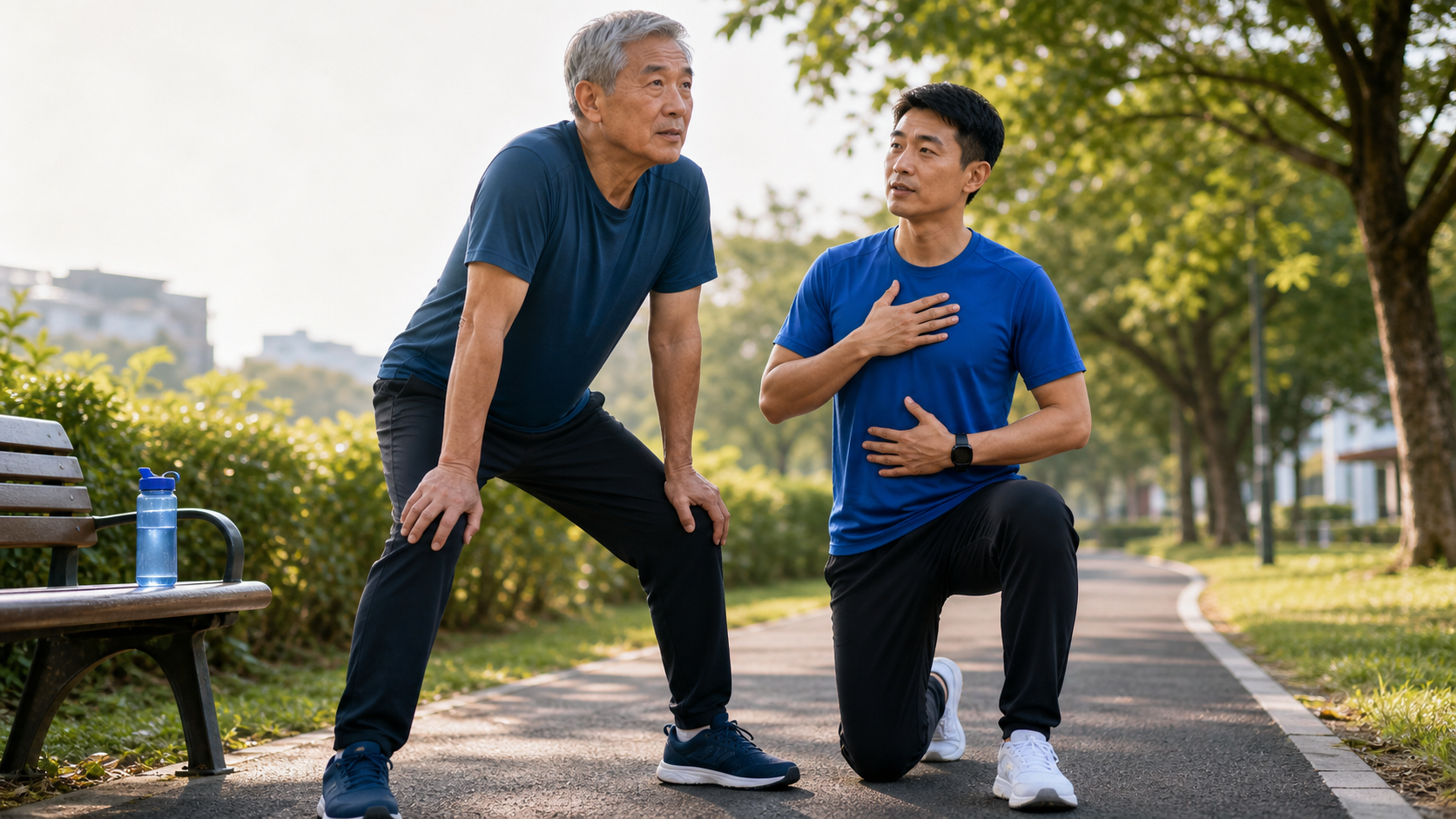
I asked Mr. Chen to stand up and slowly walk twenty meters for me to see. Halfway there, he stopped, braced his hands on his knees, hunched his shoulders high, and inhaled forcefully—that posture was all too familiar to me. It’s the body “gasping for air.” After he caught his breath, he looked up at me and said somewhat sheepishly: “Coach, the doctor told me to exercise more, but the moment I move, I get this out of breath. Does that mean I shouldn’t be moving at all? If I keep exercising, will something happen?”
I’ve heard this question hundreds of times over the past fifteen years. And my answer has always been the same: “Shortness of breath doesn’t mean you can’t move; in fact, it’s because you haven’t moved for so long that you’re this short of breath.” The trap COPD patients most often fall into isn’t the disease itself, but the vicious cycle of “short of breath → afraid to move → muscle loss, cardiopulmonary decline → even more short of breath → even more afraid to move.” In this article today, I want to lay out pulmonary rehabilitation clearly—from the scientific foundation, practical methods, and breathing techniques, to how it’s implemented here in Taiwan.
Let me state the most important premise first: COPD is a chronic disease that requires long-term physician follow-up, and any exercise program must be built on a correct diagnosis, stable medication control, and assessment by a medical team. This article is an educational summary of concepts and methods to help you communicate with your medical team. It is not meant to replace the individual judgment of any physician, physical therapist, or respiratory therapist.
What is COPD, and why exercise is actually the “prescription”
What’s actually happening in the body with this disease
Chronic Obstructive Pulmonary Disease, simply put, is a long-term, progressive airway obstruction and pulmonary inflammation. In Taiwan, the primary cause remains smoking (including secondhand smoke), along with long-term exposure to cooking fumes, dust, and air pollution. The core problem is: the airways narrow, the alveoli lose elasticity, leading to “incomplete exhalation.”
Many people think COPD means “can’t get air in,” but a more accurate description is “can’t get air out.” Air gets trapped in the lungs and can’t escape—this is called “air trapping” and “dynamic hyperinflation.” When you exercise and your breathing quickens, there’s even less time to exhale, the lungs inflate more and more, the diaphragm gets flattened and can’t generate force, and you feel chest tightness, can’t get a full breath, and become very short of breath. This is also why the shortness of breath in COPD patients is often most noticeable at the moment of “speeding up movement.”
The vicious cycle: deconditioning
Here’s a key concept called “deconditioning.” When a person becomes less and less active because of shortness of breath, the following happen:
- Leg muscles rapidly waste away and lose strength
- The cardiovascular system becomes inefficient, requiring more oxygen for the same intensity
- The number and function of muscle mitochondria (the structures in cells responsible for energy production) decline
The result: for the same task (like walking to the corner store), the body needs to use more oxygen, produces more carbon dioxide, the heart beats faster, and breathing becomes more rapid. So for the same activity, the feeling of breathlessness gets stronger each time. A large part of many patients’ “getting more and more short of breath” isn’t actually the lungs worsening—it’s the body “deconditioning from disuse.” That’s bad news, but it’s also incredibly good news—because deconditioning is reversible, and the tool for reversing it is regular exercise.
Exercise doesn’t make the lungs better; it makes the body “less dependent on the lungs”
This point needs to be made clear so there are no false expectations. Exercise rehabilitation typically does not significantly change your pulmonary function test values (FEV1)—damaged alveoli won’t grow back just because you exercise. So what’s the use of exercise?
Exercise improves the entire system “outside the lungs”: stronger, more efficient leg muscles, better cardiovascular fitness, and muscle cells that use oxygen more effectively. This means the ventilation required to do the same task decreases—your lungs don’t have to work as hard, and the feeling of breathlessness naturally lessens. Large-scale international evidence reviews and clinical guidelines from the American Thoracic Society (ATS) all indicate that pulmonary rehabilitation can improve exercise endurance, reduce dyspnea, enhance quality of life, and lower hospital readmission rates after acute exacerbations. Taking the six-minute walk distance as an example, after pulmonary rehabilitation, patients typically improve by several tens of meters on average—a very noticeable difference for daily self-care.
Why “intervals” are especially useful for COPD
Let me add a very practical scientific concept here. As mentioned earlier, much of the breathlessness in COPD comes from “dynamic hyperinflation”—when movement speeds up and breathing becomes rapid, air can’t be exhaled completely and the lungs inflate more and more. Interval exercise (move a bit, rest a bit) is especially COPD-friendly because during the brief rest periods, you have a chance to slowly exhale the trapped air and “deflate” the lungs back closer to normal size. This allows you to achieve a higher cumulative workload than continuous exercise, but without as much breathlessness.
This is also why when I work with COPD clients, I almost always start with intervals: walk for 2 minutes, stop and do pursed-lip breathing for 30–60 seconds, then walk for another 2 minutes. For many people who can’t even sustain five minutes of continuous walking at the start, intervals let them complete a far greater total amount of exercise than they could by pushing through continuous walking—and it feels much easier, making them more willing to keep going. Once their fitness improves, we gradually shorten the rest periods and lengthen the continuous segments.
The scientific foundation of pulmonary rehabilitation: the four elements of an exercise prescription
A complete pulmonary rehabilitation exercise program typically includes four modules: aerobic endurance training, resistance (strength) training, breathing training, and flexibility and posture. Let’s break each one down below.
1. Aerobic endurance training—the core of rehabilitation
This is the most important part of pulmonary rehabilitation, primarily in the form of walking (including treadmill) and stationary cycling (ergometer). The goal is to improve cardiorespiratory endurance so you’re less short of breath at the same intensity.
How do you determine intensity? This is the most critical—and most easily done incorrectly—part of COPD exercise. Because COPD patients are often limited by “breathlessness” before they ever reach their cardiovascular limits, the traditional approach of using “percentage of maximum heart rate” to set intensity often doesn’t apply. Currently, the more commonly used clinical approach is the rating of perceived exertion scale:
- Borg CR10 Dyspnea Scale (0–10): 0 is no breathlessness at all, 10 is the most breathlessness you can’t tolerate. Research and ATS/ERS guidelines generally recommend keeping exercise breathlessness in the 4–6 (moderate to somewhat hard) range; the American College of Sports Medicine (ACSM) commonly uses 3–5 as the target. This is a zone where “you’re somewhat breathless and your speech is broken into phrases, but you can still get out short sentences.”
- Talk test: If you’re so breathless you can’t even get out three or four words, that’s too intense—time to slow down or rest.
2. Resistance (strength) training—often overlooked but extremely important
Many people think that lung disease means just training the cardiorespiratory system and that strength doesn’t matter. That’s completely wrong. Leg muscle loss in COPD patients is often very severe, and leg weakness is the direct cause of “can’t walk far, can’t climb stairs.” Adding resistance training with resistance bands, light dumbbells, or body weight can effectively improve muscle strength and daily functional ability.
3. Breathing training—teaching you “how to breathe smart”
This section will be covered in more detail separately below, including pursed-lip breathing and diaphragmatic breathing—the “portable tools” for COPD patients.
4. Flexibility and posture
Stretching of the chest wall, shoulders, and neck, along with posture training to avoid chronic hunching that compresses breathing, can make the respiratory muscles work more efficiently.
Practical methods: an exercise prescription table you can use directly
The two tables below are reference frameworks I use when actually working with COPD clients. Please note: these are general examples. The actual intensity, frequency, and whether oxygen assistance is needed must be individually adjusted by your medical team.
Table 1: Three-Stage Exercise Prescription Reference for COPD (Based on Perceived Breathlessness)
| Item | Initiation Phase (Weeks 1–2–4) | Conditioning Phase (Weeks 4–12) | Maintenance Phase (After Week 12) |
|---|---|---|---|
| Aerobic Frequency | 3 days/week | 3–5 days/week | 4–5 days/week |
| Aerobic Duration per Session | Accumulate 10–20 minutes (can be split, e.g., 3 × 5 minutes) | 20–30 minutes | 30–40 minutes |
| Target Breathlessness (Borg 0–10) | 2–3 (light intensity, focus on building confidence first) | 3–5 (moderate) | 4–6 (moderate to somewhat hard) |
| Resistance Training | 1–2 times/week, bodyweight/resistance band, 8–10 reps per exercise | 2–3 times/week, 10–15 reps per exercise, 2–3 sets | 2–3 times/week, progressively increase load |
| Breathing Exercises | Practice pursed-lip breathing + diaphragmatic breathing daily | Incorporate into exercise (exhale during exertion) | Become a habit, automatically activated when breathless |
| Recovery Strategy | Stop if breathlessness exceeds 4, recover with pursed-lip breathing | Interval style: 1–2 minutes of activity, 30–60 seconds of rest | Extend continuous duration as appropriate |
Table 2: Examples of Home-Based Resistance Exercises for COPD
| Exercise | Primary Muscles Targeted | Starting Recommendation | Functional Equivalence in Daily Life |
|---|---|---|---|
| Sit-to-Stand (Chair Squat) | Thighs, glutes | 8–10 reps × 2 sets | Getting up from a chair/toilet, climbing stairs |
| Wall Sit | Front of thighs | Hold for 10–20 seconds × 3 times | Standing endurance |
| Seated Resistance Band Row | Upper back, shoulders | 10–12 reps × 2 sets | Carrying objects, maintaining upright chest for breathing |
| Calf Raises (Holding onto Chair Back) | Calves | 12–15 reps × 2 sets | Propulsion while walking, balance |
| Wall Push-Up | Chest, arms | 8–10 reps × 2 sets | Pushing doors, pushing body up |
| Lateral Raises with Water Bottles (filled with ~0.5–1 kg water) | Shoulders | 10–12 reps × 2 sets | Hanging laundry, reaching items on high shelves |
Key Principle: For all resistance exercises, coordinate the exertion phase (e.g., standing up, pulling the band) with “exhaling,” and inhale during the return phase. Never hold your breath while exerting force; breath-holding increases pressure in the chest cavity, making you more breathless and putting you at greater risk.
Table 2-1: Example of a Weekly Schedule (Reference for Conditioning Phase)
Many trainees struggle not with “how to do the exercises” but with “how to structure the week.” Below is a weekly framework I often give to clients in the conditioning phase. You can shift the days to fit your own routine. This is just an example; actual frequency and intensity should be adjusted according to your medical team’s recommendations.
| Day | Main Focus | Example Content | Target Breathlessness |
|---|---|---|---|
| Monday | Aerobic | Slow walk in the park for 20–30 minutes (interval: walk 2 minutes, rest 30–60 seconds with pursed-lip breathing) | 3–5 |
| Tuesday | Resistance | Full set of exercises from Table 2, 2–3 sets + daily breathing practice | Exhale on exertion |
| Wednesday | Aerobic (Light) | Indoor marching in place or easy walking for 15–20 minutes | 2–3 |
| Thursday | Resistance | Full set of exercises from Table 2, 2–3 sets | Exhale on exertion |
| Friday | Aerobic | Walking or stationary cycling for 25–30 minutes | 3–5 |
| Saturday | Mixed/Daily Life Activities | Walk with family, go to the market, climb a few flights of stairs as practice | 2–4 |
| Sunday | Rest/Stretching | Chest and shoulder-neck stretches, diaphragmatic breathing for relaxation | 1–2 |
Two principles for scheduling: Try not to cram both aerobic and resistance training into the same day (to avoid excessive fatigue and losing motivation the next day); and reserve at least one day for true rest—recovery is itself part of training.
Breathing Techniques: Two Essential Tools for COPD Patients
This is the most practical section of the entire article. I often tell my clients that these two techniques can be used anywhere, anytime. They cost nothing, require no equipment, and are your lifeline when you’re breathless.
I recall when Mr. Chen first started practicing breathing exercises, he kept complaining, “This feels so effeminate, and I’m not even moving. Does it actually work?” I asked him to walk briskly on the treadmill until he was somewhat breathless (around Borg 5), then stop. Once, he recovered using his usual breathing pattern; the other time, he used pursed-lip breathing. After comparing the two himself, he paused and said, “There’s quite a difference. The pursed-lip one got me out of breath faster.” From then on, he treasured this technique. What I want to say is: These two techniques look simple, but they are incredibly powerful. However, the prerequisite is that you must practice them until they become second nature, so you can call upon them the moment you feel breathless.
1. Pursed-Lip Breathing
This technique is tailor-made for the COPD problem of “not being able to fully exhale.” Here’s how:
- Inhale gently through your nose for about 2 seconds (mouth closed).
- Purse your lips, as if you’re about to blow out a candle or whistle.
- Exhale slowly and gently through your pursed lips, making the exhalation last about twice as long as the inhalation (inhale for 2 seconds, exhale for 4 seconds).
Why does it work? Pursing your lips creates a slight back-pressure in the airways, helping to keep the small airways that tend to collapse from collapsing, allowing trapped air in the lungs to escape and reducing air trapping. Many clients, the first time they do it correctly, are amazed and say, “Hey, it doesn’t feel as tight anymore.” Use it immediately when climbing stairs, walking up a slope, or experiencing a sudden bout of breathlessness.
2. Diaphragmatic (Abdominal) Breathing
The goal is to shift the primary work of breathing from the elevated shoulder and neck muscles back to the highly efficient diaphragm. Here’s how:
- Place one hand on your chest and the other on your belly.
- Inhale through your nose, feeling your belly push outward (rather than your chest and shoulders rising).
- Exhale slowly through pursed lips, letting your belly naturally draw inward.
Many people initially find it “weird and unfamiliar,” which is completely normal. I recommend practicing lying down first, with knees bent and body relaxed—this makes it easiest to get the hang of it. Once you’re proficient, progress to using it while sitting, standing, and walking.
3. Rescue Position for Severe Breathlessness
When you experience a sudden, intense episode of breathlessness, in addition to pursed-lip breathing, you can use the “tripod position”: sit with your body leaning slightly forward, supporting your forearms/elbows on your thighs or a table. This position stabilizes your upper body, allowing the accessory breathing muscles to work more efficiently. If you’re breathless while standing, you can also support yourself with your hands on a wall or on your knees. Remember: When breathless, first stabilize your breathing; don’t panic, as panic will make your breathing faster, shallower, and more labored.
Common Mistakes and Corrections: The Six Things I Most Often Correct in Practice
Mistake 1: Stopping Completely at the First Sign of Breathlessness and Never Moving Again
This is the most common issue. Breathlessness is a “expected” normal response during exercise for COPD. As long as it stays within a controllable range (Borg 4–6), it’s not a danger signal, but rather evidence of effective training. Correction: Replace “stopping completely” with “intervals”—when breathlessness reaches 4–5, slow down and use pursed-lip breathing to recover to 2–3, then continue. Don’t stop dead, but also don’t push through to a 10.
Mistake 2: Holding Your Breath During Exertion
Many people instinctively hold their breath when lifting heavy objects or standing up, which is particularly detrimental for COPD. Correction: Establish the iron rule of “exhale on exertion,” ideally combined with pursed lips.
Mistake 3: Only Walking, Completely Neglecting Strength Training
If you only do aerobic exercise and don’t train your legs, your ability to climb stairs and get up from a chair will improve only marginally. Correction: Be sure to schedule resistance training 2–3 times per week (see Table 2).
Mistake 4: Insisting on Exercising Outdoors in Cold Weather or Poor Air Quality
The cold winter air in Taiwan, as well as the autumn/winter air pollution red alerts in central and southern Taiwan, can directly irritate the airways, triggering breathlessness and acute exacerbations. Correction: On cold days, warm up indoors first, and wear a mask or wrap a scarf around your mouth and nose to warm the inhaled air; when air quality reaches orange/red alerts, switch to indoor exercise (marching in place, chair exercises, resistance bands) instead of forcing yourself to go outside.
Mistake 5: Ignoring the Coordination of Medication and Exercise
For some patients, using their bronchodilator before exercise as prescribed can reduce breathlessness during activity and allow for a higher quality workout. Correction: Proactively discuss with your physician the “timing of medication before exercise” and whether you need oxygen support during exercise. This absolutely requires professional advice; never adjust your medication on your own.
Mistake 6: Confusing “Breathlessness” with “Danger Signals”
Breathlessness is acceptable; however, certain situations are red flags requiring immediate cessation and medical attention. Please memorize the following table.
Table 3: Continue Exercising vs. Stop Immediately and Seek Medical Attention
| Situation | Assessment | Action |
|---|---|---|
| Slightly breathless, speech broken into phrases (Borg 4–6) | Normal training response | Can continue or adjust with intervals |
| Breathlessness returns to usual level within 1 hour after exercise | Normal | Continue regular exercise |
| Chest tightness, pressure, pain radiating to arm or jaw | ⚠️ Dangerous | Stop immediately, suspect cardiac issue, seek medical attention promptly |
| Dizziness, blackouts, cold sweats, irregular palpitations | ⚠️ Dangerous | Stop immediately, sit down and rest, call an ambulance if it doesn’t resolve |
| Lips/nails turning blue (cyanosis) | ⚠️ Dangerous | Stop immediately, possible oxygen deprivation, seek medical attention promptly |
| Sudden increase in phlegm, turning yellow-green, fever | ⚠️ Sign of acute deterioration | Pause exercise, seek medical evaluation promptly |
| Oxygen users: blood oxygen drops significantly below usual level | ⚠️ Caution | Follow the lower limit pre-set by your medical team |
If you have comorbidities such as heart disease, high blood pressure, or diabetes, the safety threshold for exercise is stricter. Be sure to have your physician evaluate you individually before starting, and agree on your “danger values” and response protocol.
Local Taiwan Context: How to Integrate Rehabilitation into Daily Life
Medical Care and Resources: Making Good Use of NHI and Hospital Pulmonology/Rehabilitation Departments
In Taiwan, COPD is a chronic disease, and it is recommended to have regular follow-ups at a pulmonology clinic. Many medical centers and regional hospitals have pulmonary rehabilitation clinics or respiratory care teams, where respiratory therapists and physical therapists conduct assessments and training — this is the ideal starting point. It’s best to have your first exercise session under professional supervision to establish your personalized intensity and safety limits, then transition to home-based self-practice. When you see your doctor, proactively ask: “Am I suitable for pulmonary rehabilitation? Are there rehabilitation or respiratory therapy resources you can refer me to?”
Venues: Where to Train in Taiwan
- Community parks, school tracks: Flat, with landmarks to estimate distance, suitable for walking endurance. Use “utility pole spacing” as an interval unit while walking — walk past 2 poles, then rest with pursed-lip breathing.
- Home stairwells: Practice climbing stairs (exhale forcefully on the way up, inhale on the way down), but ensure there’s a handrail and preferably someone accompanying you.
- Indoors: On days with poor air quality or rain, do chair exercises, resistance band work, or march in place in the living room.
- Avoid: Slippery riverside paths right after rain, mountain areas that are too cold in the early morning, and outdoor activities during red-level air quality alerts.
“Hiding” Exercise in Daily Life
Many patients feel stressed just hearing the word “exercise” — they think they need to change clothes, go somewhere specific, and complete a full 30 minutes. But for COPD, integrating activity into daily life is often easier to sustain. Here’s a checklist I often give my students:
- When grocery shopping or visiting a traditional market, deliberately walk a bit further, take it slow, and practice pursed-lip breathing along the way.
- When taking the MRT or bus, get off one stop early and walk home.
- If you have stairs at home, treat “going upstairs” as a mini interval session (exhale on the way up, hold the handrail).
- During TV commercial breaks, get up and do a few sit-to-stands or calf raises.
- Hanging laundry, watering plants, tidying the balcony — all are good light activities, and a chance to practice “forced exhalation.”
These fragmented activities add up and are just as effective, without the resistance of feeling like “I’m forcing myself to exercise.” The key is to move, and move regularly — the form matters less.
Three Key Reminders for Taiwan’s Climate
- Cold winter air: Warm up indoors before going out; protect your mouth and nose from the cold.
- Autumn/winter air pollution (especially in central and southern Taiwan): Get into the habit of checking the Air Quality Index (AQI); move indoors when it’s orange or above.
- Hot, humid summers: Choose early morning or evening hours, hydrate well, avoid the midday sun outdoors — the muggy heat itself can worsen the feeling of breathlessness.
Nutritional Tips for Those Who Eat Out Often
Nutrition is important for COPD because breathing itself consumes energy. Two common situations:
- Underweight or muscle loss: Ensure adequate protein intake (include beans, fish, eggs, or meat at every meal — e.g., a braised chicken leg, a piece of fish, a carton of unsweetened soy milk) to avoid becoming weaker and frailer because breathlessness makes you eat less.
- Feeling more breathless after meals: Eating too much at once pushes the stomach up, compressing the diaphragm and worsening breathlessness. Try smaller, more frequent meals — split three large meals into five smaller ones.
- Gas-producing foods: Some people find that eating too many gas-producing foods (like large amounts of beans or carbonated drinks) causes bloating that pushes against the diaphragm. Observe and adjust for yourself.
These are general guidelines. If you’re losing weight rapidly or can’t eat, ask for a referral to a dietitian for individual assessment — NHI-covered nutrition counseling is a resource worth using.
Action Recommendations for Readers at Different Stages
If You Were “Just Diagnosed and Still Afraid”
What you need most right now isn’t pushing intensity — it’s breaking through the psychological barrier of “not daring to move.” This week’s goals are simple: practice pursed-lip breathing 3 times a day, 5 minutes each session; take a slow walk near home every day, keeping your breathlessness at 2–3 (easy to slightly breathless). It’s okay if you have to stop and catch your breath — just stop and do pursed-lip breathing. First, let your body relearn that “moving is safe.” At the same time, be sure to follow up with your doctor to confirm the diagnosis and medication, and ask clearly whether you can exercise.
If You’re “Already Active and Want to Be More Systematic”
Follow the “Establishment Phase” in Table 1: aerobic exercise 3–5 times per week, 20–30 minutes per session, breathlessness at 3–5; resistance training 2–3 times per week. Start tracking — record the distance you walk, the time, and how breathless you felt (on the scale) each day. You’ll see with your own eyes that your 6-minute walk distance grows, and the number of times you stop on the stairs decreases. This kind of “visible progress in the data” is the best motivation.
If You Have “Severe COPD, or Have Been Hospitalized for Acute Exacerbation”
You need pulmonary rehabilitation under professional supervision even more — practicing at home on your own carries higher risk. Research clearly shows that undergoing pulmonary rehabilitation after an acute exacerbation reduces re-hospitalization rates and improves physical function and quality of life. So don’t give up after discharge — actively ask your hospital about pulmonary rehabilitation referrals. Exercise must be progressive, possibly starting with seated, bedside, or very short interval sessions, and strictly adhering to the oxygen saturation and intensity limits set by your medical team.
If You Are “a Family Member of a Patient”
Your role is incredibly important. Accompanying, encouraging, without pushing or nagging is key. Walk with them, time them, remind them to do pursed-lip breathing, watch for danger signs, and switch to indoor exercise with them when the weather is bad. COPD rehabilitation is a long-term battle, and family support is often the deciding factor in whether a patient can keep going. One small reminder: avoid blaming statements like “Why aren’t you moving again?” — anxiety and guilt will only make the patient more resistant. Instead, use low-barrier invitations like “Let me walk a short stretch with you” — the success rate is much higher. Also, help track progress (walked farther than last week, one fewer stop on the stairs) and point out these small achievements. Positive feedback is the best fuel.
Don’t Forget the Psychological Aspect
One last point that’s often overlooked: COPD patients are highly prone to anxiety and depression. Chronic breathlessness, limited activity, fear of attacks, and reduced social interaction inevitably take a toll on mood — and anxiety in turn makes breathing faster, shallower, and more labored, creating another vicious cycle. Regular exercise itself has mood-improving effects; but if you or a family member clearly experiences persistent low mood, insomnia, or loss of interest in everything, be sure to mention it to your doctor. Mind and body are cared for together — don’t dismiss it as “just overthinking.”
Back to Mr. Chen: The Corner Three Months Later
Three months later, I saw Mr. Chen again. He was sitting in the same spot, but this time he walked over to greet me proactively — and he walked the whole way without stopping to catch his breath. His wife was beaming beside him: “He now walks to the corner shop to buy breakfast by himself every morning, and he even takes an extra loop around the park.”
Mr. Chen’s lung function test numbers hadn’t really changed; his COPD was still COPD. But his legs had gotten stronger, his heart and lungs had become more efficient, and he’d learned pursed-lip breathing and interval rest. So “walking to the corner” was no longer a heavy task that required his entire respiratory system to work overtime. He still gets breathless, but he’s no longer afraid of it — and he’s no longer trapped at home by it. This is the most precious thing pulmonary rehabilitation can give COPD patients: taking back control of your life.
If you or a family member is trapped by COPD-related breathlessness, remember this: breathlessness doesn’t mean you can’t move; the less you move, the more breathless you’ll become. Talk to your medical team, start with today’s 5-minute slow walk and pursed-lip breathing, and step by step, train your body back to strength.
Frequently Asked Questions (FAQ)
Q1: Will exercise make my lungs worse?
A: Provided you have a correct diagnosis, stable medication control, and the intensity stays within a manageable range (dyspnea rated Borg 4–6 or below), regular exercise will not harm your lungs. On the contrary, it can improve overall fitness, reduce breathlessness, and lower the rate of re-hospitalization after acute exacerbations. The key is to progress gradually, monitor your dyspnea, avoid warning signs, and be evaluated by a physician before starting.
Q2: Do I need to use oxygen all the time when exercising?
A: Whether you need oxygen support during exercise varies entirely from person to person and must be determined by your medical team based on your blood oxygen levels during activity—you should not decide on your own. Some people do not need oxygen at rest but their oxygen saturation drops during exercise, so they may need it; others do not. Be sure to ask a professional.
Q3: Should I keep going when I am very short of breath?
A: First, determine whether this is “acceptable breathlessness” or a “warning sign.” If you are merely pausing between sentences when speaking and recover quickly after rest, you can usually continue after adjusting with intervals. If you experience chest pain, dizziness or blackouts, bluish lips, or irregular palpitations, stop immediately and seek medical attention (see Table 3).
Q4: How long until I feel a difference?
A: Most people begin to notice that the same activities feel less breathless and that they can walk farther after 4–8 weeks of regular training. The benefits of pulmonary rehabilitation can only be maintained through consistency; they will gradually fade once you stop. Therefore, regular exercise during the maintenance phase is crucial—make it a lifestyle habit.
Q5: If the weather is terrible or air pollution is at a red alert, should I skip exercise that day?
A: It is not about skipping exercise—it is about “moving indoors instead.” Marching in place, chair exercises, and resistance bands can all maintain your training without the risk of going outside and inhaling cold or polluted air that could trigger an exacerbation.
Q6: I am very old (in my seventies or eighties). Can I still train?
A: Age itself is not a contraindication. The evidence for pulmonary rehabilitation covers all age groups and all levels of severity. The key lies in “individualization” and “gradual progression.” Older adults can start with seated exercises, movements holding onto a chair back, and very short intervals—first aiming to “move safely,” then gradually increasing the load. In fact, the older and the longer someone has been inactive, the more room for improvement in strength and fitness there often is. Of course, medical evaluation and supervision before starting are just as essential.
Q7: Should I measure my blood oxygen (with a pulse oximeter) when I exercise?
A: A home pulse oximeter can be a reference tool, but the interpretation of the numbers and what your safe lower limit is must be set in advance by your medical team. Do not panic or push through based on a number you see on your own. More importantly, observe how you feel at the same time (dyspnea, dizziness, lip color)—look at the numbers and your symptoms together.
Q8: Isn’t resistance training too dangerous? I am afraid lifting things will make me more breathless.
A: As long as you follow the principle of “exhale on exertion, never hold your breath,” and start with very light weights (or even just your own body weight or a half-filled water bottle), resistance training is safe and highly beneficial for people with COPD. It is precisely the key to improving daily abilities like climbing stairs and getting up from a chair. If you are worried, just have a physical therapist or family member watch your breathing rhythm for the first few sessions.
Q9: Is it too late to quit smoking? I have already been diagnosed.
A: Quitting smoking is meaningful at any time. Although COPD cannot reverse the damage already done to your lungs, quitting is the only measure proven to slow the rate of continued decline in lung function. It will also make your exercise rehabilitation more effective and reduce acute exacerbations. In Taiwan, there are smoking cessation clinics covered by National Health Insurance and smoking cessation hotline resources. Please proactively seek help from your physician—do not think it is too late.
This article is educational content and cannot replace individual diagnosis and treatment advice from a physician, physical therapist, or dietitian. COPD is a chronic disease requiring long-term medical follow-up. Please be sure to discuss any exercise plan with your medical team and have it individually assessed before implementation.
References
- Pulmonary Rehabilitation for Adults with Chronic Respiratory Disease: An Official American Thoracic Society Clinical Practice Guideline — https://www.atsjournals.org/doi/10.1164/rccm.202306-1066ST
- Pulmonary Rehabilitation and Exercise Training in Chronic Obstructive Pulmonary Disease (PubMed) — https://pubmed.ncbi.nlm.nih.gov/29526182/
- Exercise Prescription Training in Chronic Obstructive Pulmonary Disease: Benefits and Mechanisms (PMC) — https://pmc.ncbi.nlm.nih.gov/articles/PMC12009044/
- Benefits of different intensities of pulmonary rehabilitation for patients with moderate-to-severe COPD according to the GOLD stage (PMC) — https://pmc.ncbi.nlm.nih.gov/articles/PMC6790109/
- Measures of dyspnea in pulmonary rehabilitation (PMC) — https://pmc.ncbi.nlm.nih.gov/articles/PMC3463047/
Related Reading
- Exercise and the Respiratory System: People with Asthma Can Exercise Too—A Complete Guide to Managing Exercise-Induced Bronchoconstriction and the Pulmonary Benefits
- Safe Exercise for Heart Disease Patients: From Exercise Prescription and Monitoring to Warning Signs—A Coach Walks You Through It Step by Step
- Exercising with a Chronic Condition: A Complete Guide to Safety, Quality of Life, and Lifestyle While Living with Disease
- Safe Exercise for People with Disabilities and Chronic Illnesses: A Coach’s Guide to Adjustments, Assistance, and Safety for Special Populations
一日北高/長距離團騎 常見問題補充篇 / 組團或跟團的眉角 / 壯車友容易被瘦車友慢性拉爆 / 原來屁股痛可能是這個原因...? / 風場配速法 / 公路車 / CT Yeh
2 年前
2019 柯P 超越北高 第一集團實錄 (11小時實錄請參考另一部影片) 一日雙城 一日北高 NeverStop Taiwan Long Distance Cycling Challenge
7 年前
一日北高常見問題大集合 | 攻略 | 路線 | 訓練 | 補給 | 自行車 單車 | 一日雙城 | 雙塔 | TWB北高360 | 屁股痛
6 年前
[教學] Premiere 影片 手震 修正 教學 防抖 單眼 影像 GoPro 穩定 Video Stabilization
8 年前
Never Stop 西進武嶺 前後雙機 完整全程錄影 訓練台 實境
8 年前
CT 喇低賽) 武嶺牽車 才是王道 西進牽車四小時內秘訣 攝手位置 如何判斷 防抽筋小秘訣
7 年前
CT暗黑廚房) 車友必備 宇宙無敵鮮蚵湯 幫助訓練恢復 天然食補 好市多 超肥鮮蚵 破PR
7 年前
實景訓練台) 彰化經典百K 高強度喵團 90分鐘 跟著一起練功 2019 Indoor workout Changhua Classic 100 Taiwan
7 年前