Yufuin TT (Mount Yufu) Guide: Pacing, Gear Ratios, and a Hot Spring Town Ride on the 11.4 km 4.3% Beginner-Friendly Long Climb
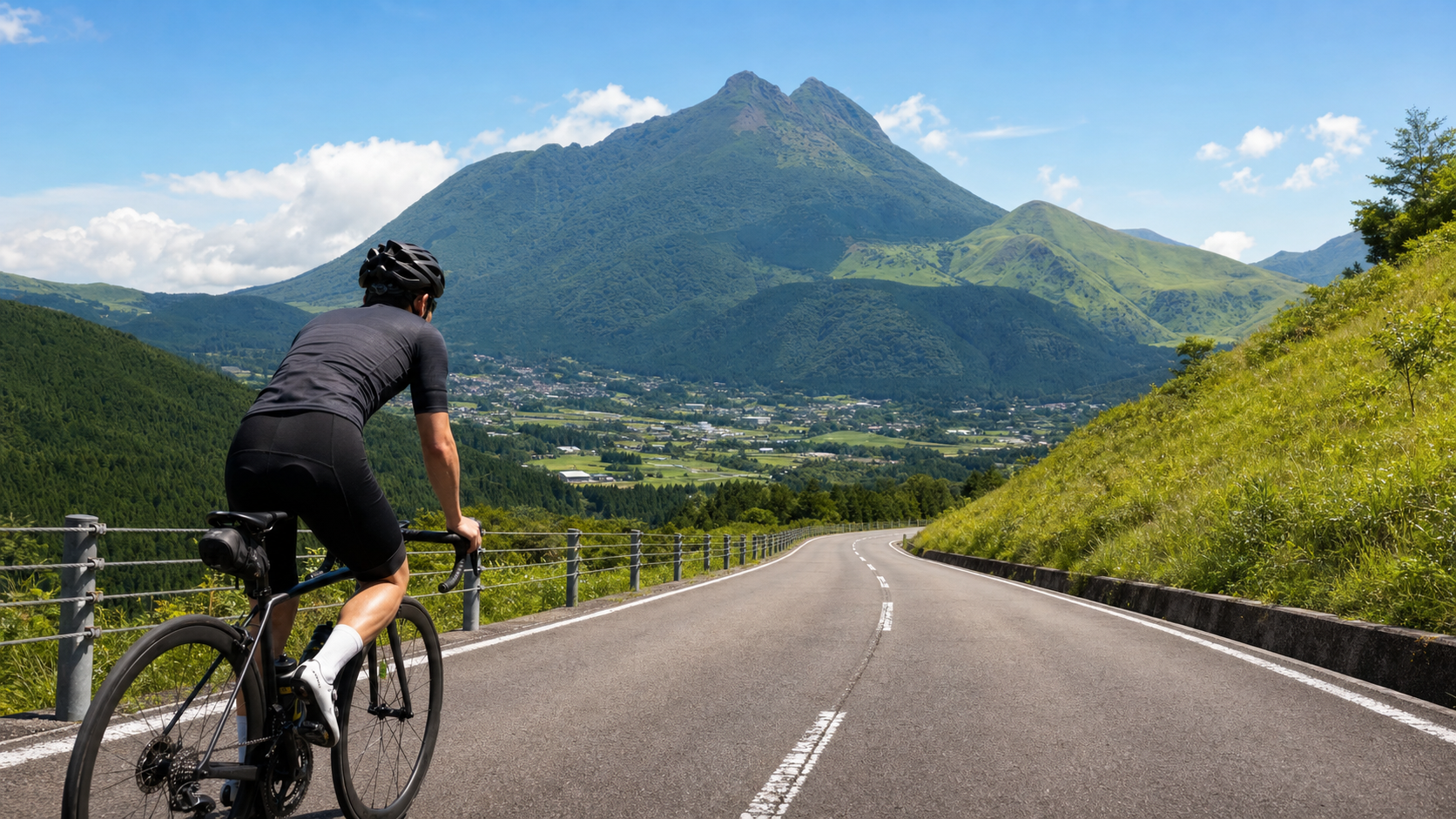
In Oita Prefecture, there’s a climb that connects a “hot spring town” with a “famous mountain”—starting from the Beppu side, following the Yamanami Highway toward the majestic Mount Yufu, climbing all the way to the Yufuin Basin. This route, often called the “Yufuin TT (Time Trial)” or the “Mount Yufu Climb,” is 11.4 km (11,430 meters) long with 487 meters of total elevation gain and an average gradient of 4.3%—making it one of the most beginner-friendly long climbs in this group of routes.
Let’s set the tone with the numbers: an average gradient of 4.3%, gentle yet long. The 11.4 km length combined with the mild gradient makes it a “holy grail for climbing beginners”—you can almost ride the entire way seated without needing an extremely low gear, yet you’ll experience the full rhythm and sense of accomplishment of a long-distance climb. To use a Taiwan route analogy, its scale is close to “a very long but very gentle continuous climb on an industrial road”—what it tests isn’t muscle strength, but patience and consistency.
And its most charming aspect: both the start and finish are hot spring towns (Beppu and Yufuin, Oita’s two famous hot spring destinations), with the majestic Mount Yufu right ahead along the way—the climb itself is a moving scenic show.
1. Data Breakdown: A 4.3% Beginner-Friendly Long Climb
| Item | Data | Interpretation |
|---|---|---|
| Distance | 11.4 km | Long distance |
| Total Elevation Gain | 487 meters | Equivalent to climbing 160 floors continuously |
| Average Gradient | 4.3% | Gentle, beginner-friendly |
| Estimated Steepest Section | Approx. 6–7% | Occurs locally, overall mild |
| Category | Category 3 | Difficulty determined by length |
What 4.3% means: This is a gradient where “you can still chat while climbing”—the golden zone for aerobic training. The core challenge of this route isn’t “enduring steep sections,” but rather “maintaining stability, staying engaged, and not losing speed during a 40–60 minute gentle climb.” For riders who want to progress from flats to mountains but fear being discouraged by steep slopes, this is the ideal first long climb.
Key Concept: A gentle, long climb is the best endurance textbook. Mount Yufu will teach you, in a gentle way, what “steady output” means.
2. Section-by-Section Guide: Breaking the 11.4 km into Three Parts
Section 1 (0–4 km): Departing from the Hot Spring Town, Gradient 3–5%
Starting from the Beppu side, Beppu is Japan’s premier hot spring town, famous for its “Hell Tour” (Jigoku Meguri). The early section has a gentle gradient.
- Pacing: The biggest mistake on a long climb is starting too fast. Begin at an “easy conversation” intensity.
- Cadence: Maintain 85–90 rpm to establish an efficient rhythm.
- Mindset: Tell yourself this is a 40+ minute cruise; the early section is just a warm-up.
Section 2 (4–8 km): Mount Yufu Appears, Gradient 4–6%
As you gain elevation, the majestic Mount Yufu (Oita’s Fuji) gradually unfolds before you. This is the most visually stunning core section of the entire route.
- Power Management: Lock into a steady aerobic zone cruise; err on the side of lower rather than higher.
- Scenery and Safety: Mount Yufu’s twin peaks are highly dramatic, but always enjoy the view under safe conditions—don’t drift off your line due to distraction.
- Fueling: This section is ideal for regular hydration and energy intake.
Section 3 (8–11.4 km): Entering the Yufuin Basin, Gradient Levels Off or Descends
Approaching the Yufuin side, after crossing the high point, the road mostly turns flat or even descends, with the Yufuin Basin spreading out before you.
- Finishing: If paced well, this is an easy finish.
- Finish Line: Yufuin is another famous hot spring town in Oita, with an artsy vibe and refined shops—the perfect end to a cycling trip. Slow down as you enter the town streets and watch for pedestrians.
3. Gearing and Equipment Recommendations
The 4.3% average gradient demands very little in terms of gearing, but for a long distance, it’s still wise to leave some margin.
| Rider Level | Chainring | Cassette | Notes |
|---|---|---|---|
| Advanced / Racing | 50/34 | 11-28 | Easily manageable on gentle climbs |
| General Enthusiast | 50/34 | 11-30 | Most recommended |
| Beginner / Conservative | 50/34 | 11-32 | For those wanting an easy finish and to practice long climbs |
Equipment Essentials:
- Wheels: For a long, gentle climb, an all-rounder rim is the best choice.
- Warmth and Wind Protection: The route passes through higher elevations and hot spring basins, so temperature differences exist—pack a windbreaker.
- Comfort Setup: With the long distance plus the return trip, saddle and contact point comfort is very important.
4. Fueling and Hydration Strategy
- Hydration: Fill up before starting from Beppu city; refreshment points in the mountains are limited.
- Energy: On a long climb, take in carbohydrates on a schedule, every 20–30 minutes.
- Hot Spring Town Fueling: Both the start and finish—Beppu and Yufuin—are hot spring tourist areas with abundant dining options, making them ideal for incorporating meals, supplies, and a soak into your itinerary; however, it’s best to schedule the hot spring bath after the ride is fully complete.
5. Weather and Seasonal Considerations
- Spring (April–May): Pleasant weather, fresh greenery around Mount Yufu—one of the best seasons.
- Summer (June–August): Hot and humid at the base, relatively cooler at higher elevations; afternoon fog and thunderstorms are common in the mountains.
- Autumn (October–November): Foliage season, with Mount Yufu and the surrounding area painted in layers of color—the most beautiful time of the year.
- Winter (December–February): Higher elevations may have ice and snow; the hot spring towns have their own winter charm, but be mindful of road conditions when riding—beginners should avoid deep winter.
- General: Large temperature differences in the mountains; bring windproof and warm layers.
6. Common Mistakes and DNF Risks
- Starting too fast: Fooled by the gentle gradient, you lose speed in the later stages.—Solution: Stay in your aerobic zone the whole way and deliberately slow down early on.
- Insufficient fueling: Not taking in carbohydrates on schedule over a long distance leads to hitting the wall later.—Solution: Eat on a fixed schedule and quantity, and fill up at the start.
- Getting distracted by Mount Yufu: The scenery is so captivating you drift off your line.—Solution: If you want to enjoy the view, stop safely.
- Riding hard after a hot spring bath: The hot springs are too tempting, and riding immediately after soaking leaves you in poor condition.—Solution: Schedule the bath at the very end of your itinerary.
7. Target Time References for Different Rider Levels
The following are reference completion times for the approximate 11.4 km, 487-meter climb:
| Rider Level | Reference Time | Average Speed | Intensity Concept |
|---|---|---|---|
| Racing | 30–35 minutes | Approx. 20–23 km/h | Steady rhythm, on the higher side |
| Advanced | 36–44 minutes | Approx. 16–19 km/h | Steady aerobic |
| General Enthusiast | 45–55 minutes | Approx. 12–15 km/h | Easy aerobic |
| Beginner Finisher | 56–70 minutes | Approx. 10–12 km/h | Goal is a steady finish |
A word to those taking on the challenge: Mount Yufu’s gradient offers beginners a “gentle first time.” Follow the mild slope steadily upward, let Mount Yufu’s twin peaks accompany you all the way, and finally glide into Yufuin for a hot spring soak—this will be the start of your love affair with long climbs.
Route data: 11.4 km distance, 487 meters total elevation gain, 4.3% average gradient (Strava segment), Beppu City, Oita Prefecture, along the Yamanami Highway near Mount Yufu, a beginner-friendly long climb connecting the two great hot spring towns of Beppu and Yufuin.
8. Why Mount Yufu Is “The Best First Long Climb”
Among all the climbs suitable for beginners, the Mount Yufu route—11.4 km at a 4.3% average gradient—has almost perfect “introductory long climb” conditions. It’s worth explaining this thoroughly, because understanding why it’s friendly will help you face it with more confidence.
The gradient falls in the aerobic golden zone: 4.3% is a gradient where “you can still chat while climbing,” right in the golden zone for aerobic training. This means most regular riders can stay seated the entire way, don’t need an extremely low gear, and won’t be pushed into the painful anaerobic zone. You can comfortably maintain a sustainable intensity and fully experience the rhythm of a long climb.
The distance is moderate—rewarding without being overly long: At 11.4 km, it’s long enough to give you a complete experience of the “long climb” process and achievement, yet it doesn’t demand the deep endurance base that Koyasan’s 17.4 km requires. It’s a goal that’s “within reach if you stretch a little”—for riders wanting to progress from flats to mountains, this kind of “challenging but not discouraging” scale is the perfect dose for building confidence.
The scenery and rewards are exceptionally rich: Both the start and finish are hot spring towns, the majestic Mount Yufu is right ahead along the way, and you can soak in a hot spring at the end. These abundant rewards provide strong psychological support for the effort of climbing. For beginners, “scenery and a hot spring await me” is the best motivation to get through the climb.
It’s precisely because of these three points that Mount Yufu is the first route I most often recommend to riders who “want to start long climbs but are afraid of being scared off by steep slopes.” It will make you fall in love with long climbs in the gentlest way.
9. Real-World Scenario Simulation: A Complete Mount Yufu Cycling Trip
Before Departure: Fill up on water in Beppu city, have a carbohydrate-based meal, confirm your cassette includes a 30–32T, and tuck a windbreaker into your jersey pocket. Beppu is the capital of hot springs—before setting off, take a moment to soak in the steaming atmosphere of the streets, then head out at your leisure.
Section 1 (0–4 km): Starting from the Beppu side, gradient 3–5%. The biggest mistake on a long climb is starting too fast—begin at an “easy conversation” intensity, maintain 85–90 rpm, and tell yourself this is a 40+ minute cruise.
Section 2 (4–8 km): The majestic Mount Yufu (Bungo Fuji) gradually unfolds before you—this is the most visually stunning core section of the entire route. Lock into a steady aerobic zone cruise, erring on the side of lower rather than higher. Always enjoy the scenery under safe conditions—don’t drift off your line due to distraction. This section is ideal for regular hydration and energy intake.
Section 3 (8–11.4 km): Approaching the Yufuin side, after crossing the high point, the road mostly turns flat or even descends, with the Yufuin Basin spreading out before you. If paced well, this is an easy finish. Slow down as you enter the Yufuin town streets and watch for pedestrians.
After Arrival: Yufuin is a hot spring town with an artsy character. Park and lock your bike, stroll through the hot spring streets, take a look at Lake Kinrin, and enjoy a famous local pudding or croquette. Finally—soak in a hot spring and let the fatigue of the climb dissolve in the warm water. This is the perfect ending to a Mount Yufu cycling trip. Remember: schedule the hot spring bath after the ride is fully complete, and don’t ride hard afterward.
10. Customized Recommendations for Different Groups
- For Climbing Beginners: Mount Yufu is your best first long climb. Set your goal as “steady throughout, no rushing, arrive in Yufuin smoothly,” and go as slow as you need in the early section. Follow the majestic Mount Yufu all the way, then reward yourself with a hot spring soak—this will be the start of your love affair with long climbs.
- For Riders Wanting to Build Aerobic Endurance: The 11.4 km of even, gentle climbing is an excellent venue for building your Zone 2 aerobic base. Lock into the lower end of your aerobic zone for a steady cruise—it’s a high-quality aerobic session with a hot spring reward at the end.
- For Hot Spring and Food Enthusiasts: This route strings together the two great hot spring towns of Beppu and Yufuin with a climb, making it a perfect hot spring and culinary journey in itself. Slow down your pace, work Beppu’s Hell Tour and Yufuin’s hot spring streets into your itinerary, and let the climb become the thread connecting all the wonderful experiences.
- For Couples / Families: Mount Yufu is friendly in difficulty, beautiful in scenery, and rich in rewards, making it ideal as a “non-intense” cycling trip. The stronger rider can accompany the slower one, and the hot spring and food at the finish are rewards everyone can enjoy.
11. The Science of Pacing on Long Climbs: Gentle Slopes Also Require Discipline
Many beginners assume “if the slope is gentle, you don’t need to worry about pacing”—that’s a beautiful misconception. Mount Yufu may be gentle, but it’s 11.4 km long, and pacing discipline still determines whether you ride comfortably or not.
Physics and physiology tell us: maintaining a steady metabolic intensity is the most efficient and most comfortable strategy for a long climb. Even on a gentle slope, if you alternately surge with excitement and then ease off, you’ll repeatedly produce metabolic waste, leaving you inexplicably tired in the later stages. The correct approach is to lock onto a target intensity that’s “sustainable for 40+ minutes” the entire way—those with a power meter should stay in their aerobic zone; those without can anchor on a fixed breathing rhythm.
Mount Yufu’s biggest “trap” is actually that it’s too friendly—the early section is so easy that you can unconsciously ride faster and faster, only to discover in the middle or later stages that your legs have quietly run out of steam. So even on such a gentle slope, please hold to one principle: deliberately suppress that “today feels easy” impulse in the early section and distribute your effort evenly across the entire route. This way, you’ll not only arrive in Yufuin comfortably, but you’ll also have the good mood to enjoy the scenery and the hot spring at the finish. The pacing wisdom of a gentle slope is: “don’t be fooled by how easy it feels.”
12. Gearing and Equipment: The Equipment Philosophy for Gentle Slopes
Mount Yufu’s 4.3% average gradient demands very little in terms of gearing, but that doesn’t mean equipment can be an afterthought. For this “beginner-friendly long climb,” there are a few key points worth noting in equipment selection.
Gearing: For the general enthusiast, a 50/34 chainring paired with an 11-30 cassette is more than sufficient—you can even ride the entire way seated. Advanced riders can use 11-28, while beginners can bring 11-32 for peace of mind. The margin in gearing is mainly for “protecting your knees”—even on a gentle slope, maintaining a slightly higher cadence over a long distance will be easier on your knees.
Wheels: For a long, gentle climb, an all-rounder rim is the best choice, balancing lightweight for climbing with comfort over long distances. This route has low aerodynamic demands, so there’s no need to pursue deep-section rims.
Contact Point Comfort: This is a particularly important consideration for a long climb plus the return trip. With 11.4 km of climbing plus the longer rides before and after, the comfort of the “contact points” between your body and the bike—saddle, bar tape, etc.—will directly affect your experience. An ill-fitting saddle can turn a beautiful ride into torture over a long distance. Confirming your contact point comfort before departure is a task that’s often overlooked on long climbs, yet it’s extremely important.
Warmth and Wind Protection: The route passes through higher elevations and hot spring basins, so temperature differences exist—bring a lightweight windbreaker. Especially if your itinerary includes descents or an evening return, windproof and warm layers will keep you from getting chilled.
13. Fueling and Hydration: The “Eating and Drinking” Details of a Long Climb
With Mount Yufu’s 11.4 km plus the long round trip, plan your fueling on a “half-day” basis. Although the gentle slope isn’t intense, a single “bonk” (glycogen depletion) is still enough to ruin the entire ride.
Carbohydrates: 2–3 hours before departure, have a meal centered on carbohydrates to ensure full glycogen stores. On a long climb, aim for 30–60 grams of carbohydrates per hour—energy gels, energy bars, or bananas all work. The key is “fixed timing and quantity, small amounts taken frequently”—don’t wait until you’re hungry to binge. Mount Yufu’s core section (Section 2) is the best place for regular fueling.
Hydration and Electrolytes: Drink 500–750 ml per hour, more in hot and humid weather. If you sweat heavily and only replace water without electrolytes, you risk cramping. In summer or when sweating a lot, add electrolyte tablets to your water or drink sports drinks. Fill up before starting from Beppu city; refreshment points in the mountains are limited.
Making the Most of Hot Spring Town Fueling: Both the start and finish—Beppu and Yufuin—are hot spring tourist areas with abundant dining options, making them ideal for incorporating meals, supplies, and a soak into your itinerary. But remember: schedule the hot spring bath after the ride is fully complete. After soaking, your muscles are relaxed and your body temperature has changed; if you hit the road immediately, your body isn’t in an ideal state, and the risk of injury actually increases. Treat the “hot spring soak” as the final reward of the entire trip, not a mid-ride break.
14. Pre-Ride Preparation and Fitness Planning
Although Mount Yufu is a beginner-friendly route, since it’s an 11.4 km long climb plus the round trip, it’s still advisable to have a certain aerobic endurance base. Climbing requires three abilities: aerobic endurance (long Zone 2 base building), threshold power (sweet spot intervals), and muscular strength with fatigue resistance. For a route like Mount Yufu—gentle but long—aerobic endurance is the key: you need an engine capable of steady output for 40+ minutes.
If you usually only ride short distances, I recommend scheduling a few 60+ minute easy rides before taking on Mount Yufu, to get your body accustomed to “sustained exercise over time.” This doesn’t require high intensity; the focus is on “accumulated time.” With this foundation, you’ll be able to comfortably and leisurely enjoy Mount Yufu’s gentle slopes and scenery, without struggling in the later stages due to insufficient endurance. Build your fitness base, prepare your equipment and supplies, and Mount Yufu will repay you with a perfect hot spring cycling trip in its gentle way.
15. Descending and Safety: After Crossing the High Point
The character of the Mount Yufu route is that “after climbing to the high point, the road toward the Yufuin side mostly turns flat or even descends.” This means your descending mainly occurs on the section after crossing the high point and entering the Yufuin Basin, as well as on any return leg of the trip.
Braking and Cornering: Even on a relatively gentle descent, stay focused. Complete all braking before entering corners, avoid braking mid-corner as much as possible, look toward the exit, and use an outside-inside-outside line. On a long descent, don’t ride the brakes continuously—use intermittent braking to avoid overheating the rims.
Temperature Management: Before starting the descent after crossing the high point, if you’ve worked up a sweat from the climb, remember to put on a windbreaker. Although Mount Yufu’s temperature differences aren’t as severe as high-altitude routes, the wind chill effect of a fast descent is still not to be underestimated—a lightweight windbreaker will keep you from getting chilled.
Slowing Down When Entering Town: As you glide into the Yufuin Basin and approach the hot spring streets, crowds and pedestrians will increase. Be sure to slow down significantly and yield to pedestrians. This is a leisurely tourist hot spring town, not a place for racing—gliding into the small town with the most composed demeanor is itself the proper closing rhythm for this gentle ride.
16. Quick Q&A on Common Questions
Q: I’ve never climbed a long hill before. Will Mount Yufu be too hard? No. The 4.3% average gradient is the ideal introductory long climb for beginners, and most people can ride the entire way seated. As long as you don’t start too fast and fuel on schedule, you’ll finish successfully. This is exactly why it’s recommended as “the best first long climb.”
Q: Do I need a very low gear? No. With a 4.3% average gradient, a 30–32T is more than enough. The margin in gearing is mainly for protecting your knees.
Q: Do I have to soak in a hot spring? Highly recommended! Beppu and Yufuin are Oita’s two great hot spring destinations, and the soak is the soul of this ride. But be sure to schedule it after the ride is fully complete, and don’t ride hard afterward.
Q: Between this route, Koyasan, and Makinoto Pass, which suits me? If you’re a long-climb beginner looking for a gentle, friendly experience with a hot spring reward, Mount Yufu is the top choice. Makinoto Pass emphasizes highland scenery, while Koyasan emphasizes endurance and spirituality. The three have distinct characters; Mount Yufu is the most “healing” of them all.
17. Conclusion
To bring it all together, Mount Yufu (Yufuin TT) is a route like this: 11.4 km, 487 meters, 4.3% average gradient—the most beginner-friendly long climb in this group of routes. It doesn’t intimidate with steepness; instead, it uses a friendly gradient, the majestic Bungo Fuji, and the two hot spring towns of Beppu and Yufuin to weave together a gentle and healing cycling journey. The core of conquering it is actually simple: don’t be fooled by how easy the early section feels, maintain a steady pace throughout, fuel on schedule, and then fully enjoy the scenery and the hot spring at the finish.
Bring enough supplies, rein in the ambition of the early section, and let the majestic Mount Yufu accompany you all the way—when you cross the high point, glide into Yufuin, and sink into a hot spring, you’ll understand that climbing can be this gentle, this healing. This will be the start of your love affair with long climbs, and a perfect journey that fully relaxes both body and mind. May you ride with composure, soak with contentment, and store this gentleness deep in your memory.
Appendix: Mount Yufu Cycling Trip Quick Checklist
| Check Item | Standard | Why It Matters |
|---|---|---|
| Largest cassette cog | ≥ 30T | Sufficient for gentle slopes, mainly protects knees |
| Contact point comfort | Check saddle, bar tape | Long distance plus round trip; comfort determines the experience |
| Water and supplies | Fill up in Beppu, fuel carbs on schedule | Limited refreshment points in the mountains; prevents bonking |
| Windbreaker | Carry with you | Protects against chill at higher elevations, on descents, and on the return |
| Hot spring timing | Schedule after the ride is fully complete | Riding hard after soaking risks injury |
| Aerobic base | Have prior 60-minute easy ride experience | The endurance foundation for long climbs |
| Itinerary planning | Beppu Hell Tour + Yufuin hot spring streets | Weaves the ride into a complete experience |
Make this checklist your pre-departure ritual. However gentle Mount Yufu’s slopes are, this ride deserves careful planning and savoring. Once your preparation is complete, the rest is up to your legs, the majestic Bungo Fuji, and the hot spring waiting to soothe you at the finish. May you ride with composure, enjoy yourself to the fullest, and have an unforgettable, gentle hot spring cycling day between Beppu and Yufuin.
One final detail that’s often overlooked but will keep you from being sore the next day: cooling down before the hot spring and recovery after it. When you arrive in Yufuin and are about to soak, don’t rush straight into the hot water the moment you get off the bike—first let your body cool down for ten minutes, hydrate, and let your heart rate settle before entering the bath, so you don’t feel dizzy from rapid vasodilation. Also, don’t soak too long or too hot; moderation is key. After the soak, replenish with carbohydrates and protein, do some gentle lower-body stretching, and get plenty of sleep, allowing your body to fully recover after the healing of the hot spring. Complete these “post-ride” tasks well, and not only will you finish this trip beautifully, but you’ll also feel refreshed the next day—perhaps even with energy to soak in a few more hot springs and stroll a few more hot spring streets in Beppu. Ride gently, soak gently, recover gently—this is the gentle rhythm that a Mount Yufu cycling trip should have, from start to finish.
Related Reading
- The Gentlest Climb: Mount Yufu, a Day from Beppu to Yufuin, Ending with a Hot Spring
- Yabitsu Pass Practical Guide: Section Pacing and Gearing Breakdown for an 11.5 km, 642-Meter Climb
- Taitung City to Zhiben Hot Spring Route: A Leisurely Southern Taiwan Hot Spring Cycling Route Plan
- Baolai Jiasian Route Guide: A Perfect Data-Driven Training Climb at 5.29 km with 202.2 Meters of Elevation Gain
台北闊瀨陡坡 騎旅 / 日本單車雜誌編輯車友臨時加入!/ 髮香才是最強的 / feat. 北迴歸線小隊 / 公路車 CT Yeh
6 個月前
爬坡ITT實境)台中 魔王 松鼠坡 首航 6:12 大肚山 大三元 科福路
8 年前
日本島波海道 EP1 / 五大絕景路線之一! / 私房溫泉 x 豪華單車客棧 / 今治 to 大三島 / 公路車 / CT Yeh
2 年前
阿里山塔塔加 兩倍特濃版!全新隧道開通! 進喔!公路車 | CT Yeh
3 年前
FTL 與 SYB 車隊專訪 西進武嶺 實用攻略分享! 2小時 如何練?!你不知道的眉角!新手準備武嶺必看 EP1 | 實力派女車友 | 精華版 | 公路車 | CTYeh
4 年前
一日北高常見問題大集合 | 攻略 | 路線 | 訓練 | 補給 | 自行車 單車 | 一日雙城 | 雙塔 | TWB北高360 | 屁股痛
6 年前
大禹嶺 到 武嶺牌樓 全程前後實況錄影 | 北進武嶺 | 東進武嶺 | KOM | 訓練台 | 坡度分析 | Taiwan KOM Last 10 km HARD | 公路車
6 年前
#北橫 + #北進武嶺 最硬的員工旅遊 EP1 | #公路車 #拉拉山 | 明池 | 武嶺 | 武陵農場 | 雲海 | Taiwan Cycling Route Wulin
6 年前