Dakeng to Xinshe Practical Guide: The 8.5km Gentle Climb Linking Zhongxingling, Taichung's Main Training Artery
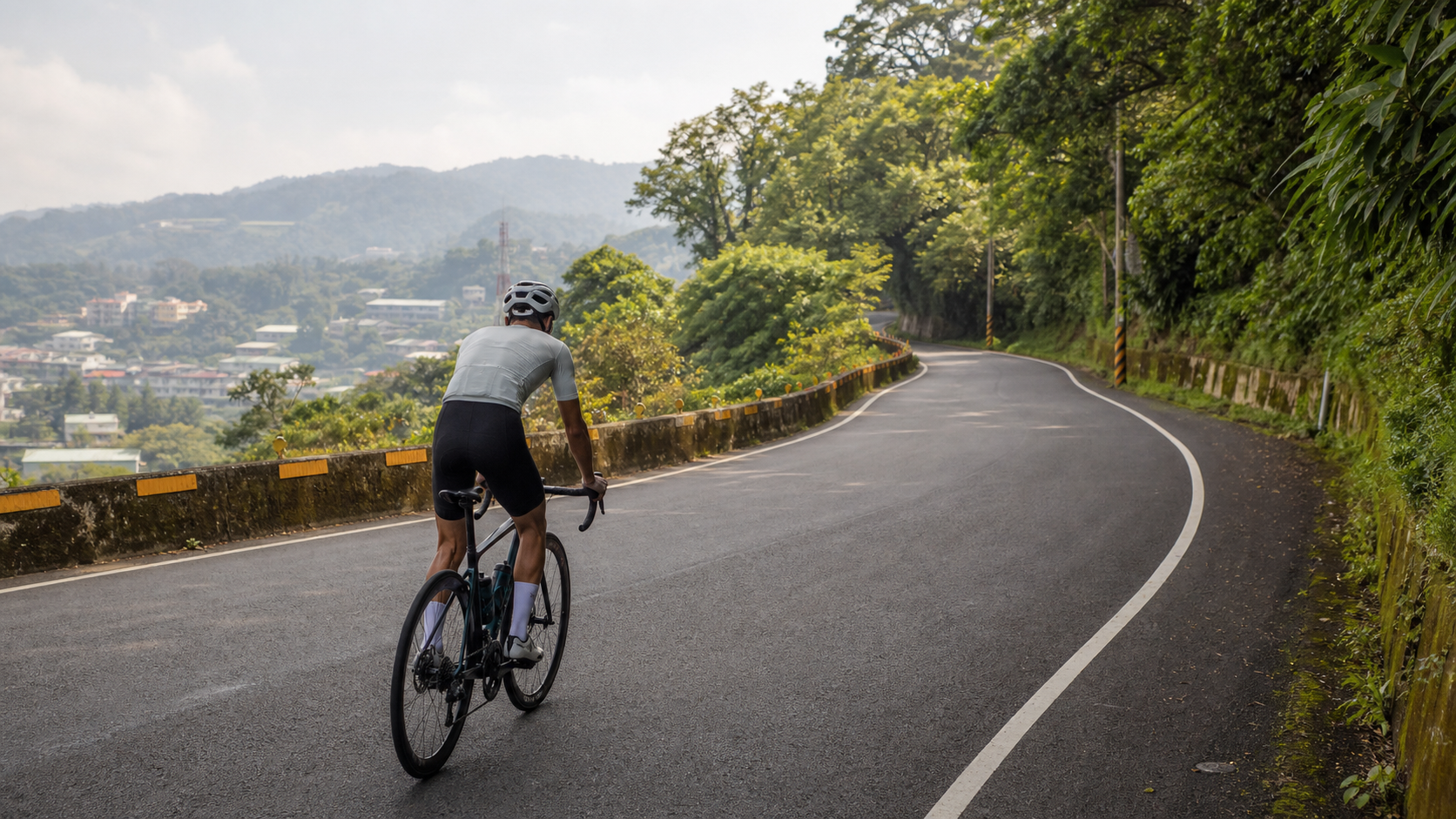
On Taichung’s climbing map, the “Dakeng to Xinshe” section is often treated as a transitional route—it’s not as brutal as Baishan Mountain or Chicheng Peak, nor as long as Daxue Mountain. At 8.49 km in length, with a total elevation gain of about 308 meters and an average gradient of only 3.6%, the numbers alone don’t even qualify it as “hard.” But precisely because it’s gentle, it has become the most frequently ridden stretch for Taichung cyclists: heading to Xinshe, to Guguan, or linking up the “Big Three” routes, almost everything passes through here. It’s the main artery for mountain-road training in Taichung. This article breaks down the route with data and shows you how to ride this “gentle climb” both fast and efficiently.
Route Overview and Data Analysis
| Item | Data |
|---|---|
| Total Route Length | Approx. 8.49 km |
| Total Elevation Gain | Approx. 308 m |
| Average Gradient | 3.6% |
| Starting Area | Dakeng (Dongshan Road area) |
| Key Junction | Zhongxingling (toward Xinshe) |
| Route Category | Mid-distance gentle climb training |
3.6% is a “dangerous” gradient. Why dangerous? Because it’s so gentle that you might think you can just hammer it in the big ring the whole way—so gentle that you’ll unconsciously exceed your threshold without realizing it. Long gentle climbs don’t test explosive power; they test “pacing discipline”—whether you can maintain a steady, sustainable output across the full 8.5 km without letting your power spike and dip. That’s exactly the skill most worth developing on the Dakeng to Xinshe route.
From Dakeng’s Dongshan Road Section 2 straight up to Zhongxingling, about 5.5 km at an average gradient of around 5.5%, is the most classic climbing segment in the area. After cresting Zhongxingling and turning toward Xinshe, the road eases, even rolling slightly, which pulls the route’s overall average down to 3.6%. Understanding this “slightly steeper at the front, gentler at the back” structure is the key to pacing.
Segment-by-Segment Guide
Segment 1: Dongshan Road Warm-up (0–2 km, 3–4% gradient)
Starting from the Dakeng Dongshan Road area, the road is wide, but traffic can be heavy at times (especially on weekends). This segment is for warming up while staying alert to road conditions. The gradient sits between 3% and 4%, making it a warm-up stretch to bring your heart rate from resting into the aerobic zone. Don’t rush—use a high cadence of 85–95 rpm with a light-to-medium gear to get your body fully warmed up in the first 2 km. On this edge of the Taichung Basin, summer heat and humidity mean that warming up too aggressively can spike your heart rate right from the start, making the rest of the ride uncomfortable.
Segment 2: Zhongxingling Climb (2–5.5 km, 5–6% gradient)
This is the segment with the strongest “climbing feel” on the entire route. Heading toward Zhongxingling, the gradient pulls up to 5% to 6%, the road begins to wind upward, and trees grow denser along the sides. Zhongxingling is Taichung’s well-connected hub—north leads down to Xinshe, east connects to Guguan, making it one of the best starting points for challenging mountain roads. For this segment, keep your heart rate below the lactate threshold, push forward at a sustainable rhythm, and don’t empty your legs before reaching Zhongxingling. Shift to a medium-to-light gear and maintain a cadence of 75–85 rpm. This is your main battleground for building “cruising output.”
Segment 3: Over the Pass to Xinshe (5.5–8.49 km, rolling 0–4% gradient)
Past the Zhongxingling junction, the road toward Xinshe eases off, even mixing in descents and short flat sections. This segment is the easiest place to “let your guard down,” and also the easiest place to “steal time”—if you paced the front section well and still have something left, this is where you accelerate to lift your average speed. Conversely, if you blew up earlier, these short rollers will leave your legs feeling heavy. The Xinshe tableland is famous for flower seas and mushrooms, and when you arrive, the view opens up—a great psychological reward.
Gear and Equipment Recommendations
With a 3.6% average gradient and localized 6% sections, this route doesn’t demand much from your equipment. The focus is on “efficiency”:
- Chainring/Cassette: A compact crank (50/34T) paired with an 11–28T or 11–30T cassette is more than enough. This route rarely requires the biggest gear; the key is maintaining a high cadence on the gentle slopes.
- Wheels: Mid-depth rims (40–50mm) actually have an advantage on this kind of gentle climb with rollers—the rotational inertia helps you save energy on the rolling sections at the back.
- Storage: Because this route is often used as a link in longer rides, carrying enough bottle cages and adding a top-tube bag for nutrition when needed is very practical.
Refueling and Group Meetups
The biggest feature of Dakeng to Xinshe is that it’s Taichung cyclists’ “meetup corridor.”
- The 7-Eleven at Dakeng Circle: This is a key assembly point for rides to Xinshe and Guguan, and a crucial spot for water and supplies. Almost every team planning a longer route gathers here, uses the restroom, and tops up bottles. Make sure you stock up on supplies here before departing.
- The Xinshe End: Xinshe town has convenience stores and local food stalls, serving as a resupply point for turning back or continuing deeper.
- Hydration: 8.5 km isn’t long, but if you’re using this as the first leg of a longer ride like the Big Three or Guguan, you should hydrate from the start at long-ride pace—don’t wait until you’re thirsty to drink.
Weather and Seasons
- Spring (Mar–Apr): Although the Xinshe flower sea peaks in winter, the Xinshe tableland in spring is lush and pleasant—prime riding season.
- Summer (Jun–Sep): The edge of the Taichung Basin is hot and humid; starting at dawn is the best strategy. Afternoon thunderstorms are frequent, so be extra careful on the descent toward Xinshe after the pass if rain hits.
- Winter (Nov–Jan): The Xinshe tableland in winter offers flower seas and cooler air, making it a popular season—but weekend traffic and crowds are heavy, so ride with extra caution.
Common Mistakes and Risks
- Hammering the gentle slope: Fooled by the 3.6% average, riders push in the big ring and let their cadence drop below 60, blowing up knees and thighs quickly. Gentle slopes demand even more attention to cadence.
- Ignoring weekend traffic: This is a popular tourist route with heavy car and motorcycle traffic on weekends, especially around Zhongxingling and Xinshe. Raise your riding discipline and road-awareness.
- Losing control after the pass: On the descent and rollers toward Xinshe, if you’re exhausted from the front section, distraction or heavy legs can easily lead to trouble.
- Misjudging supplies: Treating it as a “short route” and neglecting supplies, only to realize it’s actually the opening move of a long ride and running out of water midway.
Reference Times by Rider Level (Full 8.49 km)
| Rider Level | Reference Time | Corresponding Intensity |
|---|---|---|
| Beginner | 40–50 minutes | All-aerobic, success is finishing without putting a foot down |
| Intermediate | 28–38 minutes | Steady cruising, no speed drop on Zhongxingling |
| Race-level | 20–27 minutes | Threshold output, pushing the average hard after the pass |
Actual times vary greatly depending on direction (which end you start and finish), wind, and traffic—these are for reference only. What this route truly asks you to chase is “average speed stability,” not just raw speed.
A Training Ground for Building Your Aerobic Engine
Dakeng to Xinshe has an average gradient of only 3.6%, and many intermediate riders skip it because it’s “not punishing enough”—that’s a waste. In fact, this kind of long, gentle climb is the best venue for building your “aerobic engine.”
At the foundation of climbing ability lies aerobic capacity—how much power your body can sustain without accumulating excessive lactate. This ability isn’t built through repeated heart-rate-spiking sprints; it’s built through a large volume of “comfortable but not lazy” aerobic miles. These 8.5 km of Dakeng to Xinshe are the perfect venue for executing “Sweet Spot” training: holding intensity at 88–93% of threshold, a feeling of “a bit breathless, but can hold it for a long time.” Riding this repeatedly is the most efficient way to accumulate fitness.
Sweet Spot Workout Suggestion
- Warm up for 15 minutes (city flats + the front section of Dongshan Road)
- Main set: hold Sweet Spot intensity on the Zhongxingling climb, and try to maintain it on the rolling section toward Xinshe after the pass
- If time allows, turn around and do it again
- Cool down with 10 minutes of easy riding
Over the long term, you’ll find your “cruising ceiling” being pushed higher bit by bit—at the same heart rate, you can sustain a higher speed for longer. For future challenges like the Big Three or Daxue Mountain’s long climbs, this is the most solid foundation you can build.
Cadence: The Hidden Weapon on Gentle Slopes
The most common mistake on a 3.6% gentle slope is “mashing in the big ring with a very low cadence.” Many people think a gentle slope is easy, so they don’t bother shifting, stomping a few times and coasting—resulting in a cadence that swings wildly and muscles that fatigue early.
The correct approach is to treat the gentle slope as an opportunity to “practice cadence.” Deliberately use a medium-to-light gear and hold your cadence in the high range of 85–95 rpm. The benefit of high cadence is shifting the load from your muscles (which tire) to your cardiovascular system (which is more durable), allowing you to last longer and recover faster. This is especially critical on the rolling road toward Xinshe in the back half—once you’ve built the habit of high cadence, you can respond more fluidly to small rollers instead of stomping hard on every little rise.
Road Conditions and Safety: Hidden Risks of a Popular Route
Dakeng to Xinshe is a popular tourist route, which brings a risk that’s often underestimated—traffic.
- Heavy weekend car and motorcycle traffic: Especially during Xinshe’s flower-sea season and around Zhongxingling, weekend traffic is staggering. Always ride on the right, watch for vehicles approaching from behind, and avoid riding side-by-side chatting and taking up the lane.
- Tour buses and large vehicles: Tourist routes to Xinshe often see tour buses. Leave extra room when cornering, and don’t hug the inside of blind mountain bends.
- Descent after the pass: The direction toward Xinshe includes descents and rollers. When traffic is heavy on weekends, control your speed on descents—don’t weave through traffic just to chase speed.
Safety always matters more than performance. The beauty of a popular route rests on respect for road rights and self-protection.
Connecting This Route into Bigger Challenges
Dakeng to Xinshe’s true identity is that of a “connector route.” It’s the first leg toward bigger challenges:
- Connecting to Guguan: From Zhongxingling toward Guguan (via Xinshe, Baileng, Long’an Bridge onto Provincial Highway 8), this is the opening move toward the Central Cross-Island Highway, and even expeditions to Lishan or Wuling. Zhongxingling to Guguan is about 41 km with roughly 778 m of climbing.
- Connecting to the Big Three: After Xinshe, you can link up Baishan Mountain and Chicheng Peak to form the classic Taichung Big Three (about 89 km, 1552 m of climbing).
Understanding this “connector” role changes how you ride it—not as a final sprint, but as the warm-up and rhythm-setting for a long march. Pace the front section steadily, and you’ll have the legs for the big monsters ahead.
The Art of Pacing a Pass-Crossing Route: Handling the Rollers
What makes Dakeng to Xinshe most distinctive is that it isn’t a simple “all-uphill” route—it’s a composite of “climb + pass crossing + rollers.” After cresting Zhongxingling toward Xinshe, you’ll encounter descents and short rollers. This varied terrain demands a pacing art different from pure climbing.
On the climbs: Maintain a steady output below threshold; don’t be a hero. This is where you gain elevation and spend the most energy, so discipline is essential.
On descents and short flats: These are chances to “recover” and “bank speed.” Don’t completely stop pedaling—use the descent’s momentum and keep a light spin to maintain cadence, lifting your average speed with almost no effort. This is also the golden window for drinking, eating, and taking deep breaths to recover.
On the following short rollers: Don’t surge hard for every little rise. Instead, use the momentum from the preceding descent to “carry through,” saving your explosive power for where it truly matters. This rhythm-switching of “save when you should save, surge when you should surge” is where pass-crossing routes most test your experience—and it’s the greatest training value of Dakeng to Xinshe.
Advanced: Making It the First Leg of a Long-Ride Chain
Dakeng to Xinshe’s true identity is the “first leg” of Taichung’s long-distance routes. Riders looking to level up can use it as the starting point for bigger challenges:
- Zhongxingling to Guguan: From Zhongxingling toward Xinshe (via county roads like Zhong 93 and Zhong 95), then across Long’an Bridge onto Provincial Highway 8 to Guguan—about 41 km with roughly 778 m of climbing. This is the opening move toward the Central Cross-Island Highway, and even expeditions to Lishan or Wuling.
- Taichung Big Three: After Xinshe, link up Baishan Mountain and Chicheng Peak to form the classic 89 km, 1552 m Big Three.
- Xinshe Loop: Using Xinshe as the core, combine surrounding county roads to plan loop routes of varying distances.
When you treat Dakeng to Xinshe as the “first leg,” your pacing mindset changes—you’ll deliberately hold back, because there’s a longer road ahead. This “big-picture thinking” is the key transformation from recreational rider to long-distance player.
Equipment Details: Preparation for Long-Ride Connections
If you’re using this route as the first leg of a long ride, gear preparation needs to be more thorough:
- Dual bottle cages: Long rides demand more fluids; two bottles are the basic setup.
- Storage for supplies: A top-tube bag or saddle bag for energy gels, a windbreaker, and basic tools.
- Repair spares: Long routes take you far from town—spare tubes, tire levers, a pump or CO2, and a basic tool kit are essential.
- Phone and cash: Mountain signals are unreliable; carry enough cash for emergencies and make sure your phone is fully charged.
- Reflectors and lights: If there’s any chance you’ll be riding into dusk, front and rear lights are a must.
With thorough preparation, you can confidently connect this main artery into longer, more spectacular journeys.
Common Q&A: Practical Questions on Dakeng to Xinshe
Q: Is this route suitable for beginners?
Very much so. The 3.6% average gradient is beginner-friendly and an ideal first step from city flats into mountain-road training. For beginners riding this route, the key is learning to “maintain cadence even on gentle slopes, don’t mash the big ring,” and adapting to mountain-road traffic and descents.
Q: Is it too dangerous on weekends?
Weekend traffic is indeed heavier, especially during Xinshe’s flower-sea season and around Zhongxingling. If you’re unfamiliar with the road or uneasy in traffic, consider riding on weekdays or at dawn—fewer cars, better air, and safer. No matter when, ride on the right, watch for vehicles behind you, and avoid riding side-by-side.
Q: How do I get back after reaching Xinshe?
The simplest way is to turn around and retrace the route. For variety, you can loop back to Dakeng via other county roads from Xinshe, or extend into a longer loop. Before turning back, be sure to assess your energy and time—don’t leave yourself in the mountains after dark.
Q: Do I need to carry a lot of supplies?
If you’re only riding this 8.5 km out-and-back, one bottle and a small snack are enough. But if you’re connecting to Guguan, the Big Three, or other long routes, plan your supplies for the long haul. The 7-Eleven at Dakeng Circle is an important starting point for resupply.
Tracking Your Climbing Progress Through Data
Dakeng to Xinshe is an excellent “climbing progress tracker.” Because it’s a popular segment and a regular route for many riders, it’s well-suited for long-term logging and comparing improvement. Consider tracking changes in these metrics:
- Time on the Zhongxingling climb: This is the segment with the strongest climbing feel; its completion time best reflects your climbing fitness.
- Overall average speed: Covering the climb, pass crossing, and rollers, this is a comprehensive performance indicator.
- Average heart rate on the climb: If you can ride the same or faster time at a lower heart rate, your aerobic fitness is improving.
- Speed maintenance on the rollers after the pass: This checks your pacing discipline—pace the front well, and you’ll hold speed in the back.
Log these numbers and compare them regularly, and you’ll clearly see your growth trajectory from “barely finishing” to “cruising comfortably” to “actively pushing the pace.” This visible progress is the best fuel for maintaining training motivation. And Dakeng to Xinshe, this everyday main artery, is the perfect companion for long-term growth—witnessing you get stronger.
Understanding the Importance of “Aerobic Base”
A long, gentle climb like Dakeng to Xinshe trains the core of “aerobic base.” And the aerobic base is the foundation of all riding performance—worth every rider understanding deeply.
Imagine your fitness as a pyramid. At the tip are the flashy abilities—sprint power, anaerobic output, threshold wattage. At the base is your aerobic foundation. The wider and more solid the base, the higher the tip can rise. A rider with a weak aerobic base, no matter how strong their explosive power, won’t last long. A rider with a deep aerobic base can sustain high output for long periods, recover faster, and is more durable.
How do you train the aerobic base? The answer is surprisingly simple—large volumes of low-to-moderate intensity, long-duration aerobic riding. This kind of training isn’t exciting or adrenaline-pumping; it can even be boring. But it’s the most effective way to build the base. And these 8.5 km of gentle climbing on Dakeng to Xinshe are the ideal venue for aerobic-base training: gentle gradient, sustainable, and able to hold aerobic intensity steadily.
Many people are in a hurry, chasing high-intensity intervals exclusively while neglecting aerobic-base accumulation—and their progress stalls quickly. Truly smart training invests the bulk of time in the aerobic base, then uses a small amount of high-intensity work as the finishing touch. Next time you ride Dakeng to Xinshe, don’t dismiss it as “not punishing enough”—treat it as a golden opportunity to widen the base of your fitness pyramid. When your base is wide enough, you’ll find that climbing any hill and riding any distance becomes easier and more sustainable. That is the power of the aerobic base—and the deepest training value of this everyday main artery.
The Wisdom Between Slow and Fast
This gentle climb with an average gradient under four percent has taught me a piece of wisdom about “slow and fast.” When I first started cycling, I thought riding meant going fast—the faster, the stronger; the faster, the more impressive. So I treated every stretch as a race, pedaling desperately, sprinting desperately. The result was either blowing up or getting injured—and I gradually lost the joy of riding.
It was this gentle climb that made me slow down. Its gradient doesn’t force you to go fast; instead, it gives you the room to think about “how to ride smartly.” I began to learn control, to learn pacing, to learn when to save energy and when to spend it. And miraculously, when I learned the wisdom of “slow,” my “fast” actually improved—because I no longer wasted energy recklessly, but put every bit of effort where it counted.
This principle extends far beyond cycling. In life, we’re often held hostage by “fast”—rushing to succeed, rushing to prove ourselves, rushing to arrive. But those who truly go far often know when to slow down, to build strength, adjust rhythm, and keep reserves. Slow isn’t falling behind; it’s a wisdom accumulated for the sake of going farther. This main artery of Dakeng to Xinshe, with its gentle gradient, pours this “wisdom of slow” bit by bit into every rider willing to ride it with intention. That is what makes it more precious than any steep climb.
Treat Every Ride as a Lesson
I’ve ridden Dakeng to Xinshe countless times, yet every time, it still has something new to teach me. Sometimes it’s a subtle adjustment in pacing, sometimes a new understanding of a particular roller, sometimes just rediscovering a view. This has taught me that the true joy and value of cycling lies not in how many routes you’ve ridden or how many mountains you’ve conquered, but in whether you learn and grow from every ride with intention.
No matter how familiar a route is, as long as you ride it with curiosity and reflection, it will always have something new to give you. Conversely, even if you ride across a thousand mountains and rivers, if you’re just skimming the surface without ever thinking, real progress is hard to come by. Your attitude toward learning determines how much you gain from cycling. May you treat every ride on Dakeng to Xinshe as a lesson full of rewards—ride with intention, think with intention, feel with intention, and you’ll discover that this everyday main artery holds inexhaustible wisdom and beauty.
A Word for Those Who Want Long-Term Progress
In training, the biggest enemy is a three-minute passion. Many people buy expensive gear and download training apps in a burst of enthusiasm, train hard for a few weeks, and then run out of steam. What truly brings long-term progress is never a short-lived burst, but day-after-day, steady, persistent effort. This everyday gentle climb of Dakeng to Xinshe is the perfect partner for cultivating that “consistency”—it’s right there, ready to ride anytime, letting you turn training into a habit, a part of your life. May you ride it into your daily routine, building strength bit by bit with a steady, enduring rhythm. When you look back, you’ll find that these seemingly ordinary accumulations have already carried you to heights you once couldn’t imagine.
Conclusion
Dakeng to Xinshe—8.49 km, 308 m of climbing, 3.6% average gradient. It may seem gentle, but it’s the main artery most frequently ridden by Taichung cyclists, and a golden textbook for building your aerobic engine, practicing cadence discipline, and connecting to bigger challenges. Don’t dismiss it for being “not punishing enough”—true riders know how to extract the most solid progress from the most ordinary routes. Next time you pass the 7-Eleven at Dakeng Circle, fill your bottles, control your heart rate, watch your cadence, and ride this main artery with your own efficiency and confidence.
Related Reading
- Taichung Dakeng to Xinshe Countryside Ride: Central Taiwan’s Best Easy Weekend Route
- Riding from Dakeng to Xinshe: A Day of Slow Riding Through Mushrooms, Flower Seas, and Taichung’s Mountain Town
- Taichung Dakeng to Xinshe Flower Sea Route: A Rolling Ride Through Central Taiwan’s Floral Landscapes
- Dakeng Zhongzheng Campground Climb Practical Guide: Taichung’s 5.8 km Beginner Training Stone, Gentle with Steep Sections
爬坡ITT實境)台中 魔王 松鼠坡 首航 6:12 大肚山 大三元 科福路
8 年前
台北闊瀨陡坡 騎旅 / 日本單車雜誌編輯車友臨時加入!/ 髮香才是最強的 / feat. 北迴歸線小隊 / 公路車 CT Yeh
6 個月前
新竹羅平 x 天湖部落 大禹嶺級變態陡坡! 4K超高畫質 空拍 | 公路車
5 年前
大禹嶺 到 武嶺牌樓 全程前後實況錄影 | 北進武嶺 | 東進武嶺 | KOM | 訓練台 | 坡度分析 | Taiwan KOM Last 10 km HARD | 公路車
6 年前
大武山20%魔王陡坡【JJSC南台灣遊騎Day2】!屁股真的要裂開了...凡士林抹滿也沒用?神秘金教堂還有超便宜夜市
3 個月前
台中大雪山 膏王領騎 震到都沒畫面了 公路車
5 年前
嘉義大埔、阿婆灣挑戰賽,美到以為在日本!ft. 環騎5 Cool 西拉雅188 / 公路車 / CT Yeh
7 個月前
大武山後門26%歡樂陡坡!JJSC南台灣單車行Day2 / 被颱風追著跑 / 公路車 / CT Yeh
2 年前