Wushan Back Mountain Guide: Complete Analysis of the 7km Climb with 5.4% Average Gradient in Nanhua District (Don't Confuse It with Wushantou Reservoir)
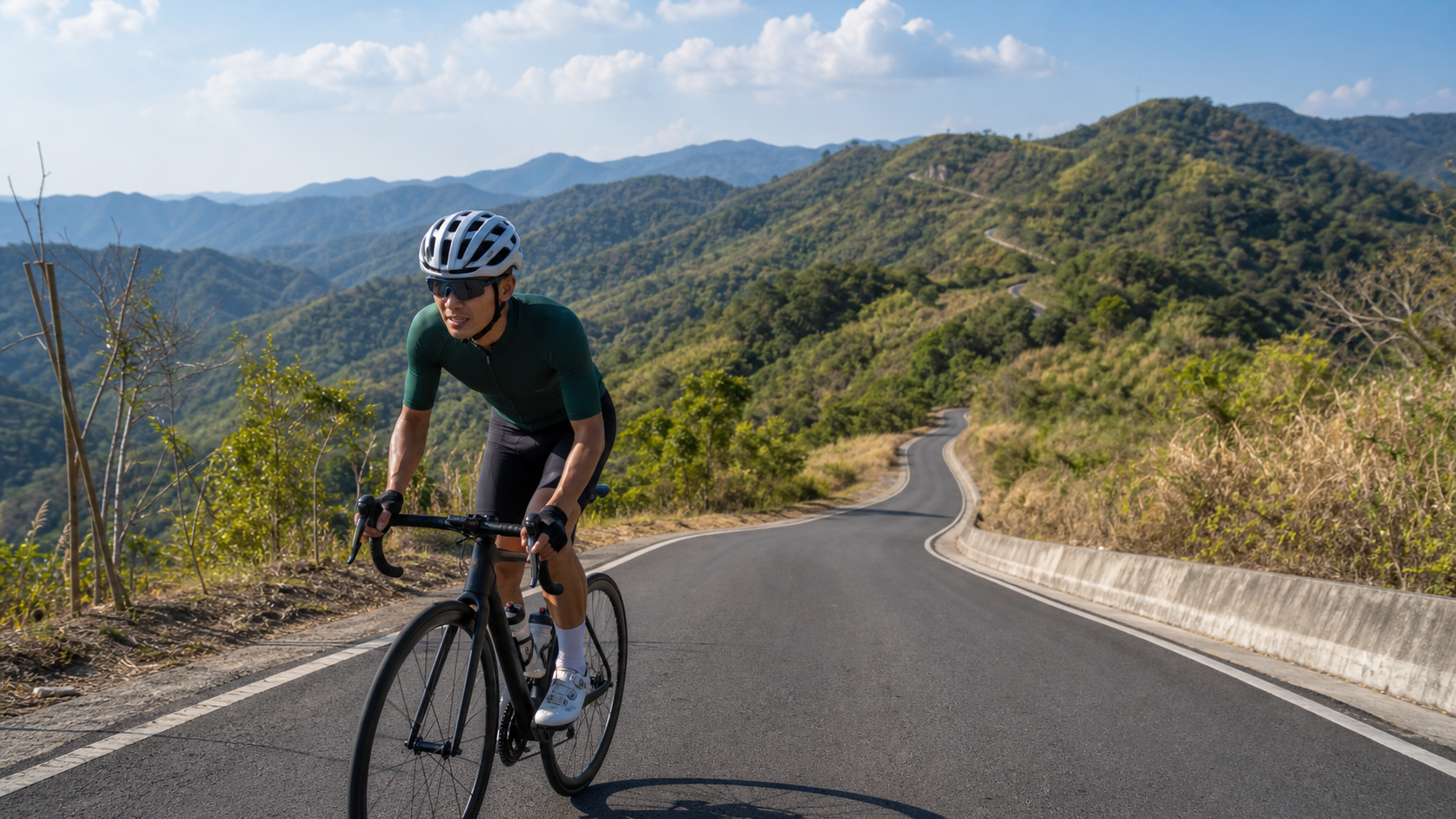
Before You Start: Let’s Be Clear, This Is Not Wushantou Reservoir
Every time someone posts the “Wushan Back Mountain” route in a cycling group, the comments section is guaranteed to have someone saying: “Oh, I know Wushantou, Coral Lake, right?” — Hold on, those are two completely different things. The “Wushan” this article is taking you to ride is a mountain range on the eastern edge of Nanhua District in Tainan City, bordering Kaohsiung City. Provincial Highway 20 (Southern Cross-Island Highway) cuts right through it, dividing it into the northern “Greater Wushan” (elevation roughly 700m and above) and the southern “Inner Wushan” (commonly known as Wushan, elevation roughly 500m). Meanwhile, the well-known “Coral Lake” — Wushantou Reservoir, named for its aerial shape resembling coral reefs — is located at the border of Guantian District and Liujia District in Tainan City, upstream of the Guantian Creek, a tributary of the Zengwen River, and is the site of the Chiayi and Yi Memorial Park. Although both places share the name “Wushan,” they are not geographically adjacent, nor do they belong to the same water system — it’s purely a coincidence that they share the same place name.
This misunderstanding is actually understandable. As a national scenic area drawing endless tourists, Wushantou Reservoir’s fame far overshadows this relatively quiet mountain region in Nanhua District. But precisely because of that, the “Wushan Back Mountain” route deserves serious attention from cyclists — it doesn’t rely on tourist fame to attract crowds; it speaks purely through solid climbing data and ridge-line views. Below is the true dossier on this route.
Route Overview: The Real Numbers Laid Out
This route is recorded on Strava as segment ID 713925. Here are the official measured core data:
| Item | Value |
|---|---|
| Route Name | Wushan Back Mountain |
| Location | Nanhua District, Tainan City |
| Strava Segment ID | 713925 |
| Distance | 7,054.31 meters (approximately 7.05 km) |
| Total Elevation Gain | 384.295 meters (approximately 384.3 meters) |
| Average Gradient | 5.4% |
| CTYeh Classification Code | 3 (Moderately difficult; this route is relatively approachable within Category 3) |
Looking at these numbers together, you can understand them directly: 7.05 km with 384.3 meters of climbing works out to an average gradient of about 5.45%, which almost perfectly matches Strava’s official 5.4% figure. This means the gradient distribution along this route is relatively even, with no outlier brutal sections within short distances — which is good news for pacing and gear selection, and it’s also why, despite being classified in Category 3 (moderately difficult), it’s still considered a “relatively approachable” route within that category. At just over 7 km, the distance isn’t long; for riders with some climbing experience, it can be completed in roughly 20 to 40 minutes, making it ideal as a weekday afternoon training menu or an added climbing session within a longer weekend route.
One sentence to sum it up: This is not a “hellish climb” that will make you suffer miserably, but rather a mid-distance climb where you can keep pedaling steadily, find a rhythm, and build real strength.
Section Guide 1: Starting from Nanhua Town Center, Find Your First Pedaling Rhythm
Starting from Nanhua town center and heading toward Wushan, this is the most mentally important part of the entire route. The mistake most riders make here is treating the relatively flat road from town to the mountain foot as “warm-up isn’t over yet” and spinning at a low cadence, only to find their legs haven’t woken up once they hit the actual climb.
The recommended approach: From the Nanhua town center, deliberately bring your cadence up to 85 rpm or higher, riding in a moderately low gear, letting your heart rate and breathing rhythm enter an athletic state first, rather than reacting only when the gradient appears. The terrain of Nanhua District is predominantly mountainous with little flatland, so “entering the mountains” is almost seamless geographically — you’ll quickly feel the road tilting slightly upward, which is the signal that Wushan Back Mountain has officially begun.
One major advantage of this section is that traffic in the southern mountain areas is generally light, and the interference factors on the road from town to the mountain foot are relatively simple. You can focus entirely on establishing your pedaling rhythm without constantly being distracted by dodging cars. Treat this section as a “calibration tool”: pick a heart rate zone you think you can sustain for the entire ride (typically below the anaerobic threshold, at the upper edge of the aerobic endurance zone), ride at that intensity for a kilometer or two, feel how your body responds, and then decide whether to make minor adjustments going forward.
Section Guide 2: Steady Climb Rhythm — The Soul of This Route
Once you enter the actual climbing section, the 5.4% average gradient begins to reveal its character of “sustained but not ferocious.” What this gradient range tests is not instantaneous explosive power, but rhythm management ability. If you’re used to riding steep climbs (8% and above), you might subconsciously want to stomp hard with high torque, but that approach on a 5.4% gradient is actually wasteful — you’ll burn through your muscle glycogen early, yet still not be halfway up.
A more efficient approach is to mentally break this section into smaller chunks (for example, one segment per kilometer), maintaining a steady cadence (between 80 and 95 rpm, adjusted to personal preference) with moderate pedaling force. It’s better to be slightly conservative than to start out too fast. The total length of this route is only just over 7 km, which seems short, but if you push through the entire 5.4% average gradient with the wrong rhythm, the speed drop in the second half will be very noticeable, potentially making your overall time slower than a steady riding approach.
This is also the section where you can best feel the topographical character of the Nanhua mountain area — rolling ridges with undulating but not severe gradients, the kind of road feel that “gets you addicted to riding.” Many experienced riders particularly favor mid-gradient routes like this as interval training material, because it allows you to sustain an intensity close to your lactate threshold for extended periods, without being forced to slow down so much by steep gradients that you lose the training effect.
Section Guide 3: Ridge-Line View Section — Catch Your Breath and Enjoy the Scenery
Riding into the middle-to-later part of the route, as elevation gradually increases, you’ll begin to feel the sense of openness in your field of view. The Wushan mountain range’s hiking trail system stretches roughly 12 km from north to south, offering views of the Taiwan Strait along the way, as well as northward views of Nanhua Reservoir, Jingmian Reservoir, and other surrounding water features — although the cycling route and hiking trail rights-of-way don’t fully overlap, their geographic proximity means the Wushan Back Mountain route offers similar viewing potential along its course, especially on clear days with good visibility.
On this section, riders are advised to slow down slightly, take their eyes off the bike computer for a few seconds, and feel the relationship between the altitude they’re at and the surrounding terrain. This isn’t just about enjoying the scenery; it also has practical training significance: appropriate mental relaxation can help you recalibrate your breathing rhythm, preventing the unconscious over-tension and wasted energy that comes from staring at numbers for too long.
Section Guide 4: The Finish — Manage Your Final Power Allocation
On any 7-kilometer-class climbing route, the most problematic part is often not the middle, but the finishing stage. Because riders often unconsciously want to “sprint it out” when they see the end approaching, only to lose their chain (literally or metaphorically) where the gradient might shift slightly.
The recommended strategy: When you confirm you have the last 1 to 1.5 km remaining, first check your power or heart rate to see how much reserve you have left. If your condition allows, do a progressive acceleration over the final 500 meters or so, rather than going all-out in one burst. After all, although this route’s classification code is 3, it’s relatively approachable, which means it’s better suited for practicing “riding the full distance with discipline” rather than purely testing your explosive power ceiling.
Gear Ratio and Equipment Advice: How to Prepare for the Gentler Side of Category 3
Although Wushan Back Mountain is classified as Category 3 (moderately difficult), as mentioned earlier, it sits on the more approachable end of that category. An average gradient of 5.4% means most riders won’t need to resort to their easiest “survival gear ratio” to make it up, which makes it an ideal training ground for riders looking to progress from Category 2 to Category 3.
Gear Ratio Recommendations:
- A standard road bike with a 50/34 chainset paired with an 11-28 or 11-30 cassette should be more than sufficient for most riders with some climbing experience.
- If you’re just transitioning from flat-road riding to climbing, or if you’re heavier and still building your power reserves, consider preparing an 11-32 or even 11-34 cassette. This allows you to maintain a comfortable cadence when the gradient keeps coming, without being forced to muscle through it.
- Whether you’re on disc brakes or rim brakes, pay attention to your brake pad condition on the descent. Some sections of the Nanhua mountain roads have gradient changes that can catch you off guard, so checking your brake feel beforehand is basic due diligence.
Equipment Preparation:
- Summer sun in the southern mountains is intense. It’s recommended to wear UV-protective arm sleeves, breathable moisture-wicking clothing, and carry sunscreen to avoid extra energy expenditure from prolonged sun exposure.
- For hydration, plan to carry at least two bottles (totaling approximately 1000 to 1500ml). Although the full route is only 7 kilometers, considering the possibility of out-and-back rides or linking up with other routes, it’s better to over-prepare than under-prepare.
- It’s advisable to carry a basic puncture repair kit and spare inner tubes. Some sections of the Nanhua mountain roads have sparse traffic, so if you get a flat, you’ll need to be self-sufficient.
Nutrition and Hydration: Nanhua Visitor Center Has Your Back
When planning this route, one useful piece of information is that the Nanhua Visitor Center is located right at the foot of Wushan, offering facilities such as showers and hot water—making it a clear rest and resupply point for cyclists and hikers alike. Whether you’re treating Wushan Back Mountain as a standalone training segment or as part of a longer route, you can factor the Nanhua Visitor Center into your itinerary as a base for pre-ride preparation or post-ride washing and resting.
Since this route isn’t long (7.05 kilometers), a one-way ride for most experienced riders falls between 20 and 40 minutes, meaning you theoretically don’t need special nutrition during the climb itself. However, if you’re using it for repeated climbing intervals (for example, riding 2 to 3 laps as intervals), it’s recommended to top up fluids on the flatter sections or at the Nanhua Visitor Center between laps to avoid electrolyte imbalance from prolonged high-intensity output.
Hydration Recommendations:
- 30 minutes before departure, consume 300 to 500ml of fluid to get your body into a well-hydrated state.
- If temperatures are high (summer heat in the southern mountains is the norm), take small sips every 15 to 20 minutes during the ride, avoiding large gulps that could cause stomach discomfort.
- If you’re planning repeated climbing intervals, consider bringing electrolyte supplements, especially during the high-sweat summer months.
Weather and Seasons: Timing Your Ride Makes a Big Difference
Nanhua District’s terrain is predominantly mountainous with little flatland, giving it a typical mountain climate. While the overall climate is mild year-round, the riding experience varies noticeably across the four seasons, and it’s worth factoring this in before you head out.
Summer (June to September): This is the season requiring the most caution in the southern mountains. Intense sun combined with muggy, humid conditions makes prolonged climbing a real risk for heatstroke or heat exhaustion. It’s recommended to avoid the strongest midday sun and instead depart in the early morning (shortly after sunrise) or the cooler evening hours. Sunscreen, UV-protective arm sleeves, and breathable moisture-wicking clothing are essential, and you’ll need more hydration than in other seasons.
Winter (December to February): Southern Taiwan winters are relatively dry with little sustained rainfall, making this a comparatively comfortable season for riding Wushan Back Mountain. While temperatures are milder than in the north, there’s still a noticeable temperature difference between morning and evening in the mountains. It’s recommended to carry a lightweight windbreaker or arm warmers for the cooler morning start, then adjust your clothing as you warm up mid-climb.
Spring and Autumn (March to May, October to November): These two transitional seasons are typically the most comfortable for riding all year round. With moderate sun intensity and pleasant temperatures, it’s recommended to schedule important training sessions or challenge goals during these seasons—the lower physical strain makes it easier to perform at your best.
Regardless of the season, it’s advisable to check the real-time weather forecast before heading out. Mountain weather is inherently harder to predict than on the flats, and the possibility of afternoon showers or fog should be factored into your risk assessment.
Common Mistakes and Risks: Hidden Nuances of Mountain Corridors
While riding a mountain route like Wushan Back Mountain doesn’t carry particularly high overall risk, there are still several common mistakes and risk points worth being aware of before you set off.
Mistake One: Mistaking “Light Traffic” for “Zero Risk”. Traffic on the Nanhua mountain roads is indeed light, which is one of the reasons this route is popular—you don’t have to constantly dodge cars and can focus on riding. But light traffic doesn’t mean there are no blind spots. Mountain roads are full of curves and rolling terrain, and some sections may have agricultural vehicles (in areas with active farming, tractors and trucks entering and exiting fields are common). Don’t let the sparse traffic lull you into complacency. Especially on curves or sections with obstructed visibility, maintain appropriate speed and stay alert.
Mistake Two: Underestimating Fluid and Electrolyte Loss on Sustained Climbs. A 5.4% average gradient isn’t steep, but 7 kilometers of continuous effort combined with southern Taiwan’s summer heat means you’ll sweat more than you might expect. Plan your hydration schedule in advance—don’t wait until you’re thirsty to think about drinking.
Mistake Three: Letting Your Guard Down on the Descent. The climb is hard work, the descent is exhilarating—but this is also where accidents tend to happen. Mountain road surfaces may have fallen leaves, loose gravel, or slippery sections (especially after rain or when morning dew hasn’t dried). Maintain proper braking distance and speed control on the way down, and don’t let the satisfaction of completing the climb relax your vigilance.
Mistake Four: Riding Solo Without Telling Anyone Your Plan. Cell phone reception can be unreliable in some mountain sections. If you choose to ride alone, it’s recommended to inform friends or fellow cyclists of your route and estimated time in advance, and carry a power bank in case your phone dies and you lose the ability to communicate.
Target Time References for Different Rider Levels
The following times are for reference only. Actual performance will vary based on individual fitness, weather conditions on the day, wind direction, and riding equipment. Use these as initial anchors for training goals rather than absolute standards.
| Rider Level | Reference Target Time (One-way 7.05km) | Notes |
|---|---|---|
| Advanced Beginner (just starting Category 3 routes) | 30 to 40 minutes | Focus on finishing and building confidence; no need to chase speed |
| Recreational Rider (regular riding habit) | 22 to 30 minutes | Try to maintain a steady rhythm and practice pace management |
| Advanced Training Rider (regular climbing training experience) | 16 to 22 minutes | Suitable as a warm-up segment before interval training or FTP testing |
| Competitive-Level Rider | Under 16 minutes | Can serve as a pre-race form check or part of a high-intensity interval session |
It’s worth emphasizing that because Wushan Back Mountain is on the more approachable end of Category 3, it serves as an excellent litmus test for “advanced beginners” to see whether they’re ready to take on more challenging routes. If you can complete the full climb at a steady, unforced pace and still have energy left afterward, your climbing ability is maturing—you might consider tackling Category 3 routes with steeper gradients or longer distances, or even Category 4 routes.
Conversely, if your first attempt feels quite demanding, don’t be discouraged—this is exactly what an ideal training route looks like. Start with the goal of simply completing it and accumulating experience, pair that with regular interval training to improve progressively, and when you come back to try again, you’ll typically notice clear progress.
Training Plan Design: Incorporating Wushan Back Mountain into Your Periodized Schedule
For riders with a systematic training routine, a single ride up Wushan Back Mountain is just the most basic use. The true value of this route lies in its flexibility to be incorporated into training plans with different objectives. Below are several common training applications for riders at different stages.
Application 1: Single Steady Climb (Tempo Training). If your training goal is to improve aerobic endurance and sustained output stability, you can treat Wushan Back Mountain as a complete Tempo-intensity session—maintain a heart rate or power zone slightly below your lactate threshold for the entire ride, without deliberately pushing hard, but instead focusing on holding a consistent output across the 7-kilometer distance. This type of workout is especially suited for riders preparing for long-distance events (such as Wuling or other long climbing challenges), helping the body adapt to prolonged moderate-intensity output.
Application 2: Repeated Climbing Intervals (Repeats). If your goal is to improve your anaerobic threshold and climbing explosiveness, consider doing 2 to 4 repeated climbs on Wushan Back Mountain, with adequate recovery time between efforts (descending or easy spinning to bring your heart rate down). Since a single ascent takes only 20 to 40 minutes, this route is ideal for fitting high-quality interval sessions into limited training time, without extending total training hours due to overly long individual efforts.
Application 3: Pacing Control Practice. As mentioned earlier, the 5.4% average gradient is most demanding on rhythm management, which means Wushan Back Mountain is also an excellent classroom for practicing “pacing distribution.” It is recommended to split the full climb into three segments—early, middle, and late—and record the average power or heart rate for each segment. Practice repeatedly to keep the output across the three segments as consistent as possible (avoiding the common mistake of going out too hard in the first segment and fading too much in the last). Over time, developing this sense of pacing will directly benefit longer climbing events.
Application 4: Pre-Race Fitness Test. For riders preparing for Category 3 or 4 races or challenge events, Wushan Back Mountain can also serve as a fitness-check segment two to three weeks before race day—ride the full climb at near-race intensity, observe your heart rate response, recovery speed, and subjective fatigue levels, and use this to evaluate your current training progress and adjust your pre-race taper accordingly.
Common Questions Before You Head Out
Q1: For a first-time attempt at Wushan Back Mountain, is it better to go for a single full climb or practice in segments?
If you are just starting to tackle Category 3 climbing routes, it is recommended to make your first goal simply “complete the full route without giving up.” Speed does not matter at all—the focus is on familiarizing yourself with the gradient changes along the entire route and how your body responds. After you successfully complete it the first time, then consider whether to take on advanced workouts like pacing control or repeated climbs.
Q2: Is this route suitable for bikes other than road bikes?
Although most riders choose road bikes for this type of climbing route, as long as your gearing is appropriately configured, mountain bikes or disc-brake commuter bikes can also complete it. The key is ensuring you have a gear ratio light enough to handle the sustained 5.4% average gradient, especially for heavier riders or those with less climbing experience, who should prioritize gearing over the bike type itself.
Q3: Can this route be combined with other routes into a one-day itinerary?
There are other roads and attractions worth exploring around Nanhua District. If your fitness and schedule allow, you can indeed incorporate Wushan Back Mountain as one climbing segment in a full-day ride, combined with roads around Nanhua Reservoir or nearby mountain routes to create a more complete route combination. However, when planning, it is recommended to schedule Wushan Back Mountain during a time when your energy levels are better (such as the first half of the ride), to avoid tackling the climb after fatigue has accumulated, which increases the risk of injury.
Q4: Are there obvious supply stops or shops along this route?
The route itself is in a mountainous area with limited commercial facilities along the way. Riders are advised to complete their main resupply in Nanhua town before departing, and to use the Nanhua Visitor Center as a staging and rest point. For those doing long or repeated rides, be sure to bring enough water and portable food—do not expect to be able to resupply along the way.
Summary: A Solid Route That Speaks Through Data
Wushan Back Mountain does not win on name recognition—it wins on the solid numbers of 7.05 kilometers in distance, 384.3 meters of elevation gain, a 5.4% average gradient, and the relatively quiet, low-traffic riding environment of the Nanhua mountain area. For riders looking to practice rhythm control and progressively build climbing strength, this is a high-value training route—it will not leave you in agony, but it is certainly not an easy rolling hill to be taken lightly.
Before you head out, double-check: you are going to Wushan in Nanhua District, Tainan City, not Wushantou Reservoir in Guantian District. Set your navigation properly, bring plenty of water and sun protection, and choose a comfortable season or time of day to depart. The Nanhua Visitor Center can serve as your staging and rest point. Ready? This route is worth giving a serious ride.
Related Reading
- The Misidentified Hidden Mountain Road: Solo Riding Nanhua Wushan Back Mountain, Encountering the Taiwan Strait and the Aroma of Pickled Olives on the Slopes
- Zhulu Mountain Field Guide: 6.89 km, 546.2 m of Climbing, 7.9% Average Gradient—Are You Ready for This Hardman Long Climb in the Wulai Mountains
- Tainan City to Zengwen Reservoir Route: A Guide to Cycling and Resupply Around Southern Taiwan’s Reservoirs
- Tonghou Forest Road Field Guide: The Real Terrain Behind 12.07 km and a 1.8% Average Gradient
西拉雅五庫單車挑戰 / 曾文水庫 & 南168 二寮 / 500元報名費居然這麼超值/ 公路車 / CT Yeh
10 個月前
半日 小台灣 極限單車路線挑戰實錄
7 年前
單車 梅山36灣 坡度介紹 路段介紹 空拍 (相關遊記影片,請參考說明或我的頻道喔,歡迎訂閱)
6 年前
太平山單車員工旅遊 | 這樣玩CP值最高!| 公路車
5 年前
4K單車實境) 嘉義 梅山36灣 訓練台 爬坡 輕鬆騎
6 年前
梅山36彎 奮起湖 單車挑戰 下集 #公路車
6 年前
大武山後門26%歡樂陡坡!JJSC南台灣單車行Day2 / 被颱風追著跑 / 公路車 / CT Yeh
2 年前
大武山20%魔王陡坡【JJSC南台灣遊騎Day2】!屁股真的要裂開了...凡士林抹滿也沒用?神秘金教堂還有超便宜夜市
3 個月前