Mudan Reservoir Route 199 Guide: A 13.2 km Family-Friendly Long-Distance Route with Gentle Grades
Introduction
Among the mountain indigenous township routes in Pingtung introduced in this series, Mudan Reservoir Route 199 is the only one truly suited as a first choice for relaxed cruising and family riding.
Route Overview and Real Data Analysis
Mudan Reservoir Route 199 is the gentlest in terms of grade among these Pingtung mountain indigenous township routes. The total length is 13.21 km, with a cumulative elevation gain of only 254 meters and an average grade of 1.4%. It does not meet the categorization threshold in the Strava system (Category 0), making it a “long-distance cruising” route rather than a “steep climb challenge.” This combination of data makes it suitable as a segment for endurance training, family riding, or as a recovery buffer within a multi-route linked itinerary.
Mudan Township is one of the three mountain indigenous townships in Pingtung County, governing six villages: Shimen, Mudan, Dongyuan, Xuhai, Gaoshi, and Silin. The ethnic composition is predominantly Paiwan, with a small number of Amis. County Highway 199 is the main thoroughfare running through Mudan Township. The route described in this article passes through key landmarks including Upper Mudan (approximately at the 12.7 km mark), Zhongjian Road (approximately at the 21.9 km mark), and Shimen (approximately at the 27.1 km mark), eventually connecting to the road network around Mudan Reservoir.
Mudan Reservoir is the most important and representative man-made landmark on this route. Built between 1988 and 1995, it officially began water storage operations in 1996. It is located on the upper reaches of the Sichong River, approximately 24 km from Hengchun Township. The dam stands 65 meters tall, with a crest length of 445.6 meters, a total storage capacity of approximately 30.56 million cubic meters, and a submerged area of 142 hectares. It is managed by the Southern Region Water Resources Branch of the Water Resources Agency, Ministry of Economic Affairs. Its primary water sources are the Liren River and the Mudan River, which flow into the Sichong River after discharge. This reservoir is not only a vital source of domestic water for the Hengchun Peninsula in Pingtung, but also, thanks to the surrounding lake and mountain scenery, the most visually appealing landmark along this route.
Core Data Summary:
| Item | Value |
|---|---|
| Total Distance | 13.21 km |
| Total Elevation Gain | 254.0 m |
| Average Grade | 1.4% (long-distance gentle grade route) |
| Strava Category | Category 0 |
| Main Landmark | Mudan Reservoir (dam height 65 m, storage capacity 30.56 million m³) |
| Administrative Area | Mudan Township, Pingtung County |
| Route Milestones | Upper Mudan 12.7 km, Zhongjian Road 21.9 km, Shimen 27.1 km (County Highway 199 main line) |
Stage-by-Stage Guide from Start to Finish
Stage 1 (0–4 km): Warm-up cruising segment. After departure, the route climbs gently along the river valley terrain. The grade is mild, suitable for maintaining a steady cruising speed to gradually get the body into riding mode. On this section, it is recommended to maintain a medium-to-high cadence without frequent gear changes.
Stage 2 (4–9 km): Approaching the reservoir’s core scenic area. As you gradually approach the vicinity of Mudan Reservoir, the terrain begins to show more noticeable undulations. Some sections may feature short, gentle climbs. It is recommended to adjust your gears dynamically based on the on-site grade while maintaining a steady output. This section is the best stretch for enjoying the lake and mountain scenery of the reservoir. If your energy allows, slow down and savor the views along the way.
Stage 3 (9–13.21 km): Wrapping up and connecting to the surrounding road network. As the route nears its end, it gradually connects to the broader County Highway 199 road network system. On this section, it is advisable to pay attention to junction signs to confirm whether you have reached your intended destination or need to continue on to other connecting segments.
Gear Ratio and Equipment Recommendations
With an average grade of only 1.4%, this route is a long-distance endurance-type route, so equipment planning logic should prioritize cruising efficiency:
- Gear Ratio Setup: A standard crankset (53/39T) paired with an 11-28T cassette will handle this route comfortably; no extremely low gear ratios are needed.
- Wheelset Choice: Consider using a lighter wheelset with lower rolling resistance to improve long-distance cruising efficiency.
- Tire Pressure and Width: 25C to 28C comfortable and durable tires are recommended; comfort on long rides takes priority over ultimate rolling efficiency.
Nutrition and Hydration Strategy
At 13.21 km in total length with only 254 meters of climbing, an average amateur rider’s completion time will fall between 40 minutes and 1.5 hours. It is recommended to ensure adequate hydration before departure and carry at least 1 liter of water. Some settlements within Mudan Township may have shops, but their business hours are irregular, so it is not advisable to rely too heavily on roadside resupply.
Weather and Seasonal Recommendations
The Mudan Township area is also affected by the fall wind (luo shan feng) of the Hengchun Peninsula, especially during autumn and winter (November to March of the following year), when winds are noticeably stronger. Riders should be mindful of crosswinds. In summer, the probability of afternoon convective thunderstorms is high, so an early morning departure is recommended. The views around Mudan Reservoir are wide and open, with the lake and mountain scenery being most captivating on clear days. It is advisable to choose a period with stable weather.
Common Mistakes and DNF Risks
Mistake 1: Underestimating the cumulative toll of the total distance. Although the grade is gentle, the 13 km total distance combined with potentially high temperatures can still accumulate considerable physical fatigue, so it should not be taken lightly.
Mistake 2: Ignoring the impact of the fall wind. In autumn and winter, neglecting the crosswind factor may affect handling stability.
Due to the gentle grade, the DNF risk on this route is significantly lower than on the other steeper routes in this series. The main risks are concentrated in weather changes and inadequate long-distance hydration planning.
Target Time References for Riders of Different Levels
| Rider Level | Estimated Completion Time | Recommended Preparation |
|---|---|---|
| Beginner / Occasional Rider | 1–1.5 hours | Suitable as an entry-level long-distance riding experience |
| Advanced Recreational Rider | 40–60 minutes | Can include stops for photos of the scenery along the way |
| Competitive / Club-Level Rider | 25–35 minutes | Suitable as a cruising training segment |
| Professional / Semi-Professional Athlete | 20–25 minutes | Can be incorporated into a long-distance endurance training plan |
The Historical Imprint of the Mudan Incident
Mudan Township preserves important historical sites from modern Taiwanese history—the Mudan Incident of 1874. This historical event, which involved Japan dispatching troops to Taiwan, has left memorial facilities in Mudan Township, including the Mudan Incident Memorial Park and the Mudan Incident Story House. If your schedule permits, it is recommended to arrange time after completing the main riding segment to visit these historical memorials and gain a deeper understanding of this historical event that had a critical impact on the development of modern Taiwanese history. This will make the ride not just a physical workout, but also an opportunity to learn about Taiwan’s history.
Positioning as an Entry-Level Route for Families and Beginners
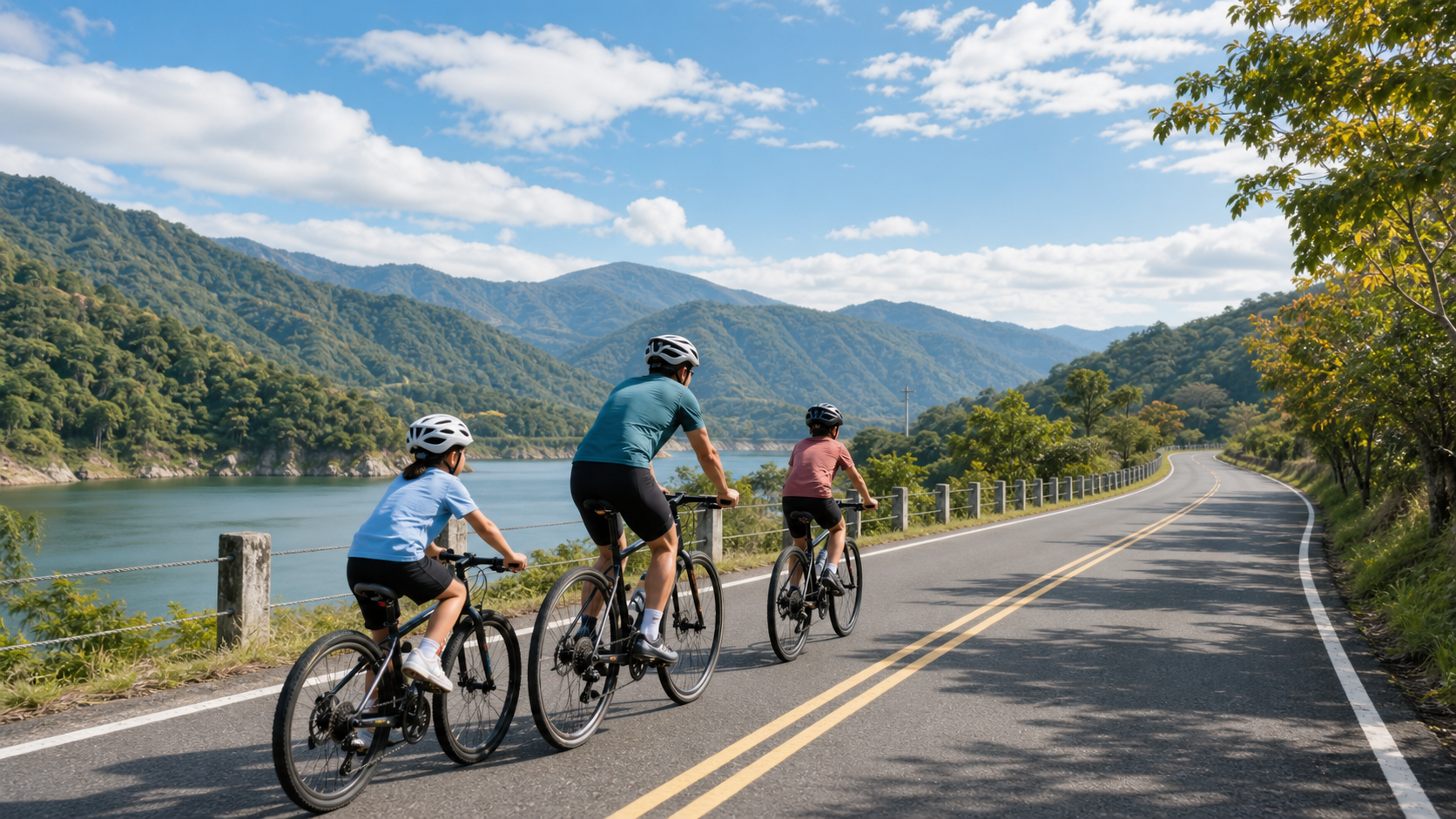
Compared to the other steeper routes in this series, the gentle grade of Mudan Reservoir Route 199 makes it an ideal route for family riding, beginner entry, or as a foundation for long-distance endurance training. If you plan to bring your children along to experience the joy of riding in the mountain indigenous townships of Pingtung, this route is an excellent starting point. The reservoir scenery along the way and the relatively gentle terrain allow beginners to enjoy the fun of cycling with a lower physical threshold, while also taking in the beautiful natural landscapes of the Pingtung mountains. For family rides, it is essential to equip complete safety gear, keep a close eye on the children’s energy levels, and arrange rest and resupply stops as needed.
Conclusion: A Gentle Route That Doesn’t Compromise on Scenery
Mudan Reservoir Route 199 uses its 13.21 km distance and 254 meters of gentle climbing to connect the natural lake scenery and historical-cultural landscape of Mudan Township. It may not appear on the must-ride list of hardcore climbing enthusiasts, but for travelers who enjoy long-distance cruising, family riding, or wish to gain a deeper understanding of modern Taiwanese history while riding, it is a route worth savoring. By following the nutrition and weather advice mentioned in this article, Mudan Reservoir Route 199 will be an easy yet profound chapter in your Pingtung mountain indigenous township itinerary.
In-Depth Analysis: Why Low-Gradient Routes Deserve Serious Planning Too
Many riders fall into the misconception that routes with gentle gradients require little preparation—that all you need to do is hop on the bike and go. In reality, long-distance low-gradient routes like Mudan Reservoir 199 have planning priorities that are entirely different from steep climbing challenges, yet equally important. First, there is the cumulative effect of total riding time—even if no single section has a steep gradient, sustained riding of 13 kilometers or more still places continuous strain on the core muscles, neck, and wrists. Especially if riding posture is poor or the frame size is ill-fitting, the likelihood of experiencing soreness and discomfort after a long ride is no lower than the muscle fatigue following a steep climb.
Second, long-distance routes expose riders to environmental variables for longer periods. Whether it’s the famous Luoshan Wind (downslope wind) of the Hengchun Peninsula or the sudden summer afternoon thunderstorms that change in an instant, longer riding time means a higher probability of encountering these weather variables. Riders planning such routes are advised to pay attention not only to the basic gradient and distance data, but also to carefully evaluate the full timeline and changing trends of the day’s weather forecast, rather than just the immediate weather conditions at the moment of departure.
Detailed Guide to Mileage Landmarks Along County Highway 199
County Highway 199’s main line spans approximately 37.4 kilometers, serving as a vital transportation artery running through Mudan Township, with clear mileage markers along the way. The landmarks mentioned in this article—Upper Mudan (approximately at the 12.7 km mark), Zhongjian Road (approximately at the 21.9 km mark), and Shimen (approximately at the 27.1 km mark)—are important geographic reference points riders can use when planning their itinerary. These landmarks not only hold practical navigational value but also correspond to different settlements and terrain features along the route—the Upper Mudan area has relatively open terrain, Zhongjian Road, as its name suggests, is located in the middle section of the entire route, and Shimen is named for its narrow, gate-like terrain, serving as a key gateway for entering and exiting Mudan Township.
Riders planning to take on this route are advised to mark these important mileage landmarks on their mapping software in advance, using them as reference points to confirm their current position and remaining distance while riding. Especially on long, low-gradient sections lacking prominent landmarks, this kind of mileage marking can be unexpectedly helpful in maintaining riding rhythm and mental state.
Engineering Details and Ecological Significance of Mudan Reservoir
As the most central man-made landmark along this route, Mudan Reservoir’s engineering scale ranks as quite substantial among Taiwan’s small and medium-sized reservoirs—with a dam height of 65 meters, a dam length of 445.6 meters, a total storage capacity of 30.56 million cubic meters, and a flooded area of 142 hectares. This scale of engineering clearly demonstrates its critical role in water resource management for the Hengchun Peninsula. The reservoir’s primary water sources are the Liren Creek and the Mudan Creek; after storage and regulation, the outflow merges into the Sichong River, ultimately supplying domestic and agricultural water needs across a broad area of the Hengchun Peninsula.
From an ecological perspective, because the terrain around the reservoir is enclosed and human development is relatively restricted, it has instead formed a relatively complete ecological sanctuary. The vegetation around the lake is lush, and various waterbirds can often be seen roosting and foraging in the area. When riding through the sections around the reservoir, riders are advised to slow down and pay attention to the surrounding ecological environment. This scenic landscape of lake and mountains is not only a visual delight but also a vital ecological asset of Pingtung’s Hengchun Peninsula—one that every visitor should appreciate and experience with a mindset of care and respect.
Riding Strategy Adjustments During the Luoshan Wind Season
Although the core sections of Mudan Reservoir 199 have gentle gradients, due to its geographical proximity to the Hengchun Peninsula, the influence of the Luoshan Wind during autumn and winter should not be underestimated. Riders planning winter itineraries are advised to pay special attention to the day’s wind forecast. If wind speeds reach a significant level, it is recommended to adjust the riding route direction, aiming to have the wind coming from behind or from the rear-side to reduce the physical exertion of riding into a headwind. At the same time, attention should be paid to the effect of crosswinds on bike balance, especially when passing through open terrain or bridge sections, where heightened vigilance is necessary.
If the wind is excessively strong, riders should consider adjusting their schedule or postponing the challenge—safety should always take precedence over completing the itinerary. While the Luoshan Wind of the Hengchun Peninsula is a unique natural phenomenon of this land, it remains an important risk factor that requires careful evaluation when it comes to riding safety.
Multi-Route Integration and Itinerary Combination Recommendations
Because Mudan Reservoir 199 has gentle gradients and relatively low physical demands, many riders arrange it as the final stage of a multi-route combined itinerary, serving as a buffer section for physical recovery and mental decompression. For example, if the day’s itinerary has already tackled high-intensity steep climbing routes such as Taiwu Back Gate or Dewen Mountain, following up with Mudan Reservoir 199 as the finale not only allows the body to gradually recover from high-intensity output but also provides a relatively relaxed and pleasant conclusion to the entire ride through the natural scenery around the reservoir.
This “hard first, easy later” approach to itinerary arrangement is quite common in multi-route planning and is one of the planning principles repeatedly emphasized throughout this article series—only by fully understanding the intensity characteristics of each route can one design a complete itinerary that balances challenge with sustainability.
In-Depth Exploration of the Historical Context of the Mudan Incident
The Mudan Incident of 1874 is a major event of profound significance in Taiwan’s modern history. It originated from Ryukyuan sailors who drifted to the Hengchun Peninsula after a shipwreck and came into conflict with local indigenous people, which in turn provided Japan with a pretext to dispatch troops to Taiwan. This incident not only affected the diplomatic struggle between the Qing court and Japan at the time but also became an important precursor event in the historical narrative of Japan’s later colonization of Taiwan. The Mudan Incident Memorial Park and the Mudan Incident Story House established within Mudan Township exist precisely to preserve and convey this complex and profound historical memory.
For travelers riding through this land, understanding this history not only adds intellectual depth to the journey but also prompts one to reconsider what complex and weighty historical entanglements this seemingly peaceful and serene landscape once carried. Riders whose schedules permit are strongly encouraged to set aside time to visit these memorial facilities. Through on-site visits and interpretive information, one can gain a more complete understanding of this significant chapter in Taiwan’s modern history that cannot be overlooked, adding richer and more multi-dimensional historical and cultural depth to this Mudan Reservoir 199 cycling journey.
Water Resource Protection and Environmental Ethics Reminder
As an important source of domestic water for Pingtung’s Hengchun Peninsula, the protection of Mudan Reservoir’s catchment area and surrounding environment is directly tied to the safety and quality of water for the broad downstream population. When riding through the sections around the reservoir, riders must comply with relevant environmental protection regulations—do not litter, do not enter restricted areas that are not open to the public, and do not disturb the surrounding ecological environment. These seemingly basic principles of environmental ethics hold indispensable significance for maintaining the long-term sustainability of this precious water resource.
Additionally, if you plan to take photos or make brief stops around the reservoir, it is recommended to choose well-developed viewpoints or rest areas, avoiding arbitrary entry onto slopes or non-open areas. This is not only to protect the ecological environment but also an important consideration and basic responsibility for ensuring your own riding safety.
Differentiated Riding Experiences Between Autumn/Winter and Spring/Summer
Because of its gentle gradients and open vistas, Mudan Reservoir 199 is particularly well-suited for experiencing the subtle seasonal changes of Pingtung’s mountain areas. In spring and summer, the vegetation around the reservoir is lush and verdant, the lake surface shimmers with glistening ripples under the sunlight, and the air is filled with the fresh, distinctive scent of mountain forests. In autumn and winter, as the northeast monsoon strengthens, the water level and surrounding vegetation may present a slightly more desolate yet uniquely charming scenery. Combined with the dry air brought by the Luoshan Wind, distant views often become clearer and more expansive.
Riders who enjoy photography or wish to deeply experience the changing seasonal landscapes are advised to consider visiting this route multiple times across different seasons. Through repeated riding experiences, one can gradually accumulate a complete understanding and appreciation of this land’s four-season scenery. This is another unique value that long-distance low-gradient routes offer compared to high-intensity steep climbing challenges—they give riders more room and leisure to appreciate the scenery at a relaxed pace and to savor the local culture and natural changes in detail, without constantly being driven forward by gradient and heart rate numbers. Instead, riders can truly slow down and properly appreciate every scenic view and detail along the way.
Extended Gear Recommendations: Optimizing Long-Distance Comfort
Beyond the basic gear ratio and tire pressure recommendations mentioned earlier, for this type of long-distance low-gradient cruising route, riders are advised to pay additional attention to the following comfort optimization details: Regarding saddle selection, prolonged riding can easily cause pressure and discomfort in the perineal area, so it is recommended to choose a saddle that matches your own pelvic width and features appropriate cushioning design. The handlebar wrap material and grip angle should also be adjusted according to your hand shape and riding habits to avoid hand numbness or discomfort after extended riding. Additionally, periodically changing hand positions (for example, alternating between the tops and the drops) can effectively distribute the sustained pressure that prolonged riding places on any single area.
These seemingly trivial comfort details may have limited impact on short, high-intensity routes, but on long-distance routes like Mudan Reservoir 199 that require continuous riding for over an hour, they are key factors that directly affect riding quality and the overall experience. They are well worth riders’ attention and preparation before departure.
Difficulty Spectrum Comparison with Surrounding Routes
If we place the seven Pingtung mountain indigenous routes in this series on the same difficulty spectrum, Mudan Reservoir Route 199 is undoubtedly the gentlest in terms of gradient, forming a stark contrast with high-intensity steep climbs such as Taiwu Back Gate (average gradient 7.9%) and Dewen Mountain (average gradient 5.6%). This diversity and layering within the difficulty spectrum, to some extent, also reflects the rich stratification of the Pingtung mountain indigenous road network system—from gentle slopes suitable for beginners and family rides, to hardcore challenges that test the limits of professional riders. The cycling network of this land can meet the diverse needs of riders at different fitness levels and with different riding purposes.
For riders planning a multi-day trip through the Pingtung mountain indigenous areas, it is recommended to refer to this difficulty spectrum and alternate routes of varying intensity, allowing the body to strike an appropriate balance between high-intensity challenges and relatively relaxed cruising sections, with adequate recovery. This kind of itinerary design logic not only helps extend the sustainability of the overall trip, but also allows riders to appreciate the diverse and richly layered landscape of the Pingtung mountain indigenous areas from a more comprehensive and multi-dimensional perspective.
Supplementary Conclusion: Value Beyond the Data
Mudan Reservoir Route 199 may not possess the same dramatic tension in gradient and elevation gain as the other routes in this series, but what it offers is a distinctly different yet equally precious riding value—allowing riders to deeply appreciate the natural lake scenery and historical-cultural landscape of the Hengchun Peninsula in Pingtung under a relatively relaxed physical load. Whether you are a trainer looking to build a foundation of long-distance endurance, or a family rider hoping to experience the beauty of Pingtung’s mountain indigenous areas with your loved ones, this route deserves to be carefully planned, savored, and revisited time and again.
Related Reading
- Pingtung Hengchun Mudan Reservoir Loop: A Hidden Climbing Route in Southern Taiwan
- Quiet Moments by Mudan Reservoir Lake: A Cycling Chronicle of the Mudan Incident and the Power of Serenity
- Pingtung Hengchun Peninsula Loop: A Complete Guide to the Long-Distance Route Through Southern Taiwan’s Mountain and Sea Landscapes
- Tainan City to Zengwen Reservoir Route: A Guide to Reservoir Cycling Routes and Supplies in Southern Taiwan
半日 小台灣 極限單車路線挑戰實錄
7 年前
大武山後門26%歡樂陡坡!JJSC南台灣單車行Day2 / 被颱風追著跑 / 公路車 / CT Yeh
2 年前
嘉義大埔、阿婆灣挑戰賽,美到以為在日本!ft. 環騎5 Cool 西拉雅188 / 公路車 / CT Yeh
7 個月前
觀霧 變好騎了! | 北高車友爆笑大會師 | 公路車 | 單車旅遊 Taiwan Cycling Route GuanWu
6 年前
大禹嶺 到 武嶺牌樓 全程前後實況錄影 | 北進武嶺 | 東進武嶺 | KOM | 訓練台 | 坡度分析 | Taiwan KOM Last 10 km HARD | 公路車
6 年前
台北闊瀨陡坡 騎旅 / 日本單車雜誌編輯車友臨時加入!/ 髮香才是最強的 / feat. 北迴歸線小隊 / 公路車 CT Yeh
6 個月前
司馬庫斯 | 單車員工旅遊 | 比武嶺還接近上帝的路 | 2021 全面實況 路況解析 | 空拍 櫻花炸開超濃密 | 財伯觀光果園 | CT Yeh
5 年前
藤枝二集團 單車行 Day1 | 南部小武嶺 | 爬坡爬到罵罵叫 | JJSC | 公路車 | CT Yeh
3 年前