Zhulu Mountain Practical Guide: 6.89 km, 546.2 m of Climbing, 7.9% Average Grade — Are You Ready for This Hardman-Level Long Climb in the Wulai Mountains?
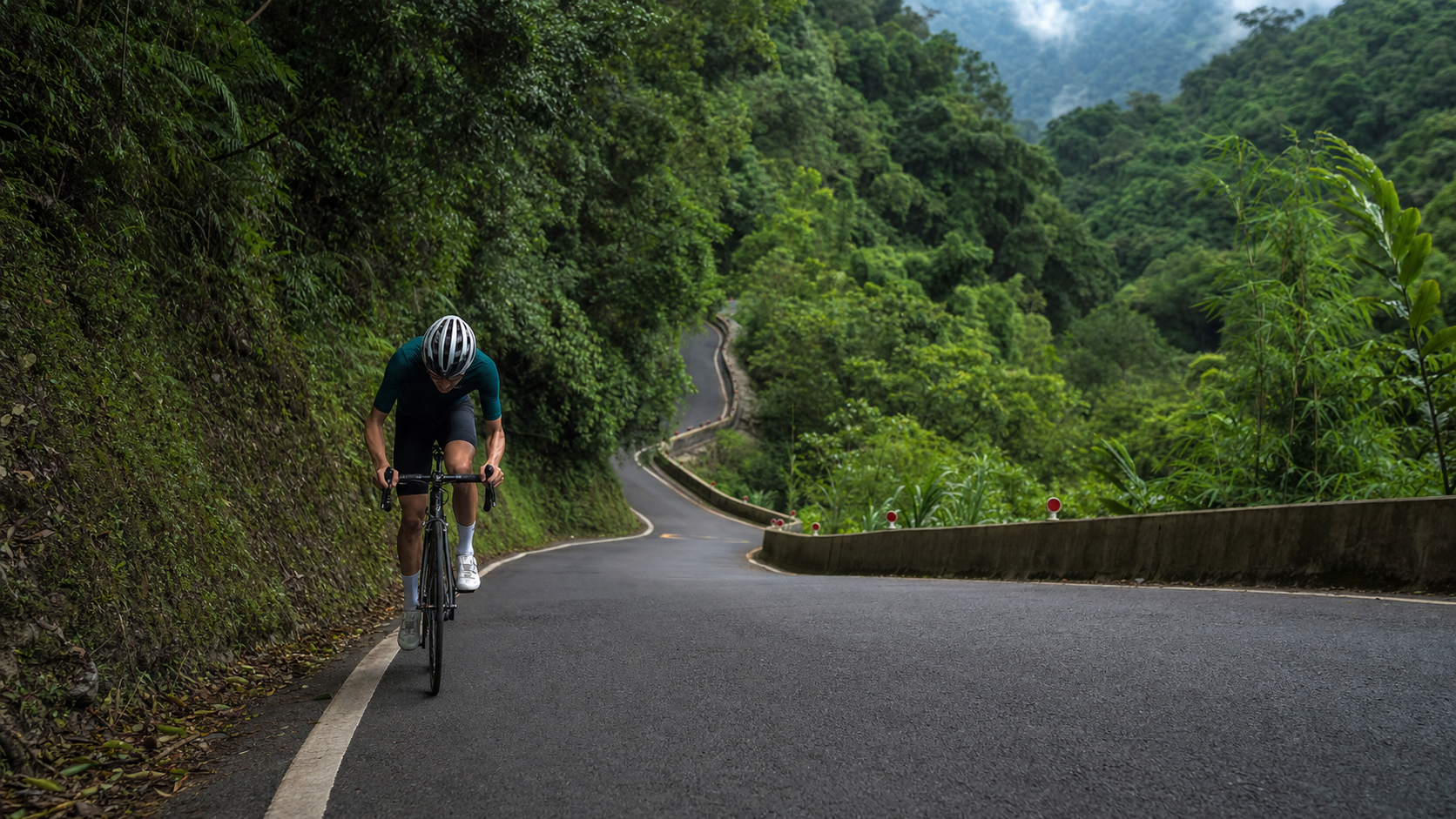
Zhulu Mountain Practical Guide: 6.89 km, 546.2 m Elevation Gain, 7.9% Average Gradient — Are You Ready for This Hardman-Grade Long Climb in the Wulai Mountains
If your training menu is still missing a “secret-spot” climb that’s hard on paper yet low in fame, Zhulu Mountain deserves serious consideration. Located in the mountainous area of Wulai District, this route spans 6.89 km with a total elevation gain of 546.2 m and an average gradient of 7.9% — a figure that clearly surpasses Muzha Zhinan Temple (5.6% average), and even exceeds Jinguashi Jinshui Highway (6.3% average) and Guanyinshan Lingyun Road (6.2% average). This is a bona fide hardman-grade long climb. Today’s article isn’t about scenery — it’s about data, tactics, and risks, breaking down Zhulu Mountain for riders who truly want to take it on.
Route Overview and Real Data Analysis: Why a 7.9% Average Gradient Is So Relentless
Let’s get the numbers straight first. The Zhulu Mountain route is 6.89 km long, with a total elevation gain of 546.2 m and an average gradient of 7.9%, located in the mountainous area of Wulai District, New Taipei City. In practical terms, that’s nearly 79 m of climbing per kilometer — on the spectrum of suburban cycling climbs in Taiwan, this already ranks as a “prolonged high-intensity” route. It’s not the kind of short, punchy steep climb (like the Jinshan Ju Ming Museum climb at 11.9% average but only 2.29 km long); rather, it’s a hardman-style long climb defined by “long duration, no respite, and sustained attrition.”
What makes a 7.9% average gradient so relentless is its “continuity.” A short, extremely steep climb may deliver a shocking burst of intensity, but the pain ends after a few minutes. A 7.9% average over nearly 6.9 km, however, means you must sustain a power output near your threshold for twenty minutes or more. This prolonged mix of aerobic and anaerobic energy demands tests your cardiovascular and muscular endurance far more comprehensively — and mercilessly — than any short, steep climb.
One important caveat: based on currently verifiable public information, the place name “Zhulu Mountain” itself has very limited coverage in mainstream geographic databases, and the precise relationship between its specific geographic location and surrounding landmarks cannot currently be confirmed. This also means the route’s fame and discussion volume are far lower than other better-known scenic routes within Wulai District. But that actually gives Zhulu Mountain a unique “secret training climb” character — it doesn’t attract riders through name recognition; it relies purely on this set of hard-nosed numbers to filter out riders who genuinely want to test their own limits.
Wulai District itself sits at the southernmost tip of New Taipei City, part of the mountainous terrain on the northwest side of the Snow Mountain Range. Geologically, it’s mostly youthful valley terrain — characterized by deeply incised river valleys, steep slopes, and dramatic elevation changes, which explains why this mountain area can give rise to a long, hard climb like Zhulu Mountain with an average gradient approaching 8%. Overall, this is a mountain road with relatively light traffic by general understanding, but that also means support and rescue resources are relatively limited, making pre-challenge preparation all the more critical.
From a power perspective, assuming a 70 kg rider wants to complete this 6.89 km, 546.2 m climb in 25 minutes, the rough sustained climbing power required would fall around 3.3 to 3.7 watts per kilogram — already approaching the threshold power performance of upper-intermediate amateur club riders. In other words, if you want to complete this route with a “respectable” time, the demands on physical conditioning, long-term training foundation, and mental resilience are substantial. This is not a route you can breeze through on a single burst of willpower.
If we map it against the Tour de France’s conventional climb categorization logic, a combination of 7.9% average gradient and 6.89 km length typically falls in the “Category 2 to Category 1” range — a level with clear training and competitive significance, far beyond what the average recreational rider can comfortably handle. This is also why, despite Zhulu Mountain’s low profile, once experienced riders spread the word about this route’s numbers, it tends to earn deep respect — and is even regarded as a key benchmark route for verifying whether one’s climbing ability has genuinely improved.
Section-by-Section Strategy: Breaking 546.2 m of Elevation Gain into Digestible Chunks
A climb with a 7.9% average gradient and 6.89 km length, if not broken down into stages for understanding and pacing, can easily lead to a mid-route collapse of both body and mind. Below is a general four-stage framework to help you build a pacing blueprint in your mind before the actual challenge.
Stage 1 (first 25% of the route): Resist the urge to sprint from the start. A 7.9% average means this route offers almost no “easy warm-up” leeway — you’re into meaningful climbing from the very first pedal stroke. The most common mistake in this stage is going out too hard on adrenaline. Keep your heart rate strictly within 75% of your maximum, giving your body a chance to gradually adapt to the sustained climbing load rather than pushing your muscles straight into lactate accumulation.
Stage 2 (25% to 50% of the route): Enter sustained threshold output. This is the section of the entire route that demands the most “discipline” — the gradient holds at or above the average, and your body will gradually feel the dual pressure of muscle soreness and rapid breathing. Stay seated as your primary pedaling strategy, keeping cadence around 80 rpm, and avoid muscling a heavy gear through brute force to reduce the risk of premature muscle fatigue. This is also the point where thoughts of giving up are most likely to surface — keep your focus locked on breathing rhythm and pedaling cadence rather than constantly calculating how many kilometers remain.
Stage 3 (50% to 75% of the route): A battle between willpower and physiology. By now, your body has typically entered a significant state of fatigue, and heart rate may be approaching or even touching threshold. In this stage, intersperse brief out-of-the-saddle surges to shift muscle recruitment patterns, giving your continuously loaded quadriceps and glutes a moment of relief while also using the forward weight shift to slightly adjust your breathing rhythm. Remember, this is not the time for full-on sprinting — out-of-the-saddle efforts should serve “regulation,” not “acceleration.”
Stage 4 (final 25% of the route): Manage your remaining energy reserves. On a 7.9% average long climb, the worst-case scenario is “dying in sight of the finish” in the final stretch — poor pacing earlier forces a drastic slowdown or even a dismount and walk in the last section. In this stage, be honest with yourself about your physical condition: if you still have reserves, you can try a modest output increase toward the finish; if you’re near your limit, it’s better to slow down and ride steadily at a sustainable cadence than to force a sprint that triggers cramping or compromises bike handling. On mountain roads, losing balance due to physical exhaustion carries far greater risk than on flat terrain.
Beyond the four-stage physical and mental plan, “route reconnaissance” before the actual challenge is equally important. Since Zhulu Mountain is a mountain route with relatively limited information, first-time challengers should not aim to set a personal record on the first attempt. Instead, ride it once at a sightseeing pace or moderate intensity to learn the specific gradient transition points, road surface conditions, corner curvature, and any road details that could affect pacing decisions. This “recon first, attack later” strategy is especially critical on secret routes with limited information — you can’t rely on other riders’ shared experiences to know every gradient inflection point the way you can on famous routes. Only by riding it yourself once can you truly build your own pacing map.
Additionally, a 7.9% average long climb demands far more from pedaling posture and core stability than a typical gentle gradient route. When sustaining high-intensity climbing output for extended periods, insufficient core strength can lead to excessive upper-body sway, wasting unnecessary energy and indirectly dragging down overall pacing. Before tackling this kind of hardman long climb, consider incorporating core training into your regular workout menu — it will deliver immediate, visible benefits to efficiency and stability on long climbs.
Gearing and Equipment: The Hardware Setup a 7.9% Average Gradient Demands
Facing a long climb with a 7.9% average and 546.2 m of elevation gain, gear selection is no longer just an “efficiency consideration” — it’s a decisive factor in whether you can finish at all.
| Rider Level | Recommended Gearing Setup | Notes |
|---|---|---|
| Beginner / First long climb | 34T small chainring + 32T or 34T large cassette (with a rear derailleur with sufficient capacity) | Prioritize having enough low gears available to avoid being forced into prolonged out-of-saddle grinding mid-route |
| Intermediate / Experienced on long climbs | 34T small chainring + 28T to 30T cassette | Balances efficiency and sustained output, suitable for those with a solid climbing mileage base |
| Advanced / Pursuing steady pacing | 36T small chainring + 28T cassette | Slightly heavier gearing, suited to riders with stable power output and stronger threshold capacity |
Special recommendation: if your bike is currently equipped with a standard 50/34 crankset and an 11-28 cassette — a typical “general road setup” — you’ll likely feel significant gearing pressure in the middle to late stages of a sustained 7.9% climb. If conditions allow, strongly consider at least a 30T or larger large cog, or even a mountain-bike-style wide-range cassette (e.g., 11-32T or 11-34T), to ensure you have enough low gears to maintain cadence rather than being forced to muscle through with brute force. This is the more responsible choice for your knees and long-term riding longevity.
For tires, since Wulai mountain roads are generally understood to have light traffic, road surface conditions can vary due to aging drainage systems, leaf accumulation, or occasional loose gravel. Use 25c or wider training or all-round tires with good grip, and avoid overly high tire pressure to balance rolling efficiency and cornering stability.
For bike preparation, a sustained 7.9% climb places higher demands on drivetrain and brake system reliability. Before departure, check that shift cables aren’t slack and that shifting is precise — especially in the middle to late stages when fatigue sets in and you urgently need to shift to an easier gear for relief; a poorly responding drivetrain can be the final straw that breaks your riding rhythm. For brakes, completing the climb is usually followed by an equally long descent back down. Check remaining brake pad life and the condition of brake fluid (hydraulic disc) or cables (mechanical brakes) before departure to avoid the risk of brake fade on long, continuous braking descents.
Nutrition and Hydration Management: The Deadly Detail Most Riders Overlook on Long Climbs
A 7.9% average, 6.89 km long climb will take most riders anywhere from 25 to 50 minutes or longer to complete (depending on individual fitness; see the graded target times below). This duration falls squarely into the range where a serious nutrition strategy is required.
- Before the ride: Finish your main meal about 2 hours beforehand, and ensure you start well-hydrated (urine color close to clear or pale yellow is a good indicator), avoiding the mistake of beginning a high-intensity long climb while even mildly dehydrated.
- During the ride: On a climb averaging nearly 8%, sweat rates will be noticeably higher than on gentler routes. Take small sips of water every 10 to 15 minutes — don’t wait until you feel thirsty, because by then your body may already be mildly dehydrated, impairing muscle contraction efficiency and increasing cardiovascular strain.
- Electrolytes and energy: If you expect the ride to take over 40 minutes, carry easily consumable energy gels or sports food, and add electrolyte supplements to your bottles. Leg cramps are most likely to strike in the middle to late stages of prolonged high-intensity climbing, and electrolyte replenishment is one of the key preventive measures.
- Mountain signal and solo-riding risk: Since this is a mountain road with generally light traffic, and specific information about surrounding facilities and rescue resources is limited, be sure to carry sufficient water and supplies, and inform family or riding partners of your route and estimated time. Avoid tackling this kind of high-intensity long climb alone and without backup support.
Weather and Seasonal Risks: Special Considerations for the Wulai Mountains
The Wulai area is part of New Taipei City’s mountainous terrain, where weather changes are far more dramatic and unpredictable than on the plains. Before tackling a long climb like Zhulu Mountain, check rainfall information for the day and the preceding days — after consecutive rainy days, mountain roads are prone to slippery surfaces, localized ponding, and even small rockfalls or loosened roadbeds. A steep climb averaging nearly 8% combined with wet pavement dramatically increases the risk of loss-of-control crashes.
Afternoon convective thunderstorms are also a routine risk in mountain areas during summer. Schedule your challenge for early morning or late morning to avoid the peak window for afternoon thundershowers. Additionally, summer climbing intensity is high and sweat loss is substantial, so heatstroke and heat exhaustion risks cannot be ignored. Choose a cooler time of day to start, and stay alert for prodromal heatstroke symptoms such as dizziness or nausea.
In autumn and winter, temperature differences between morning and evening in mountain areas can be significant. Even if you feel hot while climbing during the day, temperatures at the summit or higher elevations can be noticeably cooler. Carry a lightweight insulating layer — especially when stopping to rest after the climb or preparing for the descent, your body temperature drops faster than you might expect. Insufficient warmth can lead to hypothermia risk, a serious safety concern on mountain roads with relatively sparse human presence.
Common Mistakes and DNF Risks: A 7.9% Average Gradient Won’t Forgive Your Carelessness
- Underestimating the sustained attrition of a long climb: Many riders approach a long climb with the mindset of a short, steep one, opening with a high-intensity sprint only to see their energy plummet mid-route, forcing a drastic slowdown or outright abandonment.
- Insufficient gearing: This is the most common and most fatal equipment error on a 7.9% long climb — without enough low gears, you’re forced to muscle through the middle and late stages with brute force, sharply increasing strain on knees and muscles, and greatly raising the risk of cramps and muscle pulls.
- Inadequate nutrition and hydration planning: Sweat and energy expenditure rates during prolonged high-intensity output far exceed those on gentler climbs. Without proper planning, hypoglycemia and dehydration can set in during the later stages, directly compromising your ability to finish and your safety.
- Underestimating the risk of riding solo in the mountains: This is a lightly trafficked mountain road with limited information on roadside services. If you fail to inform family or friends of your itinerary and carry sufficient supplies, the difficulty of getting help rises significantly if an accident or mechanical failure occurs mid-route.
- Insufficient weather risk assessment: Mountain weather changes quickly. Charging in without checking rainfall and road conditions in advance can lead to slippery surfaces and poor visibility, substantially increasing safety risks.
- Letting your guard down on the descent: The return descent after completing the climb demands equal focus — after a long climb, muscles are significantly fatigued, and reaction speed and handling precision may be compromised. Combined with numerous corners and steep gradients on mountain roads, control your speed and use intermittent braking on the descent to avoid handling errors caused by fatigue.
Target Time References for Different Rider Levels
The following times are for reference only. A 7.9% average long climb varies enormously in its demands on fitness and experience, and actual performance will differ noticeably based on individual condition, weather, and equipment setup:
| Rider Level | Estimated Finish Time | Characteristics |
|---|---|---|
| First-time challenger / Average fitness | 50–70 minutes | Aim for completion; may need multiple stops to catch breath or refill water; solo riding not recommended |
| Regular training rider | 35–50 minutes | Has a reasonable climbing mileage base; can complete the route at a sustained but conservative pace |
| Advanced club rider | 26–35 minutes | Possesses solid threshold power output; can maintain a steady pace against the prolonged pressure of a 7.9% average |
| Competitive-level rider | 20–26 minutes | Has excellent power-to-weight ratio and sustained threshold output; minimal visible slowdown throughout |
To be honest: Zhulu Mountain is not suitable for complete beginners with no climbing training base to tackle directly. A 7.9% average plus 546.2 m of total elevation gain, combined with the reality of sparse resources on mountain roads, makes this route better suited to intermediate and above riders who already have some long-climb experience and understand their own pacing ability and limits, as the core segment of a “hardman long-climb endurance test” in their training menu. If you’re a beginner, start with intermediate climbs like Muzha Zhinan Temple (5.6% average) to build experience and confidence, then gradually work up to a long climb of Zhulu Mountain’s caliber. Progress step by step, and you’ll genuinely enjoy the sense of accomplishment from conquering a hard climb — rather than putting yourself at unnecessary risk.
Training Planning: Incorporating Zhulu Mountain into a Long-Term Climbing Menu
A 7.9% average long climb is not suited to being a “spur-of-the-moment” challenge target. Instead, incorporate it into a periodized training plan as a benchmark route for verifying long-climb endurance and threshold output.
During the preparation phase, first build foundational aerobic endurance and pedaling economy on other moderate climbs (e.g., routes with a 5% to 6% average). Once you can consistently complete intermediate climbs at moderate-to-high intensity, gradually progress to a long climb of Zhulu Mountain’s level. On your first attempt, set the goal as “safe completion” rather than “setting a record” — familiarize yourself with the route’s gradient distribution and your own physiological responses under prolonged high-intensity output.
After accumulating two to three completed attempts, you can begin trying segmented interval training — split Zhulu Mountain into front and back halves, each tackled at near-threshold intensity, with moderate recovery between segments, to improve your body’s tolerance for prolonged high-intensity output. This training method is a highly practical advanced tool for riders preparing for longer, harder road climbing events (such as the Wuling Challenge).
Over the long term, consider re-challenging the full Zhulu Mountain time trial at regular intervals (e.g., monthly or per training cycle), objectively tracking your progress on prolonged high-intensity climbs through changes in finish time, heart rate, and power data. The value of a hardman long climb like this one lies precisely in the fact that it doesn’t lie — whether your training is solid and your fitness has genuinely improved, this climb will give you the most honest feedback.
Final Thoughts: This Climb Deserves Your Full Respect
What makes Zhulu Mountain special isn’t just the hard-nosed 7.9% average gradient itself — it’s that this is a relatively low-key, information-limited secret route. No glamorous landmarks, no widely told backstory. It simply uses the most honest gradient numbers to test every rider willing to take it on. If you’ve already built enough confidence and experience on other intermediate climbs, Zhulu Mountain will be an excellent touchstone for verifying whether you truly possess the ability for prolonged high-intensity climbing. Prepare your gearing, pack your nutrition, watch the weather, and set out with respect — this hard mountain climb won’t cut you any slack just because you took it lightly.
Related Reading
- A Hard Climb Without a Name: Riding into the Wulai Mountains on Zhulu Mountain, 546 Meters of Self-Dialogue
- Luchang Steep Climb Practical Guide: Full Analysis of the 4.09 km, 9.6% Average Gradient Ultimate Challenge
- Wulai Fushan Tribe Full Analysis: 14.4 km River-Tracing Forest Road — What Terrain Traps Lie Behind the 1.4% Average Gradient
- Tonghou Forest Road Practical Guide: The Real Terrain Interpretation Behind 12.07 km and a 1.8% Average Gradient
半日 小台灣 極限單車路線挑戰實錄
7 年前
萬年峽谷! 30% 超激陡坡 里佳部落DAY2 還是很硬! | 公路車 | CT Yeh
3 年前
台北闊瀨陡坡 騎旅 / 日本單車雜誌編輯車友臨時加入!/ 髮香才是最強的 / feat. 北迴歸線小隊 / 公路車 CT Yeh
6 個月前
大武山後門26%歡樂陡坡!JJSC南台灣單車行Day2 / 被颱風追著跑 / 公路車 / CT Yeh
2 年前
一定要騎一次!阿里山最深處:里佳部落!單車旅行 | 2800m爬升 | 深度部落體驗:嗨翻晚會、螢火蟲、銀河 | feat. JJSC & 廢物伙伴 | 公路車 CT Yeh
10 個月前
單車 梅山36灣 坡度介紹 路段介紹 空拍 (相關遊記影片,請參考說明或我的頻道喔,歡迎訂閱)
6 年前
爬坡ITT實境)台中 魔王 松鼠坡 首航 6:12 大肚山 大三元 科福路
8 年前
大武山20%魔王陡坡【JJSC南台灣遊騎Day2】!屁股真的要裂開了...凡士林抹滿也沒用?神秘金教堂還有超便宜夜市
3 個月前