Choosing Running Shoes: The Differences Between Cushioned, Stability, and Racing Shoes
文章導覽
Choosing Running Shoes: The Differences Between Cushioned, Stability, and Racing Shoes
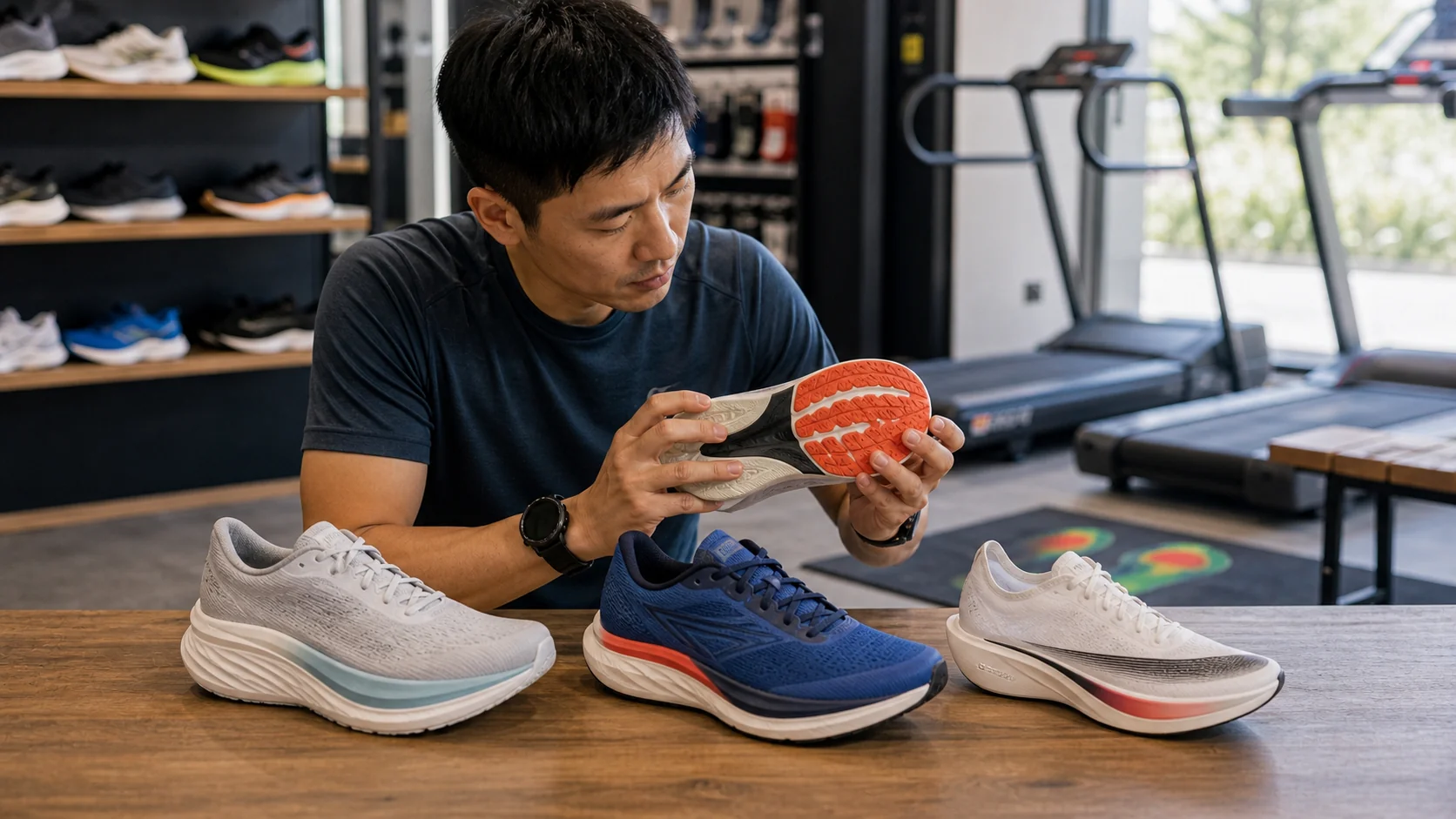
Walk into a running shoe store and you may instantly be overwhelmed by dozens of models: some as thick as sponge cake, others as thin as ballet flats; some marketed as “maximum cushioning,” others promising a “natural ground feel”; some cost several hundred dollars, while others with seemingly similar features cost a fraction of that.
Choosing running shoes is one of the first, and most important, decisions many runners face. The right shoe makes training more comfortable and helps prevent injury; the wrong shoe can trigger a variety of problems. This article systematically breaks down running shoe categories, design principles, and the core logic behind choosing the right pair.
Basic Structure of a Running Shoe
Before diving into categories, let’s look at the main components of a running shoe:
- Outsole: The part in direct contact with the ground, providing traction and durability, usually made of rubber
- Midsole: The core of the shoe, providing cushioning, rebound, and support — typically EVA, PU, or proprietary foam materials
- Upper: The fabric structure wrapping the foot, affecting breathability, fit, and weight
- Drop (Heel-to-toe offset): The height difference between the heel and forefoot; traditional running shoes are around 10-12mm, while low-drop shoes (0-6mm) have become popular in recent years
- Carbon fiber plate: Some racing shoes embed a carbon plate in the midsole to improve energy return efficiency
Three Main Categories
1. Cushioned Shoes (Cushioning/Neutral)
Design philosophy: Provide generous midsole cushioning to absorb the impact of running, suited to runners with normal or high arches.
Representative models: Nike Pegasus, Asics Gel-Nimbus, Hoka Clifton, Brooks Ghost
Best suited for:
- Normal to high arches
- Rearfoot or midfoot strikers
- Daily training and long-distance running
- Beginners (especially recommended)
Characteristics:
- Thicker midsole with noticeable cushioning
- Usually heavier (250-320g for men’s models)
- Drop typically 8-12mm
- Highly durable, can last 500-800 km
Things to note: Excessive cushioning is not necessarily beneficial for everyone. If a runner has an overpronation issue but wears a purely neutral cushioned shoe, the injury risk may actually increase.
2. Stability Shoes (Stability / Motion Control)
Design philosophy: Uses uneven midsole density (dual-density design) or guide-rail structures to limit excessive foot pronation, protecting the arch and knees.
Representative models: Asics GT series, Brooks Adrenaline GTS, New Balance 860
Best suited for:
- Low arches (flat feet) or collapsed arches
- Runners with a clear tendency toward overpronation
- Heavier runners
- Those experiencing medial knee pain or shin pain
How to tell if you need stability shoes:
- Wet your feet and step on paper to observe the shape of your footprint (the larger the area left by the arch, the lower your arch is)
- Have a specialty running store perform a gait analysis
- Check the wear pattern on your old shoes: if the inner side is significantly more worn than the outer side, you may be overpronating
Things to note: Stability shoes are not a cure-all. If the root cause of overpronation is weak core strength or weak glute muscles, strengthening those muscle groups is the real solution — shoes can only serve as a supplementary aid.
3. Racing Shoes (Racing / Performance)
Design philosophy: Maximize running efficiency, sacrificing some cushioning and durability in exchange for light weight and rebound.
Representative models: Nike Vaporfly / Alphafly, Adidas Adizero Adios Pro, Asics Metaspeed Sky
Categories:
- Carbon-plated racing shoes: Embedded carbon fiber plate, can improve running economy by 4-6%, but expensive (roughly NT$8,000-15,000+)
- Traditional racing shoes: Lightweight design without a carbon plate, suited for faster-paced training and racing
- Lightweight trainers: A middle ground between daily trainers and racing shoes, balancing efficiency and durability
Best suited for:
- Runners with a certain training base (sub-4-hour marathoners)
- Half-marathon and marathon race day use
- Speed training (interval runs, tempo runs)
Things to note: Carbon-plated shoes are not suitable for everyday training use (high cost, less protective). It’s recommended to use them only on race day or during high-intensity training, keeping weekly mileage in them under 50km.
Key Factors to Consider When Choosing Shoes
1. When to Try Them On
It’s best to try on shoes in the afternoon or evening — your feet swell slightly after a day of activity, more closely matching how they’ll feel during a long run.
2. Sizing
There should be about a thumb’s width of space (roughly 0.5-1cm) between your big toe and the tip of the shoe. If your toes are right up against the toe box when trying them on, they will likely get injured during long runs.
3. Width
Many brands offer different width options (D/2E/4E). If your forefoot feels squeezed, choose a wider version.
4. Functional Testing
Try running in the shoes for at least 5-10 minutes in the store to get a feel for the cushioning, stability, and comfort. If you feel any discomfort immediately, don’t count on the shoes “breaking in” to fix it.
Shoe Choices for Different Types of Training
| Training Type | Recommended Shoe |
|---|---|
| Daily easy runs | Cushioned or stability shoes |
| Long runs (20km+) | Cushioned shoes (or carbon-plated shoes) |
| Interval speed training | Lightweight trainers or racing shoes |
| Race day | Carbon-plated racing shoes |
| Trail/mountain running | Trail running shoes (stronger traction) |
Conclusion
There’s no absolute right or wrong when it comes to choosing running shoes — what works for you is what’s best. Beginners are advised to start with a moderately cushioned daily trainer to build a stable running foundation, then gradually upgrade based on personal needs and goals. If you experience persistent running injuries, consult a sports physical therapist rather than relying solely on a shoe change to solve the problem.