文章導覽
When to Replace Your Tires: How to Judge Tire Wear Level
Tires are the only point of contact between your bike and the road, and their condition directly determines grip, handling stability, and flat-resistance. Many riders wait until a tire actually blows out before replacing it, but that is often the least cost-effective approach. Learning to assess tire wear lets you replace tires at the right time while avoiding unnecessary roadside repair headaches.
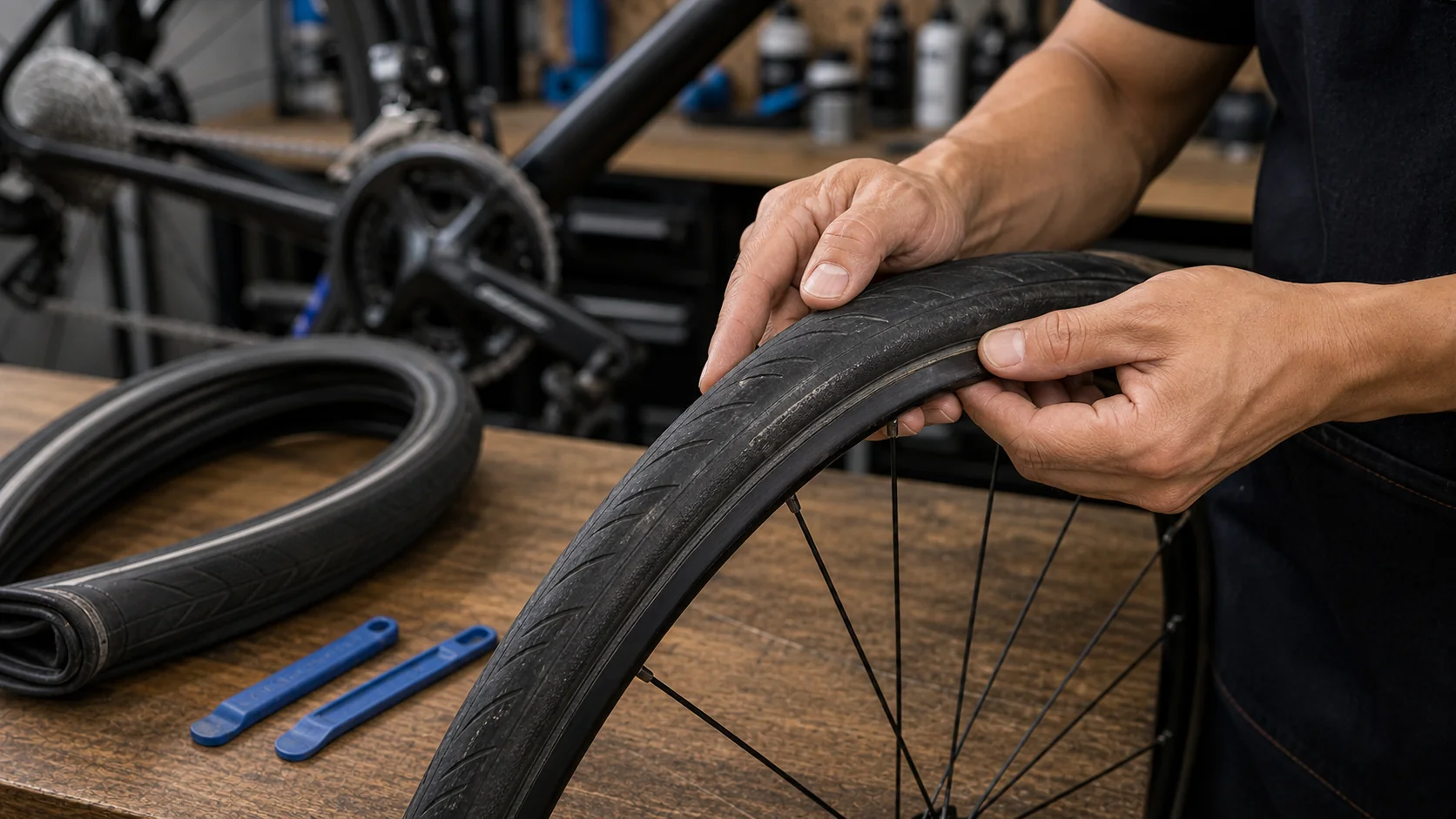
Understanding Tire Construction
Before judging wear, it helps to understand how a tire is built:
- Tread: The outer layer of rubber that contacts the ground directly, determining grip and wear resistance.
- Casing: The structural layer made of multiple plies of nylon or Kevlar fiber, determining tire stiffness and ride comfort.
- Puncture protection belt: Located between the tread and casing, it blocks sharp objects from penetrating through.
- Bead: The hard edge on each side of the tire that seats into the rim, determining mounting stability.
Wear Indicator 1: Tread Wear Level
Wear Indicators
Many modern road tires have small dimples or pits molded into the tread as wear indicators. When these dimples disappear or become nearly invisible, it means the tread rubber has worn down to the replacement threshold.
Flattening of the Tread Profile
An unworn tire has a rounded cross-section. With prolonged use, the central area that continuously contacts the road gradually wears flat, creating a noticeable “flat spot.” When the flat spot in the center exceeds 1 cm in width, grip and handling have clearly degraded, and replacement is recommended.
Visual Color Change
Some tires have an underlayer of a different color (often orange-red or yellow) beneath the tread. When the outer black rubber has worn through to reveal this underlayer color, it is a clear signal to replace the tire.
Wear Indicator 2: Exposed Puncture Protection Belt
The puncture protection belt is one of the tire’s most important safety structures. If the tread rubber has worn through to the protection belt, you will see:
- Irregular white or light-colored fiber patterns on the tread
- A surface texture that changes from rubbery to fabric-like
Once the puncture protection belt is exposed, the tire’s resistance to sharp objects has dropped dramatically, and a flat could happen at any time. It must be replaced immediately.
Wear Indicator 3: Sidewall Cracking and Aging
Even if the tread doesn’t look badly worn, the condition of the sidewall is equally important.
Fine Cracking
As rubber ages, small hairline cracks appear on the sidewall. If the cracks are shallow (less than 1mm deep) and not interconnected, the tire can still be used, but should be monitored closely. If the cracks are deep and interconnected, especially near the bead, it means the casing has begun to break down and a blowout could occur at any time.
Sidewall Bulges
A localized bulge on the sidewall indicates broken fibers inside the casing — a sign of structural failure. This cannot be repaired; you must stop riding and replace the tire immediately.
Cuts and Puncture Holes
Cuts sustained during riding, if deep enough to reach the casing layer, still carry a risk of blowing out the next time the tire is inflated, even if the surface hasn’t fully penetrated through. Feel the depth of the cut with your finger; if in doubt, replace the tire.
Wear Indicator 4: Mileage and Age
Even if a tire looks fine on the outside, the rubber itself has an aging lifespan:
| Tire Type | Recommended Replacement Mileage |
|---|---|
| General training tires | 3,000–5,000 km |
| Race-day thin-casing tires | 1,500–3,000 km |
| Durable commuter tires | 5,000–8,000 km |
| Tubular tires | 2,000–4,000 km (brand-dependent) |
In addition, even if the mileage hasn’t been reached, tires that have been stored for more than 5 years should also be replaced, as the rubber begins to oxidize and age — especially for tires stored in environments with strong sunlight or large temperature swings.
Rear Tires Wear Faster Than Front Tires
It’s worth noting that the rear tire carries roughly 60–65% of the rider’s weight plus driving force, so it typically wears 1.5–2 times faster than the front tire. It’s recommended to periodically rotate front and rear tires (for tires of the same specification), or move the front tire to the rear position after replacing the rear tire, to extend overall tire life.
Quick Reference: When to Replace
| Condition | Recommended Action |
|---|---|
| Wear indicators have disappeared | Prepare to replace |
| Tread flat spot > 1cm | Replacement recommended |
| Puncture protection belt exposed (fibers visible) | Replace immediately |
| Sidewall bulge | Stop riding immediately, replace |
| Deep sidewall cracking | Replace immediately |
| Mileage exceeds recommended value | Replace |
| Stored for more than 5 years | Replace |
Tires are the component that most directly affects riding safety, and any “one more ride” mentality can turn dangerous in a high-speed corner. Regular visual inspection, and decisively replacing tires once they reach the replacement threshold, is what responsible riding looks like.
Related Reading
- A Practical Guide to Replacing Bicycle Tires: From Puncture Repair to Full Tire Swap
- Repair or Replace? A Decision Guide for Bicycle Component Maintenance
- Judging Drivetrain Wear: When Should You Replace Your Chain, Cassette, and Chainrings?
- Bicycle Tire Buying Guide: Differences in Width, Tread Pattern, and Material