World Cycling Championships: Performance Analysis of Taiwanese Riders Over the Years
The UCI Road World Championships, held every autumn, is the highest-prestige individual honor event in road cycling. Riders who claim the Rainbow Jersey are entitled to wear the striped jersey representing the world champion for the entire following year of racing. For Taiwanese cycling, participation and performance on the world stage is not only an indicator of athletic achievement, but also reflects the overall development level of the competitive cycling ecosystem.
Overview of the World Championships Format
The modern UCI World Championships includes multiple disciplines, mainly divided into:
- Road Race: A one-day event, typically 250-280 km in distance, and the most iconic discipline
- Individual Time Trial: Against the clock, typically 40-50 km
- Mountain Bike: Cross-country and downhill events
- Track Cycling: Multiple events on an indoor velodrome
- BMX Racing and Freestyle
- Road Climb (new event)
Taiwanese riders’ international participation over the years has focused primarily on road racing, with some presence in time trials and track cycling.
The Development Trajectory of Taiwanese Competitive Cycling
The international competitive development of Taiwanese cycling can be roughly divided into three periods:
Pioneering Era (pre-1990s): Participation was mainly amateur, with modest results; the primary goal was accumulating international racing experience and exposure.
Growth Era (2000-2015): With the boom of Taiwan’s cycling industry (Giant and Merida rising to the global forefront), domestic training resources gradually improved. The government and associations began systematically sending riders abroad for training camps, and some riders joined European Continental teams.
Transformation Era (2015-present): Taiwanese riders began to make their mark at the Asian Championships and achieved results in select UCI 1.1 and 2.1-rated events. Youth development programs also began to bear fruit, with the U23 World Championships becoming a key target.
Main Challenges in the Road Race
In the World Championships road race, the structural challenges facing Taiwanese riders are quite evident:
Physique Disadvantage: World Championships courses typically feature extensive climbing, and Europe’s top climbers generally weigh between 58-65 kg. Taiwanese riders have similar physiques, but there remains a gap in the systematization of their physical training, showing deficiencies in sustained high-intensity output over long distances.
Insufficient Team Support: The World Championships use a national team system, and Taiwan sends a relatively limited number of riders, making it difficult to form tactical team play. Against European powerhouses coordinating tactics with 8-9 riders, Taiwanese riders fighting as individuals struggle to break through in the decisive final sections.
Lack of Race Exposure: Opportunities to compete in professional events directly affect a rider’s form and tactical experience. Compared to top riders who race the World Tour year-round, Taiwanese riders lack the racing instincts accumulated in top-tier events, a gap that becomes most apparent in the mass sprint battles of the final kilometers.
Potential in the Time Trial Discipline
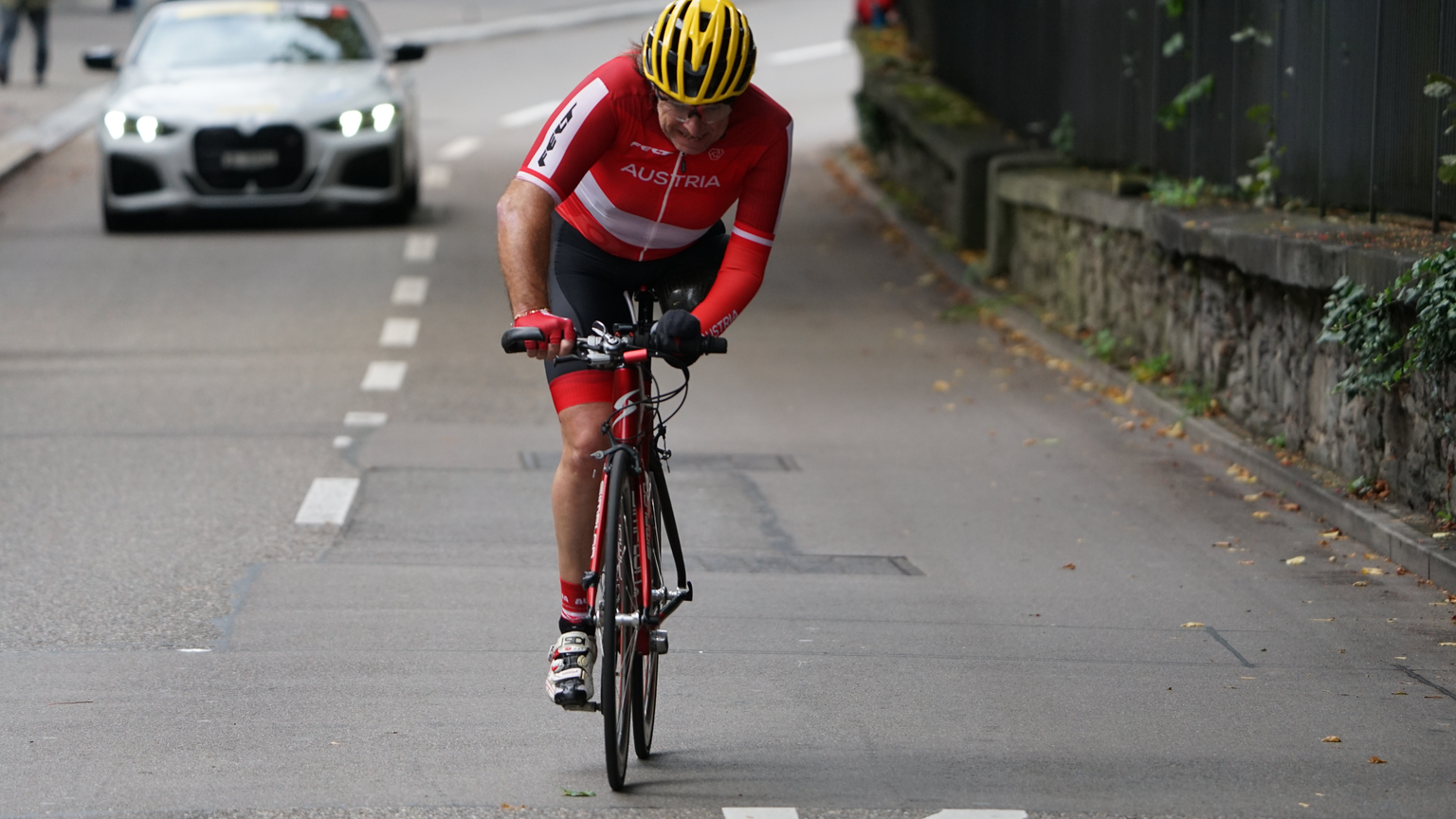
Compared to the road race, Taiwanese riders show more promising development potential in the time trial. Time trials do not rely on team tactics, purely testing an individual’s power output and pacing management, better highlighting personal strength.
Data from some Taiwanese riders’ domestic time trial performances shows their FTP power values are already approaching Asia’s top tier. If combined with optimized aerodynamic equipment (TT helmets, aero bars, aero frames) and precise pre-race preparation, achieving better results in time trials within the Asian racing region is an attainable goal.
Track Cycling and Olympic Preparation
Track cycling is another potential direction for Taiwan to achieve international breakthroughs. Because track conditions are consistent, individual ability carries greater weight, and with the variety of events (sprint, scratch race, omnium, time trial, etc.), Taiwan can select the most advantageous disciplines for focused development based on rider characteristics.
In recent years, through policies such as the “2025 Taiwan Cycling Development Plan,” the government has invested more resources in overseas training and competition subsidies for young riders. If these efforts are sustained, Taiwanese riders are expected to create breakthroughs in events beyond the Asian Championships within 5-10 years.
The Asian Competitive Landscape
In the Asian cycling landscape, Taiwan faces particularly fierce competition from Japan, South Korea, and Kazakhstan. Japan has a well-established domestic league system and sponsor support, while Kazakhstan boasts a World Tour team like Astana Qazaqstan, giving its riders the opportunity to receive European-style training from a young age. Within this competitive framework, Taiwan needs to more clearly define its own development pathway.
Future Outlook
For Taiwanese cycling to perform better at the World Championships, the key lies not in occasional outstanding results, but in establishing a systematic ecosystem:
- Opening the European Pipeline: Giving talented young riders the opportunity to join European Continental or ProTeam squads, allowing rapid growth in a high-intensity racing environment
- Widespread Adoption of Data-Driven Training: Popularizing scientific tools such as power meters, lactate testing, and VO2max assessment
- Building a Race Structure: Establishing a high-level domestic race series to attract foreign riders and elevate the overall competitive environment
- Sponsor Ecosystem: Taiwan’s cycling industry has substantial capital; if further invested in competitive sponsorship, it would provide the material foundation for riders’ professional development
The dream of the Rainbow Jersey may still be distant for Taiwanese riders, but every start line crossed is a step toward closing the gap.
Related Reading
- Road Race Strategy at the Cycling World Championships: The One-Day Tactical Battle for the Rainbow Jersey
- Map of Asian Cycling Events: International Racing Opportunities for Taiwanese Riders
- History of Olympic Road Cycling and Taiwan’s Participation
- Tour de Taiwan Complete Guide: Course Analysis and Review of Past Champions
2023自行車展!與環台賽選手一同表演賽 / 全自動AI Fitting?/ TIME新車發表/神秘充電桌等 精華分享 VLOG | CT Yeh | 公路車
3 年前
小野田真的存在!日本赤城山爬坡公路賽 台灣首發團完全實錄 | 頭文字D真實賽道! | 看完東奧自行車賽後好想再去騎一次啊! | 公路車 | CT Yeh
4 年前
2024 春季KOM 賽事精華版 / 太魯閣 / 貓捉老鼠精彩追擊 / 錄影剪輯版 / 東進武嶺 / 公路車 (請開啟字幕)
2 年前
2026 車錶排行榜!誰是最多車友正在使用?練家子最愛哪款?🏆 (2萬名車友數據) / 公路車 / CT Yeh
5 個月前
2026台北自行車展 一日隨意逛小紀錄 / 風櫃嘴16分國手的交流 / 踩台居然刷到季軍🥉 USD150 GET! / ! / CT Yeh
4 個月前
2024公路車車錶排行榜!2萬車友調查統計!今年黑馬是.../街頭車友民調/CT Yeh
2 年前
日本公路最高登山賽,台灣首位YT挑戰實錄,乘鞍登山賽40週年,賽前篇完整版,請到我的YT收看 #公路車 #cycling
11 個月前
2022台北國際自行車展 訓練台 試騎心得大全 差點腿軟走出! 元宇宙武嶺!| Garmin Tacx Oreka Xpedo Wahoo | 公路車 | CT Yeh
4 年前