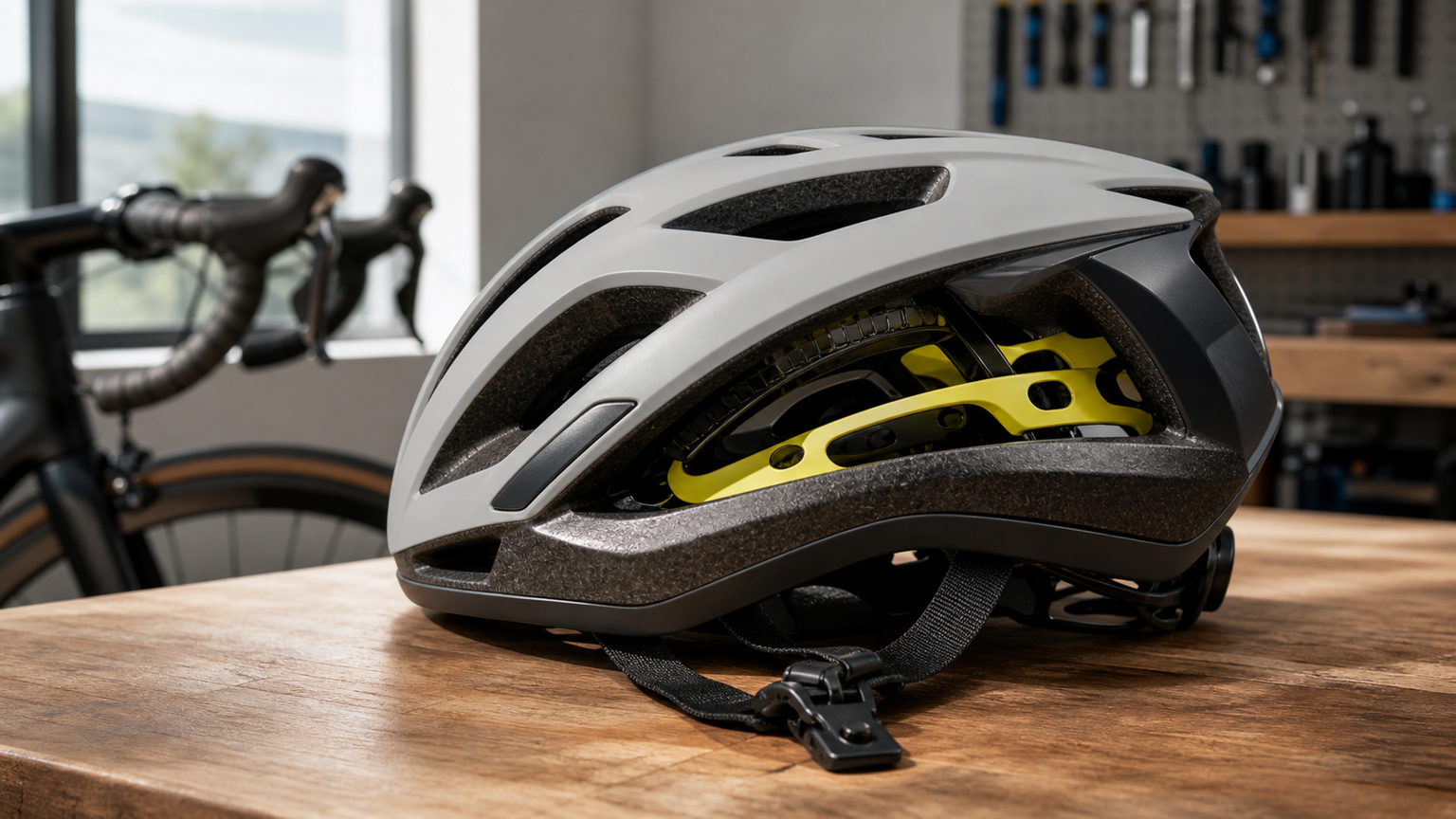
Bicycle Helmet Buying Guide: MIPS Technology and Safety Certification Explained
The helmet is the single most important piece of cycling gear, bar none. Every year in Taiwan, dozens of serious head injury accidents occur due to not wearing a helmet. This article provides an in-depth look at helmet technical specifications and safety certifications, helping you make the best choice.
Safety Certification Standards
There are multiple certification standards for helmets on the market, and consumers should understand the differences:
Comparing Major Certifications
| Certification | Region | Test Standard | Stringency |
|---|---|---|---|
| CE EN1078 | European Union | Drop impact test | Moderate |
| CPSC | United States | Drop impact test | Relatively strict |
| AS/NZS 2063 | Australia/New Zealand | Multi-angle impact | Strict |
| SNELL B-90/95 | United States | Most stringent standard | Extremely strict |
| Virginia Tech STAR | Academic rating | Rotational impact | Most comprehensive |
Most helmets sold in Taiwan pass CE EN1078 or CPSC certification. It’s recommended to choose products with clear certification labeling, and avoid purchasing inferior products from unclear sources.
MIPS Technology Explained
MIPS (Multi-directional Impact Protection System) is the most important technological innovation in helmets in recent years.
What is MIPS?
Traditional helmets can only absorb linear impact force, but in an actual crash the head is often subjected to rotational impact force, which is more likely to cause brain injury. MIPS adds a sliding liner layer between the shell and foam, allowing the head to slide relatively 10-15mm during impact, reducing the rotational force transmitted to the brain.
The Real-World Benefits of MIPS
According to research from Virginia Tech’s STAR rating system, helmets equipped with MIPS reduce brain injury risk by an average of 23% in rotational impact testing. Many top-rated helmets from leading brands feature MIPS or similar technology (such as Bontrager WaveCel, POC SPIN).
Comparing Similar Technologies
- MIPS: the industry standard, adding roughly NT$500-1,000 in cost
- WaveCel (Bontrager): a honeycomb-structured impact-absorbing layer, a three-in-one shock absorption mechanism
- SPIN (POC): silicone pad design, fits well against the head shape
- Koroyd: a tubular foam structure, improving both ventilation and shock absorption simultaneously
Ventilation Design
Taiwan’s hot, humid summers make ventilation a major factor in riding comfort.
Evaluating Vents
| Type | Number of Vents | Suitable Scenario |
|---|---|---|
| Entry-level | 12-16 vents | General riding |
| Mid-tier | 18-22 vents | Long-distance training |
| Racing | 24+ vents | Racing, hot weather |
| Time trial | 0 vents (closed) | Time trials (aerodynamics prioritized) |
Note: the number of vents isn’t the only metric — the internal channel design and airflow path matter more.
Recommendations by Price Point
Entry-Level (NT$1,500-3,000)
- Giro Register MIPS: has MIPS protection, excellent value for money
- Bell Draft MIPS: lightweight design, 14 vents
Mid-Tier (NT$3,000-6,000)
- Kask Mojito³: Italian craftsmanship, excellent comfort, very popular in Taiwan
- Specialized Align II MIPS: wide-head-friendly design
High-End (NT$6,000+)
- Giro Aries MIPS: aerodynamic shape combined with good ventilation
- Bontrager Velocis WaveCel: exclusive WaveCel technology
- POC Ventral Air SPIN: Scandinavian design aesthetic
How to Wear It Correctly
- The gap between the helmet’s front edge and your eyebrows should be about two fingers wide
- The straps on both sides should form a V-shape, meeting below the ears
- Chin strap tightness: you should be able to fit two fingers underneath
- Rocking the helmet forward and backward should not cause significant movement
When to Replace Your Helmet
- After every crash: even if there’s no visible damage, the internal foam may have already compressed and failed
- Every 3-5 years: material degradation, sweat corrosion
- Be very cautious buying used: you cannot confirm whether it has previously suffered a severe impact
Conclusion
Investing in a helmet is the most worthwhile purchase you can make — budget at least NT$2,000-3,000, and choose a model with MIPS or equivalent rotational protection technology. Taiwan regulations require cyclists under 16 to wear a helmet, but for your own safety, everyone regardless of age should build the habit of wearing one.
Related Reading
- Choosing a Road Bike Safety Helmet: MIPS, WG11, and Other Safety Certifications Explained
- Comprehensive Bicycle Helmet Review: Balancing Aerodynamics, Ventilation, and Weight
- Bicycle Helmet Buying Guide: MIPS Technology, Ventilation Design, and Weight — Key Purchase Considerations
- Bicycle Helmet Safety Certification Explained: Differences Between CPSC, CE EN1078, and MIPS
摔車後補裝備: 好市多新款單車安全帽& Specialized Romin 北高整路屁股都不痛的坐墊 | 一千元居然有MIPS | CT Yeh | 公路車
4 年前
#公路車 #Fitting 靠人工智慧APP 幫你調整單車
6 年前
多到選擇障礙... 換個單車把帶想一個小時 / BTP / 編織&軟木特有材質超吸睛! / 公路車 / CT Yeh
1 年前
車錶新黑馬? / 超狂續航 / 超好用錶冠 / 無敵準定位 / Dash圖表合成!?/ COROS DURA 評測!/ 公路車 / CT Yeh
2 年前
鉅齒紋輪組!? ControlTech MEG-T50 EVO 碳纖維幅條輪組/ 功率對比實驗 / 公路車 / CT Yeh
2 年前
再快都跟的上!? 單車跟隨攝影機之王 HOVERAir X1 PROMAX 全面實測 / 唯一!8K畫質&自行車專用模式和跟蹤信標&前後避障 / DJI Neo 可參考/ 公路車 / CT Yeh
1 年前
下次拍照前要查清楚啦🤣 #cycling
7 個月前
Nepest NOVA 碳條輪組:輕量、空力、舒適一次滿足!/ 公路車 / CT Yeh
7 個月前