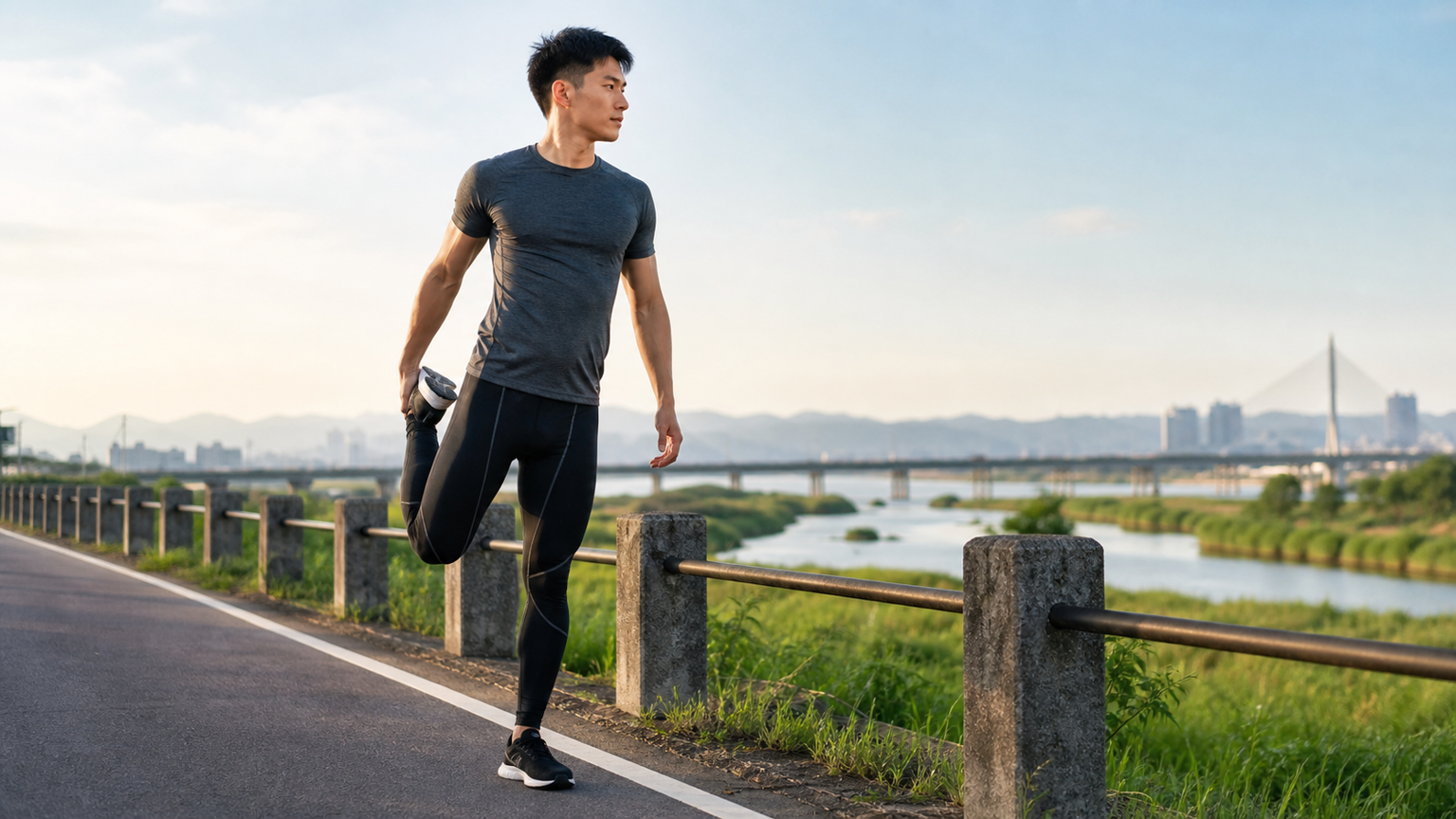
What Science Says About Compression Tights for Running
Compression tights/shorts have become a popular product in the sports market in recent years, claiming to enhance athletic performance, speed up recovery, and reduce muscle fatigue. But is there real scientific evidence behind these claims? This article compiles recent sports science research to give you an objective analysis.
How Compression Gear Works
Compression garments use graduated pressure (decreasing from the distal to the proximal end) to promote venous blood return. In theory, this can:
- Improve blood circulation: Help deliver oxygen to working muscles
- Reduce muscle oscillation: Decrease muscle vibration during running, reducing microtrauma
- Accelerate metabolic waste removal: Clear metabolic byproducts such as lactate more quickly
- Improve proprioception: Enhance awareness of body position
What the Science Says
Performance
Multiple systematic reviews and meta-analyses show:
- Short-distance running (within 5K): Compression tights show no significant performance improvement (effect size d < 0.2)
- Long-distance running (10K and above): Some studies show slight advantages, but results are inconsistent
- Running economy: A few studies suggest a possible 1-2% improvement
Conclusion: Compression tights have limited immediate effects on performance. Don’t expect to put them on and run faster.
Delaying Muscle Fatigue
Research in this area is more positive:
- Studies show compression tights can reduce perceived exertion, meaning wearers feel less tired even when objective measures are similar
- Muscle oscillation is reduced by approximately 25-30%, theoretically reducing microtrauma (Journal of Sports Sciences, 2014)
Post-Exercise Recovery
This is the area with the strongest research support for compression gear:
- Multiple studies consistently show that wearing compression gear for 12-24 hours after exercise can accelerate the recovery of muscle strength
- Delayed onset muscle soreness (DOMS) is reduced, especially after high-intensity training
- A 2013 study in the British Journal of Sports Medicine: compression gear significantly improved muscle function 24-48 hours post-race
Key point: The greatest benefit of compression tights lies in wearing them after a race to promote recovery, not in enhancing performance during the race.
Compression Level Guide
Compression gear is rated by pressure in millimeters of mercury (mmHg):
| Level | Pressure (mmHg) | Use |
|---|---|---|
| Light compression | 10-20 mmHg | Athletic use |
| Medium compression | 20-30 mmHg | Post-surgical recovery, long-haul flights |
| High compression | 30-40 mmHg | Medical use (requires prescription) |
Typical athletic compression tights provide approximately 12-20 mmHg of pressure, which falls in the light compression range—safe and effective for athletes.
Comparison of Major Brands
2XU (Australia)
The global market leader in athletic compression, with mature technology.
- MCS series: Targets specific muscle groups (Muscle Containment Stamping)
- Refresh series: Designed for recovery, with lower pressure
- Taiwan price: Approximately NT$2,500-5,000
Skins (Australia)
Known for “Body Mapping” technology, designing compression gradients based on muscle anatomy.
- A400 series: The most popular model
- Taiwan price: Approximately NT$2,000-4,500
CEP (Germany)
Rooted in the medical compression industry, with technology transferred to the sports market. Offers more precise compression levels, suitable for runners with medical-grade compression needs.
- Taiwan price: Approximately NT$1,800-3,500
CW-X (USA)
Known for its “Conditioning Weave” support design, providing extra support for the knees and lower back. Suitable for runners with knee issues.
- Taiwan price: Approximately NT$2,000-4,000
Compression Calf Sleeves
If you don’t want to wear full-length compression tights, compression calf sleeves are an alternative, providing localized compression to the gastrocnemius and soleus muscles.
Advantages: Easy to put on and take off, can be paired with any running shorts, lower price (NT$800-2,000)
Best for: Runners prone to calf soreness, those with mild varicose veins, or runners whose ankles tend to swell after long runs
Practical Recommendations
Based on scientific research, the most effective strategy for using compression tights:
- During a race: The effect is mainly psychological—just choose a comfortable pair
- After a race: Put on compression tights immediately (or wear them until bedtime) to effectively promote recovery
- Running after long-haul flights: Wear compression gear to prevent deep vein thrombosis (DVT)
- Recovery training days: Wear compression gear during low-intensity runs to experience reduced perceived fatigue
Conclusion
Compression tights aren’t magic, but they do have scientific support for promoting post-exercise recovery. If you have a high training volume and race frequently, a high-quality pair of compression tights (approximately NT$2,500-4,000) is a worthwhile investment as a recovery tool. But don’t expect to put them on and break your PB—that still comes down to solid training.
Related Reading
- The Evidence on Running Compression Tights: What Science Really Tells You
- Running Compression Apparel: A Full Analysis of the Science Behind Muscle Support and Venous Return
- The Recovery Effects of Compression Garments: What Does the Research Say?
- The Benefits of Running Compression Tights: Comparing Calf Sleeves, Tights, and Loose Shorts
3D 列印車褲墊 / 舒適改善? / 無痕 x 分區壓縮 / ATK & Decider系列 / JE22黑科技 / #公路車 #CTYEH
11 個月前
#公路車 #Fitting 靠人工智慧APP 幫你調整單車
6 年前
大家都在開箱的...單車用藍芽對講耳機真的有幫助嗎? SENA BiKom 20 長距離旅遊 & 海鷗繞圈賽 實際體驗心得 / 公路車 / CT Yeh
9 個月前
詳測) 小米 電動打氣筒 公路車胎要充多久? 值得買嗎? 米家充氣寶 小心燙手!
7 年前
靠單車減肥35公斤 心得分享與整理
7 年前
#PUSHBIKE 原來這麼好玩! 小朋友 滑步車 初體驗 超可愛
6 年前
Fitting訓練兩用功率車 ! Thinkrider ST900 完整實測!/ 坡度升降 / 鄰居測試/ smart bike/公路車/ CT Yeh
2 年前
用了AirTag 單車就不怕被偷?盲點大測試 結果… |公路車|CT Yeh
5 年前