文章導覽
Electronic Shifting (Di2/eTap) Beginner’s Guide: Is It Worth the Upgrade?
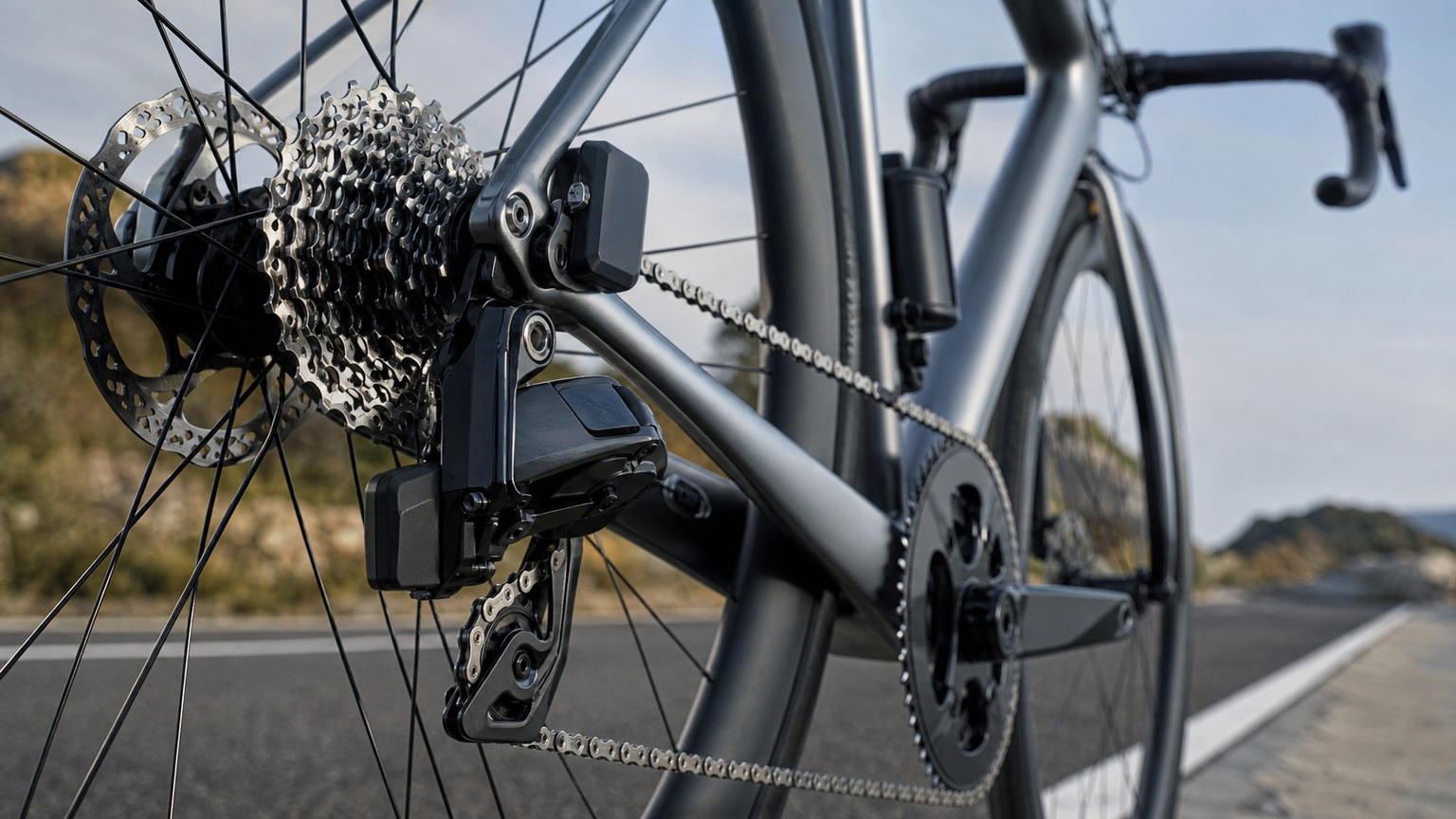
Electronic shifting is a major evolution in road bike drivetrain technology. Instead of relying on cable tension pulled by hand force, precise electric motors now control the shift. This article breaks down how electronic shifting works, the main options available, and whether it’s worth the investment for amateur riders.
How Electronic Shifting Works
Mechanical shifting relies on tension in a steel cable to position the front and rear derailleurs. Electronic shifting instead uses a small electric motor:
- Press the electronic switch on the shift lever
- A signal is sent to the front/rear derailleur (wired or wireless)
- The motor precisely moves the chain to the target gear
The advantage is that every shift delivers exactly the same force and travel, unaffected by mechanical factors like cable stretch or poor lubrication.
Comparing the Main Systems
Shimano Di2 (Dual Information Interface)
Shimano’s electronic shifting brand uses wired transmission (components connected via thin wires), with the current mainstream version being the 12th generation (12-speed).
R9250 Dura-Ace Di2 (top tier):
- Highest precision
- A full groupset in Taiwan costs roughly NT$60,000-80,000
- Weight: about 2,000g for the full groupset
R8150 Ultegra Di2 (second tier):
- Performance close to Dura-Ace, priced about 30% lower
- A full groupset in Taiwan costs roughly NT$40,000-55,000
- The most recommended entry point into electronic shifting
SRAM AXS (Wireless Electronic)
SRAM uses wireless transmission, eliminating wires between components for a cleaner look, though each component’s battery must be managed individually.
Red AXS (top tier):
- 12-speed, lightest weight
- A full groupset in Taiwan costs roughly NT$70,000 and up
Force AXS (second tier):
- Excellent performance with a modest weight penalty compared to Red
- A full groupset in Taiwan costs roughly NT$45,000-60,000
Rival AXS (mid tier):
- The entry-level choice for electronic shifting
- A full groupset in Taiwan costs roughly NT$25,000-35,000
Wired vs. Wireless Differences
| Comparison | Shimano Di2 (Wired) | SRAM AXS (Wireless) |
|---|---|---|
| Cable aesthetics | Wires visible | Wireless, extremely clean |
| Battery management | Single battery (in frame or rear derailleur) | Each component has its own battery |
| Charging frequency | Every 1-2 months | Every 2-3 weeks (more frequent) |
| Shift signal | Wired, theoretically more stable | Wireless, occasional (very rare) lag |
| Rain reliability | Good | Good (IPX5 water resistant) |
The Real-World Electronic Shifting Experience
Shifting Precision
Electronic shifting almost never suffers from “poor indexing.” Mechanical shifting requires periodic cable tension adjustment (especially after installing new cables, which need repeated stretching), while electronic shifting theoretically maintains precision long-term after a single setup.
Synchro Shift
Both Di2 and AXS support Synchro Shift: a single button automatically coordinates the front and rear derailleurs to maintain the optimal gear ratio. This is especially friendly for beginners, who don’t need to memorize the best front/rear chainring combinations.
Rapid Multi-Shift on Climbs
On steep climbs where you need to drop several gears quickly, electronic shifting lets you hold the button down for continuous shifting, rather than having to press and release cleanly each time. This is particularly useful on steep sections such as Taiwan’s Wuling or the Alishan Highway.
Maintenance Requirements
Advantages of Electronic Shifting
- No need to adjust cable tension
- Shifting precision is maintained long-term
- Fault diagnosis via smartphone apps (such as Shimano E-TUBE or the SRAM AXS App)
Things to Watch With Electronic Shifting
- Battery management: Check that the battery is sufficiently charged before heading out — Di2 automatically stops shifting when the battery drops below 5%
- Wire protection: Di2’s thin wires need protection from being caught by the chain or impacted
- Battery replacement: Lithium battery capacity declines with long-term use and eventually needs replacement (cost roughly NT$2,000-5,000)
- Repair costs: Repairing damaged electronic components costs far more than mechanical systems
Upgrade Cost Analysis
The cost of upgrading from mechanical Ultegra to Di2 Ultegra:
| Item | Cost (approx.) |
|---|---|
| Di2 Ultegra R8150 groupset | NT$40,000-50,000 |
| Installation labor | NT$2,000-4,000 |
| Frame internal wiring (if needed) | NT$1,000-3,000 |
| Total | Roughly NT$45,000-57,000 |
If you’re currently on mechanical Ultegra, upgrading to Di2 requires an incremental cost of roughly NT$35,000-45,000.
Is It Worth Upgrading?
When an Upgrade Makes Sense
- You ride frequently (100km+ per week)
- You have knee issues and need finer gear ratio control
- You compete in long-distance races where a missed shift is costly
- You have the budget and want the top-tier experience
When to Hold Off
- Budget is limited (that money could go toward more training)
- You don’t ride often (fewer than 3 times per week)
- You’re a beginner and not yet sure of your long-term commitment
- You’re concerned about the repair cost and complexity of electronic failures
Conclusion
Electronic shifting is a genuine upgrade in experience — riders who switch rarely want to go back. But whether that value is fully realized depends on your riding intensity and frequency. For most amateur riders, mechanical Ultegra is already excellent; if you’re chasing the ultimate experience, Di2 or AXS will make every ride that much more refined.
Related Reading
- Practicality and Maintenance Cost Assessment of Electronic Shifting Systems (Di2/AXS)
- In-Depth Electronic Shifting Review: Comparing the Experience, Reliability, and Upgrade Costs of Shimano Di2 vs SRAM eTap
- A Practical Comparison of Di2/eTap/EPS Electronic Shifting vs Mechanical Shifting
- Shimano Dura-Ace Di2 vs SRAM RED eTap AXS: A Complete 2025 Comparison of Top-Tier Electronic Shifting Systems