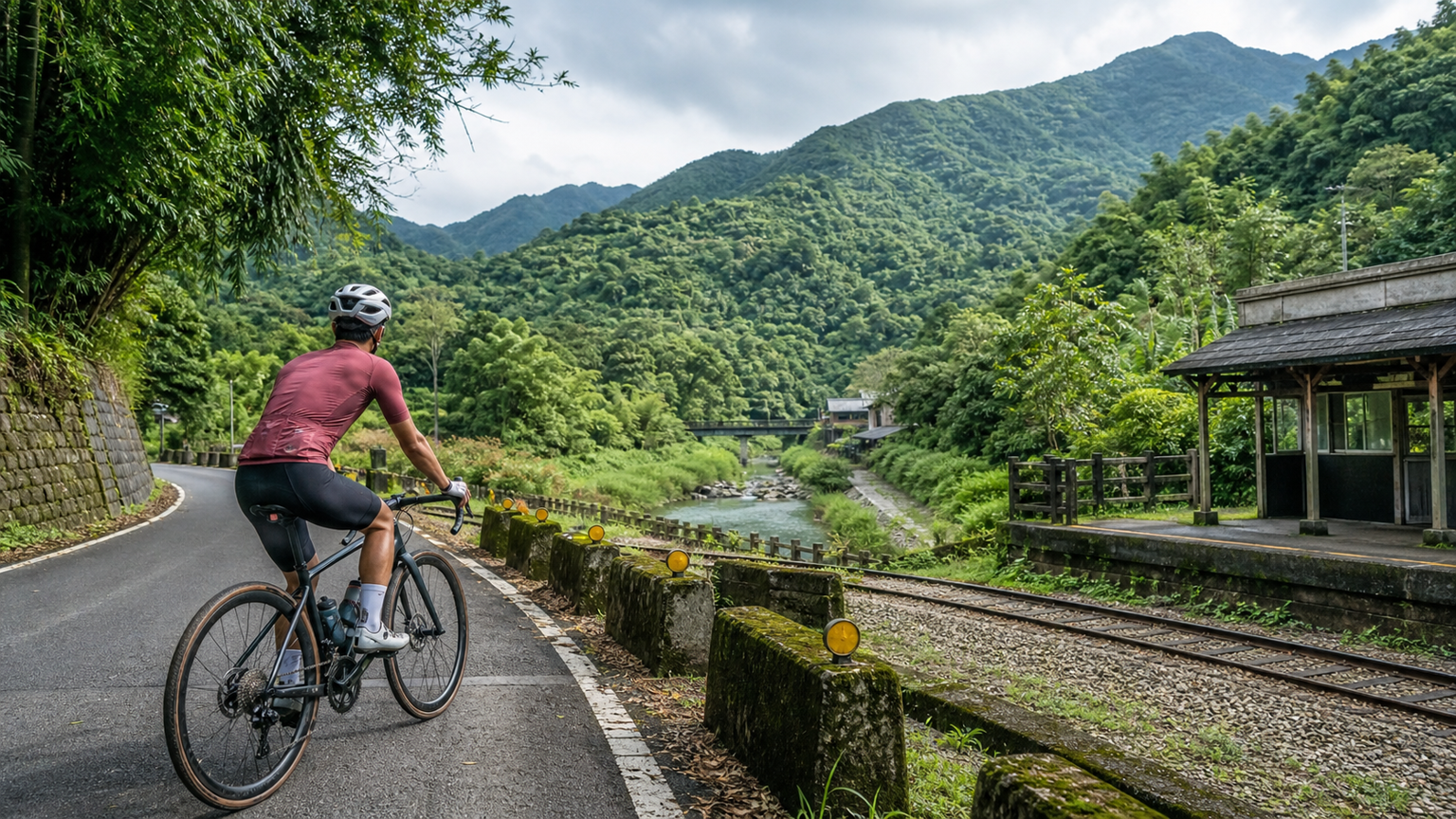
A Cycling Day Trip Through Pingxi, Jingtong, and Shifen Old Street
The Pingxi Line is one of Taiwan’s most romantic branch railways. Starting in Ruifang, it winds along the Keelung River valley through Sandiaoling, Dahua, Shifen, Wanggu, Lingjiao, and Pingxi before finally reaching Jingtong, covering a total of 12.9 kilometers. The villages that grew up along this railway carry a century of stories about Taiwan’s coal-mining boom and bust, and about the people who once earned their living in the dark mining tunnels.
For cyclists, riding County Road 106 from Ruifang into the Pingxi Line valley is one of the most culturally rewarding short rides in northern Taiwan.
Route Information
| Item | Details |
|---|---|
| Start | Ruifang Train Station |
| Finish | Jingtong Station |
| Distance | About 20 km |
| Total Climbing | About 350 m |
| Road Surface | County Road 106, running parallel to the railway |
| Difficulty | Easy to moderate |
| Time Needed | 4–6 hours including sightseeing |
Why Cycle Instead of Taking the Train?
The Pingxi Line is one of Taiwan’s most popular scenic railways, and it gets extremely crowded on weekends and holidays. Cycling offers several advantages:
- Stop wherever you like: You can pull over at any attraction at any time, free from train schedules.
- Fewer crowds: Sections of the road run alongside the railway with far fewer tourists, giving you more room to take in the valley.
- A different perspective: Riding lets you see the relationship between the railway and the river valley from a parallel vantage point — a view you simply don’t get from the train.
- Combining sport with sightseeing: The 350 meters of climbing isn’t much, but the rolling terrain along the way makes for an engaging ride.
Segment-by-Segment Guide and Sights
Ruifang to Sandiaoling (0–8 km)
Starting from Ruifang, follow County Road 106 into the valley. This stretch climbs gently alongside the Keelung River (about 1–3% grade), passing farmhouses, abandoned mining structures, and bamboo groves.
The Sandiaoling Waterfall Cluster:
Sandiaoling is home to northern Taiwan’s most famous cluster of waterfalls. Within a 10-minute walk you’ll find Hegu Waterfall, Motian Waterfall, and Pipadong Waterfall, all more than 30 meters tall with powerful flows. Park your bike at the entrance near Sandiaoling’s old station and walk in to see the falls.
Sandiaoling to Shifen (8–13 km)
Shifen Waterfall:
Taiwan’s widest waterfall, spanning about 40 meters with a curtain-like drop of roughly 20 meters, often called “Taiwan’s Niagara.” It’s about a 15-minute walk from Shifen Old Street.
Shifen Old Street and Sky Lanterns:
Shifen Old Street is best known for its sky lantern (Kongming lantern) culture. Every Lantern Festival (the 15th day of the first lunar month), the mass release of sky lanterns in Pingxi becomes one of Taiwan’s most spectacular folk celebrations. Today, sky lanterns can be purchased and released on Shifen Old Street year-round.
Different lantern colors carry different wishes:
- Red: good luck and health
- Yellow: wealth
- Pink: love
- Orange: for all things to go well
Shifen to Pingxi to Jingtong (13–20 km)
Pingxi Old Street:
Home to the Pingxi Township office, the old street is lined with traditional grocery stores and restaurants. The famous Pingxi Sky Lantern Festival is held near the Pingxi railway bridge, and the sea of fireworks and lanterns is one of Taiwan’s most romantic festival scenes.
Jingtong Station:
The terminus of the Pingxi Line and the most culturally evocative stop on the whole route. Jingtong was once a key base for the Taiyang Mining Company, and its old coal-processing buildings and washing facilities are still preserved today, now repurposed as a cultural attraction.
Jingtong’s best-known tradition is the “wishing wood” — wooden plaques hung on the old tree beside the station, each one inscribed with a traveler’s wish.
The Mining History Behind the Line
The villages along the Pingxi Line flourished during the Japanese colonial era thanks to coal mining. At its peak in the 1960s and 1970s, the mines along the Pingxi Line produced roughly 30% of Taiwan’s coal, and mining families settled here, forming a tightly knit mining community culture.
After the 1980s, as petroleum replaced coal, the mining industry along the Pingxi Line declined rapidly and much of the population moved away, leaving behind aging settlements and abandoned mines. These “mining ruins” are now treasured remnants of Taiwan’s industrial heritage.
Food and Supplies
| Location | Specialty |
|---|---|
| Ruifang town center | Ruifang pork chop lunch box (Taiwan Railway lunchbox culture) |
| Shifen Old Street | Ginger lily leaf-wrapped rice dumplings, miner’s lunch box |
| Pingxi Old Street | Traditional steamed buns, sweet taro-ball soup |
| Jingtong | Jingtong miner’s steamed buns, handmade pastries |
Planning a Trip Around Taiwan Railway
The easiest itinerary:
- Take the Taiwan Railway from Taipei to Ruifang (about 40 minutes)
- Rent a bike in Ruifang or ride there from Taipei
- Cycle into the Pingxi Line valley (about 20 km one way)
- Take the Pingxi Line train back to Ruifang from Jingtong (foldable bikes are welcome on board)
- Take the Taiwan Railway back to Taipei
Closing Thoughts
The cycling trip through Pingxi, Jingtong, and Shifen isn’t Taiwan’s most spectacular route, nor its most challenging climb. But it holds an atmosphere found nowhere else in Taiwan — the quiet stillness of the mining era, the lightness of sky lanterns rising into the sky, and the wooden plaques covered in handwritten wishes hanging beside the old station.
Let the history of the mines, the nostalgia of the railway, and the sound of the mountain stream become the soundtrack of your ride.
Related Reading
- The Nuannuan to Pingxi Route in Keelung: A Unique Cycling Experience Through Northern Taiwan’s Mining Landscape
- Keelung’s Nuannuan to Pingxi: A Coal-Mining Mountain Town Ride Near Taipei
- Mist and Rails in the Sky Lantern Town: Riding to Shifen Waterfall, Meeting Pingxi’s Rain and Light
- The Winter Cherry Blossom Path of Pingjing Street: A Seasonal Ride Hidden on Yangmingshan’s Slopes
太平山單車員工旅遊 | 這樣玩CP值最高!| 公路車
5 年前
藤枝二集團 單車行 Day1 | 南部小武嶺 | 爬坡爬到罵罵叫 | JJSC | 公路車 | CT Yeh
3 年前
高雄綠園道鐵路自行車道 / 外地人能輕鬆駕馭 還是整路崩潰? / 2025 全線開通 春節實地探索一次!(附GPS連結)/ 公路車 / CT Yeh
1 年前
里佳部落 阿里山單車深度旅遊! | 竹山/草嶺/來吉/奮起湖 | 無敵銀河絕景 全新路線探索! 驚險狀況百出! | 4K沉浸式畫質 | 公路車 | CT Yeh
3 年前
5 ℃ 櫻花之旅 / 75萬單車直接雨中洗車.../ 平菁街 / 北迴歸小隊 / 公路車 / CT Yeh
5 個月前
觀霧 變好騎了! | 北高車友爆笑大會師 | 公路車 | 單車旅遊 Taiwan Cycling Route GuanWu
6 年前
一定要騎一次!阿里山最深處:里佳部落!單車旅行 | 2800m爬升 | 深度部落體驗:嗨翻晚會、螢火蟲、銀河 | feat. JJSC & 廢物伙伴 | 公路車 CT Yeh
9 個月前
虎豹潭!日本老師來台一日約騎 台灣車友熱情招待私房路線 / CT Yeh
19 天前