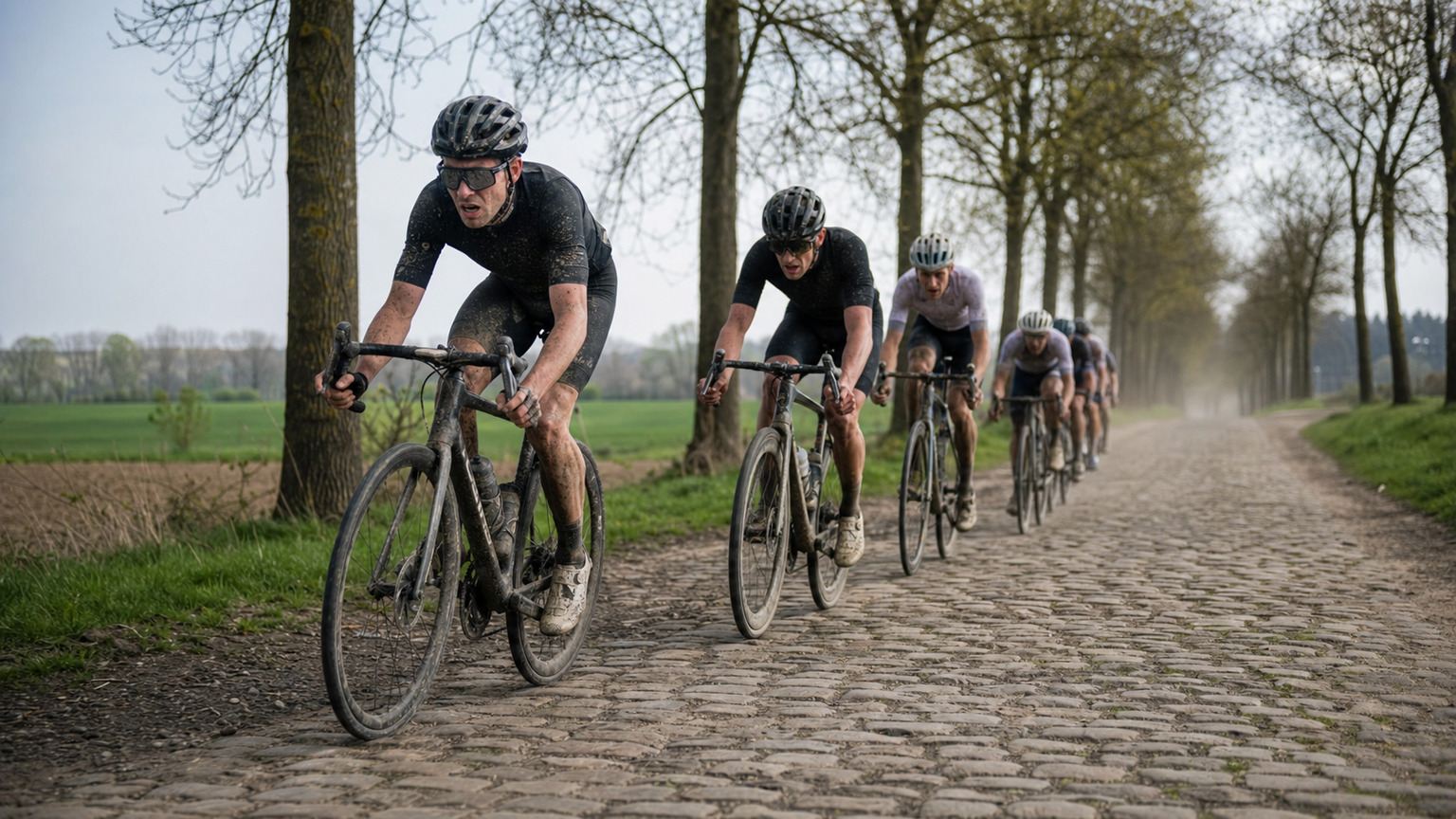
Classic Cycling Race Analysis: The Legend of the Cobblestones of Paris-Roubaix
“The Hell of the North” (L’Enfer du Nord) — this title belongs to Paris-Roubaix, the most brutal and unique of the five Monuments of European cycling. On rural roads paved with medieval cobblestones (Pavé), strength, skill, and luck are all indispensable.
Race Basic Information
- Full Name: Paris-Roubaix
- Founded: 1896
- Date: Every April (the Sunday after Easter)
- Distance: Approximately 260 km
- Cobblestone Sections: Approximately 55 km (divided into 29 separate sectors)
- UCI Classification: Monument Classic (highest-tier one-day race)
- Prize: A cobblestone (rather than a trophy)
Course Feature: The Cobblestones (Pavé)
What is Pavé?
Pavé is the surviving medieval cobblestone road of northern France, made of hand-chiseled granite stones that have existed for hundreds of years. These cobblestone roads:
- Uneven Surface: Stones vary in size, and the gaps keep tires vibrating constantly
- Extremely Slippery After Rain: Rainwater and mud turn the cobblestone surface into an ice rink
- Visually Stunning: Rows of cobblestones stretch out under the shade of trees — beautiful yet dangerous
Cobblestone Difficulty Rating
Paris-Roubaix rates its cobblestone sectors from 1–5 stars:
| Rating | Description | Representative Sector |
|---|---|---|
| ★☆☆☆☆ | Easiest, suitable for warming up | Multiple entry-level sectors |
| ★★★☆☆ | Medium difficulty, requires skill | Early section of Wallers-Arenberg |
| ★★★★☆ | High difficulty, tests endurance and skill | Multiple decisive sectors |
| ★★★★★ | Hardest, race-defining sectors | Wallers-Arenberg deep forest section, Carrefour de l’Arbre |
The Most Famous Cobblestone Sectors
Wallers-Arenberg (5 stars):
- Length: Approximately 2.4 km
- Passes through a dense poplar forest, known as “The Great Trench”
- After rain, the cobblestone surface is covered with leaves and mud, with extremely low visibility
- Mass crashes frequently occur at the exit
Carrefour de l’Arbre (5 stars):
- Approximately 15 km from the finish
- One of the final five-star sectors, serving as the race’s ultimate decisive sector
- Elite riders make their last attempt to break away or suppress rivals here
Race Tactics Analysis
Building an Advantage Before the Race
- Paris-Roubaix is usually relatively calm in the early part of the race (first 100 km)
- Teams conserve energy, waiting to enter the cobblestone sectors
- A breakaway may build an advantage early in the race, but is usually caught
Cobblestone Sector Strategy
Positioning Before the Cobblestones:
- A front position is crucial: when the entrance to a cobblestone sector is congested, being at the back can cost significant time
- Top riders and teams typically start fighting for position 10 km before entering a cobblestone sector
Riding on the Cobblestones:
- Lower tire pressure (approximately 4.5–5 bar, well below the 6–7 bar standard for road racing)
- Grip the drops firmly (not riding on the hoods)
- Keep knees slightly bent, acting as a “human shock absorber”
- Choose the dirt path at the roadside (if available) instead of the center of the cobblestones
Team Tactics:
- The team leader is protected by 2–3 domestiques throughout the race
- After a puncture (almost inevitable), team mechanics quickly change wheels
The Decisive Moments
The race usually splits decisively during the cobblestone sectors in the final 80–100 km:
- The strongest riders create gaps first at Arenberg or subsequent sectors
- A successful breakaway group competes over the cobblestones and paved roads in the final 100 km
- The finish is at the velodrome in Roubaix — the final sprint after entering the indoor track is one of the most dramatic scenes of the entire season
Great Moments in History
- 1919: The “Peace Paris-Roubaix” after World War I, resuming the race
- 1994: Johan Museeuw showed dominant power on the rain-soaked cobblestones (the golden era of the Belgians)
- 2004: Magnus Backstedt (Sweden) conquered the cobblestones with his massive frame, defying the notion that only “elite climber physiques” could win
- 2021: Sonny Colbrelli (Italy) kneeling to kiss the ground on the Roubaix track, tears streaming — one of the most moving images of that year
- 2022, First Women’s Edition: Lizzie Deignan (Great Britain) won the inaugural women’s Paris-Roubaix, making history
Equipment Specifics
Equipment preparation for Paris-Roubaix is completely different from a standard road race:
| Equipment | Paris-Roubaix Specification | Reason |
|---|---|---|
| Tire Width | 28–30mm (some riders use 32mm) | Vibration damping and puncture resistance |
| Tire Pressure | 4.5–5 bar | Shock absorption, increased grip |
| Frame | Special design (with suspension fork on some brands) | Absorbs vibration |
| Gloves | Thick, extra-padded protection | Reduces hand vibration |
| Goggles | Windproof and dustproof | Protection from flying debris |
Why Is Paris-Roubaix So Captivating?
- Sense of History: Riding on cobblestones over 100 years old feels like traveling through time
- Uncertainty: Anyone can crash, and even the strongest rider cannot fully control the outcome
- Visual Impact: Images of riders covered in mud, faces caked with dust, gritting their teeth over the cobblestones — these are iconic images of cycling
- Unique Prize: A real cobblestone is the most distinctive prize in all of cycling
Paris-Roubaix is not just a bike race; it is an epic of humanity battling harsh natural conditions. Every April, the ritual of the “Hell of the North” unfolds once again, leaving cycling fans around the world holding their breath.
Related Reading
司馬庫斯 | 單車員工旅遊 | 比武嶺還接近上帝的路 | 2021 全面實況 路況解析 | 空拍 櫻花炸開超濃密 | 財伯觀光果園 | CT Yeh
5 年前
萬年峽谷! 30% 超激陡坡 里佳部落DAY2 還是很硬! | 公路車 | CT Yeh
3 年前
微雨戰! 2022桃園市長盃錦標賽 無敵交管 沒來玩太可惜了! 羅馬公路太可怕 差點成佛! 公路車 | CT Yeh
4 年前
日本島波海道 EP1 / 五大絕景路線之一! / 私房溫泉 x 豪華單車客棧 / 今治 to 大三島 / 公路車 / CT Yeh
2 年前
水金九不厭五分 10度寒流冷到不願停!feat. 卡卡 / 公路車 / CT Yeh
6 個月前
嘉義大埔、阿婆灣挑戰賽,美到以為在日本!ft. 環騎5 Cool 西拉雅188 / 公路車 / CT Yeh
7 個月前
荷蘭 Rapha 租公路車 騎 阿姆斯特丹 Amsterdam Rapha Cycling Club Bike Hiring
6 年前
2024 如來神掌 百人約騎挑戰!feat. 秘境單車社團 / 神人們太可怕 / 全程錄影 x 完整坡度解析 / 公路車 / CT Yeh
2 年前