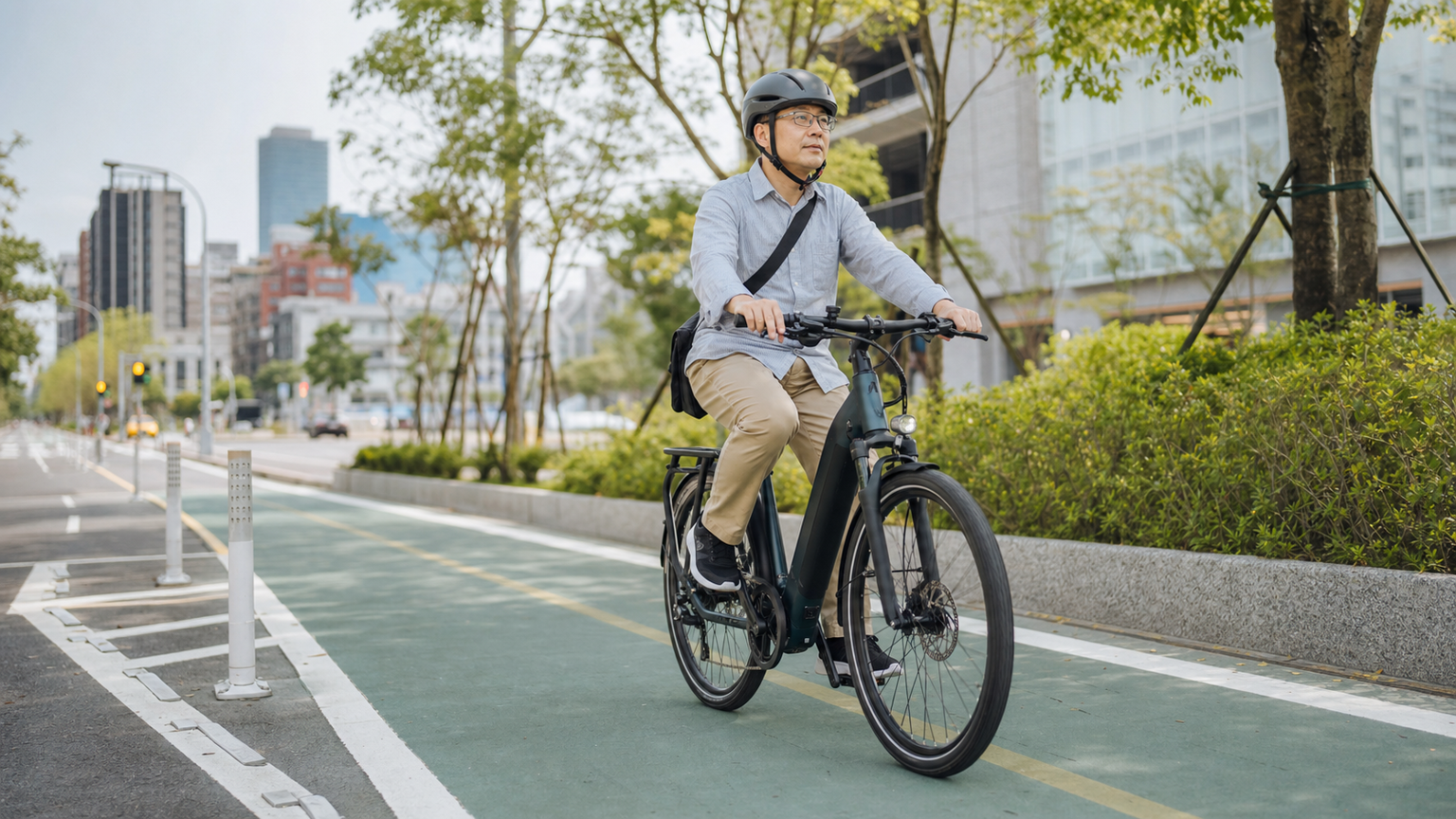
Electric-Assist Bicycle (E-bike): Who Is It Suitable For
Electric-assist bicycles (E-bikes) are becoming increasingly visible in Taiwan. They are neither scooters nor purely human-powered bicycles, but a unique hybrid mode of transportation. Understanding the pros, cons, and target users of E-bikes is essential to determine whether one is right for you.
The Technical Foundation of E-bikes
Types of Motor Systems
Mid-Drive Motor:
- Motor located at the bottom bracket position
- Low center of gravity, riding feel close to a regular bicycle
- High drivetrain efficiency, excellent climbing performance
- Representative brands: Bosch, Shimano Steps, Yamaha
- Typically found in mid-to-high-priced E-bikes
Hub Motor:
- Motor built into the hub of the front or rear wheel
- Simple structure, lower maintenance costs
- Higher center of gravity (especially with front-wheel motors)
- Typically found in more affordable E-bikes
Assist Modes and Regulations
Current Taiwan regulations (per the Road Traffic Management and Penalty Act):
- E-bike maximum continuous power 250W or below
- Assist speed limit 25 km/h (assistance stops beyond this speed)
- Compliant E-bikes require no driver’s license and may be ridden on bicycle lanes
Assist modes are typically divided into:
- Eco mode: Low assist level, maximum range (100–150 km per charge)
- Tour mode: Medium assist
- Sport mode: Strong assist, shorter range (approx. 50–80 km)
- Turbo/Boost mode: Strongest assist, shortest range
Analysis of Groups Suited to E-bikes
1. Commuters (10–30 km distance)
Why it suits them:
- No need to worry about arriving at the office unable to freshen up due to exercise sweat
- Uphills and headwinds are no longer a burden
- Can ride in regular work attire
- Traffic congestion is severe in Taiwanese cities; E-bikes can use bicycle lanes to bypass traffic jams
Practical considerations:
- Added battery weight (total bike weight is typically 18–25 kg, about 10 kg heavier than a regular bike)
- Battery charging takes 2–5 hours
- Charging facilities needed at the parking location (or the battery must be portable for charging at the office)
2. Older Adults (50+ years old)
Why it suits them:
- Maintains the joy of cycling without being limited by physical stamina
- Can keep up with fitter family members or friends on outings
- Low-intensity activity, gentle on the cardiovascular system and joints
- Sustains motivation for social and outdoor activities
Considerations:
- The bike is heavier; care is needed if it must be carried up stairs
- A step-through frame design is recommended for easier mounting and dismounting
3. People with Knee or Joint Problems
E-bikes allow people with mild knee issues to continue enjoying cycling. The motor assist significantly reduces the torque required for pedaling, lowering stress on the knees.
4. Users of Electric Cargo Bicycles
For small businesses or families needing to transport goods, cargo E-bikes are an eco-friendly and practical choice:
- Can carry 50–150 kg of cargo
- Agile in urban environments, no parking space required
- A growing number of logistics companies in Taiwan are piloting their use
5. Bicycle Tourists (Mountain Routes)
Taiwan’s cycling tour routes are not short on steep climbs. E-bikes enable more people to complete challenging routes such as Wuling and Beiyi, no longer excluding riders due to differences in physical fitness.
Who Might Not Need an E-bike?
- Athletes with clear training goals: Want to maximize training benefits and need no assistance
- Short-distance urban riders (within 3 km): A regular bicycle suffices; the advantages of an E-bike are not obvious
- Long-distance travelers needing lightweight gear: The weight of an E-bike is a significant burden
Taiwan E-bike Market Overview
| Brand | Features | Price Range |
|---|---|---|
| Giant | Yamaha motor collaboration models, multiple city and touring options | NT$45,000–120,000 |
| Merida | eBig Nine, eONE-SIXTY off-road models | NT$60,000–150,000 |
| Trek | Powerfly off-road, Domane+ road e-assist | NT$80,000–180,000 |
| Gogoro GFC | Urban commuter model, swappable battery | NT$30,000–50,000 |
| iGogreen | Taiwanese local brand, mid-drive motor | NT$25,000–60,000 |
Things to Note When Buying an E-bike
- Test ride: The riding feel of an E-bike differs from a regular bicycle; you must test ride it to determine if you like it
- Battery warranty: The battery is the most expensive consumable; confirm the warranty period (2 years or more recommended)
- Charging convenience: Confirm whether there is a power source at your regular parking spot for charging
- Parts availability: Choose major brands to ensure a supply of replacement parts
- Insurance: E-bikes have a higher theft rate (because they are expensive); consider bicycle theft insurance
An E-bike is not “cheating,” but a tool that allows more people to enjoy the pleasure of cycling. Whether you are a commuter, an older adult, or a cycling enthusiast with joint issues, an E-bike may be exactly what you need to rediscover or begin your cycling journey.
Related Reading
- Taiwan Market Trends for Electric-Assist Bicycles (E-Bikes)
- Cycling and the Environment: The Contribution of Electric-Assist Bicycles (E-bikes) to Urban Carbon Reduction
- The Complete Guide to Electric-Assist Bicycles (E-Bikes): A Comprehensive Analysis of Motors, Batteries, and Regulations
- Electric Bicycle Race Regulations: Which Events Allow E-bikes
#公路車 #Fitting 靠人工智慧APP 幫你調整單車
6 年前
高雄綠園道鐵路自行車道 / 外地人能輕鬆駕馭 還是整路崩潰? / 2025 全線開通 春節實地探索一次!(附GPS連結)/ 公路車 / CT Yeh
1 年前
全台首發!邁金P715踏板功率計!市場價格撼動者再出招 / 功率對比實測 / FAVERO ASSIOMA 可參考! / 公路車 / CT Yeh
1 年前
詳測) 小米 電動打氣筒 公路車胎要充多久? 值得買嗎? 米家充氣寶 小心燙手!
7 年前
再快都跟的上!? 單車跟隨攝影機之王 HOVERAir X1 PROMAX 全面實測 / 唯一!8K畫質&自行車專用模式和跟蹤信標&前後避障 / DJI Neo 可參考/ 公路車 / CT Yeh
1 年前
靠單車減肥35公斤 心得分享與整理
7 年前
2023 自行車錶排名 大數據 23,000位車友用什麼錶? Garmin Edge 對決 Bryton Rider 誰市佔高? 你用的上榜了嗎? | 公路車 | CT Yeh
3 年前
多到選擇障礙... 換個單車把帶想一個小時 / BTP / 編織&軟木特有材質超吸睛! / 公路車 / CT Yeh
1 年前