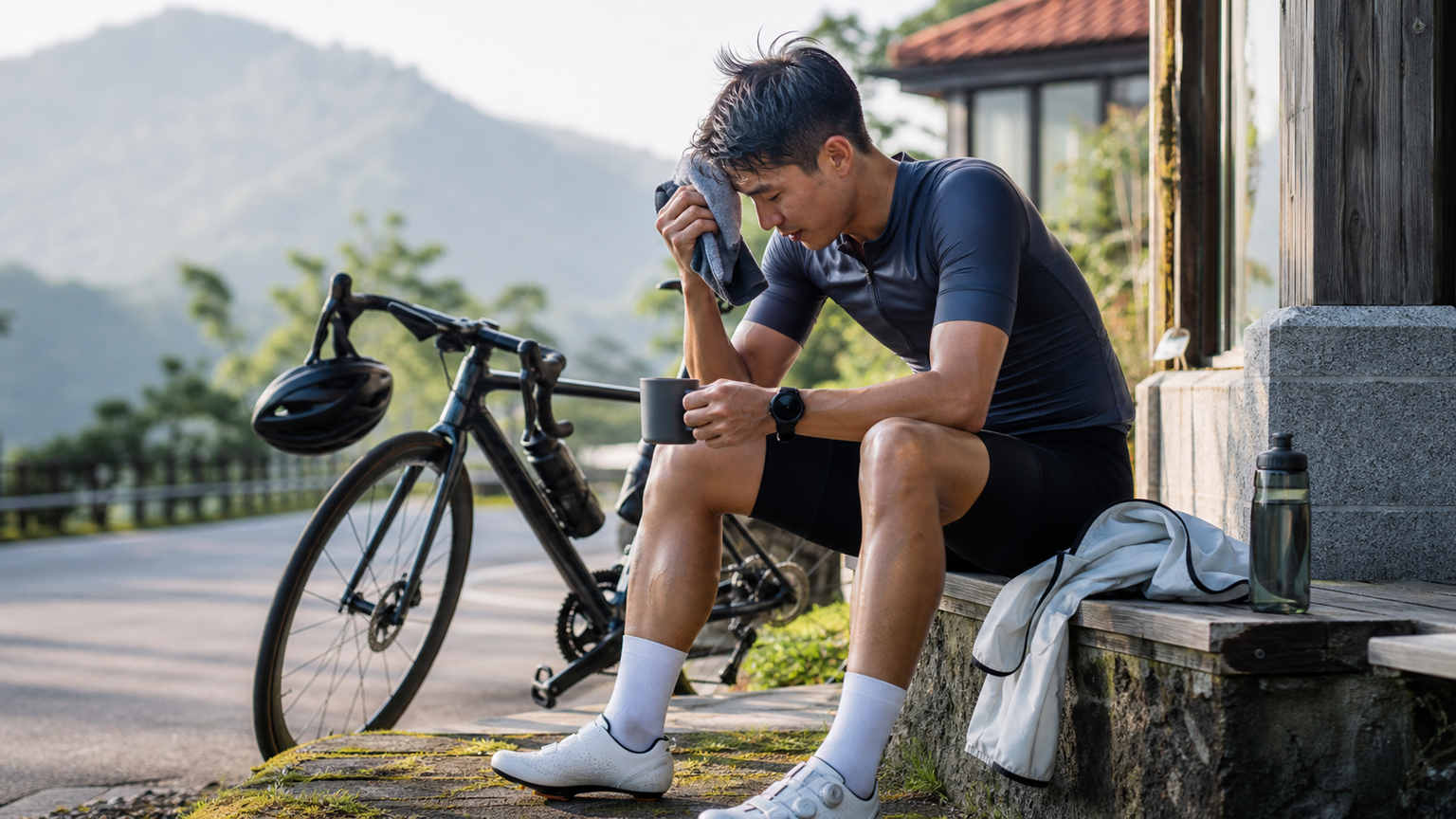
Exercise-Induced Immunosuppression: Why You Get Sick After Heavy Training
The “Open Window” Theory
Have you ever noticed that you’re particularly prone to a sore throat or a runny nose within a few days after completing a long ride or a marathon? This is no coincidence. Sports scientists call this phenomenon the “Open Window” theory.
Within 3-72 hours after high-intensity or prolonged exercise, immune system function experiences a brief but significant decline, creating an “open window” period during which pathogens can easily invade.
How Does Exercise Affect the Immune System?
Short-Term: Immune Suppression
During exercise (acute response):
- The number of NK cells (natural killer cells) and T cells in the blood increases substantially and temporarily
- This may seem like a good thing, but these cells are mainly “mobilized” from lymphoid tissue rather than truly proliferating
After exercise (open window period):
- Immune cell counts drop sharply (sometimes below pre-exercise levels)
- Cortisol and adrenaline rise, suppressing lymphocyte activity
- Secretory IgA (sIgA, the first line of defense in the mouth and nasal passages) levels decline
- Inflammatory cytokines (such as IL-6) rise, creating a “cytokine storm”
Long-Term: Immune Enhancement (J-Curve)
The relationship between exercise and immune function follows a J-curve:
| Exercise Volume | Immune Function | Upper Respiratory Tract Infection Risk |
|---|---|---|
| Sedentary | Slightly low | Moderate |
| Moderate regular exercise | Optimal | Low |
| Very high training volume | Declining | High |
Long-term, regular moderate-intensity exercise (30-60 minutes per day) can actually enhance immune function and reduce infection risk. The problem arises when training volume or intensity exceeds the body’s recovery capacity.
Factors Influencing the Degree of Immunosuppression
Factors That Increase Risk
- Exercise duration exceeding 90 minutes
- Intensity above 75% VO2max
- Consecutive high-intensity training (lacking recovery days)
- Dramatically increasing training volume before a race (heavy training weeks before tapering)
- Insufficient sleep (<7 hours)
- Inadequate energy intake (especially carbohydrates)
- High psychological stress
Protective Factors That Reduce Risk
- Adequate carbohydrate intake
- Sufficient sleep
- Adequate protein intake
- Stress management
Scientific Evidence
Dr. David Nieman is a pioneering researcher in this field. His study of 2,300 marathon runners found:
- Upper respiratory tract infection rates were 6 times higher within 1-2 weeks after finishing compared to the control group
- Runners logging more than 95 km per week had 2 times the infection risk of those running 30 km per week
Pre-Race Protection Strategies
1. Carbohydrate Supplementation
Research consistently shows that consuming carbohydrates during exercise can significantly attenuate the rise in cortisol and the degree of immunosuppression. Recommendations:
- Exercise lasting more than 60 minutes: consume 30-60 grams of carbohydrates per hour
- During long-distance races: 60-90 grams per hour (requires a glucose + fructose mix)
2. Immune Protection Through Tapering
Starting a taper 10-14 days before an important race not only leaves your legs fresh but also puts your immune system in optimal condition on race day.
3. Prioritize Sleep
Each hour of sleep lost increases the risk of catching a cold by approximately 14% (Prather et al., 2015). During heavy training periods, sleep duration should be increased to 8-9 hours.
4. The Role of Supplements
| Supplement | Level of Scientific Support | Recommended Dosage |
|---|---|---|
| Vitamin C | Moderate (may shorten illness duration) | 200-1000mg/day |
| Zinc | Moderate (at symptom onset) | 75mg/day (short-term) |
| Probiotics | Preliminary support | Daily Lactobacillus species |
| Propolis | Preliminary support | Follow product recommendations |
| Glutamine | Controversial | Inconsistent study results |
5. Post-Race Behavioral Precautions
- Avoid lingering in crowded places after the race
- Change out of damp clothing as soon as possible
- Avoid close contact with people who have a cold for 48 hours
- Increase hand-washing habits for 72 hours after the race
Training Load Management: Avoiding Chronic Immunosuppression
If you spend every week in the immune “open window,” you will eventually enter a state of chronic overtraining, with persistently suppressed immune function. Recommendations:
- Follow the 10% rule: increase weekly training volume by no more than 10%
- Schedule a recovery week every 3-4 weeks (reduce training volume by 30-40%)
- Monitor HRV as an indicator of immune and recovery status
Conclusion
Post-exercise immunosuppression is a normal physiological response that cannot be completely avoided, but its impact can be minimized through appropriate strategies. Remember: training makes you strong, but recovery makes you progress. After hard training, giving your body adequate fuel, sleep, and rest is the key to maintaining healthy, high-performance training.
Related Reading
- The Immune Window After Running: Why You Get Sick After High-Intensity Efforts
- Swimmers’ Immune Systems: Managing Infection Risk During High Training Volumes
- Cyclists’ Immune Systems: Cold Prevention Strategies Under High Training Loads
- Protecting Cyclists’ Immune Systems: Health Management Under High Training Loads
一日北高/長距離團騎 常見問題補充篇 / 組團或跟團的眉角 / 壯車友容易被瘦車友慢性拉爆 / 原來屁股痛可能是這個原因...? / 風場配速法 / 公路車 / CT Yeh
2 年前
西進武嶺 免費訓練分析服務 Intervals | 練不夠還是練過頭?你哪一種類型選手?AI模型告訴你! | 備戰神器 | 公路車 訓練 | CT Yeh
4 年前
戰略) Zwift Race 如何咬在第一集團 如何評估自己要開多少推力 (請開1.5倍速看)
7 年前
多機位拍片神器 DJI Action 2 拍出速度張力感 | 類空拍機視角 4陣列麥克風超強降風噪 實測! | 公路車 | CT Yeh
3 年前
一日北高常見問題大集合 | 攻略 | 路線 | 訓練 | 補給 | 自行車 單車 | 一日雙城 | 雙塔 | TWB北高360 | 屁股痛
6 年前
#公路車 #Vo2Max #最大攝氧量 測驗 體驗 | 心肺測試
6 年前
CT 喇低賽) 單車 比賽總是沒照片? 攝影師的觀點大公開 姿勢就是力量! 請加速1.25倍收看
7 年前
FTL 與 SYB 車隊專訪 西進武嶺 實用攻略分享! 2小時 如何練?!你不知道的眉角!新手準備武嶺必看 EP1 | 實力派女車友 | 精華版 | 公路車 | CTYeh
4 年前