Post-Exercise Gastrointestinal Issues: How to Avoid Stomach Discomfort While Cycling and Running
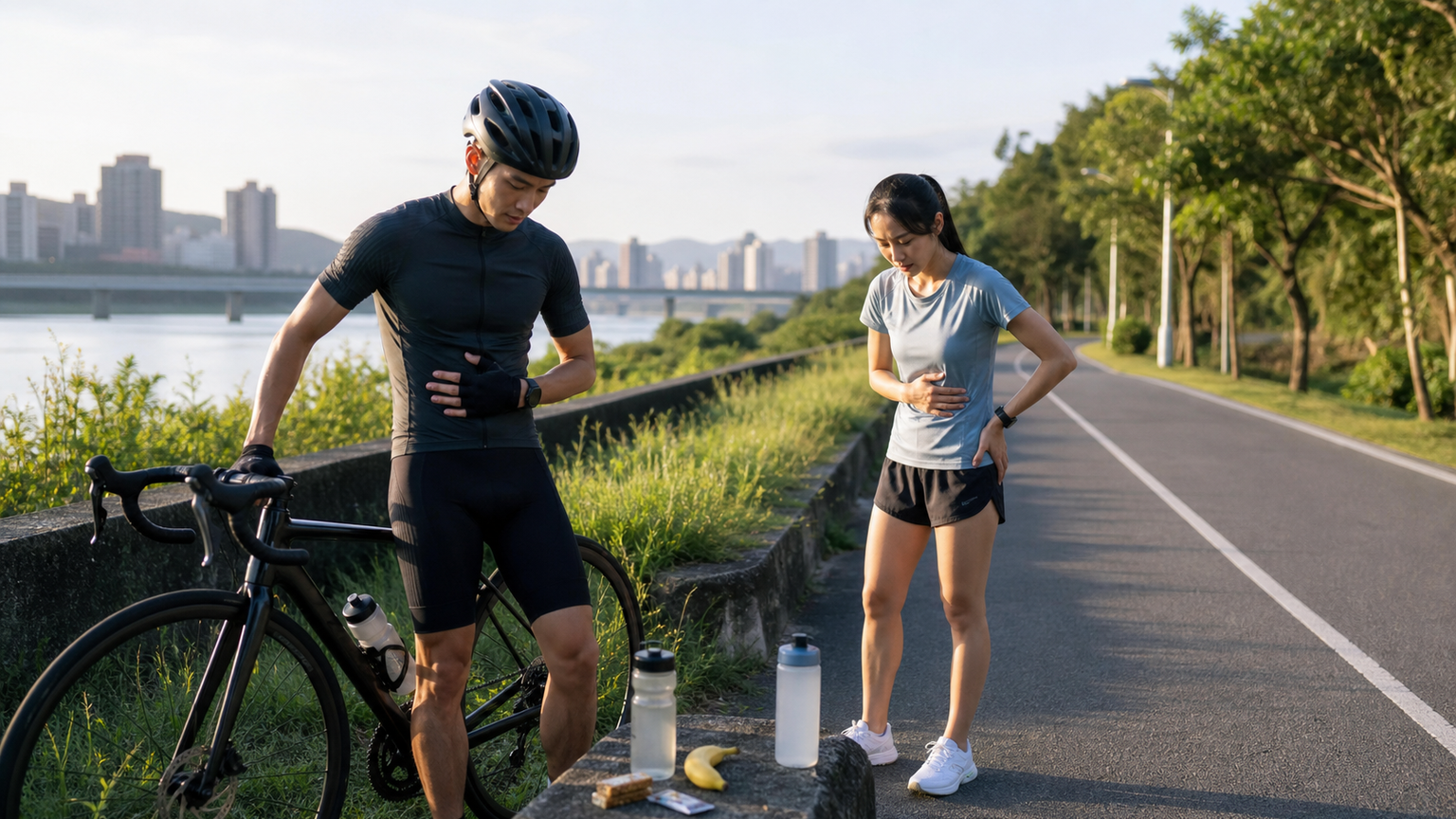
Gastrointestinal Issues After Exercise: How to Avoid Stomach Discomfort While Running or Cycling
How Common Are Gastrointestinal Problems in Athletes?
Gastrointestinal distress (GI symptoms) is one of the most common issues among endurance athletes:
- 30-90% of long-distance runners and triathletes report GI symptoms
- Approximately 40% of marathon runners experience abdominal cramps or diarrhea during a race
- GI symptoms are one of the main causes of DNF (Did Not Finish) in long-distance events
Cyclists generally have fewer GI problems than runners, mainly because cycling involves no vertical impact, but roughly 10-20% of cyclists still experience issues during long rides.
Causes of Gastrointestinal Problems During Exercise
1. Redistribution of Intestinal Blood Flow
During exercise, the body prioritizes blood flow to working muscles, and intestinal blood flow can decrease by 60-70%. This relative ischemic state can:
- Impair intestinal mucosal integrity (the “leaky gut” phenomenon)
- Reduce intestinal absorption capacity
- Trigger abnormal intestinal motility (peristalsis)
2. Mechanical Irritation (Specific to Running)
The impact of every footstrike “shakes” the intestinal contents, irritating the intestinal wall. This is the main reason runners are more prone to diarrhea than cyclists.
3. Dehydration and Electrolyte Imbalance
Even mild dehydration (2% of body weight) can significantly delay gastric emptying, causing food to accumulate in the stomach and leading to nausea and bloating.
4. Improper Fueling Strategies
- High-concentration carbohydrate solutions (>8%) are absorbed slowly, causing “gut overflow” and diarrhea
- Excessive fiber or fat breaks down slowly in the intestines
- Excessive fructose (in some energy gels and fruit juice drinks) leads to osmotic diarrhea
5. Stress and Anxiety
Pre-race nervousness is a strong trigger for intestinal symptoms. The gut-brain axis is highly sensitive to psychological stress.
Classification of Common Gastrointestinal Symptoms
| Symptom Type | Common Causes | When It Occurs |
|---|---|---|
| Abdominal cramps | Electrolyte imbalance, fueling too quickly | Mid-exercise |
| Bloating/gas | Excessive fiber/lactose intake | Before or during early exercise |
| Nausea/vomiting | Dehydration, improper fueling, overexertion | During high intensity |
| Runner’s Trots | Intestinal ischemia, mechanical irritation | Late in a long run |
| Reflux (heartburn) | Bent-over position (cycling), sphincter pressure | While cycling |
Prevention Strategies: 48 Hours Before the Race
Dietary Adjustments
Foods to avoid 2 days before the race:
- High-fiber vegetables (broccoli, cabbage, legumes)
- Large amounts of whole grains (oats, brown rice)
- Dairy products (if prone to lactose intolerance)
- Spicy foods
- High-fat foods
- Caffeinated or alcoholic beverages (unless you are accustomed to them)
Recommended foods 2 days before the race:
- White rice, pasta, white bread (refined carbs, low fiber)
- Chicken, fish (low-fat protein)
- Bananas, plain rice porridge
Race Day Breakfast
- Eat 3-4 hours before the race to ensure the stomach has emptied
- Focus on low-fiber, low-fat carbohydrates
- Make sure you have had a bowel movement (coffee helps stimulate bowel motility for many people)
Fueling Strategies During Exercise
Hydration
- Don’t wait until you’re thirsty to drink, but don’t overdo it either (risk of hyponatremia)
- Recommendation: consume 150-250 mL every 15-20 minutes
- Use isotonic or hypotonic drinks (carbohydrate concentration 4-8%)
Carbohydrate Fueling
- Test your fueling products during training; never use untested new products in a race
- Use a glucose + fructose blend (2:1 ratio) for a maximum absorption rate of up to 90g/hour
- The maximum absorption limit for glucose alone is about 60g/hour; exceeding this easily causes diarrhea
- Solid foods (bananas, energy bars) can be digested at low intensity but are hard to digest at high intensity
Fueling Mistakes to Avoid
- ❌ Trying new fueling products during a race
- ❌ Consuming a large amount of fuel at once (should be taken in small, frequent portions)
- ❌ Starting high-intensity exercise on an empty stomach and then consuming a large amount immediately after
- ❌ Taking concentrated energy gels without water
Gut Training
The gut’s ability to adapt to fueling can be trained. Research shows that practicing fueling regularly during training can:
- Increase the expression of carbohydrate transport proteins in the gut
- Improve tolerance to higher fueling rates
- Reduce gastrointestinal symptoms during races
Practical recommendations:
- Practice your race-day fueling plan during every long training session
- Gradually increase your hourly carbohydrate intake (from 40g → 60g → 80g)
- Confirm that you have good tolerance for all the fueling products you plan to use
Special Management for Runner’s Trots
If abdominal cramps worsen during a run, here’s what to do:
- Slow down to an easy jog or walk
- Try deep abdominal breathing (to reduce diaphragm pressure)
- If symptoms persist, head to the nearest restroom (in long races, plan restroom locations along the route in advance)
- If cramps are severe or you notice bloody stools, stop immediately and seek medical attention
Conclusion
Most gastrointestinal problems during exercise are preventable. The key lies in: pre-race dietary control, proper fueling strategies, and training your gut to adapt to exercise fueling through practice. Finding the fueling plan that works for you takes time and repeated testing. We recommend starting to build your own gut fueling log from every training session—over the long term, your gastrointestinal issues will be greatly reduced.
Related Reading
- Gastrointestinal Distress (GI Distress) While Running: A Complete Guide to Causes and Prevention
- Gastrointestinal Issues in Endurance Athletes: Solutions for Runner’s Diarrhea and Cyclist’s Bloating
- Runner’s Gastrointestinal Problems: Preventive Dietary Strategies for Abdominal Pain and Diarrhea During Races
- Gut Training for Road Running: How to Get Your Stomach Used to Digesting Fuel While Running
約騎爆笑地獄梗 大腸怎麼了🤣 #公路車 #cycling
3 年前
一日北高常見問題大集合 | 攻略 | 路線 | 訓練 | 補給 | 自行車 單車 | 一日雙城 | 雙塔 | TWB北高360 | 屁股痛
6 年前
一日北高/長距離團騎 常見問題補充篇 / 組團或跟團的眉角 / 壯車友容易被瘦車友慢性拉爆 / 原來屁股痛可能是這個原因...? / 風場配速法 / 公路車 / CT Yeh
2 年前
CT 喇低賽) 單車 比賽總是沒照片? 攝影師的觀點大公開 姿勢就是力量! 請加速1.25倍收看
7 年前
靠單車減肥35公斤 心得分享與整理
7 年前
Never Stop 西進武嶺 前後雙機 完整全程錄影 訓練台 實境
8 年前
iPhone內建一秒變長腿🤣 車友必備#cycling
2 年前
爬陡坡被爆胎的車友跑步超車 #cycling #里佳部落
9 個月前