Winter Cycling Clothing Guide: How to Dress for Taiwan’s January-February Rides
For many people, winter in Taiwan is the season when they simply don’t want to ride. But for serious riders in training, winter is a critical period for building an aerobic base. The right cold-weather clothing lets you keep training effectively in cold conditions while avoiding the health problems that come from getting chilled.
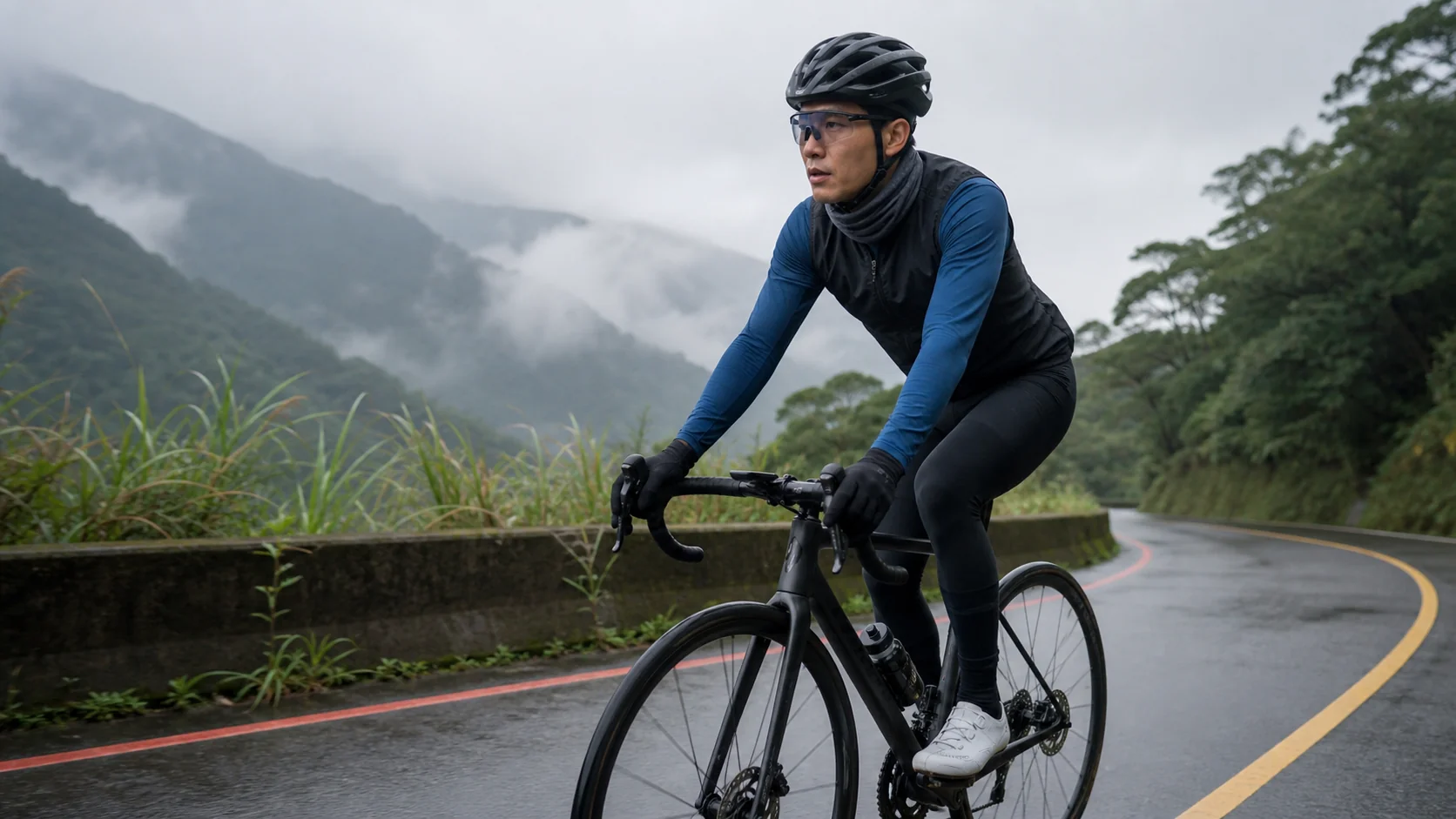
Climate Characteristics of Winter Riding in Taiwan
| Region | Average Jan-Feb Temperature | Main Challenge |
|---|---|---|
| Taipei, Yilan | 14-18°C | Northeast monsoon, high humidity |
| Central plains | 15-20°C | Large day/night temperature swings |
| South (Kaohsiung, Tainan) | 18-24°C | Relatively warm, but still chilly |
| Mountains (500m+) | 8-15°C | Low temperatures, strong winds |
Basic Principles of Layering
The core of winter clothing is the “Three Layer System”:
| Layer | Function | Material |
|---|---|---|
| Base Layer | Moisture-wicking | Merino wool or synthetic wicking fabric |
| Mid Layer | Insulation | Fleece or lightweight down |
| Shell Layer | Wind and water resistance | Gore-Tex or similar waterproof-breathable fabric |
Cold-Weather Recommendations by Body Part
Torso
Base layer: A long-sleeve thermal base layer jersey. Cotton is not suitable, since it dries slowly once soaked with sweat, which lowers your perceived body temperature.
Outer layer: A windproof softshell jacket or a lightweight waterproof jersey. Key selection points:
- Back panel design: the back usually needs more wind protection than the front
- Pocket placement: rear pockets should remain accessible
- Reflective elements: winter has shorter daylight hours, so visibility matters
Jersey length: A winter jersey’s back hem should be longer than the front (designed so your lower back stays covered when riding downhill)
Legs
General winter (above 15°C): Three-quarter or full-length tights (no extra thickness needed)
Cold conditions (10-15°C): Full-length thermal bib tights
Extreme cold (below 10°C): Full-length tights plus leg warmers
Hands
Fingers and palms are the areas most prone to losing heat, since blood flow is concentrated in the working muscle groups while riding.
| Temperature | Recommended Gloves |
|---|---|
| 18-22°C | Half-finger gloves |
| 12-18°C | Thin full-finger gloves |
| 8-12°C | Medium-thickness full-finger gloves |
| Below 8°C | Thick windproof full-finger gloves, consider chemical hand warmers |
Practical tip: Keep a spare pair of thin gloves in your saddle bag and put them on before a descent (your hands face much stronger cold wind on the way down).
Head and Ears
- Ear warmers: Protect ears from cold wind without interfering with helmet fit
- Cycling skull cap: A thin insulating cap worn under the helmet, mainly protecting the crown and forehead
- Neck gaiter/buff: Multi-purpose — can warm the neck or be pulled up to cover the face
Feet
- Insulated cycling shoes: Some winter cycling shoes have a warm inner lining
- Overshoes: The most effective way to keep feet warm, available in waterproof (rain) and windproof-only versions
- Wool cycling socks: Provide more warmth than typical synthetic fiber socks
Quick Reference: Clothing by Temperature
| Temperature | Upper Body | Lower Body | Hands | Head |
|---|---|---|---|---|
| >20°C | Short-sleeve jersey | Shorts | Half-finger or bare | Regular helmet |
| 15-20°C | Long-sleeve jersey | Shorts + leg warmers | Thin full-finger gloves | Ear warmers |
| 10-15°C | Long-sleeve + light jacket | Full tights | Medium-thickness gloves | Ear warmers + skull cap |
| <10°C | Full three-layer system | Thick full tights | Thick windproof gloves | Full coverage |
The Special Challenge of Northern Taiwan’s Winter Rain
Taipei, Yilan, and other northern areas often see persistent light winter rain, which combined with low temperatures makes for the most demanding conditions of all. Recommendations:
- A waterproof-breathable jacket is essential (Gore-Tex or similar)
- Waterproof overshoes: ordinary overshoes soak through within minutes in heavy rain
- Anti-fog or sunglasses: prevent rain and sweat from blurring your vision
- Spare gloves: if your first pair gets soaked, having a backup pair to switch to helps a lot
Winter riding can be a truly beautiful experience — morning mist, empty roads, and cooler temperatures that make long-distance rides more comfortable. With the right gear, winter isn’t cycling’s off-season at all — for many experienced riders, it’s actually their favorite time to ride.
Related Reading
單車賞雪 裝備準備及注意事項分享 | 公路車
5 年前
單車 一日北高 ( 雙城 ) 肥宅雙人瘋狂行 紀錄片 REACTO
10 年前
騎單車去大屯山賞雪! 助航台滑冰 全記錄 | 台北R友大集合 | 下雪打雪仗囉 | 4K超高畫質
5 年前
靠單車減肥35公斤 心得分享與整理
7 年前
#公路車 #Fitting 靠人工智慧APP 幫你調整單車
6 年前
2025 自行車錶排行榜 兩萬車友大數據 / Garmin Bryton 排名會大洗牌嗎? / 全新的碼表前身分析 /公路車 / CT Yeh
1 年前
太平山單車員工旅遊 | 這樣玩CP值最高!| 公路車
5 年前
訓練台體驗) 2019台北自行車展 三大家 訓練台體驗 Tacx Neo Flux 2 Xepdo Apx Wahoo Kickr
7 年前