Sports Drinks or Plain Water: Choosing the Right Hydration for Long Rides and Runs
“Should I drink a sports drink or plain water?” is a question many endurance athletes keep coming back to. The answer isn’t either-or — it depends on exercise duration, intensity, ambient temperature, and your individual sweat rate. This article breaks down the question from a scientific angle.
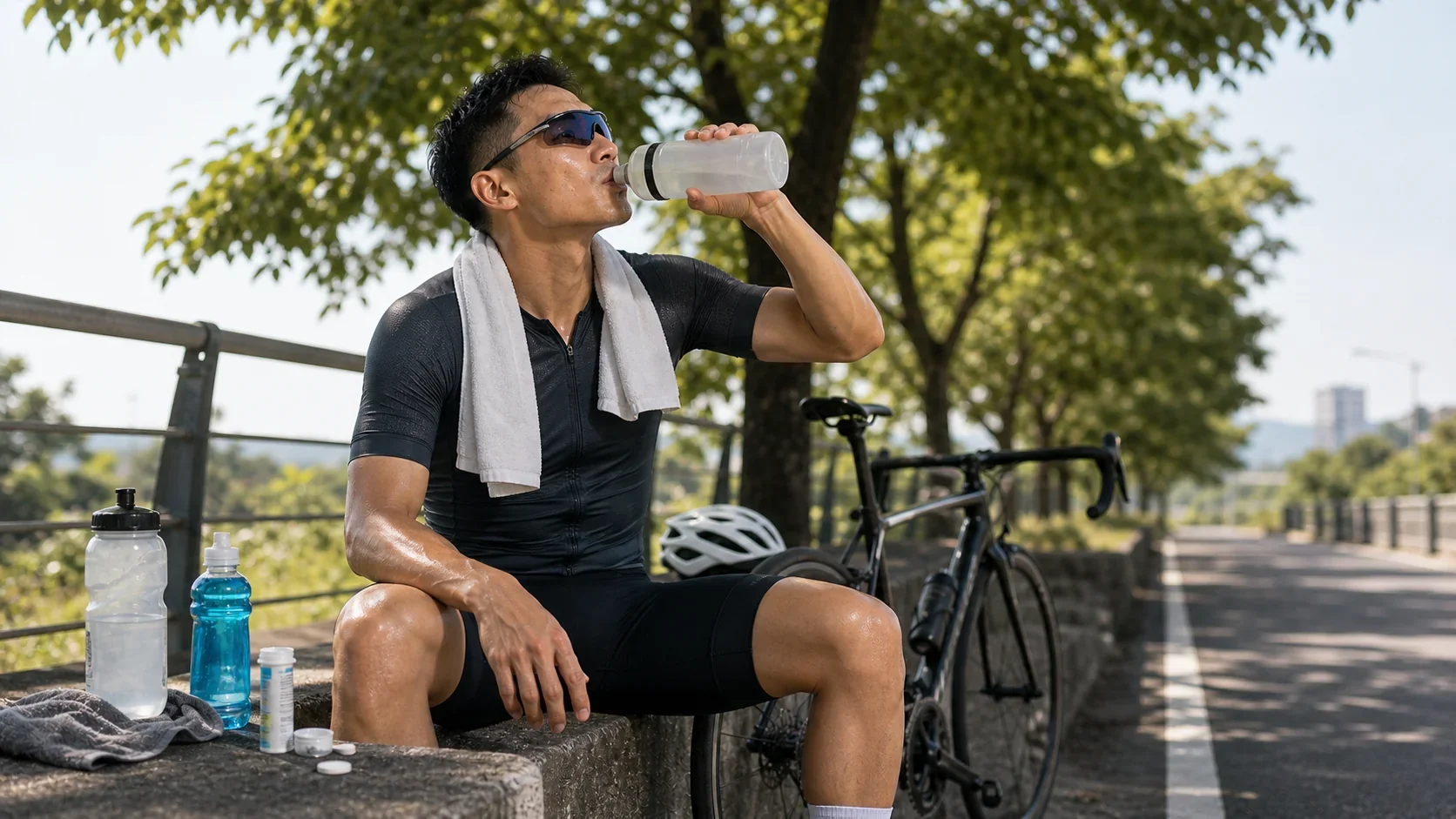
The Basics: Your Body’s Fluid Needs
Sweat Rate
Sweat volume varies from person to person, but here are general reference ranges:
| Condition | Sweat Rate (L/hr) |
|---|---|
| Low intensity + cool weather | 0.5-0.8 |
| Moderate intensity + mild weather | 0.8-1.2 |
| High intensity + hot weather | 1.2-2.0 |
| Extreme heat + high intensity | 2.0-3.0 |
Dehydration beyond 2% of body weight begins to impair performance:
- 2% dehydration: aerobic endurance drops by about 5%
- 5% dehydration: endurance drops by about 30%
- 8% dehydration: dizziness, nausea, severely impaired performance
What’s in a Sports Drink
A typical sports drink contains:
| Component | Amount (per 500ml) | Function |
|---|---|---|
| Carbohydrates | 25-35g | Provides energy |
| Sodium (Na) | 200-400mg | Electrolyte replacement, promotes fluid absorption |
| Potassium (K) | 50-100mg | Muscle function |
| Magnesium (Mg) | Small amount | Muscle relaxation |
Water vs. Sports Drink: When to Choose Which?
Short-Duration Exercise (under 60 minutes)
Recommendation: Plain water
For low-to-moderate intensity exercise under an hour, your body’s glycogen stores and electrolytes are entirely sufficient — no supplementation needed. The calories in a sports drink (roughly 250-300kcal per liter) are just excess sugar during short workouts.
Moderate Duration (1-2 hours)
Recommendation: Mostly water, with light electrolytes as needed
During 1-2 hours of moderate-intensity exercise, the main priority is replacing lost fluid. If temperatures are high and you’re sweating heavily, a drink with a small amount of electrolytes (such as electrolyte tablets dissolved in water) can help, though a full-sugar sports drink isn’t strictly necessary.
Long-Duration Exercise (over 2 hours)
Recommendation: Sports drinks or combined fueling
During sustained exercise beyond 2 hours:
- Rising energy demands: Plain water alone can’t replace the large amounts of glycogen being burned
- Cumulative electrolyte loss: After heavy sweating, drinking only plain water can dilute sodium levels in the blood, potentially causing hyponatremia
- Thirst becomes unreliable: After prolonged exercise, thirst is no longer a reliable signal, so planned intake is needed
The Risk of Hyponatremia (Water Intoxication)
This is an often-overlooked risk in long-distance sports. Symptoms include:
- Headache, nausea
- Dizziness, confusion
- In severe cases, can progress to coma
High-risk groups:
- Runners in the late stages of a marathon or ultramarathon
- Athletes after the swim and bike legs of a long-distance Ironman
- Runners who overhydrate by drinking plain water purely based on feel
Prevention: During long-duration exercise, take in a sodium-containing drink or salt tablet every 1-2 hours to ensure both fluid and electrolytes are replaced together.
DIY Electrolyte Drink Recipe
Don’t want to spend a lot on commercial sports drinks? Here’s a simple homemade electrolyte drink:
Basic version (1 liter):
- 1L plain water
- 0.5-1g salt (NaCl) (about 1/4 teaspoon)
- 20-30g sugar (about 2-3 teaspoons)
- Optional: a splash of lemon juice (improves taste)
Cost comparison:
- Homemade: about NT$5/liter
- Commercial sports drinks: about NT$25-40/liter
A Practical Decision Flow
Exercise duration < 1 hour? → Drink plain water

Exercise duration 1-2 hours, temperature < 25°C? → Plain water + occasional electrolytes

Exercise duration > 2 hours, or temperature > 30°C? → Sports drink or water + fueling

High-intensity competition? → Sports drink + energy gels/solid fuel
Conclusion
Plain water is the best choice for most everyday training — simple, free, and zero calories. Sports drinks show their real value under conditions of long duration, high intensity, and high heat.
The best hydration strategy is to understand your own sweat rate and decide what to drink based on actual need rather than advertising claims. Track your body weight before and after a few training sessions (a 1kg weight difference equals roughly 1 liter of fluid) to get the most precise, personalized hydration guide for yourself.
Related Reading
靠單車減肥35公斤 心得分享與整理
7 年前
#公路車 #Fitting 靠人工智慧APP 幫你調整單車
6 年前
洗單車神器 吹水機! 實際洗車用用看 暴力洗鍊條大法 | 公路車 | CT Yeh
4 年前
西進武嶺 免費訓練分析服務 Intervals | 練不夠還是練過頭?你哪一種類型選手?AI模型告訴你! | 備戰神器 | 公路車 訓練 | CT Yeh
4 年前
一日北高前的高裝檢 | 北高 360 | 挑戰11小時的裝備 | 一日雙塔 | 補給
6 年前
CT暗黑廚房) 車友必備 宇宙無敵鮮蚵湯 幫助訓練恢復 天然食補 好市多 超肥鮮蚵 破PR
7 年前
4K 東眼山 x 水蜜桃冰沙 百人單車約騎! 操完再吃冰 多爽快
7 年前
半日 小台灣 極限單車路線挑戰實錄
7 年前