The History of the Marathon: From the Battlefields of Greece to the Olympic Stage
Every year, millions of people around the world set out on a 42.195-kilometer journey in marathon races, but hidden behind this distance lies more than 2,500 years of history and legend.
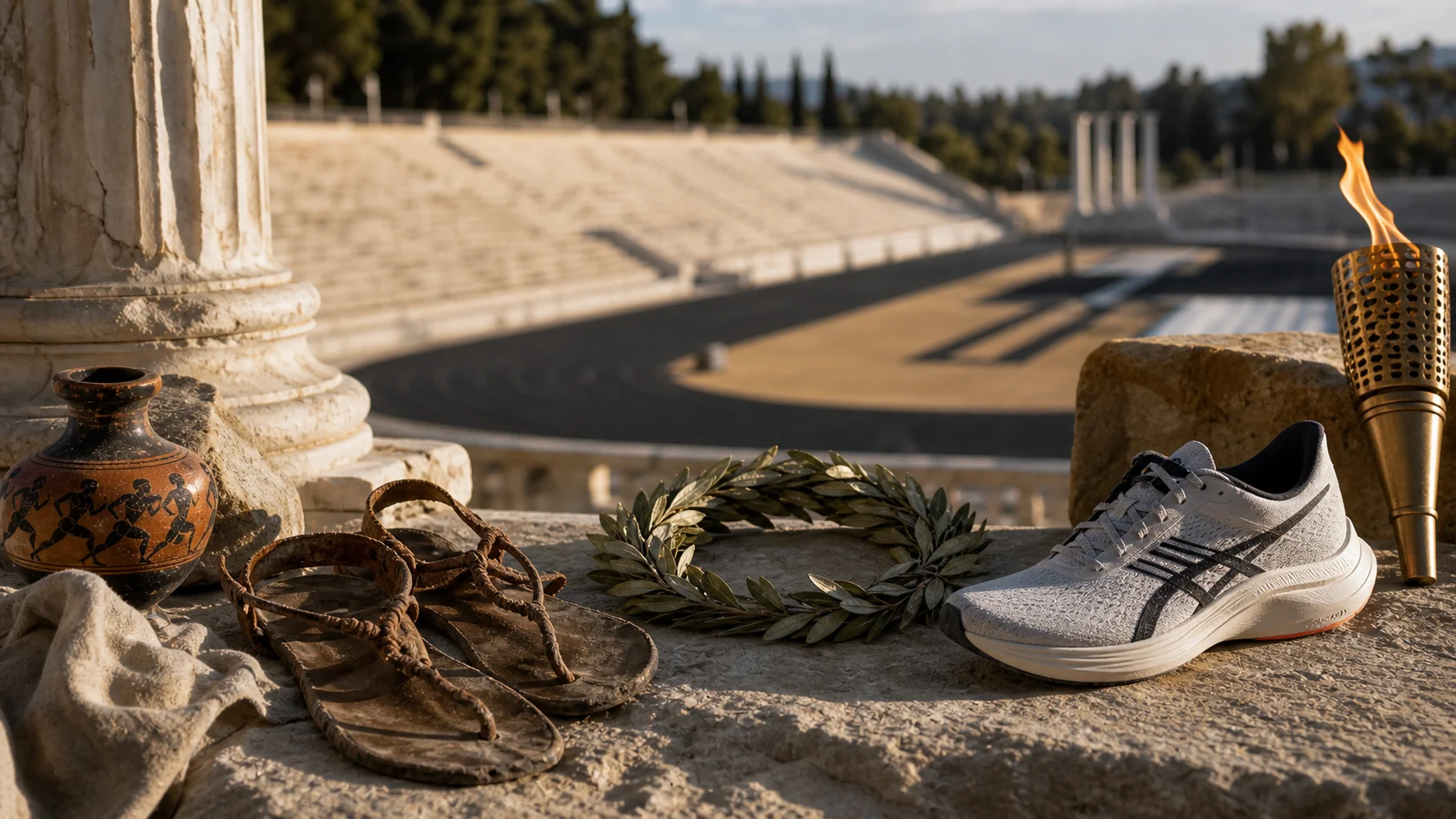
Origins: The Battle of Marathon (490 BC)
The Legend of Pheidippides
The story begins in 490 BC, when the Persian Empire’s army invaded Greece and fought a decisive battle against the allied Athenian forces on the plain of Marathon.
According to the ancient Greek historian Lucian, an Athenian messenger named Pheidippides was sent to run back to the city of Athens (about 40 kilometers) after the great victory at Marathon, to deliver the news of triumph. Upon arrival, he cried out, “We have won! (Νενικήκαμεν, Nenikekamen),” and immediately collapsed and died of exhaustion.
The historical truth: This story may well be a legend embellished by later generations. In historical records, Pheidippides is more famously known for a different feat — running alone the roughly 250 kilometers from Athens to Sparta to seek reinforcements, two days before the Battle of Marathon. But regardless of its accuracy, this tale has become an eternal symbol of the marathon spirit.
The Birth of the Modern Marathon: The 1896 Athens Olympics
Inspiration from a French Historian
In 1896, the first modern Olympic Games returned to Athens. The French historian Michel Bréal was deeply moved by the legend of Pheidippides and proposed to Olympic founder Pierre de Coubertin that a long-distance race “commemorating the ancient Greek hero” be added to the program.
The First Olympic Marathon Champion
On April 10, 1896, the first Olympic marathon set off from Marathon Village, finishing at the Panathenaic Stadium in Athens, over a distance of about 40 kilometers.
Among the 17 competitors, Spyridon Louis, a Greek water carrier from Marousi, crossed the finish line first in 2 hours, 58 minutes, and 50 seconds, becoming the first Olympic marathon champion in history.
His victory sparked a wild celebration among the Greek crowd. Members of the Olympic royal family even jumped onto the track to accompany him for the final stretch — one of the most moving moments in Olympic history.
Where the Distance of 42.195 Kilometers Comes From
An Accidental Decision at the London Olympics
In the early Olympics, the marathon distance was not fixed (about 40 km in 1896, about 40.26 km in 1900, and about 40 km in 1904).
The 1908 London Olympics marked the establishment of the modern marathon distance, though the reason was quite accidental:
- The route started from the lawn of Windsor Castle, so the British royal family could watch
- The finish line was set directly in front of the royal box at White City Stadium
- The distance between this particular start and finish point happened to work out to exactly 26 miles 385 yards (42.195 kilometers)
In 1921, the International Amateur Athletic Federation (IAAF) officially established 42.195 kilometers as the standard marathon distance, and it remains so to this day.
Key Historical Milestones
| Year | Event | Significance |
|---|---|---|
| 1896 | First Olympic marathon | Birth of the modern marathon |
| 1908 | 42.195 km distance established | Standardization of the distance |
| 1960 | Bikila wins gold barefoot (Rome Olympics) | African runners take the world stage |
| 1967 | Kathrine Switzer runs the Boston Marathon | A pioneer for women’s marathon running |
| 1984 | Women’s marathon included in the Olympics for the first time | A milestone for gender equality |
| 1999 | Khalid Khannouchi first breaks 2:05:42 | A breakthrough in the world record |
| 2019 | Eliud Kipchoge’s Ineos 1:59 Challenge | First time under 2 hours (unofficial) |
Eliud Kipchoge: The Icon of the Modern Marathon
Kenya’s Eliud Kipchoge is the greatest marathon runner of the modern era, and a living embodiment of the marathon spirit:
- World record: 2:01:09 (2018 Berlin Marathon, official world record)
- Ineos 1:59 Challenge: Completed in 1:59:40 in Vienna in 2019 (unofficial, under special conditions)
- Olympic gold medals: Rio 2016 and Tokyo 2021, winning gold at two consecutive Olympics
His famous words, “No Human Is Limited,” have become the finest expression of the marathon and of the human spirit of challenge.
The Marathon as a Mass-Participation Sport
Today, the marathon is no longer the exclusive domain of professional athletes — every year, more than six million people around the world complete a marathon. The “Six World Marathon Majors” (Tokyo, Boston, London, Berlin, Chicago, and New York) have become a lifetime bucket list for countless runners.
The appeal of the marathon lies in its “democratizing” challenge — every finisher, no matter their pace, is connected to a legend that is 2,500 years old.
Related Reading
- The Olympic History of Cycling: The Evolution of Olympic Cycling Events Since 1896
- The History of the Olympic Road Cycling Race and Taiwan’s Athletes
- Wan Jin Shi Marathon: The History of Taiwan’s Oldest Marathon Race
- A Century of Legend at the Tour de France: From Newspaper Marketing to the World’s Greatest Sporting Event
小野田真的存在!日本赤城山爬坡公路賽 台灣首發團完全實錄 | 頭文字D真實賽道! | 看完東奧自行車賽後好想再去騎一次啊! | 公路車 | CT Yeh
4 年前
日本公路最高登山賽,台灣首位YT挑戰實錄,乘鞍登山賽40週年,賽前篇完整版,請到我的YT收看 #公路車 #cycling
10 個月前
2025 乘鞍 KOM 登山賽挑戰實錄 / 日本公路最高 ! 賽前探路篇 / 比富士山厲害,無敵絕景!/ 40週年 / 中文YT首發 / 公路車 / CT Yeh #乘鞍ヒルクライム
10 個月前
半日 小台灣 極限單車路線挑戰實錄
7 年前
2018 田中馬拉松 全程健跑 VR 360 環景錄影 體驗現場狂野加油氣氛! Insta 360
7 年前
台灣旅行團參加 第7回まえばし赤城山ヒルクライム大会 雙視點
8 年前
2019 夏季KOM 5小 完賽心得 準備攻略 東進武嶺 夏季登山王之路 Taiwan KOM Challenge
7 年前
Never Stop 西進武嶺 前後雙機 完整全程錄影 訓練台 實境
8 年前