The Sleep Science of Elite Athletes: LeBron and Federer’s 12-Hour Sleep
When asked about the secret to staying at the top of their game, LeBron James and Roger Federer both gave the same answer: 12 hours of sleep every night. This isn’t a luxury — it’s a necessary investment in maintaining competitive ability throughout a career.
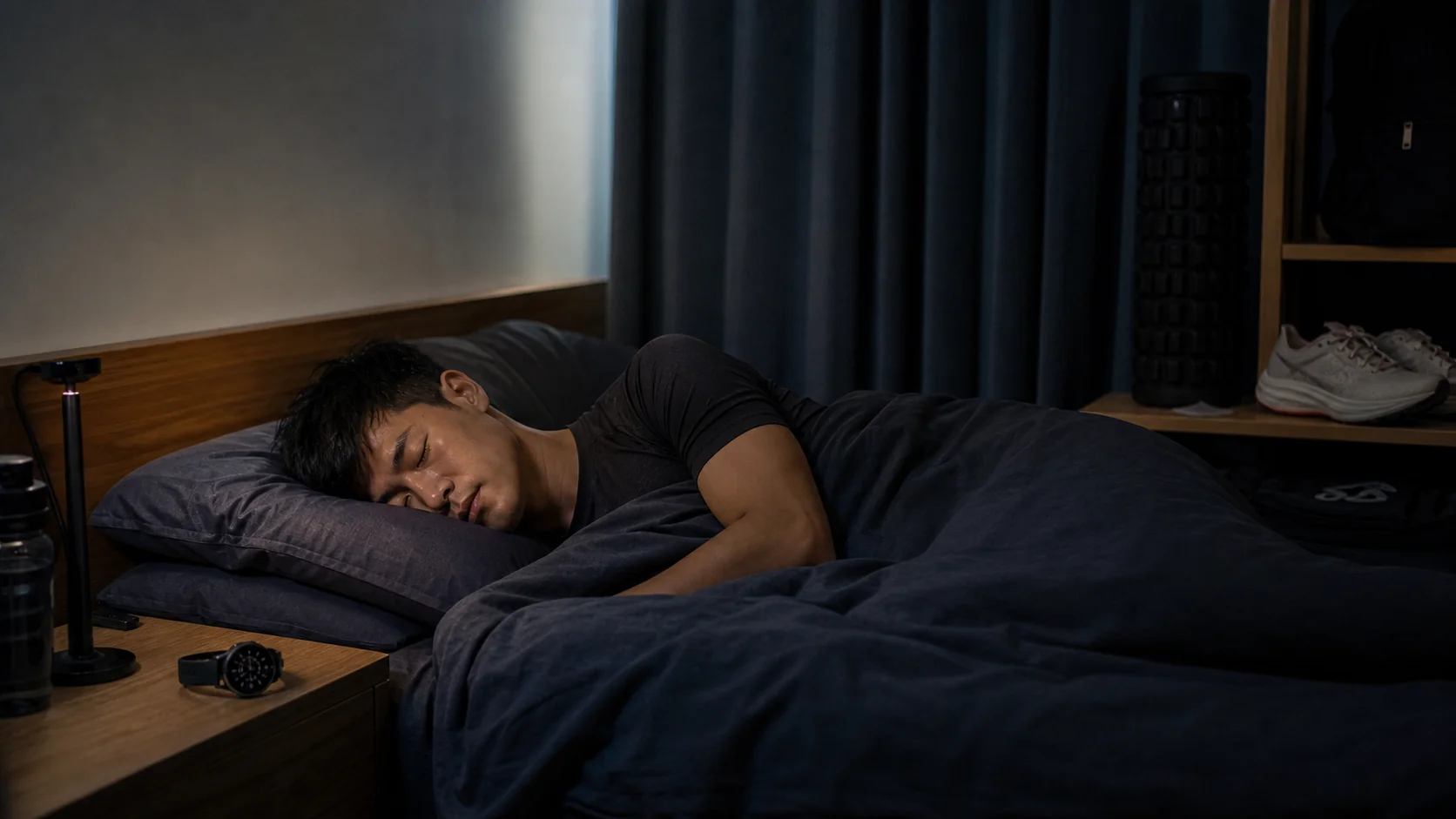
The Sleep Habits of Elite Athletes
The Superstars Who “Sleep More”
| Athlete | Sport | Daily Sleep Time |
|---|---|---|
| LeBron James | NBA Basketball | 10-12 hours |
| Roger Federer | Tennis | 11-12 hours |
| Usain Bolt | Sprinting | 8-10 hours (+2-hour nap) |
| Venus Williams | Tennis | 9-10 hours |
| Tiger Woods | Golf | 12 hours after each round |
LeBron’s Sleep Philosophy
LeBron James has emphasized in numerous interviews that sleep is his most important recovery tool:
“I put a lot of energy into my sleep, yes, I sleep a lot. I sleep at least 8-9 hours every night, but I try my best to get up to 12 hours. Recovery matters more to me than training.”
He even requests a sleeper seat on flights for away games, to make sure he maintains sleep quality even during long-distance travel.
The Science of Sleep and Athletic Performance
Growth Hormone Secretion
About 75% of the body’s growth hormone (GH) is secreted during deep sleep (NREM stage 3, slow-wave sleep). The functions of growth hormone include:
- Promoting muscle protein synthesis
- Accelerating fat metabolism
- Repairing micro-damage to muscles caused by training
- Strengthening bones and ligaments
In short: your muscles don’t grow in the gym — they grow in bed.
Cognitive Function and Reaction Time
A key study by Stanford University (Mah et al., 2011) on basketball players found the following:
- Athletes extended their usual 6-9 hours of sleep to 10 hours
- Athletic performance was tested after 5-7 weeks
Results: Sprint speed improved by 5%, free-throw shooting percentage improved by 9%, three-point shooting percentage improved by 9.2%, and feelings of fatigue decreased.
Metabolism and Weight Management
The effects of sleep deprivation on an athlete’s metabolism include:
- Elevated cortisol: Increased stress hormone levels, which is detrimental to muscle repair and weight management
- Increased ghrelin: Increased hunger, especially cravings for high-calorie foods
- Decreased leptin: Weakened satiety signals
The Effects of Sleep Deprivation (Research Data)
| Sleep Duration | Short-Term Effects | Long-Term Effects |
|---|---|---|
| <6 hours | Reaction time extended by 30%, strength decreased by 5-8% | Risk of overtraining, reduced immunity |
| 6-7 hours | Slight decline in cognitive function | Accumulated fatigue |
| 7-8 hours | Normal | Maintains general health |
| 8-10 hours | Optimal state | Ideal recovery |
| 10-12 hours | Extra recovery (elite standard) | Maximized tissue repair |
Recommendations for Amateur Cyclists and Runners
You don’t need to sleep 12 hours a day, but you do need to treat sleep as part of your training:
Minimum Standards
- Training days: 8-9 hours (more recovery needed due to training stimulus)
- Rest days: 7-8 hours
- The night before a race: No need to force extra sleep, but make sure you get 7-8 hours
Tips for Improving Sleep Quality
- Fixed bedtime: The body’s circadian clock prefers regularity
- Avoid screens for 1 hour before bed: Blue light suppresses melatonin secretion
- Bedroom temperature: 18-20°C is the ideal sleep temperature
- Training timing: Try to avoid intense training within 3 hours of bedtime
- Caffeine cutoff: Try to avoid caffeine after 2pm
The Supplementary Role of Napping
When a full night’s sleep can’t be guaranteed, a 20-30 minute power nap can significantly boost attention and performance:
- Studies show a 20-minute nap can improve athletic performance by 3-5%
- Don’t exceed 30 minutes (to avoid sleep inertia from entering deep sleep)
- Timing: 1-3pm (the optimal window that doesn’t affect nighttime sleep)
Finally, if you want a faster pace, stronger muscles, and quicker recovery, the cheapest and most effective method might just be: going to bed an hour earlier.
Related Reading
CT Talk) 數據面窺看 武嶺大神們 平時的備戰 共通點 (娛樂性質XD)
7 年前
西進武嶺 免費訓練分析服務 Intervals | 練不夠還是練過頭?你哪一種類型選手?AI模型告訴你! | 備戰神器 | 公路車 訓練 | CT Yeh
4 年前
一日北高 11小時 賽後心得分享篇 | TWB北高360 | 一日雙城 | 單車 | 公路車
6 年前
live) 超越北高 之一日北高12小時 策略
7 年前
FTL 與 SYB 車隊專訪 西進武嶺 實用攻略分享! 2小時 如何練?!你不知道的眉角!新手準備武嶺必看 EP1 | 實力派女車友 | 精華版 | 公路車 | CTYeh
4 年前
福隆鐵人團練隨拍
8 年前
一日北高 11小時 挑戰實錄 原來北高半天就騎完了... 2020 twb360
6 年前
一個測試有沒有認真練車的方法😂 #公路車
10 個月前