Runner-Specific Strength Prescription: From Hip Drive to Lower-Limb Stiffness, Gym Strategies to Improve Running Economy
/no_think
Why Runners Should Lift: Economy, Not Muscle
For runners, the ultimate metric of strength training is running economy—consuming less oxygen at the same speed. Multiple meta-analyses indicate that adding heavy strength or plyometric training for 8–14 weeks can improve running economy by approximately 2–8%, with almost no increase in body weight (and even improved power-to-weight ratio). The mechanisms include: greater tendon stiffness (energy-saving elastic rebound), faster motor unit recruitment, and shorter ground contact time.
The Three Pillars of Strength for Runners
1. Hip Extensor Strength (Glutes + Posterior Chain)
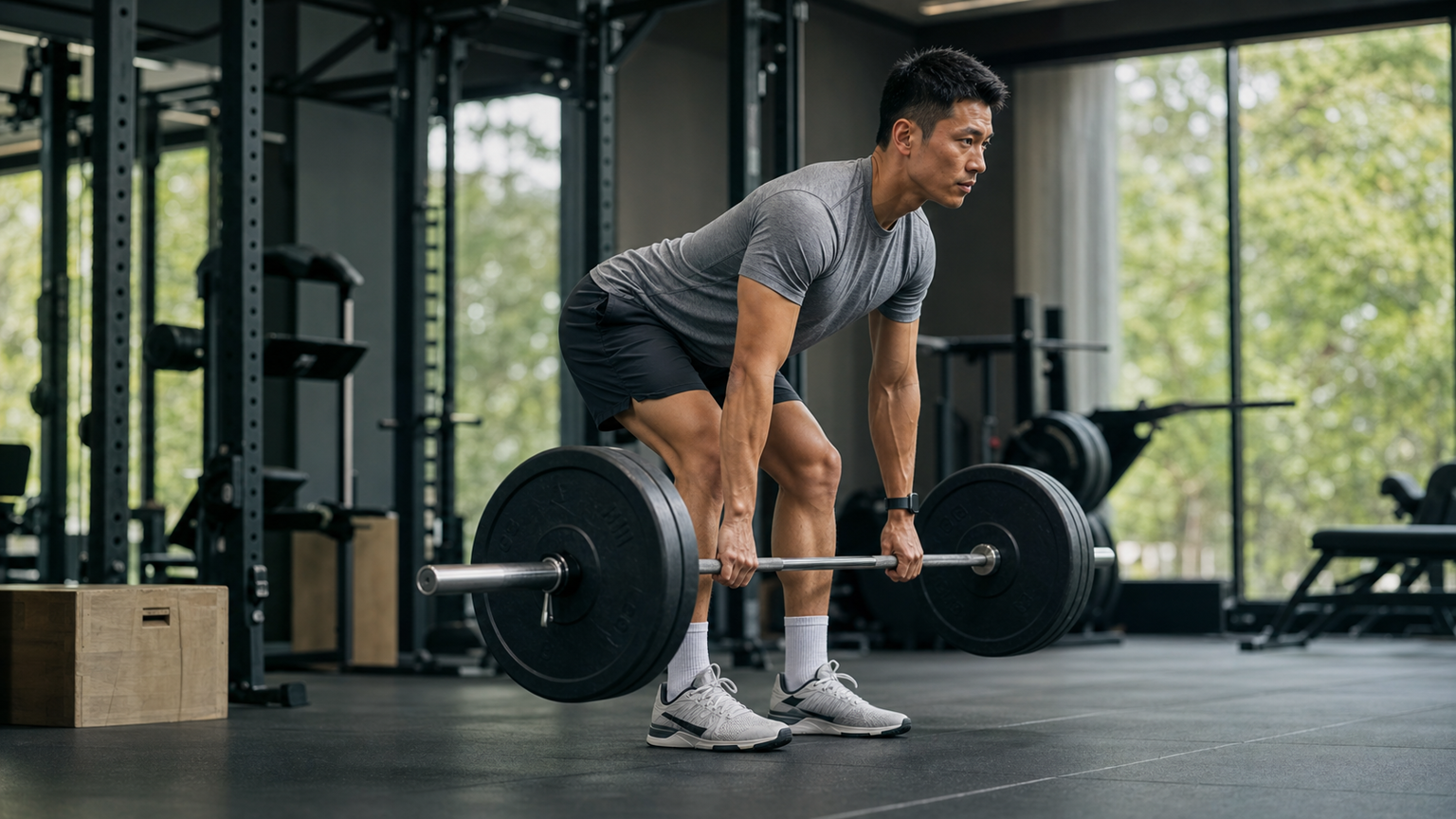
Running propulsion comes primarily from hip extension, not knee extension. Weak glutes are the most common strength deficit in runners, leading to quadriceps compensation and increased patellofemoral stress. Core movements: deadlifts, hip thrusts, single-leg RDLs.
2. Lower-Limb and Calf–Tendon Stiffness
The efficiency of elastic rebound at landing relies heavily on Achilles tendon and calf stiffness. Calf raises (including loaded and eccentric variations), isometric peak-hold calf raises, and ankle hops are key.
3. Maximal Strength (High Intensity, Low Reps)
What runners need most is not muscular endurance (your mileage already provides plenty of that), but the neural adaptations from high-intensity, low-rep training. Research supports that 85–90% 1RM, 3–5 reps per set, transfers best to economy.
Periodized Program (Paired with Mileage)
| Phase | Weeks | Focus | Examples | Intensity/Volume |
|---|---|---|---|---|
| Foundation | 1-4 | Movement quality, anatomical adaptation | Squats, RDLs, hip thrusts | 3x8-10, 65-75% |
| Maximal Strength | 5-10 | Neural adaptation | Squats, deadlifts, single-leg | 4x3-5, 85-90% |
| Conversion | 11-14 | Strength to speed | Half-squat jumps, plyometrics | High velocity, low volume |
| In-Season Maintenance | Race period | Preserve strength without stealing recovery | 2-3 movements 2x4 @ 85% | Once per week |
Principles for Coordinating Mileage and Strength
- Keep high-intensity run days and heavy leg days as separate as possible; if on the same day, space them ≥6 hours apart and prioritize the current phase’s focus first.
- Do not schedule heavy lower-body work the day after a long run: residual fatigue degrades technique and recruitment quality.
- Taper strength volume during deload weeks: 10 days before race day, shift strength work to low-volume, high-quality sessions; neural adaptations can be retained.
- Quality over quantity: For runners, two 30–40-minute targeted strength sessions per week far outperform lengthy bodybuilding-style workouts.
An Often Overlooked Component: The Ankle and Calf
Many runner injuries concentrate in the calf–Achilles–plantar chain. Beyond the major muscle groups, be sure to include:
- Loaded calf raises 3x8 (including a 3-second eccentric lowering)
- Isometric single-leg calf raise peak-hold 4x30 seconds
- Short foot exercises to build active arch support
These unassuming movements often hold greater preventive value for the Achilles tendon and anterior tibial syndrome than one more set of squats.
Acceptance Criteria
Don’t just look at whether your squat got heavier—check: whether heart rate/oxygen uptake at 5K pace has dropped, whether the pace decay in the latter half of long runs has narrowed, and whether single-leg hop symmetry has improved. These are the real evidence that strength has “transferred” to running.
“Runners don’t go to the gym to get bigger; they go to buy a pair of springier, more economical legs. Squatting heavy doesn’t matter—what matters is whether that strength helps you breathe one less breath at kilometer 30.” —A strength and conditioning coach specializing in marathon runners
Related Reading
靠單車減肥35公斤 心得分享與整理
7 年前
CT暗黑廚房) 車友必備 宇宙無敵鮮蚵湯 幫助訓練恢復 天然食補 好市多 超肥鮮蚵 破PR
7 年前
西進武嶺 免費訓練分析服務 Intervals | 練不夠還是練過頭?你哪一種類型選手?AI模型告訴你! | 備戰神器 | 公路車 訓練 | CT Yeh
4 年前
#公路車 #Fitting 靠人工智慧APP 幫你調整單車
6 年前
Never Stop 西進武嶺 前後雙機 完整全程錄影 訓練台 實境
8 年前
實景訓練台) 彰化經典百K 高強度喵團 90分鐘 跟著一起練功 2019 Indoor workout Changhua Classic 100 Taiwan
7 年前
白沙屯媽祖進香在家走!UREVO 坡度自調走步機 / 可連接訓練遊戲APP MyWhoosh / 邊看直播邊走起來 / CT Yeh
11 個月前
CT 喇低賽) 武嶺牽車 才是王道 西進牽車四小時內秘訣 攝手位置 如何判斷 防抽筋小秘訣
7 年前