Endurance Training Adaptations Across Perimenopause and Menopause: Strength, Bone, and Recovery Strategies Amid Hormonal Shifts
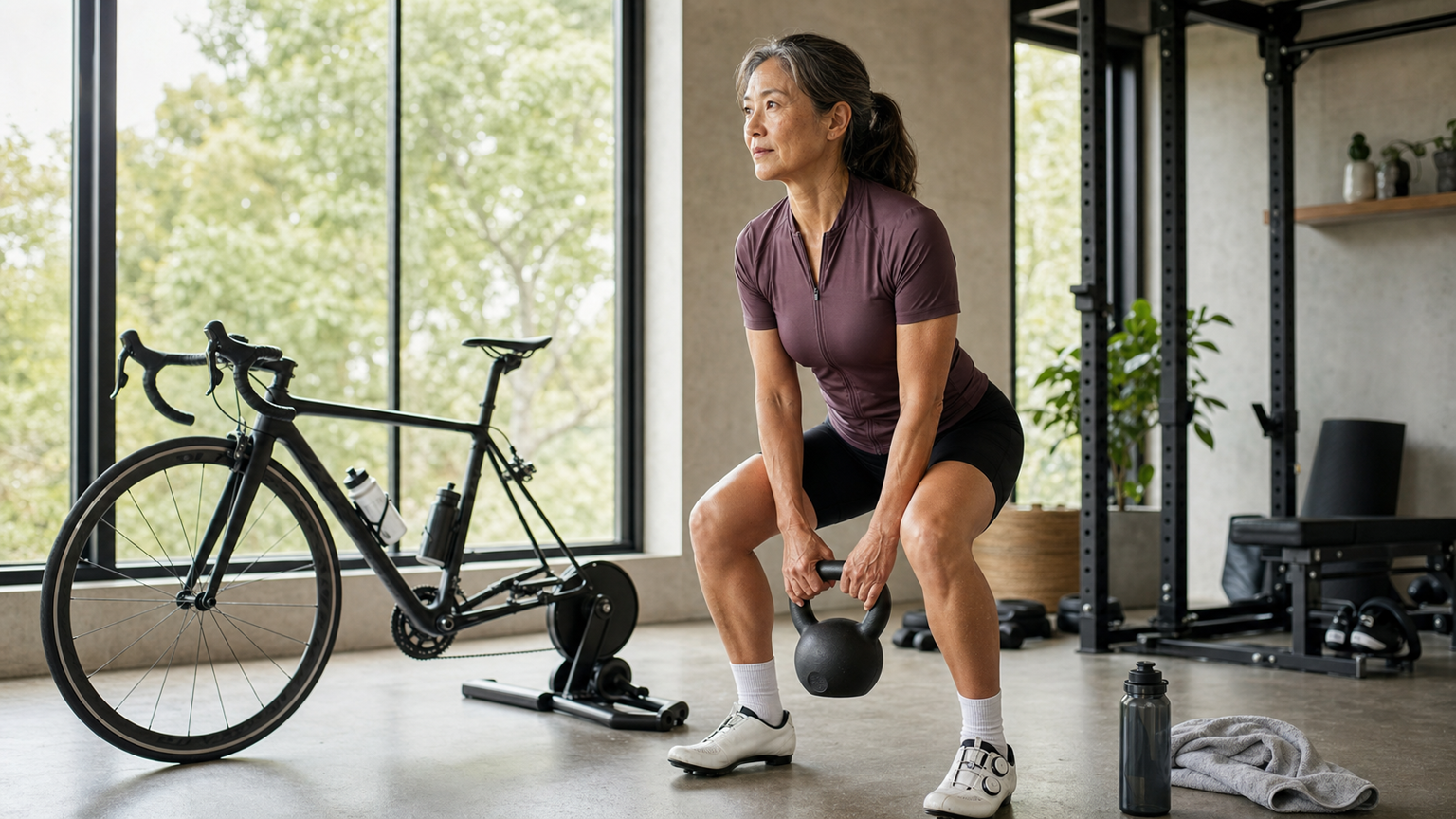
Don’t Treat Menopause as a Signal to “Slow Down”
Perimenopause (the period of hormonal fluctuation in the years leading up to menopause) and menopause are accompanied by a significant decline in estrogen. This transition does change the physiological environment, but it is not a notice to exit the stage—it’s a signal that training strategies need proactive recalibration. Many women actually reach their lifetime best in endurance sports during this phase. The key is understanding the changes and adjusting accordingly, rather than passively accepting the narrative that “decline is inevitable with age.”
What Declining Estrogen Affects
| System | Impact of Declining Estrogen | Training Countermeasure Direction |
|---|---|---|
| Bone | Accelerated bone loss (fastest in the years immediately after menopause) | Heavy resistance + impact loading to stimulate bone formation |
| Muscle | Maintaining muscle mass/quality becomes harder; protein synthesis response becomes blunted | Increase resistance training intensity + adequate protein intake |
| Body Composition | Tendency toward increased central fat and relatively lower muscle mass | Maintain strength training + energy management |
| Thermoregulation | Hot flashes, altered thermoregulation | Adjust training environment and hydration strategies |
| Recovery/Sleep | Sleep quality often disrupted; recovery resources become tighter | Strengthen recovery practices and monitor training load |
| Cardiovascular | Altered cardiovascular risk profile | Regular aerobic exercise becomes even more valuable |
Four Proactive Adaptation Strategies
1. Move Strength Training Up the Priority List, Not Down
The last thing you should do at this stage is reduce resistance training. To counter accelerated muscle and bone loss, you need sufficient intensity of loading stimulus (moderate-to-high loads, compound movements). Low-intensity, high-repetition work won’t provide the stimulus needed for bone formation and muscle quality maintenance. This is about “using higher-quality strength training to offset the hormonal headwind.”
2. Add Impact/Jumping Load (Where Structure Allows)
The osteogenic (bone-forming) response to impact and multi-directional loading becomes especially important after menopause. Progressive, controlled jumping/impact stimulus (starting with low volume, pain-free, and within structural tolerance) combined with resistance training is the most underrated combination for maintaining bone density.
3. Upgrade Your Protein Strategy
After menopause, the muscle’s protein synthesis response (anabolic resistance) becomes blunted, meaning you need higher per-meal protein doses and more even distribution to achieve the same muscle-maintenance effect. Treat protein as a key training variable at this stage, not an afterthought.
4. Raise the Weight of Recovery and Sleep
Disrupted sleep plus tighter recovery resources make “training load management” more critical than in younger years. The same accumulation of high-intensity work requires more careful hard-day/easy-day allocation, deload weeks, and sleep hygiene at this stage. Treat recovery as a formal component of the training plan, not an add-on.
A Conceptual Weekly Training Framework
- Resistance training 2–3 times/week: compound movements as the foundation, adequate intensity, include single-leg and posterior chain work, and incorporate low-volume impact stimulus.
- Aerobic: maintain regular aerobic work (mix of low-intensity volume + moderate amounts of high-intensity intervals—intervals are highly valuable for maintaining VO2max and metabolic health).
- Recovery: clearly defined easy days and deload weeks every few weeks; prioritize sleep and protein distribution.
- Monitoring: adjust based on subjective feel + performance markers, rather than rigidly applying the loads of your younger years.
The Intersection with Medical Care
Hot flashes, sleep, bone health, and hormone therapy fall within the medical domain and should be discussed with your physician for a personalized plan; this article focuses on training adaptations. It’s worth emphasizing: the protective benefits of regular resistance and impact training for postmenopausal bone and muscle are a foundation that no supplement can easily replace.
Mindset: From “Fighting Aging” to “Recalibrating”
Framing this stage as “fighting decline” easily leads to a defeatist mindset. A more useful framework: the hormonal environment has changed, so training parameters should change with it—more precise intensity, more adequate protein, and greater respect for recovery. When the calibration is right, the postmenopausal endurance life can be very long and very good.
“Menopause is not the terminal station of an endurance career; it’s a gear shift. I’ve seen so many women after fifty finally start taking lifting seriously, eating protein seriously, and sleeping seriously—and they end up posting the most consistent results of their lives. Hormones decline; strategies must advance.” —A coach specializing in female midlife athletic performance
Related Reading
- Menopause and Endurance: Muscle, Bone, and Thermoregulation Challenges After Estrogen Declines
- Menopausal Athletes: How Hormonal Changes Affect Training
- Hormonal Changes in Older Athletes: The Impact of Declining Testosterone on Training Recovery
- Periodized Training for Female Cyclists: The Relationship Between Hormones and Performance
西進武嶺 免費訓練分析服務 Intervals | 練不夠還是練過頭?你哪一種類型選手?AI模型告訴你! | 備戰神器 | 公路車 訓練 | CT Yeh
4 年前
[教學] Premiere 影片 手震 修正 教學 防抖 單眼 影像 GoPro 穩定 Video Stabilization
8 年前
西進武嶺 自製新版AI配速表產生器 x 賽前攻略 抱佛腳! 沒有功率計也可以產生配速表嗎?有什麼其他眉角賽前要注意的呢? | 西進武嶺 / 東進武嶺 KOM 攻略 | 公路車 | CT Yeh
4 年前
單車AI教練!全新 ChatGPT4o 幫你分析訓練成果!排武嶺課表,分析騎車姿勢! 太神了! / 公路車 / CT Yeh / feat. 緯緯
2 年前
FTL 與 SYB 車隊專訪 西進武嶺 實用攻略分享! 2小時 如何練?!你不知道的眉角!新手準備武嶺必看 EP1 | 實力派女車友 | 精華版 | 公路車 | CTYeh
4 年前
白沙屯媽祖進香在家走!UREVO 坡度自調走步機 / 可連接訓練遊戲APP MyWhoosh / 邊看直播邊走起來 / CT Yeh
11 個月前
#公路車 #西進武嶺 配速配瓦實驗 坡度分析 四小時內攻略 建大盃 NeverStop #西進武嶺攻略
6 年前
#公路車 #Fitting 靠人工智慧APP 幫你調整單車
6 年前