Complete Comparison Table of Training Prescription Differences Between Older and Younger Athletes: Same Principles, Different Parameters
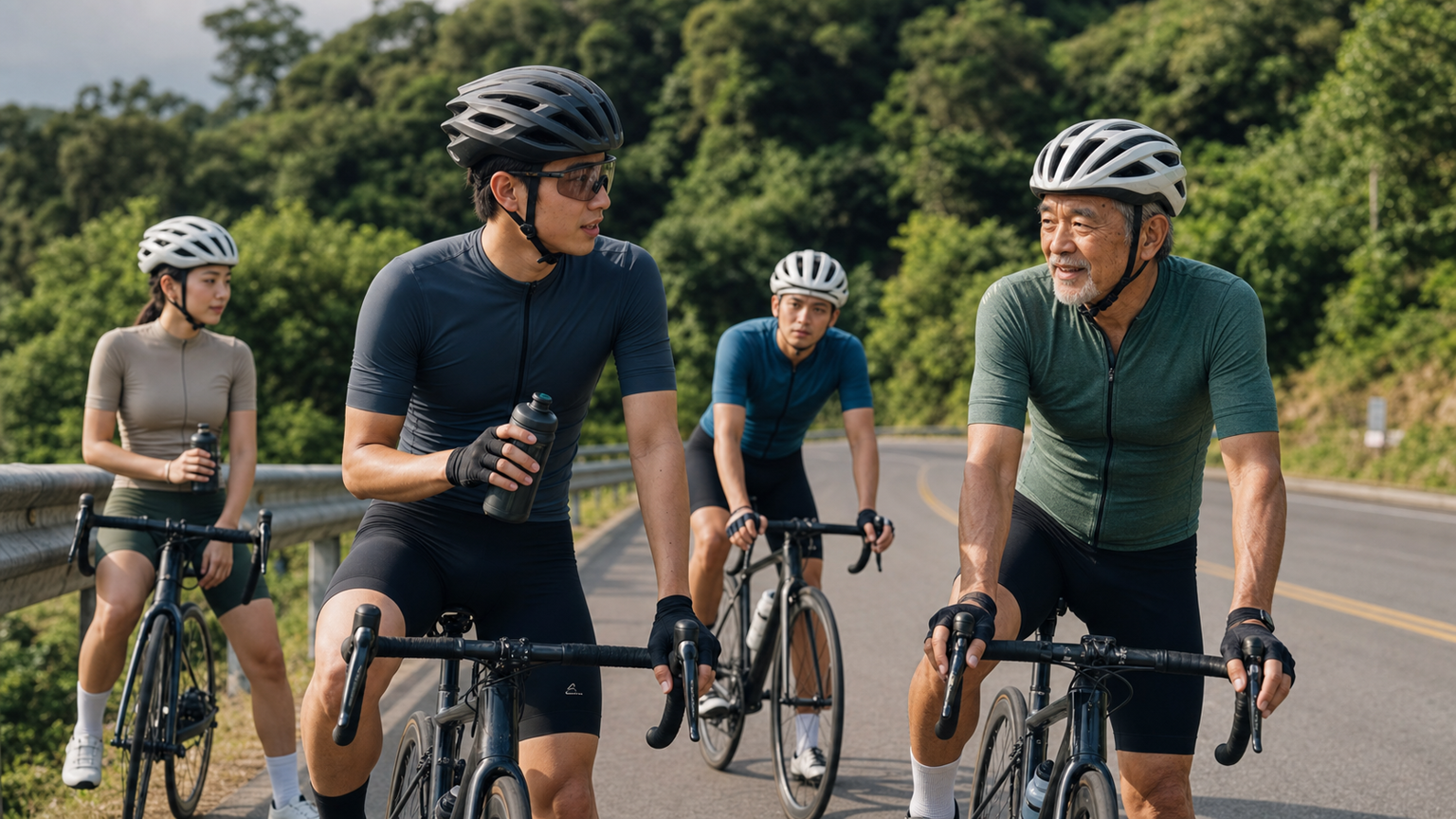
One Conclusion Running Through the Entire Series: Principles Are Shared, Parameters Differ
After reading through the discussions on adolescents, middle-aged, and older athletes, one unified conclusion emerges: the underlying principles of endurance training are nearly universal across ages—progressive overload, periodization, the value of strength work, recovery management, adequate energy—but the “parameters” applied when putting these principles into practice must be recalibrated according to age and developmental stage. Applying adult parameters to adolescents, or young-athlete parameters to older athletes, is a common root cause of injury and stagnation. This article wraps up the entire topic with an integrated comparison table.
Unchanging Principles Shared Across Ages
Whether adolescent, prime-age, or older, all of these hold true:
- Progressive overload and “no sudden jumps”
- Periodization (base—build—race—transition)
- The value of strength training (injury prevention, performance, structural health)
- Recovery is a necessary condition for adaptation, not an option
- Adequate energy availability is the foundation of everything
- Movement quality and technique take priority over load numbers
The difference is not in whether to do these, but in the dose, pace, frequency, and focus.
Parameter Calibration Comparison Table
| Parameter | Adolescents (Developing) | Prime-Age (approx. 25–40) | Middle-Aged to Older (40–60) | Older (60+) |
|---|---|---|---|---|
| Rate of load progression | Conservative (structures immature) | Standard | More conservative (slower recovery, slower tendons) | Most conservative (slowest tendon adaptation) |
| High-intensity stimulus | Age-appropriate, limited, skill-focused | Can be aggressive | Retained but with thorough recovery planning | Retained but reduced volume, longer intervals |
| Recovery demand weighting | High (growth + training) | Medium | Elevated (recovery slows) | Highest (repair markedly slower) |
| Role of strength training | Foundation/injury prevention/physical literacy | Performance + injury prevention | Countering decline + performance | Combating sarcopenia + function + performance |
| Strength intensity approach | Technique first, age-appropriate | Can be high intensity | Moderate-to-high intensity (keeping reserve) | Sufficient intensity, technique first |
| Degree of specialization | Low (variety prioritized) | High | High (goal-dependent) | Adjusted to health and enjoyment |
| Energy management focus | Dual demands of development + training | Training demands | Countering body composition drift | Adequate protein, avoiding deficiency |
| Definition of success | Long-term health + foundation + staying in the sport | Maximizing performance | Performance + sustainable health | Function + health + enjoyment + sustainability |
The Three Most Common “Parameter Misapplications”
- Scaling down an adult plan for adolescents: Ignoring developmental stage, PHV, variety, and dual energy demands—leading to overuse injuries and early dropout.
- Forcing young-athlete parameters onto older athletes: Progressing too fast, insufficient recovery, tendons unable to keep up—injuries and performance collapse are misdiagnosed as “aging.”
- Dropping strength training entirely at any age: Losing the foundation of injury prevention and structural health; especially costly for older athletes (accelerated sarcopenia, hard to regain lost muscle).
A Decision-Making Framework Universal Across Ages
Every training decision can be calibrated to any age using the same set of questions:
- Can the body at “this age/developmental stage” recover from this stimulus?
- Does the rate of progression accommodate the slowest adaptive component at this age (adolescents = developmental maturity; older athletes = tendons/recovery)?
- Are the two foundations—strength and energy—being taken care of according to what matters most at this age?
- Do the success metrics I set align with what should be pursued at this age stage?
The principles are the same set; ask the right parameters, and they can serve the same person from their teens to their eighties—just with different numbers at different life stages.
“I’ve coached fourteen-year-olds and seventy-four-year-olds, and I actually used the same set of principles. The difference has never been whether the principles are right; it’s whether you’ve adjusted the parameters to the right life stage. Scaling down an adult plan for kids, or forcing a young athlete’s plan onto an older person—these two mistakes have destroyed more athletic careers than any training method.” —An endurance training director spanning all age groups
Related Reading
- Training Adjustments After Forty: How to Smartly Extend Your Athletic Career
- Endurance and Strength in Parallel After 60: The Dual Goals of Sarcopenia Defense and Independent Living
- Endurance Training Guide After 40: The Real Changes in Max Heart Rate, Muscle Mass, Recovery, and Hormones, and How Your Plan Should Change
- A Blueprint for Exercise and Healthy Aging: How to Combine Exercise Across Different Ages
西進武嶺 免費訓練分析服務 Intervals | 練不夠還是練過頭?你哪一種類型選手?AI模型告訴你! | 備戰神器 | 公路車 訓練 | CT Yeh
4 年前
一日北高/長距離團騎 常見問題補充篇 / 組團或跟團的眉角 / 壯車友容易被瘦車友慢性拉爆 / 原來屁股痛可能是這個原因...? / 風場配速法 / 公路車 / CT Yeh
2 年前
崇越盃武嶺冠軍高手 賽前JJSC 群峰會精華!對應大數據分析,會有落差嗎?/ feat. JJSC中部公路車約騎 /公路車 / CT Yeh
2 年前
靠單車減肥35公斤 心得分享與整理
7 年前
西進武嶺 自製新版AI配速表產生器 x 賽前攻略 抱佛腳! 沒有功率計也可以產生配速表嗎?有什麼其他眉角賽前要注意的呢? | 西進武嶺 / 東進武嶺 KOM 攻略 | 公路車 | CT Yeh
4 年前
[教學] Premiere 影片 手震 修正 教學 防抖 單眼 影像 GoPro 穩定 Video Stabilization
8 年前
滑雪新手們慘摔學習全紀錄(請開字幕),滑雪好好玩 | Snowboard + Ski | 岩原 スキー場 | 滑雪APP使用 | GoPro Max
6 年前
CT Talk) 數據面窺看 武嶺大神們 平時的備戰 共通點 (娛樂性質XD)
7 年前