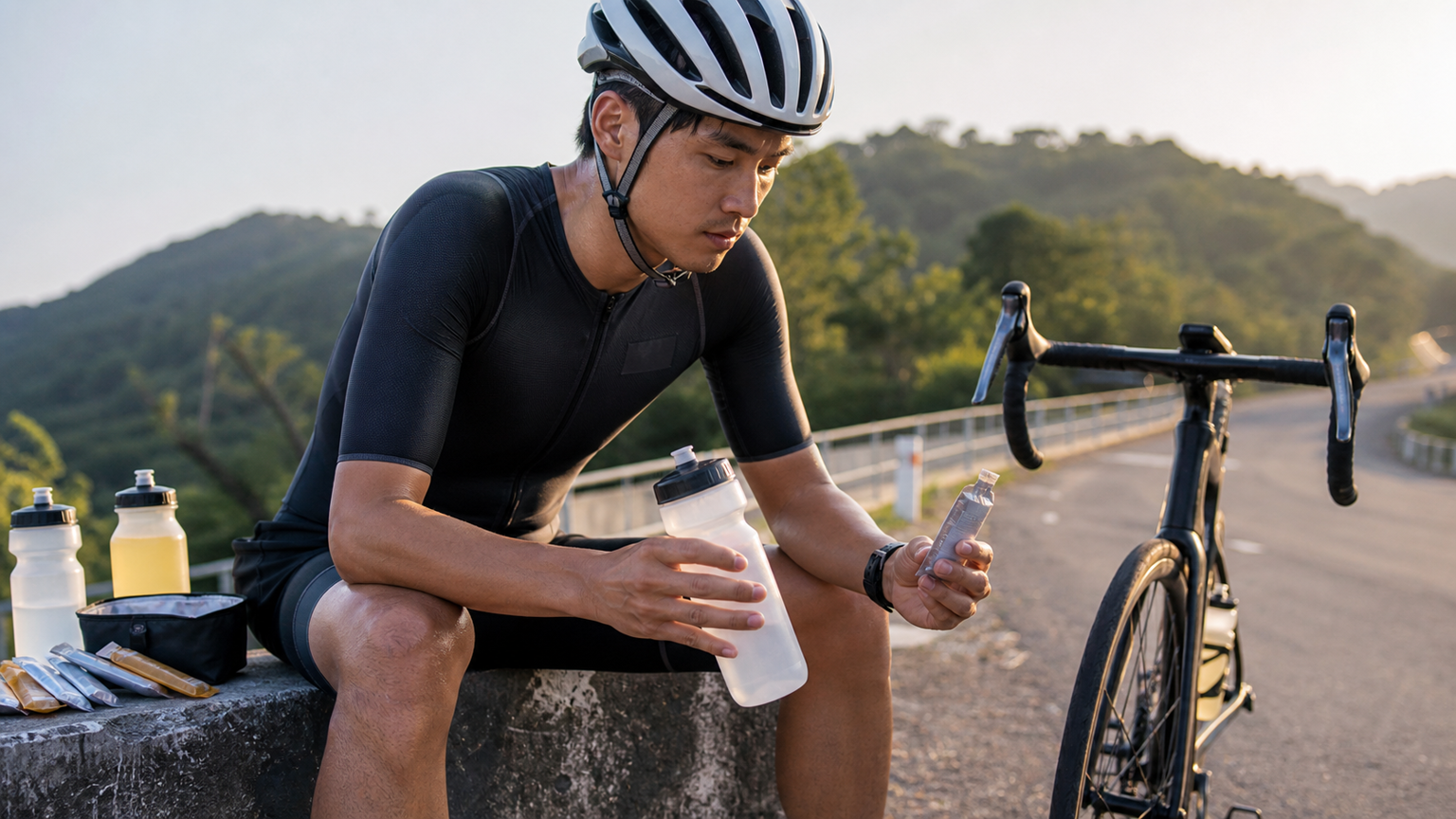
The Gut Is a Trainable Organ
Many people blame energy brands when they feel nauseous or get diarrhea during races, but the real issue is that their gut has never been trained to absorb carbs at high intensity. Research shows that repeated training can upregulate intestinal transporter proteins, pushing the carbohydrate absorption ceiling from roughly 60g/h to 90g/h+.
Gut Training Progression Table
| Week | In-Ride Carb Target | Protocol |
|---|---|---|
| 1–2 | 40g/h | Fixed timing and dosage during long rides |
| 3–4 | 60g/h | Add a glucose + fructose blend |
| 5–6 | 75g/h | Eat at race intensity |
| 7–8 | 85–90g/h | Full race-day nutrition simulation |
The Science of Dual-Source Carbohydrate Absorption
Glucose is absorbed via SGLT1, while fructose uses the GLUT5 pathway—two separate channels. A roughly 2:1 glucose-to-fructose blend can engage both pathways simultaneously, raising the total absorption ceiling well above that of a single sugar. Check the labels on your nutrition products.
Training Absorption at High Intensity
Gut absorption is suppressed during high-intensity efforts. What you need to train is precisely “being able to eat at race intensity”—so gut training belongs in long sessions at race pace, not just in easy rides.
Individual Variability and Red Flags
Everyone has a different tolerance ceiling. If chasing 90g/h only gives you cramps, simply find your own limit. If you experience persistent diarrhea or vomiting during training, check the osmolality (overly concentrated drinks) and the products you’re using.
Race-Day Golden Rule
Never use a fueling amount or brand on race day that you haven’t practiced in training. Gut training results only apply to “the exact protocol you trained with.”
Practical Details: Dual-Carb Ratios and Osmolality
The gut is a trainable organ: repeated training can upregulate transporter proteins, pushing the carbohydrate absorption ceiling from roughly 60g/h to 90g/h+. The key is “dual-source carbs”—glucose goes through SGLT1, fructose through GLUT5, and a roughly 2:1 glucose-to-fructose blend can engage both pathways simultaneously, raising the total absorption ceiling well above that of a single sugar. Another overlooked variable is drink osmolality: if the concentration is too high (>8% sugar concentration), it delays gastric emptying at high intensity and triggers cramps—this is often the real reason behind “I switched brands and still got diarrhea.”
8-Week Gut Training Progressive Protocol
| Week | In-Ride Carbs | Key Focus |
|---|---|---|
| 1–2 | 40g/h | Fixed timing and dosage during long rides |
| 3–4 | 60g/h | Add a 2:1 glucose + fructose blend |
| 5–6 | 75g/h | Move eating to race intensity |
| 7–8 | 85–90g/h | Full race-day nutrition simulation |
Common Mistakes: Only Practicing Eating on Easy Rides, and Chasing a Universal Ceiling
Gut absorption is suppressed at high intensity, so “being able to eat at race intensity” is the actual skill to build—practicing fueling only on easy Z2 rides means you haven’t trained the race scenario at all. Another mistake is ignoring individual variability and chasing 90g/h regardless; if you get cramps, simply find your own ceiling. The golden rule is: never use a fueling amount or brand on race day that you haven’t practiced in training—gut training results only apply to “the exact protocol you trained with.”
I always say triathletes who “know how to eat” win. A gut that can steadily absorb 80g/h on the 70.3 bike leg is worth more than an extra 15W—and like muscle, this ability is built through training, not something you’re born with.
Related Reading
- Gut Training: An Evidence-Based Method to Expand Carbohydrate Absorption Capacity in Two Weeks
- Gut Training: Treat Your Gut as a Trainable Organ So You Can Still Eat in the Back Half
- Gut Training: Why Fueling Must Be Rehearsed in Training
- Gut Training: Train Absorption Capacity Like a Muscle to Down an Extra 30 Grams of Carbs Per Hour
靠單車減肥35公斤 心得分享與整理
7 年前
FTL 與 SYB 車隊專訪 西進武嶺 實用攻略分享! 2小時 如何練?!你不知道的眉角!新手準備武嶺必看 EP1 | 實力派女車友 | 精華版 | 公路車 | CTYeh
4 年前
西進武嶺 免費訓練分析服務 Intervals | 練不夠還是練過頭?你哪一種類型選手?AI模型告訴你! | 備戰神器 | 公路車 訓練 | CT Yeh
4 年前
福隆鐵人團練隨拍
8 年前
約騎爆笑地獄梗 大腸怎麼了🤣 #公路車 #cycling
3 年前
CT暗黑廚房) 車友必備 宇宙無敵鮮蚵湯 幫助訓練恢復 天然食補 好市多 超肥鮮蚵 破PR
7 年前
CT 喇低賽) 武嶺牽車 才是王道 西進牽車四小時內秘訣 攝手位置 如何判斷 防抽筋小秘訣
7 年前
一日北高常見問題大集合 | 攻略 | 路線 | 訓練 | 補給 | 自行車 單車 | 一日雙城 | 雙塔 | TWB北高360 | 屁股痛
6 年前