文章導覽
Carbon Fiber Bike Care and Maintenance: Key Knowledge to Avoid Costly Repairs
Carbon fiber bikes are the mainstream choice for modern road bikes. Their light weight, stiffness, and vibration-damping properties make them the top pick for performance cycling.
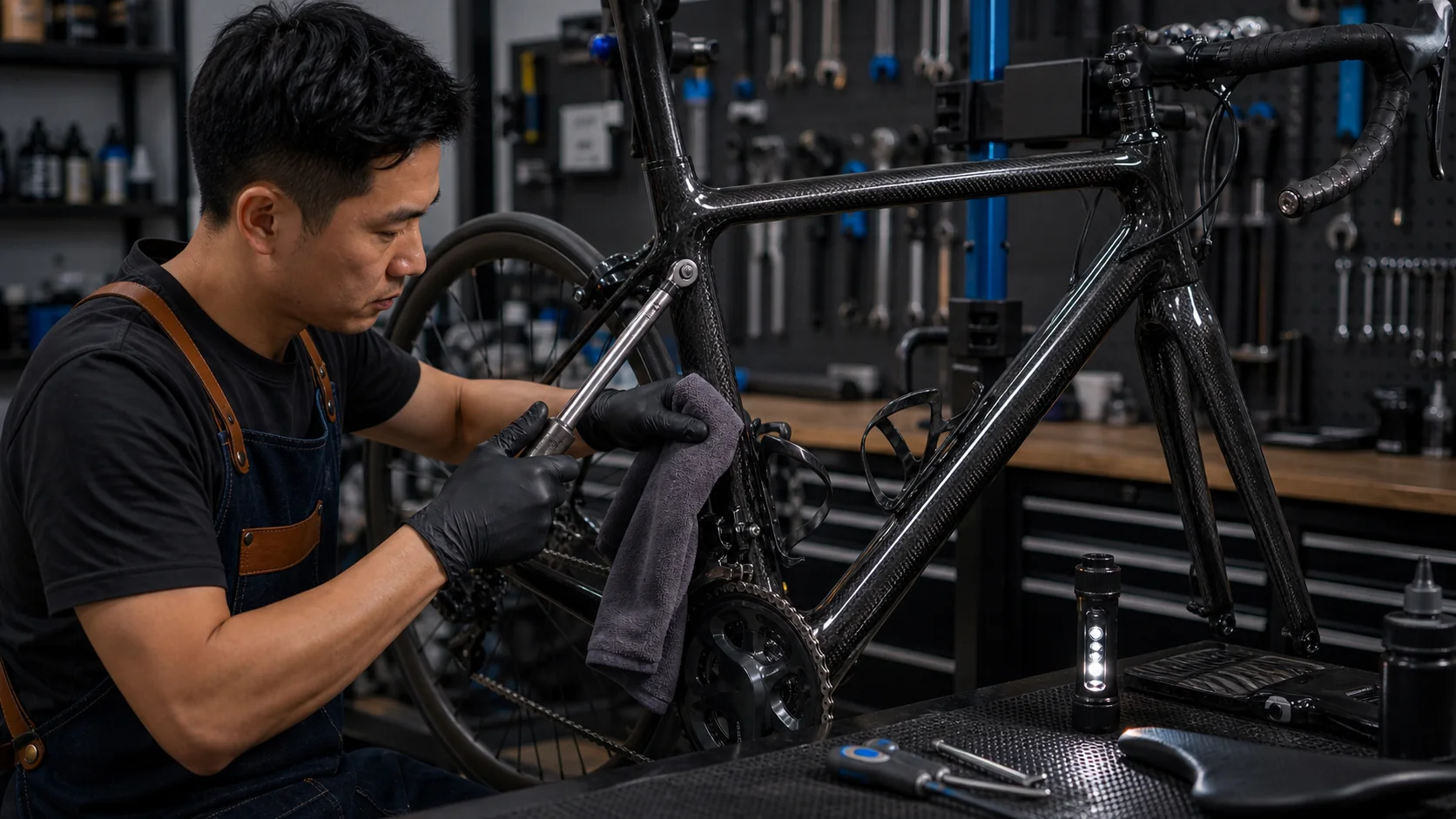
But carbon fiber is fundamentally different from metal — it is especially sensitive to certain types of damage, and improper maintenance can lead to costly repairs or even a sudden failure mid-ride (which is extremely dangerous).
This article provides a complete guide to maintaining carbon fiber frames and components.
Understanding Carbon Fiber’s Properties
Why Carbon Fiber Is Different
Carbon fiber is highly direction-dependent in strength — it is very strong along the load path it was engineered for, but an impact from an unintended direction can cause damage without leaving any visible mark.
Key characteristics:
- Damage to carbon fiber (especially impact damage) can be completely invisible on the surface while cracks have already formed internally
- This “hidden damage” can suddenly fail during a later ride, which is extremely dangerous
Two Main Types of Carbon Fiber Damage
Fatigue Damage:
Long-term use beyond the designed torque (such as an over-tightened bolt) or repeated bending stress can cause delamination between the carbon fiber layers.
Impact Damage:
Crashes, tool strikes, or other sudden impacts can fracture carbon fibers (even when there is no visible mark on the surface).
Proper Torque Management
One of the most common causes of carbon fiber damage is over-tightened bolts.
Why Torque Matters So Much
Metal components can usually tolerate a fair amount of over-tightening, but carbon fiber is prone to crushing under concentrated point pressure.
A typical example:
An over-tightened seatpost clamp bolt can crush the carbon tube inside the clamping area — the exterior looks completely normal, but internal damage has already occurred.
Essential Torque Tools
A torque wrench (NT$800–3,000) is a must-have tool for any carbon fiber bike owner.
Every bolt has a manufacturer-specified torque value (usually printed on the component or in the manual). Use a torque wrench to make sure you tighten within the correct range.
Recommended torque values for common bolts:
| Location | Typical Torque (Nm) |
|---|---|
| Seatpost clamp | 4-6 Nm |
| Handlebar bolts | 4-6 Nm |
| Stem bolts | 4-6 Nm (faceplate) / 6-8 Nm (top cap) |
| Bottle cage bolts | 4-5 Nm |
| Crank bolts | Per spec (typically 35-50 Nm) |
Note: Torque values can vary by brand and model — always follow the manufacturer’s specification.
Carbon Fiber Assembly Compound
At carbon contact points such as the seatpost and stem, use a carbon fiber assembly compound (such as Finish Line Fiber Grip):
- Increases friction, allowing sufficient clamping force at a lower torque
- Prevents the carbon fiber from slipping inside the metal clamp
- Reduces point pressure on the carbon fiber surface
Important: Do not use it on regular bolted fasteners in general.
Cleaning and Care for Carbon Fiber
Daily Cleaning
Recommended cleaning process:
- Rinse with clean water to remove dirt and grit
- Wipe down the frame with a neutral, pH-balanced cleaner (avoid strong acids or alkalis)
- Dry with a soft cloth, avoiding standing water
- A silicone-based wax can be used to protect the paint finish
Avoid using:
- High-pressure water jets (which can force water into internal components)
- Gasoline or strong solvents (which damage the paint and may erode the resin)
- Sandpaper or other abrasive materials
Chain Lube and Cleaner Precautions
Certain cleaning products can corrode the epoxy resin matrix that binds carbon fiber together.
Recommendations:
- Use cleaners designed specifically for bicycle chains
- Avoid letting chain cleaner contact the carbon frame surface
- Rinse thoroughly with water immediately after cleaning
How to Inspect for Damage
Visual Inspection (Before Every Ride)
What to check:
- Any new cracks or paint chips on the frame surface
- Tube junctions (head tube, bottom bracket, rear stays, etc.) for anything unusual
- The seatpost insertion area
- The fork crown (which bears the most load during front braking)
Special inspection after a crash:
After any crash, regardless of how the bike looks, perform a thorough visual inspection. If you have any doubts, take it to a shop with carbon fiber inspection capability.
The Tap Test
Gently tap the carbon surface with your knuckle — normal carbon fiber produces a crisp, solid “tock-tock” sound. If an area produces a dull or hollow sound, it may indicate delamination or a crack.
An advanced variant: Tap gently with a coin instead — the change in sound is easier to distinguish.
Professional Ultrasonic Inspection
Some high-end bike shops or carbon repair facilities offer ultrasonic testing, which can detect internal damage that is invisible to the naked eye.
Recommended for:
- After a major crash
- Carbon frames older than 5 years
- Before buying a used carbon fiber bike
Handling Common Issues
Minor Scratches and Paint Damage
If the damage is limited to the paint (the decorative layer) and doesn’t reach into the carbon fiber itself, it usually doesn’t compromise structural safety.
How to handle it:
- Clean the area
- Apply clear nail polish or automotive touch-up paint to prevent oxidation
- Apply a clear protective film to prevent further damage
Handling Suspected Damage
If you’re not sure whether an area is damaged, or you notice any of the following:
- An unusual sound when tapped
- A soft spot in the tube wall
- Unusual flex or a strange feeling from the frame while riding
Stop riding immediately and have it inspected by a professional shop.
The risk of carbon fiber damage is not worth the potential danger of continuing to ride.
Repairing Small Cracks
Small surface cracks that don’t penetrate multiple carbon fiber layers can be repaired by a professional carbon fiber repair shop.
Taiwan has several specialized carbon fiber repair shops; costs typically range from NT$2,000-8,000 depending on the severity of the damage.
Important: Do not attempt to repair structural damage yourself.
Storage and Transport Precautions
Everyday Storage
- Avoid long-term storage in direct, strong sunlight (UV radiation can affect the epoxy resin)
- When hanging the bike vertically, avoid clamping tubes with point pressure
- Do not place heavy objects on the tubes
Air Travel
Carbon fiber frames face greater risk when checked as luggage on flights:
Protection tips:
- Use a hard-shell bike case (better protection than a soft bag)
- Install a fork mount to keep the fork from shifting
- Wrap all carbon fiber tubes in bubble wrap
- Remove the pedals and handlebars and protect them separately
- Loosen the front tire and release some air pressure (to avoid pressure changes affecting the tire)
Conclusion
Caring for a carbon fiber frame comes down to two core principles:
- Correct torque: Use a torque wrench, and never over-tighten
- Regular inspection: Especially after a crash — never assume the frame is structurally sound just because it looks fine
Get these two things right, and your carbon fiber frame can last 10 years or more with proper use.
Protecting your investment matters — protecting your safety matters even more.