2026 Triathlon Wetsuit Buying Guide: Matching Buoyancy, Flexibility, and Taiwan Water Temperatures
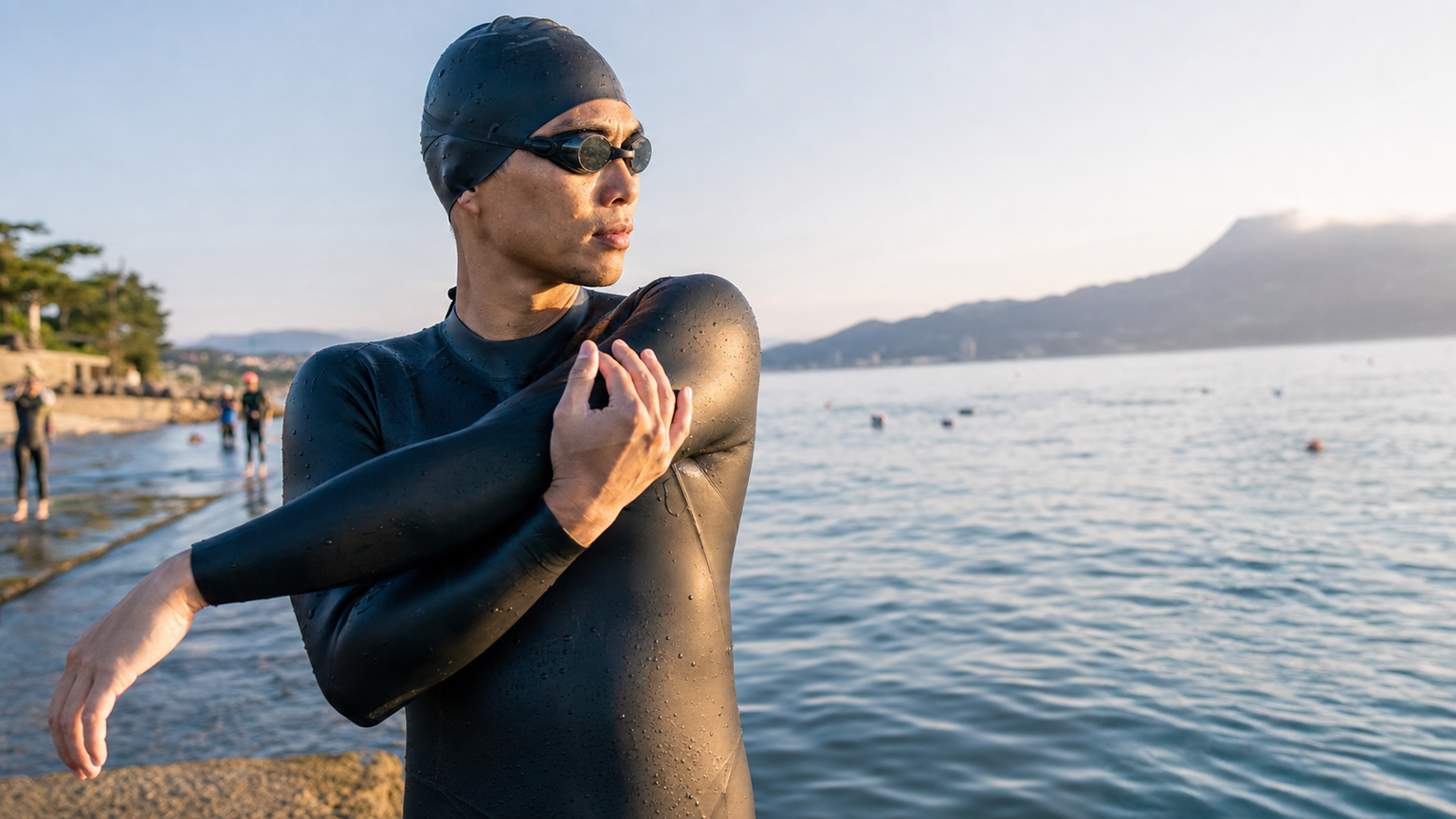
A Wetsuit Isn’t Just for Warmth—It’s Free Buoyancy and Speed
The value of a triathlon wetsuit is often misunderstood. In races where it’s legal to wear, the “buoyancy” it provides lifts your body and reduces drag, effectively giving you free speed and energy savings on the swim leg; warmth is just a bonus. But choose the wrong flexibility, and your shoulders will be locked down during the pull.
Core Specifications
| Spec | Function | Trade-off |
|---|---|---|
| Buoyancy (panel thickness) | Lifts body, reduces drag | Too buoyant lifts you too high, compromising posture |
| Shoulder/arm flexibility | Freedom of stroke | The more flexible, the more expensive |
| Thickness zoning | Thick torso (buoyancy), thin shoulders (mobility) | Balances buoyancy and stroke |
| Neck/wrist fit | Prevents water entry, easy removal | Too tight causes chafing and injury |
Thickness Is Zoned by Design
A good wetsuit isn’t the same thickness throughout. Typically, the torso and thighs are thicker (maximizing buoyancy, lifting the lower body to improve posture), while the shoulders and arms are thinner (preserving stroke flexibility). Looking only at “maximum thickness” is meaningless—you need to examine the zoning logic.
Taiwan Race Water Temperature Considerations
Most triathlons in Taiwan (such as those in the east or on outlying islands) have high summer water temperatures, often approaching or exceeding the upper limit at which wetsuits are banned. Before registering, be sure to check the race rules: whether wetsuits are allowed, whether they’re mandatory, and what the water temperature cutoff is. It would be awkward to buy an expensive wetsuit and not be able to wear it.
Full Suit vs. Sleeveless: How to Choose
Wetsuits mainly come in two cuts, and given Taiwan’s warmer water temperatures, this trade-off is especially critical:
| Cut | Pros | Cons | Best For |
|---|---|---|---|
| Full suit (long sleeve) | Maximum buoyancy and warmth, best drag reduction | Heavy shoulder restriction, hotter, more expensive | Cooler water, chasing PRs, good shoulder flexibility |
| Sleeveless | Complete shoulder freedom, less stuffy | Slightly less buoyancy and warmth | Taiwan’s warmer water, those with restricted shoulders |
Most summer races in Taiwan have higher water temperatures, and many athletes choose sleeveless suits for shoulder freedom and heat dissipation, sacrificing a bit of buoyancy for overall comfort. If you lack shoulder flexibility and force yourself into a full suit, the loss from a locked-down stroke often outweighs the buoyancy gains.
Trying On and Fit
A wetsuit must fit snugly (no large air pockets or room for water ingress), but it shouldn’t be so tight that it restricts breathing or shoulder movement. After putting it on, do a few stroke motions—if you feel noticeable shoulder restriction, it’s either too tight or lacks sufficient flexibility.
Care and Longevity
- Rinse with fresh water (salt and chlorine accelerate rubber degradation)
- Dry in the shade, avoid direct sunlight, avoid prolonged folding
- Fingernails and rough objects can easily tear it; be gentle when putting on and taking off
The most common wetsuit tragedy is spending big money on a top-tier model, only to be told at check-in, “No wetsuits today.” Before buying one, read the race rules first—that’s more important than understanding the spec sheet.
Related Reading
- Wetsuit Complete Guide: Selection, Putting On/Taking Off, and Swim Feel Adjustments
- Wetsuit Buying Guide: Thickness, Buoyancy, and Mobility for Triathlon Wetsuits
- Wetsuit Selection and Dressing: The Complete Guide to Essential Open Water Gear
- Wetsuit vs. Skin Swimming: A Triathlete’s Complete Guide to Open Water Attire Strategy
[防寒衣體驗] 鐵人魂 三鐵 防寒衣試穿會 於松運 深水游泳池 鯨魚池
8 年前
松運深水池拍攝 作品 防寒衣品牌
8 年前
3D 列印車褲墊 / 舒適改善? / 無痕 x 分區壓縮 / ATK & Decider系列 / JE22黑科技 / #公路車 #CTYEH
11 個月前
ThinkRider 智騎 XXPRO 訓練台,高階機種功能 只要 1/3價格!? 實測功率對比、噪音實測 / 公路車 / CT Yeh
1 年前
水金九不厭五分 10度寒流冷到不願停!feat. 卡卡 / 公路車 / CT Yeh
6 個月前
CT 喇低賽) 武嶺牽車 才是王道 西進牽車四小時內秘訣 攝手位置 如何判斷 防抽筋小秘訣
7 年前
風櫃嘴時間 預測西進武嶺時間?13000名車友統計數據分析告訴你 !
5 年前
Nepest NOVA 碳條輪組:輕量、空力、舒適一次滿足!/ 公路車 / CT Yeh
7 個月前