Special Considerations for Older Cyclists: Training Adjustments and Health Maintenance After 50
Special Considerations for Older Cyclists: Training Adjustments and Health Maintenance After 50
“I’m already in my fifties — can I still train seriously on the bike?”
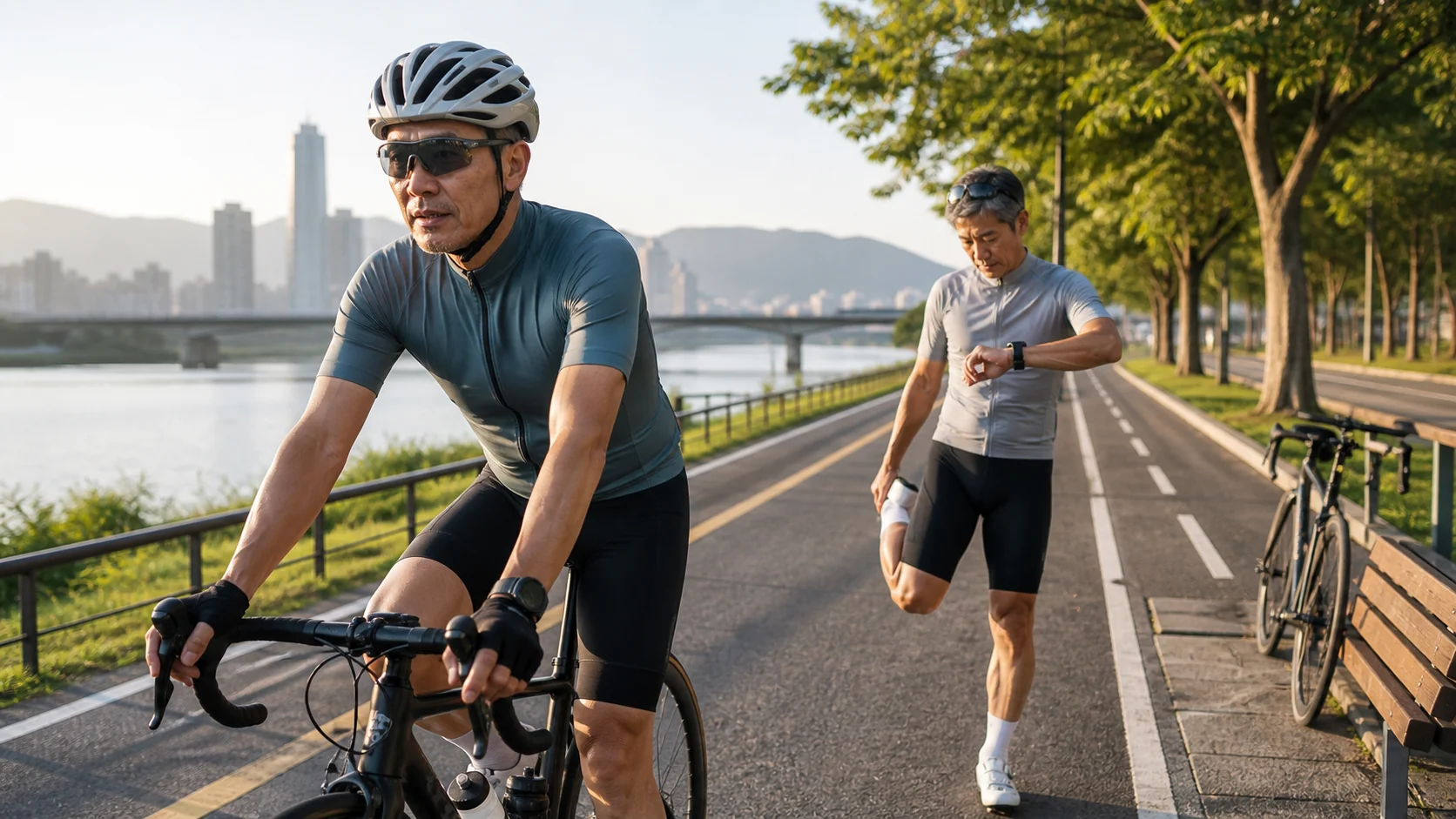
The answer is yes. Cycling is one of the most joint-friendly endurance sports there is. Many professional riders extend their peak years well into their forties, and recreational cyclists can still enjoy riding in their seventies and eighties.
That said, training after 50 does need to be adjusted to reflect real changes in the body.
Physiological Changes After 50
Understanding these changes is the starting point for adjusting your training.
Changes in Muscle and Strength
Declining muscle mass (sarcopenia):
Starting around age 40, the body loses roughly 8% of muscle mass per decade, and this accelerates to about 15% per decade after 50. This is not irreversible — appropriate strength training can significantly slow and even reverse the trend.
Decline in fast-twitch (Type II) fiber proportion:
Fast-twitch fibers (associated with power output) decline faster than slow-twitch fibers (associated with endurance). This helps explain why older athletes tend to hold on to their endurance performance longer than their sprint performance.
Reduced recovery capacity:
More recovery time is needed after high-intensity training. Research shows that athletes over 50 may need 30–50% longer to recover compared to when they were in their thirties.
Changes in the Cardiovascular System
Declining maximum heart rate:
Maximum heart rate drops by roughly 1 bpm per year (with individual variation). The commonly used estimate is 220 minus age, though an actual field or lab test is far more accurate.
Stroke volume:
The heart’s maximum blood output per beat declines slightly, which affects VO2max.
Reduced arterial elasticity:
Declining arterial elasticity can raise blood pressure, making cardiovascular monitoring more important.
Bones and Joints
Osteoporosis risk:
This is especially relevant for cyclists, since cycling is a low-impact sport. Without supplementary strength training and adequate calcium and vitamin D intake, bone density can decline over time.
Joint degeneration:
Mild degeneration in the knees and hips may appear, requiring more careful management of training volume.
Training Adjustments After 50
Increase the Proportion of Recovery
Adjusting your training plan:
| Age | Typical high-intensity frequency | Recovery days |
|---|---|---|
| 30–39 | 2–3 times/week | 1–2 days |
| 40–49 | 1–2 times/week | 2–3 days |
| 50–59 | 1–2 times/week | 2–4 days |
| 60+ | 1 time/week | 3–5 days |
Principle: it is better to do slightly less high-intensity work and recover fully than to risk long-term injury from overtraining.
Strength Training Becomes Essential
For cyclists over 50, strength training moves from “optional” to “essential.”
Benefits of strength training:
- Maintains muscle mass (counters sarcopenia)
- Strengthens bone (helps prevent osteoporosis)
- Improves functional strength (a reserve of strength for daily life)
- Can maintain or even increase power output
Recommended exercises:
- Squats: maintain leg strength
- Deadlifts: maintain posterior-chain (glutes and hamstrings) strength
- Leg press: a knee-friendlier alternative
- Core work: slows degeneration of the abdominal muscles
Training frequency: twice a week, ideally after (not before) your cycling sessions.
Managing Intensity
Rely on heart rate, not just power:
An older rider’s maximum heart rate declines, but heart rate zone proportions are still valid guidance. Re-test and update your maximum heart rate estimate periodically.
Increase the proportion of Zone 2 training:
An older body tolerates high intensity less well, so Zone 2 (low-intensity aerobic) training can still deliver steady cardiovascular improvement with much lower risk.
Reduce the frequency of high-intensity sessions, but keep their quality high:
Rather than three mediocre high-intensity sessions a week, aim for one or two sessions a week that you can do at full effort after being properly recovered.
Health Management After 50
Cardiovascular Health Monitoring
Recommended regular checkups:
- An annual exercise ECG (especially for high-volume riders)
- Blood pressure monitoring (quarterly, or whenever symptoms appear)
- Blood lipids (cholesterol) once a year
- Fasting blood glucose once a year
Cycling and heart health:
Cycling is very good for cardiovascular health, but high-intensity training also places real stress on the heart. If you experience chest pain, severe palpitations, or unusual shortness of breath, stop immediately and seek medical attention.
Bone Health
Supplementation guidance:
- Calcium: 1,000 mg per day for adults (1,200 mg per day for women over 50)
- Vitamin D: 1,000–2,000 IU per day (even where sunlight is abundant, many people spend most of their time indoors)
Strength training vs. bone health:
Aerobic exercise alone (including cycling) has limited benefit for bone density. It needs to be paired with impact-bearing exercise (such as running) or resistance training to maintain bone density effectively.
Recommendation: add 2–3 sessions of running or strength training per week to help maintain bone density.
The Impact of Hormonal Changes
Men (declining testosterone):
- Reduced capacity for muscle protein synthesis
- Slower recovery
- Increasing protein intake (1.6–2.0 g/kg/day) can help offset this to some degree
Women (menopause):
Declining estrogen affects:
- Bone density (making strength training even more important)
- Body composition (increased fat, decreased muscle)
- Thermoregulation (greater tendency to overheat while riding)
Recommendation: discuss with a gynecologist whether hormone replacement therapy (HRT) may be appropriate, particularly for riders experiencing significant menopausal symptoms.
Racing and Challenges After 50
Age-Group Racing
Most cycling events in Taiwan offer age-group (Masters) categories, allowing riders over 50 to compete against peers in the same age bracket.
The advantage of age-group categories:
Competing against riders of a similar age makes racing fairer, more challenging, and more rewarding.
Age-group events in Taiwan:
- Wuling Challenge: 45+ and 55+ categories
- National cycling championships: multiple age categories
- County and city cycling festivals: typically include age categories
Adjustments for Long-Distance Challenges
Taking on long-distance challenges after 50 — such as riding around the island or the “Double Towers” route — calls for some adjustments:
A longer preparation period:
Give your body a more generous lead-in time (at least 6 months, rather than 3).
Recovery milestones:
Within a long-distance training plan, schedule 1–2 full recovery days after each major training milestone.
Support matters even more:
For older riders, logistical support during long-distance challenges — nutrition supply, safety monitoring — matters even more than it did in younger years.
Conclusion
Cycling after 50 is not the beginning of the end — it’s the beginning of riding smarter.
The changes in your body are real, but with the right training adjustments, adequate recovery, and appropriate health monitoring, you can still enjoy the pleasure and challenge of cycling well into your 50s, 60s, and 70s.
Most important of all: stay in communication with your doctor, understand your own health status, and make sure your training plan matches your real physical condition.
Age is just a number — there’s no need for your passion for riding to fade because of it.
Related Reading
- Training Adaptations for Older Riders: How to Maintain and Improve Riding Performance After 50
- A Health Guide for Older Cyclists: The Complete Guide to Safe Training After 50
- Planning for Cycling in Retirement: Staying Active After 50 Through Cycling
- Training Adjustments After Forty: How to Extend Your Athletic Career Wisely
靠單車減肥35公斤 心得分享與整理
7 年前
2025 自行車錶排行榜 兩萬車友大數據 / Garmin Bryton 排名會大洗牌嗎? / 全新的碼表前身分析 /公路車 / CT Yeh
1 年前
#公路車 #Fitting 靠人工智慧APP 幫你調整單車
6 年前
西進武嶺 免費訓練分析服務 Intervals | 練不夠還是練過頭?你哪一種類型選手?AI模型告訴你! | 備戰神器 | 公路車 訓練 | CT Yeh
4 年前
Canyon 公路車斷把手 五年老車特規還能修嗎? 維修保養全記錄 feat. 501單車監理站 | 公路車 | CT Yeh
4 年前
高雄綠園道鐵路自行車道 / 外地人能輕鬆駕馭 還是整路崩潰? / 2025 全線開通 春節實地探索一次!(附GPS連結)/ 公路車 / CT Yeh
1 年前
碟煞公路車 優缺點?換車一年半實際經驗分享 / 公路車 / CT Yeh
2 年前
碟煞公路車 銑面器 !? 原來銑完差這麼多! 降低蹭碟機率! | TIME 公路車 保養小記錄 | CT Yeh
3 年前