Preventing Heat-Related Cycling Injuries in Taiwan's Summer: A Complete Emergency Guide from Heatstroke to Heat Cramps
Preventing Heat-Related Cycling Injuries in Taiwan’s Summer: A Complete Emergency Guide from Heatstroke to Heat Cramps
Taiwan’s summer riding conditions are among the harshest in the world. Temperatures of 35°C combined with 80-90% humidity can push the “feels-like” temperature above 45°C.
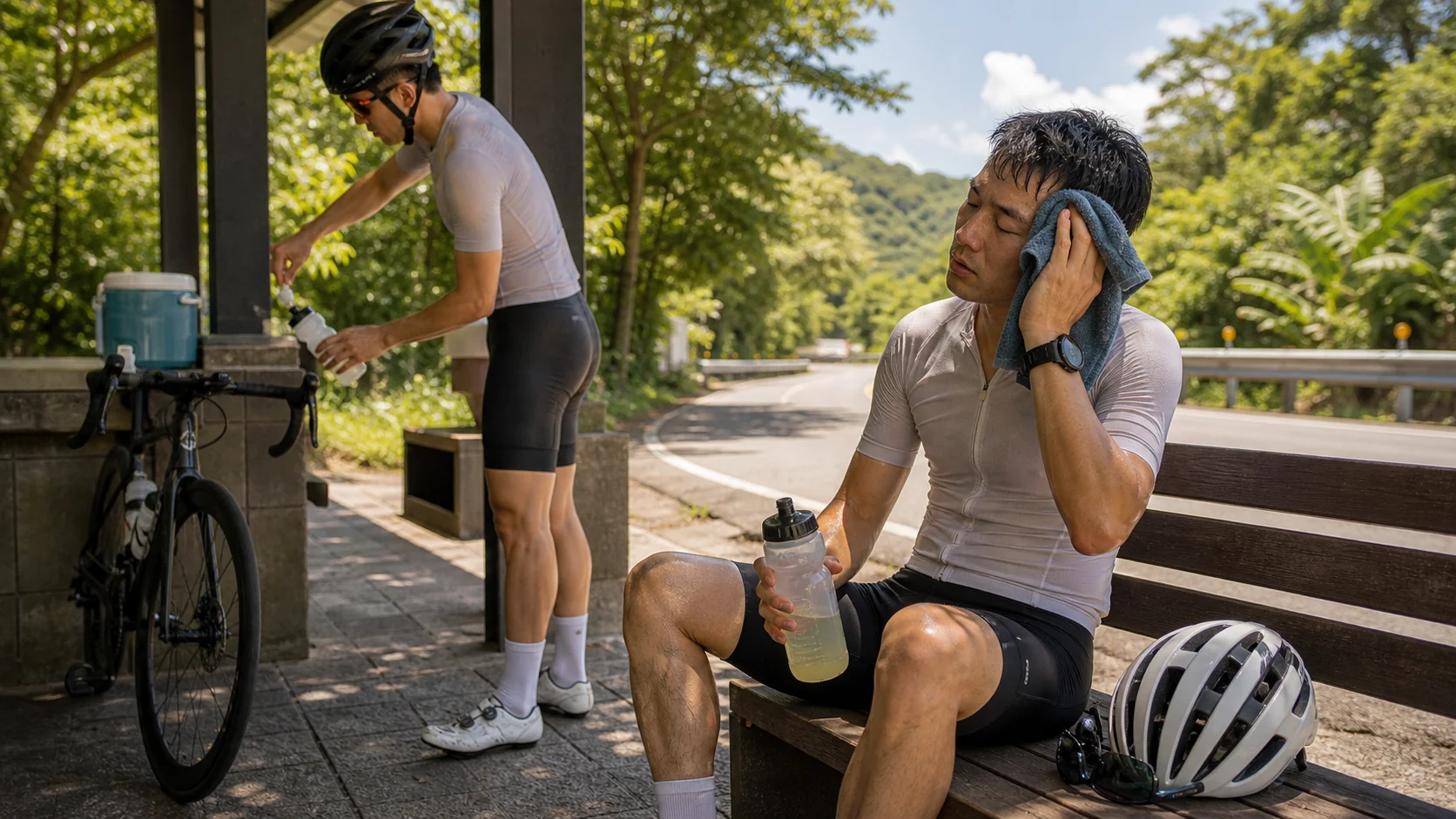
In such conditions, heat illness is a potential threat every cyclist needs to understand.
Types of Heat Illness
Type 1: Heat Cramps
Symptoms: Sudden muscle cramps, usually in the large muscle groups used during intense exercise (calves, thighs, abdomen)
Severity: Mild
Cause: Loss of electrolytes (primarily sodium) from heavy sweating
Treatment:
- Stop activity and move to a shaded area
- Replenish with an electrolyte drink
- Gently stretch the cramping muscle
- Do not resume vigorous exercise immediately
Type 2: Heat Exhaustion
Symptoms:
- Heavy sweating
- Pale, cool, clammy skin
- Dizziness, headache
- Nausea, vomiting
- Weakness, fatigue
- Rapid heartbeat
- Alert and oriented (an important distinction from heatstroke, which involves confusion)
Severity: Moderate (requires immediate attention; not always an emergency room visit, but needs close observation)
Treatment:
- Stop activity immediately
- Move to a cool, shaded area (air conditioning is even better)
- Lie down with legs elevated
- Remove excess clothing
- Cool the body with cold, wet towels (neck, armpits, groin)
- Sip a cold electrolyte drink if able to drink safely
- If symptoms do not improve within 30 minutes, seek medical attention
Type 3: Heatstroke
Symptoms:
- High core body temperature (>40°C)
- Hot, dry skin (sweating may stop!)
- Confusion, incoherent speech
- Unusual or erratic behavior
- Severe headache
- Rapid heartbeat
- Possible loss of consciousness
Severity: Medical emergency (high mortality rate — call an ambulance immediately)
Immediate actions:
- Call an ambulance (119 in Taiwan)
- While waiting for the ambulance:
- Move the person to the coolest available location
- Cool the body with large amounts of cold water (any cold water will do if ice is unavailable)
- Use a fan to accelerate heat loss
- Do not give fluids to someone who is not fully conscious (risk of choking)
- Continuously monitor level of consciousness
Key identifier:
The hallmark sign of heatstroke is the sudden absence of sweating — if someone in a hot environment suddenly stops sweating, this is a red flag.
Assessing Your Risk Factors
High-Risk Situations
| Risk Factor | Explanation |
|---|---|
| First high-heat ride of the season | Body has not yet acclimatized to the heat |
| Starting the ride already dehydrated | Insufficient fluid intake the day before |
| Insufficient sleep the night before | Reduced ability to regulate body temperature |
| Certain medications | Diuretics, some heart medications |
| Excess body weight | Lower heat-dissipation efficiency |
| Riding after drinking alcohol | Causes dehydration and impairs judgment |
| Unfamiliar hot-weather environments | Especially when traveling out of your home area |
Especially High-Risk Routes in Taiwan
The following routes require extra caution during Taiwan’s summer:
- The Tainan/Kaohsiung coastal roads (July-August, where sea and land breezes combine to produce an extremely high “feels-like” temperature)
- The Taitung Longitudinal Valley (little shade, high heat)
- Riding along highway corridors (high radiant heat)
Prevention Strategies
Preparing Before You Ride
Pre-hydration:
Drink 500-700ml of a sports drink or electrolyte water two hours before you set out.
Health self-check:
Ask yourself before departure:
- How much sleep did I get last night? (Less than 6 hours is a risk factor)
- Have I had enough water today?
- Am I feeling unwell in any way?
If the answer to any of these raises concern, adjust your plan — shorten the distance or start earlier in the day.
Monitoring During the Ride
Self-monitoring:
Do a “quick self-check” every 30 minutes:
- Am I still sweating normally?
- How does my head feel (headache is an early warning sign)?
- What color is my urine (dark yellow indicates dehydration)?
Watching out for each other in a group:
Regularly check on your riding partners, especially watching for a sudden drop in speed, unusual behavior, or a change in facial expression.
Calculating Your Fluid Needs
Estimated sweat loss:
Sweat loss during Taiwan’s summer can reach 1.5-2 liters per hour.
Hydration target:
150-250ml every 15-20 minutes (avoid drinking a large volume all at once)
Electrolyte replacement:
Replenish 300-500mg of sodium per hour (roughly equivalent to 0.5g of table salt), or use electrolyte tablets/sports drinks.
Dehydration warning indicators:
- Dark yellow/orange urine: Significant dehydration — rehydrate immediately and reduce intensity
- Very little urine (no urination for over 3 hours): Severe dehydration — consider stopping the ride
Communicating in Case of Emergency
Inform Family/Friends
Before a long summer ride, make sure to:
- Share your detailed route and expected return time
- Confirm emergency contact numbers are saved in your phone
- Share your live location (Strava Beacon or Life360)
Learn Basic First Aid
Knowing how to recognize the different types of heat illness and provide initial treatment is especially important for group ride leaders.
Consider signing up for a first aid training course (the Taiwan Red Cross offers regular classes).
Choosing Your Riding Time and Location
Avoid peak heat hours:
Taiwan’s summer temperatures peak between 1pm and 4pm. Early morning (6-10am) and evening (5-7pm) are relatively more suitable times to ride.
Choose shaded routes:
The shade on mountain roads can be 3-5°C cooler than open flat terrain, meaning lower heat-illness risk over the same distance.
Conclusion
The risk of heat illness during Taiwan’s summer is real, but with proper prevention it can be almost entirely avoided.
Remember these three most important principles:
- Continuously replenish fluids and electrolytes
- Watch for heat-illness warning signs in yourself and your riding partners
- When serious symptoms appear, seek medical help without hesitation
A safe riding experience starts with taking care of your own body. Taiwan’s beautiful routes will be waiting for you to explore them safely.
Related Reading
單車 一日北高 ( 雙城 ) 肥宅雙人瘋狂行 紀錄片 REACTO
10 年前
CT暗黑廚房) 車友必備 宇宙無敵鮮蚵湯 幫助訓練恢復 天然食補 好市多 超肥鮮蚵 破PR
7 年前
台灣旅行團參加 第7回まえばし赤城山ヒルクライム大会 雙視點
8 年前
靠單車減肥35公斤 心得分享與整理
7 年前
虎豹潭!日本老師來台一日約騎 台灣車友熱情招待私房路線 / CT Yeh
20 天前
高雄綠園道鐵路自行車道 / 外地人能輕鬆駕馭 還是整路崩潰? / 2025 全線開通 春節實地探索一次!(附GPS連結)/ 公路車 / CT Yeh
1 年前
2023自行車展!與環台賽選手一同表演賽 / 全自動AI Fitting?/ TIME新車發表/神秘充電桌等 精華分享 VLOG | CT Yeh | 公路車
3 年前
台中大雪山 膏王領騎 震到都沒畫面了 公路車
5 年前