Road Bike Brand Rankings: Analyzing the Global Standing of Taiwanese Bicycle Brands Giant and Merida
文章導覽
The Rise of Taiwan’s Homegrown Bicycle Brands: Giant and Merida’s Path to the World
Taiwan is the world’s most important bicycle manufacturing base—a fact many people know. But how Taiwan evolved from an “island of OEM manufacturing” into a nation with two globally top-tier bicycle brands, Giant and Merida, is a remarkable story of industrial upgrading and brand building.
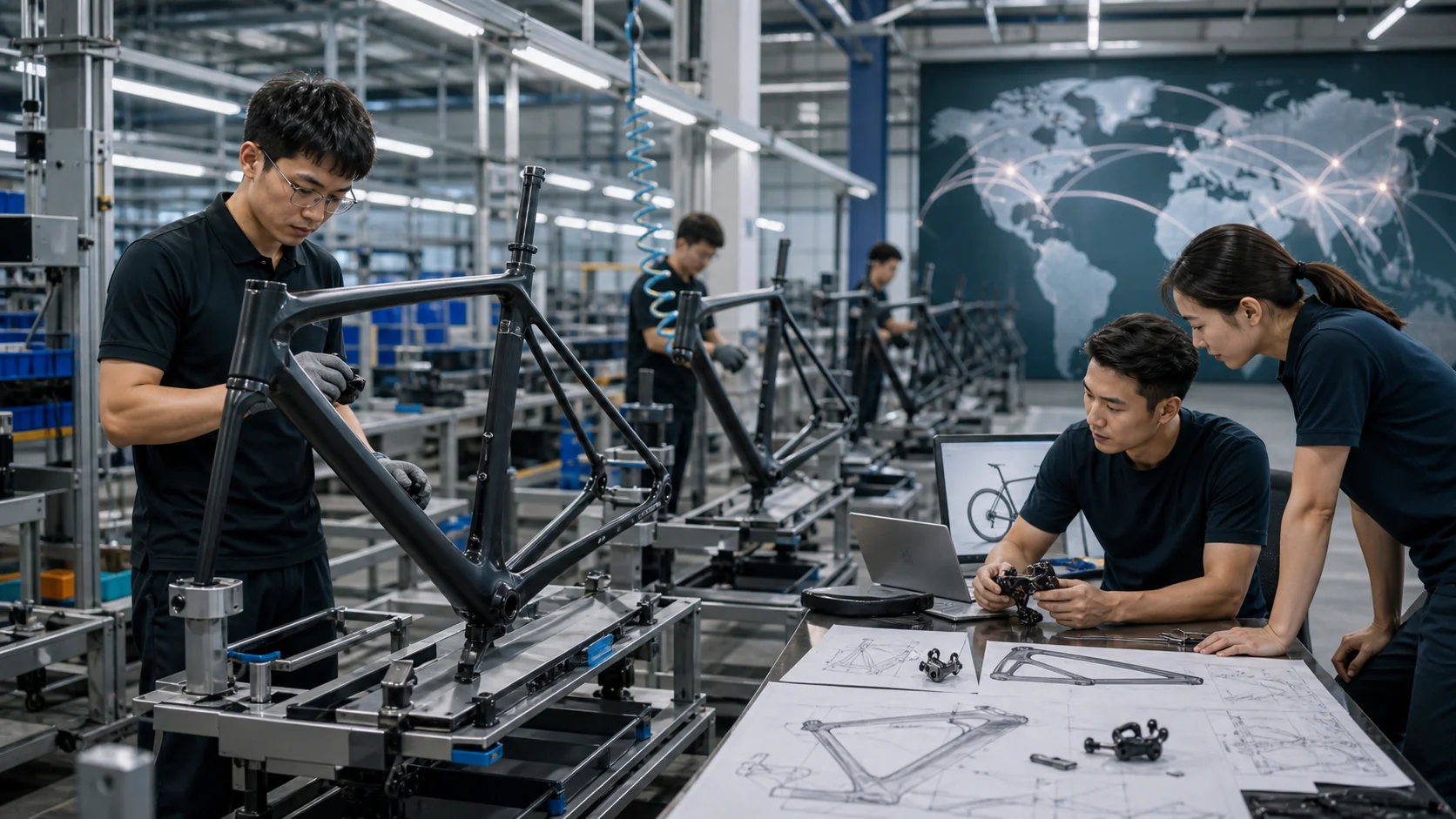
The Origins of Taiwan’s Bicycle Industry
The 1970s: The Beginning of the OEM Era
The start of Taiwan’s bicycle industry went almost hand in hand with Taiwan’s economic takeoff.
From the late 1960s to the early 1970s, Taiwanese manufacturers began taking on OEM orders from Japanese and American bicycle brands. Low labor costs and steadily improving manufacturing capabilities quickly made Taiwan a major global bicycle production hub.
Key characteristics of this period:
- Taiwanese manufacturers worked almost exclusively as OEMs for foreign brands
- No brand recognition of their own
- Thin profit margins and fierce competition
Crisis and Turning Point: The 1970s Oil Crisis
The 1973 oil crisis unexpectedly propelled the transformation of Taiwan’s bicycle industry.
The oil crisis caused bicycle demand in Europe and America to surge sharply (riding a bike was cheaper than driving a car), Taiwanese manufacturers saw orders explode, and factories expanded rapidly. But at the same time, it also made Taiwanese manufacturers begin to realize the fragility of pure OEM work—when market demand fades, orders disappear just as quickly.
Giant: From OEM Factory to World Number One
Founding Story (1972)
Giant was founded by Liu Chin-Piao in Dali, Taichung City, initially producing children’s bicycles before quickly transitioning to OEM work for foreign brands.
Key turning point: The partnership with Schwinn in 1981
In 1981, Giant began producing bicycles for Schwinn, the largest bicycle brand in the United States, and at its peak, Giant’s production accounted for more than 70% of Schwinn’s global sales. This partnership allowed Giant to rapidly learn the manufacturing techniques and supply chain management required for high-quality bicycles.
Brand decision: Launching the Giant house brand in 1981
At the height of its OEM business, Liu Chin-Piao made a seemingly contradictory decision: while continuing OEM work, he also launched the Giant house brand.
This decision faced strong opposition from many clients at the time (they did not want their OEM factory to become a competitor), but Liu Chin-Piao persisted.
Schwinn’s collapse: Giant’s opportunity
In 1992, Schwinn filed for bankruptcy due to financial problems, and overnight Giant lost the client that accounted for 70% of its OEM volume.
This crisis instead became the catalyst for Giant’s transformation into a pure house-brand company. Freed from the constraints of its largest client, Giant threw all its efforts into developing its own brand.
Giant’s Globalization Strategy
In 1986, Giant established its first overseas subsidiary in the Netherlands, beginning its global expansion.
Core strategies for globalization:
- Not just exporting products, but building its own sales networks and brand recognition in each country
- Establishing its own design and R&D centers, without relying on external design
- Sponsoring professional racing events to raise brand awareness
Giant’s investment in professional racing:
In the 1990s, Giant began sponsoring professional cycling teams. Taiwanese riders appeared on the roads of the Tour de France, and Giant’s brand image entered the world’s most prestigious cycling stage.
Giant Today
Today, Giant is one of the world’s largest bicycle manufacturers:
- Factories across Taiwan, mainland China, and the Netherlands
- Subsidiaries or distributors in approximately 50 countries
- Annual shipments exceeding 6 million units
- Brands under its umbrella include Giant and Liv (a women’s cycling brand)
Merida: A Global Footprint Starting from Lukang
Founding Story (1972)
Merida was founded by Tseng Tsung-Tsu in Lukang Township, Changhua County, starting out at almost the same time as Giant, also beginning with OEM work.
Merida’s most famous client was the German brand Centurion, and it later also became an important OEM partner for Specialized.
Merida’s special relationship with Centurion:
In 1987, Merida acquired a stake in Centurion, becoming a shareholder of a German bicycle brand—a very bold cross-border acquisition at the time.
Merida’s European Strategy
Unlike Giant’s globally dispersed approach, Merida focused more heavily on the European market in its early years, particularly the German-speaking countries (Germany, Austria, Switzerland).
Building the brand in Europe:
- Establishing a strong sales and marketing team in Germany
- Sponsoring German road racing teams
- Deeply integrating into German cycling culture (Germany is one of Europe’s largest bicycle markets)
Merida’s Investment in Professional Racing
Merida’s biggest milestone in professional cycling was becoming the bicycle supplier for Team Bahrain Victorious (and years earlier, Team Bora-Hansgrohe), putting Merida bikes on the world’s top stages such as the Tour de France.
Merida Today
Today, Merida ranks among the top five bicycle companies globally:
- Annual shipments exceeding 2 million units
- Distribution channels in approximately 80 countries
- Germany is its most important overseas market
Taiwan Excellence and the Bicycle Industry
The overall success of Taiwan’s bicycle industry is not just about Giant and Merida—it is the upgrading of the entire supply chain and industrial cluster.
The bicycle industry cluster in Changhua County (the Taichung–Changhua area) includes:
- Frame manufacturers
- Component manufacturers (such as FSA and Promax)
- Aluminum alloy and carbon fiber material suppliers
- Precision machining factories
This high-density supply chain makes Taiwan’s bicycle production efficiency unmatched worldwide.
A-Team: Taiwan’s Bicycle Industry Collaboration Model
One unique success factor of Taiwan’s bicycle industry is the “A-Team”—an industry alliance formed by Taiwan’s major bicycle and component manufacturers.
The core philosophy of A-Team: cooperation among competitors, lifting the entire industry together.
A-Team’s achievements:
- Jointly setting technical standards
- Jointly showcasing the overall strength of Taiwan’s bicycle industry
- Providing one-stop supply chain solutions to international buyers
Challenges Facing Taiwan’s Bicycle Industry
After success, new challenges follow:
Competition from mainland China:
As manufacturing in mainland China has improved, the low-price bicycle market faces intense competition. Taiwanese manufacturers have responded by continuing to move upmarket into higher-value segments.
Upgrading carbon fiber technology:
Carbon fiber bicycles are the most important battleground for Taiwanese manufacturers to upgrade, and refining carbon fiber craftsmanship is key to maintaining a competitive edge.
Direct-to-consumer (DTC) model:
The rise of e-commerce allows brands to reach consumers directly, and Taiwanese manufacturers are also learning this new business model.
Conclusion
The story of Giant and Merida is one of the most successful cases of manufacturing upgrading in Taiwan.
From OEM factories to globally top-tier brands, this journey is not just a commercial success—it is a reflection of Taiwanese people’s commitment to quality, innovation, and long-term vision.
Next time you ride a Giant or Merida, remember the journey to the world that began in Lukang and Dali.
Further Reading
- Taiwan’s Bicycle Industry: How GIANT and MERIDA Went Global
- The History of Taiwan’s Bicycle Industry: How Giant and Merida Became World Brands
- Taiwan’s Position on the International Cycling Stage: How Giant and Merida Changed the Global Cycling World
- The International Influence of Taiwan’s Cycling Culture: Giant, Merida, and the World Stage