Introduction
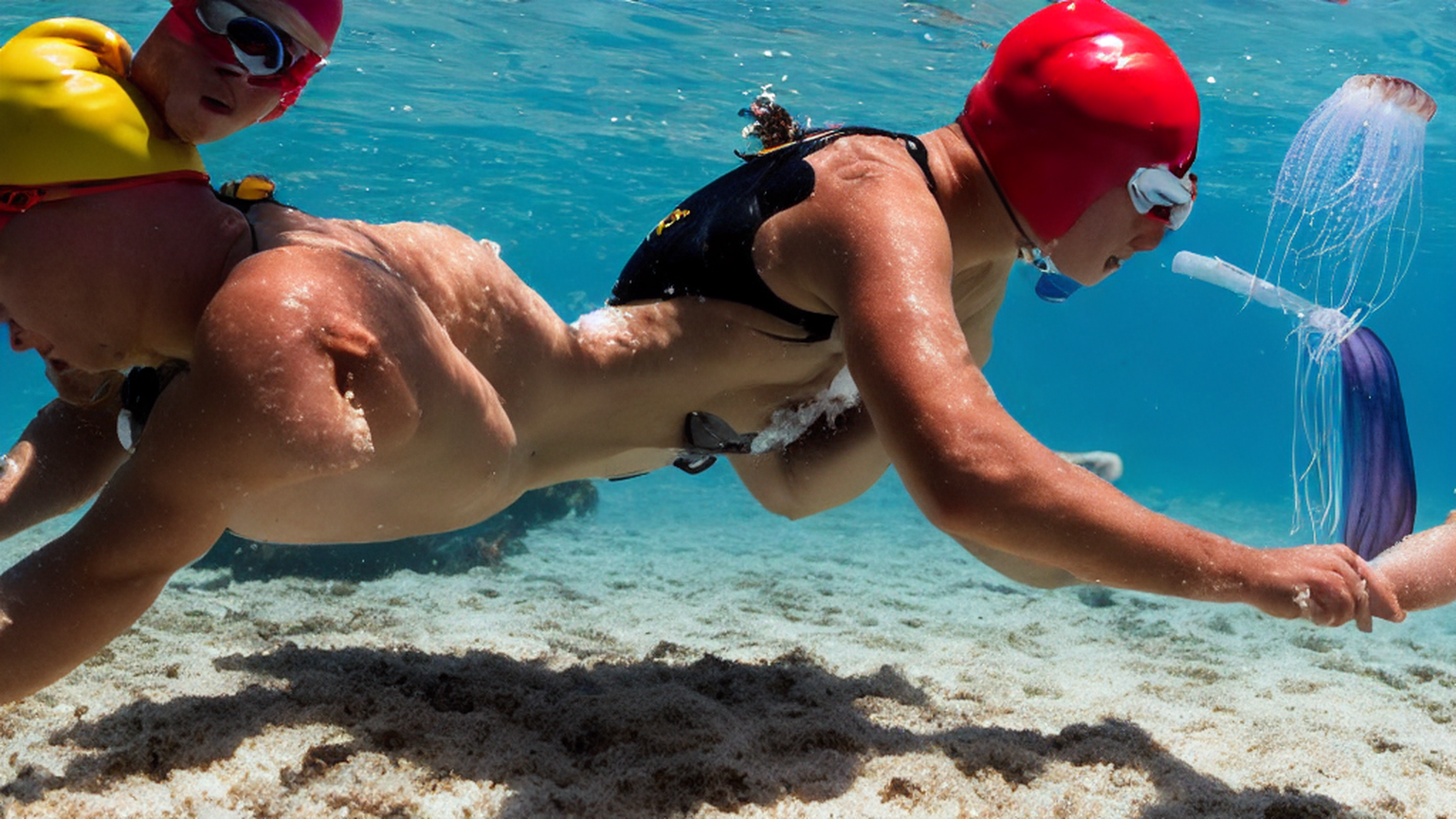
While enjoying the crystal-clear waters of Penghu, one of the last things swimmers want to encounter is a jellyfish sting. That sudden burning sensation often sends people into a panic, leading to incorrect first-aid responses. Jellyfish stings are not uncommon in Taiwan’s open water swimming, especially during the peak summer season from May to September. Proper prevention and first-aid knowledge is essential for every open water swimmer.
Common Jellyfish Species in Taiwanese Waters
| Jellyfish Species | Danger Level | Appearance | Distribution in Taiwan |
|---|---|---|---|
| Portuguese Man-of-War | High | Blue-purple gas-filled float on the surface | Southern Taiwan, outlying islands |
| Box Jellyfish | High | Transparent and square-shaped, with tentacles | Occasionally seen in the south |
| Moon Jellyfish | Low | White round bell with four rings in the center | Common throughout Taiwan |
| Sea Moon Jellyfish | Low to Medium | Translucent white bell | Common throughout Taiwan |
The most common species in Taiwan are mostly low-toxicity types like the Moon Jellyfish, whose stings typically cause brief mild stinging and redness, and are not life-threatening. The Portuguese Man-of-War is not strictly a jellyfish but a colonial organism; however, its tentacles can reach several meters in length, and the sting area can be quite extensive.
Correct First-Aid Steps for a Sting
Step 1: Leave the water immediately
After being stung, the first priority is to get out of the water safely. Pain can impair judgment and swimming ability, so swim immediately to the nearest shore or rescue boat.
Step 2: Do not touch the sting area with bare hands
The jellyfish’s nematocysts may not have fully released their toxin. Rubbing or touching the area with your hands can trigger more nematocysts and worsen the injury. Also, do not attempt to pull off the tentacles directly, as the nematocysts remain active even after the tentacles break.
Step 3: Remove the tentacles
Use a credit card, the edge of a shell, or any flat object to “scrape off” the tentacles from the skin surface (do not pinch or pull), scraping outward from the wound. Alternatively, cover the tentacles with dry sand before scraping them off.
Step 4: Rinse the wound
- Correct: Rinse with seawater (or saline solution).
- Incorrect: Rinse with fresh water — fresh water can cause the nematocysts to release more toxin due to osmotic pressure differences, worsening the injury.
- Specific cases: If confirmed to be a box jellyfish sting, rinse with vinegar (5% acetic acid), which can neutralize the toxin.
Step 5: Relieve the pain
- An ice pack or cold compress can effectively relieve pain and swelling (do not apply ice directly to the skin; place a cloth in between).
- Oral pain relievers (such as ibuprofen) can help reduce inflammation and pain.
- Antihistamines (such as diphenhydramine) can help reduce allergic reactions and itching.
Step 6: Monitor for allergic reactions
Seek medical attention immediately or call 119 if any of the following symptoms appear:
- Widespread hives over the body
- Difficulty breathing, tightness in the throat
- Rapid heartbeat, dizziness
- The sting area covers more than the size of a palm
Prevention Measures
- Ask local lifeguards before swimming whether there have been any jellyfish sightings that day.
- Wearing a wetsuit, long-sleeved rashguard, or a professional anti-jellyfish swimsuit can effectively reduce the area of skin exposed to stings.
- Portuguese Man-of-War are more common during Penghu’s peak summer season (July–August); watch for blue-purple floats on the water’s surface.
Practical Tips
- It is recommended that your open water swimming first-aid kit include: vinegar (small bottle), ice pack, antihistamines, pain relievers, and a spare credit card (for scraping).
- If you spot a jellyfish during your swim, do not panic and thrash about — jellyfish move slowly, so stay calm and simply swim around them.
- Taiwan’s marine biology research institute offers resources for identifying jellyfish species; familiarize yourself with the appearance of common Taiwanese jellyfish before swimming.
Conclusion
Although jellyfish stings are unpleasant, the vast majority are not life-threatening, and you can get through them safely as long as you handle the situation calmly. With proper first-aid knowledge and appropriate preventive measures, you can continue to enjoy open water swimming in Taiwan’s beautiful seas without being deterred by the presence of jellyfish.
Related Reading
- Open Water Sun Protection and Skin Care: Don’t Let Your Skin Be the Weakest Gear
- Open Water Swimming Safety Guidelines: A Guide to Taiwan’s Legal Swimming Areas
- Taiwan’s Beach Culture and Swimming Safety: Understanding Wave Conditions and Rip Currents
- Sun Protection and Skin Care for Open Water Swimming: Strategies for Prolonged Sun Exposure
2025 海鷗團體繞圈賽 網路直播 超激烈裁判長視角 / EIPC 李廷威、Waypoint 等眾多高手競爭 / feat. 卡密兒主持 / 海鷗繞圈賽
9 個月前
碟煞公路車 銑面器 !? 原來銑完差這麼多! 降低蹭碟機率! | TIME 公路車 保養小記錄 | CT Yeh
3 年前
海鷗練車之女車友最近都很愛偷襲🤣 #公路車
1 年前
風櫃嘴 | 全台最多大砲的單車路線 | 尋寶網攝影師告訴你怎麼擺拍起來才好看 | 熱門攝影地點巡禮
6 年前
2023桃園團體繞圈賽 / 海鷗繞圈賽 | 全程空拍數據版 | 公路車 | CT Yeh
2 年前
備戰 戀戀197 賽前關門點分析 西濱團練 #公路車 4K高畫質
6 年前
空拍機 炸機 卡樹 救援隊出動! DJI Mavic Pro #空拍機
6 年前
元宇宙運動 ! RouvyAR 虛擬實境約騎! 台灣路段開箱 帶你日月潭環潭一圈 | 團騎競賽參加教學 | 常見小問題整理 三人共享一年不用一千 | 公路車 | 訓練台 | CTYeh
5 年前