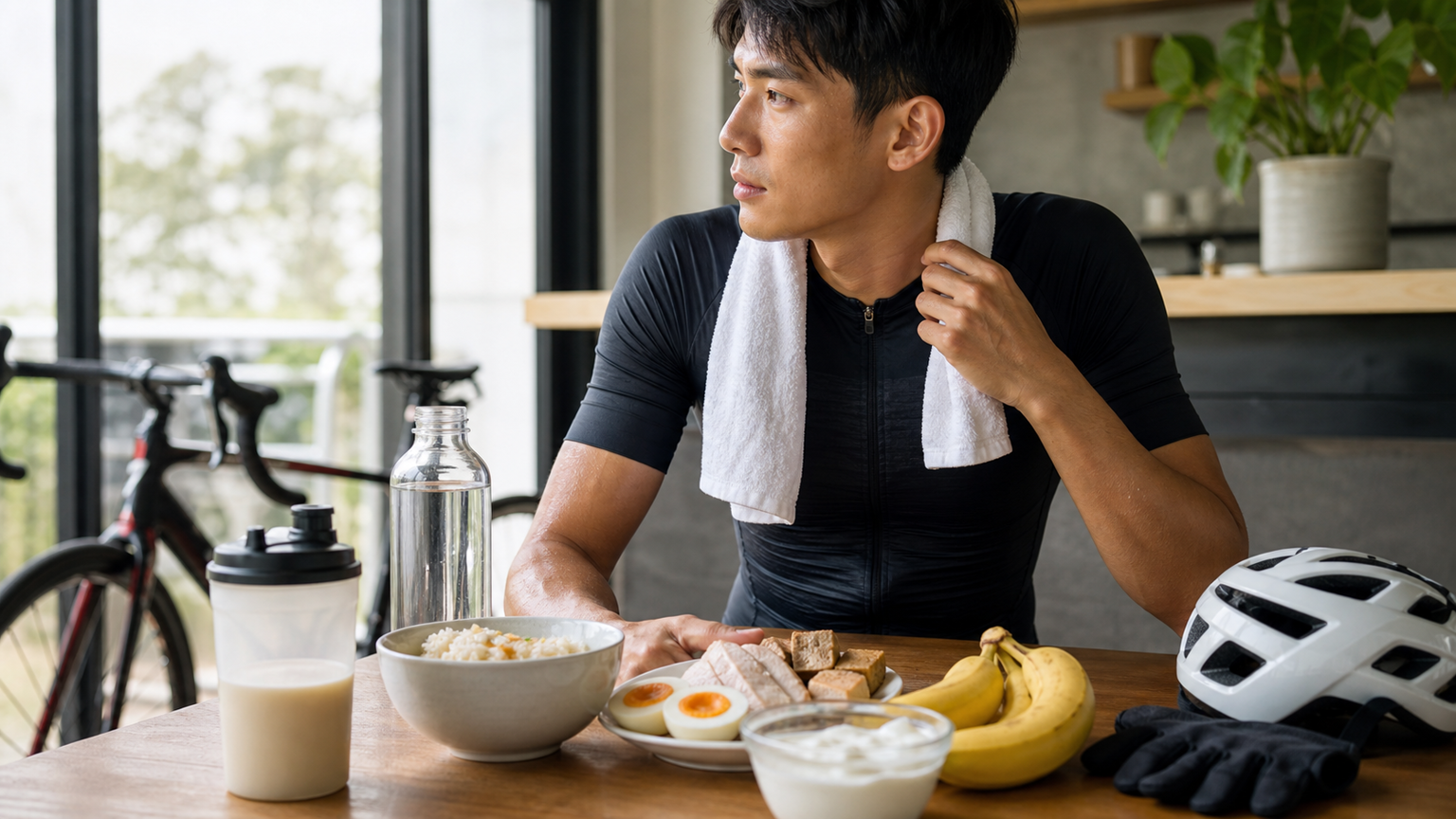
Introduction
The concept of the “Golden 30 Minutes” originates from sports science research on the post-exercise metabolic window. After training, muscle cells show significantly enhanced insulin sensitivity, with glucose transporter proteins (GLUT4) translocating to the cell membrane in large numbers, making carbohydrate absorption efficiency reach its daily peak. Meanwhile, muscle protein synthesis signaling (the mTOR pathway) is activated by exercise, requiring sufficient amino acids as building blocks. Missing this window does not mean recovery is completely compromised, but seizing it can indeed significantly accelerate glycogen replenishment (studies show 33–50% faster) and promote muscle repair.
The Two Core Components of a Recovery Meal
1. Carbohydrates: Refilling Glycogen
The ACSM recommends consuming 1–1.2 g/kg of carbohydrates immediately after training (a second round can be added 60–90 minutes later). For a 65 kg athlete, that means 65–78g of carbohydrates—roughly equivalent to 1.5 bowls of white rice or 2–3 bananas.
Choosing moderate-to-high glycemic index foods can speed up glycogen replenishment, making them suitable for athletes after high-intensity training or those with another session the next day. Low-glycemic foods are also effective, just slightly slower, and are better suited for the off-season or when there is ample time between sessions.
2. Protein: Activating Muscle Repair
20–40g of high-quality protein (with sufficient leucine, Leucine ≥ 2.5g) is an effective dose for stimulating muscle protein synthesis. Research shows that exceeding 40g in a single intake yields diminishing returns (with exceptions for older athletes or those with larger body frames).
| Protein Source | Serving Size | Protein (g) | Leucine (g) |
|---|---|---|---|
| Chicken breast (cooked) | 120g | 28 | 2.3 |
| Boiled eggs | 3 eggs | 19 | 1.6 |
| Greek yogurt | 200g | 17–20 | 1.5 |
| Tofu (firm) | 200g | 14 | 1.1 |
| Whey protein powder | 30g (one scoop) | 22–26 | 2.5–3.0 |
| Edamame (cooked) | 150g | 15 | 1.2 |
Carbohydrate-to-Protein Ratio
The classic recommendation is a carbohydrate-to-protein ratio of 3:1 to 4:1 (by grams). This ratio simultaneously triggers a maximal insulin response (aiding carbohydrate uptake) and protein synthesis. For example:
- 70g carbohydrates + 20g protein (3.5:1 ratio)
- Specific foods: 1.5 bowls of white rice + 1 egg + 150g chicken breast
Practical Recovery Meal Templates for Taiwan
| Scenario | Recovery Meal Choice | Carbohydrates (g) | Protein (g) |
|---|---|---|---|
| Has a kitchen | 1.5 bowls of white rice + 120g chicken breast + tomato scrambled eggs | 75 | 35 |
| Convenience store | 2 onigiri rice balls + 2 tea eggs + low-fat milk | 80 | 28 |
| In a hurry after the gym | Whey protein shake + 2 bananas + 2 slices of whole wheat toast | 70 | 25 |
| Vegetarian | 1 bowl of brown rice + tofu miso soup + half a bowl of edamame | 65 | 22 |
| After swimming (no appetite) | 500mL chocolate milk | 60 | 18 |
Chocolate milk is a “natural recovery drink” supported by numerous studies, with a carbohydrate-to-protein ratio of approximately 3–4:1, and it contains calcium, sodium, and potassium, making it the go-to lazy-person recovery meal.
Adjusting Recovery Meals Based on Training Intensity
- Low-intensity easy training (<60 min): Your next regular meal is sufficient; no need to deliberately increase portions.
- Moderate intensity 60–90 min: Supplement with carbohydrates + protein within 30 minutes, but portions can be reduced to 0.8 g/kg of carbohydrates.
- After high-intensity training/competition: Prioritize 1.2 g/kg of carbohydrates and 30–40g of protein; active replenishment is even more critical if you have training the next day.
- Double training days (two sessions per day): The recovery meal between sessions is crucial; aim to complete replenishment within 20 minutes and never skip it.
Practical Tips
- Liquids first, then solids: Your gastrointestinal tract may temporarily be on strike after training. Start with a sports drink or milk, then eat solid food 30 minutes later.
- Prepare a “ready kit”: Keep a packet of whey protein and a banana in your training bag to avoid missing the window because no food is available.
- Track recovery quality: Next morning’s muscle soreness and fatigue levels can help you assess whether the previous night’s recovery meal was sufficient.
Conclusion
The 30 minutes after training is not optional—it is the final mile that turns training stimulus into tangible results. Master the principle of 1 g/kg of carbohydrates plus 20–30g of protein, combined with Taiwan’s abundant and convenient food options, and let every drop of sweat translate into real progress.
Related Reading
- Recovery Nutrition After Swimming: Protein and Carbohydrate Supplementation in the Golden 30 Minutes
- The Golden 30 Minutes of Post-Run Recovery: Optimal Timing for Protein and Carbohydrate Supplementation
- Recovery Diet After Road Running: Protein-to-Carbohydrate Ratio in the 30-Minute Golden Window
- Recovery Diet After Swimming: Supplementation Principles in the Golden 30 Minutes
西進武嶺 免費訓練分析服務 Intervals | 練不夠還是練過頭?你哪一種類型選手?AI模型告訴你! | 備戰神器 | 公路車 訓練 | CT Yeh
4 年前
CT暗黑廚房) 車友必備 宇宙無敵鮮蚵湯 幫助訓練恢復 天然食補 好市多 超肥鮮蚵 破PR
7 年前
FTL 與 SYB 車隊專訪 西進武嶺 實用攻略分享! 2小時 如何練?!你不知道的眉角!新手準備武嶺必看 EP1 | 實力派女車友 | 精華版 | 公路車 | CTYeh
4 年前
實景訓練台) 彰化經典百K 高強度喵團 90分鐘 跟著一起練功 2019 Indoor workout Changhua Classic 100 Taiwan
7 年前
靠單車減肥35公斤 心得分享與整理
7 年前
西進武嶺 自製新版AI配速表產生器 x 賽前攻略 抱佛腳! 沒有功率計也可以產生配速表嗎?有什麼其他眉角賽前要注意的呢? | 西進武嶺 / 東進武嶺 KOM 攻略 | 公路車 | CT Yeh
4 年前
CT趣訪 西進武嶺 2小時組 EP2 全村的希望 蔣緯緯! 訓練菜單&技巧公開 |公路車 |CT Yeh
4 年前
Live) 備戰2019彰化經典百K 賽前攻略 (已完賽請看新影片
7 年前