The Relationship Between Magnesium and Cramps: Do Endurance Athletes Need Magnesium Supplementation?
Introduction
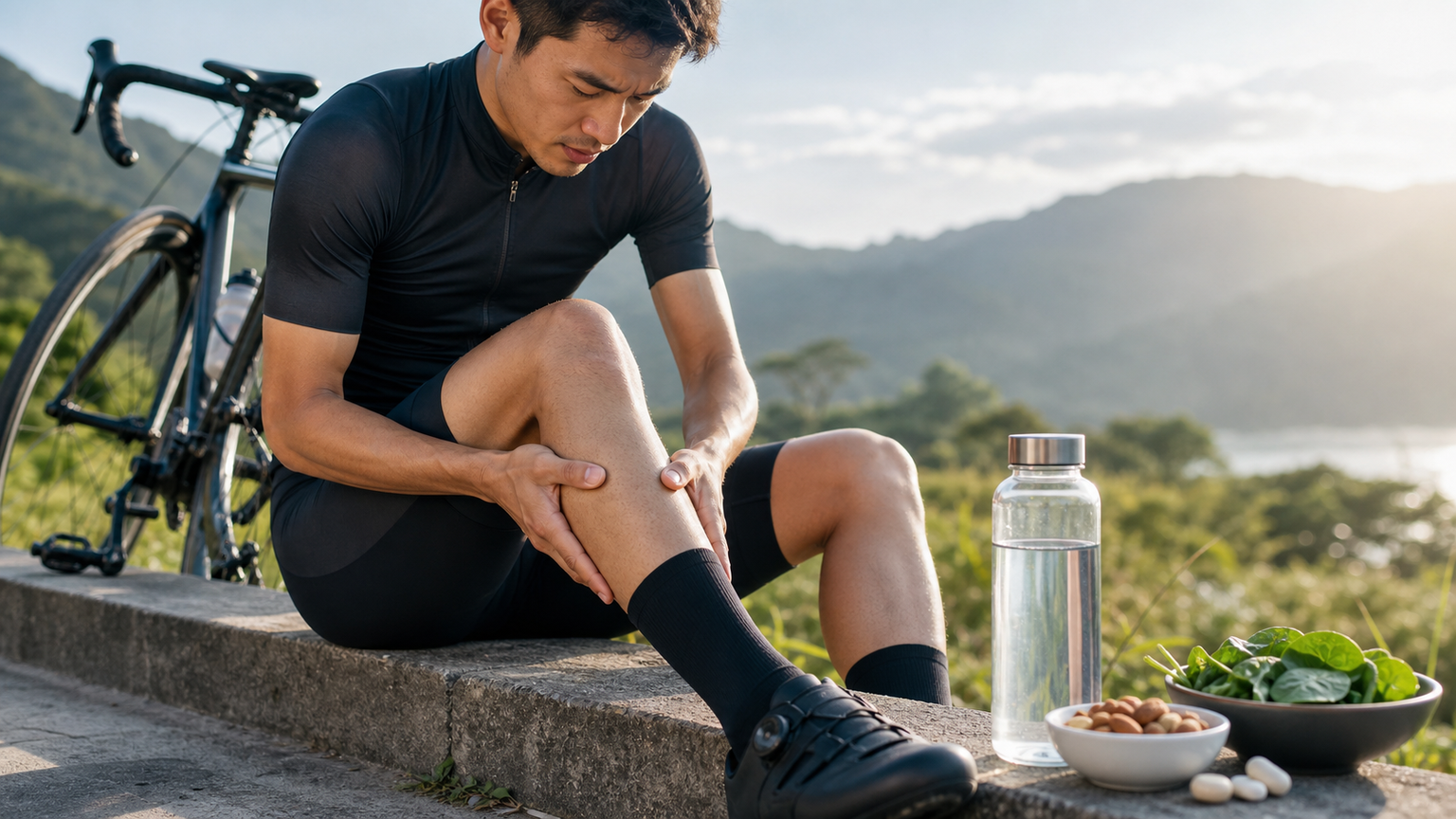
Sudden calf cramps in the latter half of a long ride or marathon are a shared nightmare for many endurance athletes. The widely circulated claim that “supplementing magnesium prevents cramps” is deeply ingrained, and magnesium supplement sales have risen year after year. However, sports science’s answer to whether magnesium deficiency truly causes exercise-associated cramps is far more complex than marketing slogans suggest.
Magnesium’s Role in the Body
Magnesium is the fourth most abundant mineral in the human body, participating in over 300 enzymatic reactions. Functions particularly important in sports nutrition include:
- ATP Synthesis: All ATP utilization requires magnesium (ATP exists in the form of Mg-ATP)
- Muscle Contraction and Relaxation: Magnesium is a natural antagonist to calcium—calcium promotes contraction, while magnesium promotes relaxation
- Protein Synthesis: Ribosomal function depends on magnesium
- Electrolyte Balance: The sodium/potassium pump requires magnesium to function
- Nerve Transmission: Regulates NMDA receptors, influencing neuronal excitability
Magnesium Deficiency and Exercise-Associated Cramps: What Science Says
An important distinction: systemic magnesium deficiency (hypomagnesemia, serum magnesium <0.75 mmol/L) is indeed associated with muscle spasms, but this is a clinical deficiency state that is uncommon among athletes with healthy diets.
Exercise-Associated Muscle Cramping (EAMC) is a different matter. The most robust mechanism currently is the “neuromuscular fatigue theory”—when overused muscles are in a fatigued state, the inhibitory mechanisms of spinal motor neurons become dysregulated, leading to involuntary contractions. Electrolyte imbalance (particularly sodium) is a secondary factor, but pure magnesium deficiency is not a primary driver.
| Cramp Theory | Strength of Evidence | Explanation |
|---|---|---|
| Neuromuscular fatigue | Strong | Dysregulated inhibitory reflexes in overused muscles |
| Sodium/electrolyte loss | Moderate | Electrolyte imbalance after heavy sweating |
| Dehydration | Moderate (controversial) | Often occurs concurrently with sodium loss |
| Magnesium deficiency | Weak (general athletes) | Clinical deficiency is rare; supplementation benefits are inconsistent |
| Calcium/potassium imbalance | Weak | Acute imbalance may contribute, but mechanism is unclear |
Which Athletes Actually Need Magnesium Supplementation
Although magnesium is not a primary cause of EAMC, the following groups may indeed have inadequate magnesium intake:
- Those with restricted caloric intake (athletes in weight-loss phases)
- Heavy sweaters (training over 3 hours daily, hot environments)
- Those whose staple diet consists of refined foods (refined carbohydrates lose significant magnesium)
- Alcoholics (increased magnesium excretion)
- Those taking diuretics
Taiwan’s recommended daily allowance for adults: 380 mg/day for men, 320 mg/day for women. Endurance athletes may have slightly higher needs, approximately 350–420 mg/day.
Food Sources of Magnesium
| Food | Serving Size | Magnesium (mg) |
|---|---|---|
| Pumpkin seeds | 30g | 150 |
| Dark chocolate (70% or higher) | 30g | 64 |
| Almonds | 30g | 77 |
| Edamame (cooked) | 150g | 58 |
| Brown rice | 1 bowl (150g cooked) | 42 |
| Spinach (cooked) | 100g | 87 |
| Banana | 1 piece | 32 |
| Tofu | 150g | 45 |
Athletes who maintain a varied diet, replace refined white rice with whole grains, and consume nuts and legumes daily typically do not need additional magnesium supplements.
If You Choose to Supplement Magnesium
If you decide to supplement, here are the differences between common forms:
- Magnesium Glycinate: High absorption rate, low gastrointestinal irritation—currently the most recommended form
- Magnesium Malate: Well absorbed, may improve energy metabolism
- Magnesium Oxide: Lowest absorption rate (4%), often used as a laxative; poor supplementation benefit
- Magnesium Sulfate (Epsom Salt): For bathing; transdermal absorption is controversial and not a basis for oral supplementation
General recommendation: 200–400 mg of elemental magnesium daily (in glycinate form), taken before bedtime (may improve sleep quality and reduce nighttime cramps).
Strategies That Actually Reduce Exercise-Associated Cramps
- Adequate Training: Condition the target muscle groups to handle race intensity, reducing fatigue-triggered cramps
- Sodium Supplementation: Actively consume sodium during long-distance training (500–700 mg/hr)
- Stretching Habits: Regular post-training stretching reduces static tightness
- Mustard/Pickle Juice: Some studies show foods containing these “pungent irritants” can rapidly relieve acute cramps via oral nerve reflexes (not an electrolyte mechanism)
Practical Recommendations
- Adjust dietary structure first (more whole grains, nuts, legumes) before considering supplements.
- Those with recurrent cramps should first rule out dehydration and sodium loss rather than directly blaming magnesium deficiency.
- 7-Eleven chocolate milk and nut packs (cashews/almonds) are convenient natural magnesium options.
- For those with poor sleep quality plus frequent cramps, magnesium glycinate before bed may offer improvement.
Conclusion
Magnesium is not the primary cause of cramps, but it is indeed an important cornerstone of overall neuromuscular function. Rather than blindly supplementing magnesium, first evaluate dietary structure, training adequacy, and sodium supplementation strategies, then provide targeted supplementation to those who truly need it.
Related Reading
- The Truth About Magnesium and Muscle Cramps: Cramps Aren’t Necessarily a Magnesium Deficiency, but Magnesium Can Help With 6 Things
- Magnesium Supplementation for Athletes: The Truth and Practical Guide for Cramps and Sleep
- Magnesium: The Overlooked Sports Mineral—Functions, Exercise Loss, and Supplementation Evidence Fully Analyzed
- Cramping During Races: It’s Not Just About Salt—Neuromuscular Fatigue Is the Main Culprit
大家都在開箱的...單車用藍芽對講耳機真的有幫助嗎? SENA BiKom 20 長距離旅遊 & 海鷗繞圈賽 實際體驗心得 / 公路車 / CT Yeh
9 個月前
福隆鐵人團練隨拍
8 年前
一日北高/長距離團騎 常見問題補充篇 / 組團或跟團的眉角 / 壯車友容易被瘦車友慢性拉爆 / 原來屁股痛可能是這個原因...? / 風場配速法 / 公路車 / CT Yeh
2 年前
Never Stop 西進武嶺 前後雙機 完整全程錄影 訓練台 實境
8 年前
#公路車 #Fitting 靠人工智慧APP 幫你調整單車
6 年前
西進武嶺 免費訓練分析服務 Intervals | 練不夠還是練過頭?你哪一種類型選手?AI模型告訴你! | 備戰神器 | 公路車 訓練 | CT Yeh
4 年前
洗單車神器 吹水機! 實際洗車用用看 暴力洗鍊條大法 | 公路車 | CT Yeh
4 年前
CT 喇低賽) 武嶺牽車 才是王道 西進牽車四小時內秘訣 攝手位置 如何判斷 防抽筋小秘訣
7 年前