Introduction
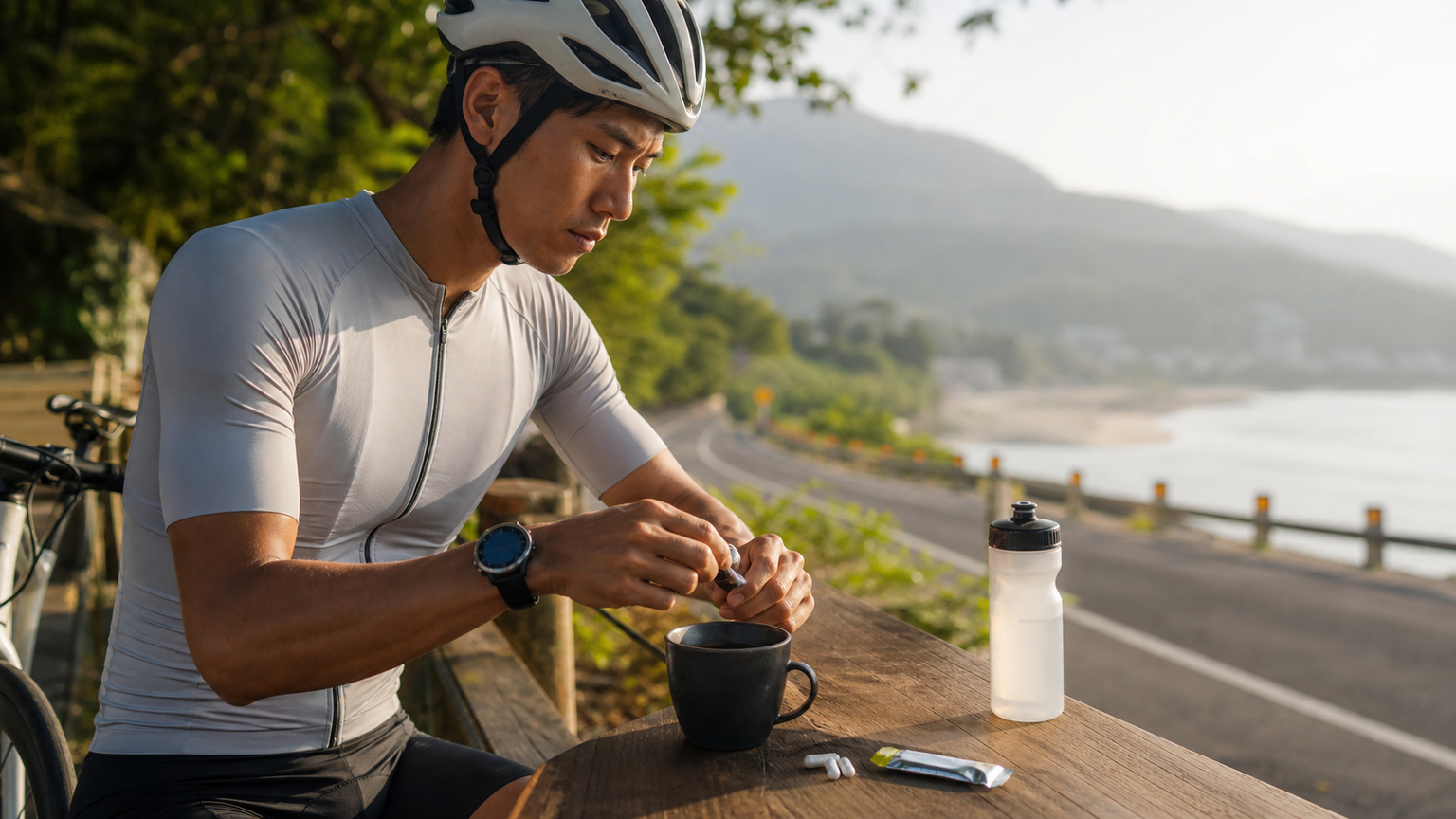
Caffeine is one of the most thoroughly researched substances in the world and a legal performance enhancer that WADA removed from its banned list in 2004. The ISSN position stand clearly states that appropriate doses of caffeine can improve endurance performance by 2–4%, delay the perception of fatigue, and enhance cognitive function and movement precision. For an athlete already near their personal best, a 2–4% improvement is often a gain that would be difficult to achieve through an entire year of training.
How Caffeine Works
Caffeine enhances sports performance primarily through two mechanisms:
-
Adenosine receptor antagonism: Adenosine accumulates after fatigue and binds to receptors, producing drowsiness. Caffeine competes with adenosine for receptor binding, blocking fatigue signals and making the athlete feel more alert and stronger under the same physiological conditions.
-
Catecholamine release: It stimulates the secretion of epinephrine and norepinephrine, increasing cardiac output, mobilizing fat, and reducing pain perception.
Dosage Recommendations
| Population | Effective Dose | Notes |
|---|---|---|
| Low tolerance | 1–2 mg/kg | Sensitive to caffeine; small doses are already effective |
| General athletes | 3–6 mg/kg | Mainstream effective dose recommended by ISSN |
| High tolerance (habitual coffee drinkers) | 5–9 mg/kg | Benefits may diminish; a “withdrawal period” is needed |
| Above 9 mg/kg | Not recommended | Increased risk of side effects with diminishing returns |
Practical calculation for a 65 kg athlete: 3 mg/kg = 195 mg, 5 mg/kg = 325 mg. A cup of American-style coffee contains approximately 80–150 mg, while a shot of black espresso contains about 60–80 mg.
Timing of Intake
- Standard recommendation: 45–60 minutes before a race/high-intensity training session
- Caffeine reaches peak plasma concentration 45–90 minutes after ingestion, with a half-life of approximately 3–6 hours
- In-race strategy (ultra-endurance): Supplement with small doses (1–2 mg/kg) when fatigue sets in during the latter half; caffeinated energy gels are well suited for this purpose
| Race Type | Caffeine Strategy |
|---|---|
| 10K/Half marathon | Single dose of 3–5 mg/kg 60 minutes before the start |
| Full marathon | 3 mg/kg before the start + 1–2 mg/kg top-up at the 30 km mark |
| Triathlon (long distance) | Before the start + top-up in the latter part of the bike leg |
| Cycling 100km+ | Before the start + top-up at the 2.5-hour mark |
Common Caffeine Sources in Taiwan
| Source | Estimated Caffeine (mg) | Notes |
|---|---|---|
| 7-11 American-style coffee (M) | 100–120 | Consistent and convenient |
| Black coffee (espresso) | 60–80/shot | Varies greatly with specialty coffee |
| Caffeinated energy gel | 75–100/packet | Precise dosing |
| Red Bull energy drink 250mL | 80 | Contains sugar (26g) |
| Strong tea (black tea/oolong) | 30–60/250mL | Milder; L-theanine helps reduce side effects |
| Caffeine tablets (OTC) | 100–200/tablet | Most precise dosing |
Is a “Caffeine Withdrawal” Necessary?
For those who drink coffee daily, the performance-enhancing benefits of caffeine do indeed diminish due to tolerance. Research shows that a 7–14 day caffeine withdrawal can restore sensitivity to caffeine, making its race-day benefits more pronounced. However, the withdrawal period comes with 3–5 days of headaches and fatigue, which may affect normal training. A compromise: reduce intake to one cup per day (≤100 mg) for 4–7 days before the race, then take a full dose on race day.
Side Effects and Precautions
- Palpitations/increased heart rate: Caution is needed with high doses or for those with heart sensitivity
- Increased gastrointestinal motility: May lead to restroom needs during training/racing; test beforehand during training
- Sleep disruption: High doses taken after 3 PM affect sleep quality that night, thereby impairing recovery
- Individual genetic differences (CYP1A2 gene): Fast metabolizers gain greater benefits; slow metabolizers experience more pronounced side effects
Practical Recommendations
- When using a caffeine strategy for the first time, test it during an important training session rather than on race day.
- Start with 3 mg/kg, confirm gastrointestinal tolerance, then decide whether to increase to 5 mg/kg.
- 7-11 American-style coffee in Taiwan is a convenient and relatively consistent option before a race; caffeinated energy gels are a great tool for in-race top-ups.
- Do not take high doses on an empty stomach; pairing with a small amount of carbohydrates can reduce stomach discomfort.
Conclusion
Caffeine is the most scientifically supported legal supplement in an endurance athlete’s toolkit. 3–6 mg/kg taken 60 minutes before the race is a safe starting point. Rehearse it in training, execute it in competition, and let that cup of black coffee become your secret weapon in the final kilometers.
Related Reading
- Caffeine and Sports Performance: Research on Optimal Intake Timing and Dosage
- Caffeine and Sports Performance: A Legal Aid for Enhancing Endurance and Strength Output
- Caffeine and Cycling Performance: The Strongest Legal Supplement Supported by Sports Science
- Swimmers and Caffeine: Timing and Dosage for Performance Enhancement
西進武嶺 免費訓練分析服務 Intervals | 練不夠還是練過頭?你哪一種類型選手?AI模型告訴你! | 備戰神器 | 公路車 訓練 | CT Yeh
4 年前
CT暗黑廚房) 車友必備 宇宙無敵鮮蚵湯 幫助訓練恢復 天然食補 好市多 超肥鮮蚵 破PR
7 年前
靠單車減肥35公斤 心得分享與整理
7 年前
2021 96聯賽 桃園市長盃 4K多視角實況 當天選手瓦數/推力比/均速/時間 即時數據分析 | 公路車 | CT Yeh
5 年前
2026 車錶排行榜!誰是最多車友正在使用?練家子最愛哪款?🏆 (2萬名車友數據) / 公路車 / CT Yeh
5 個月前
武嶺配速表最佳使用方式 #bike
1 年前
如果Pogačar騎西進武嶺可以多快?會破2嗎?各種情況深度推估探討 / 公路車 / CT Yeh
2 年前
#公路車 #西進武嶺 配速配瓦實驗 坡度分析 四小時內攻略 建大盃 NeverStop #西進武嶺攻略
6 年前