Introduction
Swimming is the discipline with the most unique dietary demands among the three sports. Water temperature (typically 26–30°C) suppresses the rise in core body temperature, making athletes less likely to feel thirsty or hungry than after running; water pressure compresses the abdomen, increasing discomfort when training after eating; and the dynamics of the water limit the frequency of fueling during competition. These characteristics make swimming’s dietary strategy distinctly different from other endurance sports.
The Dietary Specifics of Water Training
| Characteristic | Impact on Diet |
|---|---|
| Water temperature suppresses appetite | Hunger is delayed after training, making it easy to underestimate needs |
| Water pressure compresses the abdomen | Gastrointestinal discomfort is more noticeable during training |
| Cannot eat while training | Must fuel before and after training; no mid-session eating |
| No sensation of sweating in water | Still sweats heavily in reality (you do sweat in water); athletes often neglect hydration |
| Different thermoregulation | Calories burned are similar to room-temperature training, but perceived fatigue is lower |
Dietary Strategy Before Swimming
3–4 Hours Before Training
A full meal, carbohydrate-focused with moderate protein, low fat and low fiber:
| Food | Carbs (g) | Protein (g) | Notes |
|---|---|---|---|
| 1.5 bowls of white rice | 75 | 5 | Primary carbohydrate source |
| 2 steamed eggs | 2 | 13 | Low fat, high protein |
| Blanched spinach | 5 | 3 | Light vegetable |
| Unsweetened soy milk 250mL | 8 | 10 | Protein supplement |
90 Minutes Before Training
This is a window that requires special attention in swimming—water pressure makes abdominal fullness more pronounced, and too much food can cause discomfort during training.
Recommended:
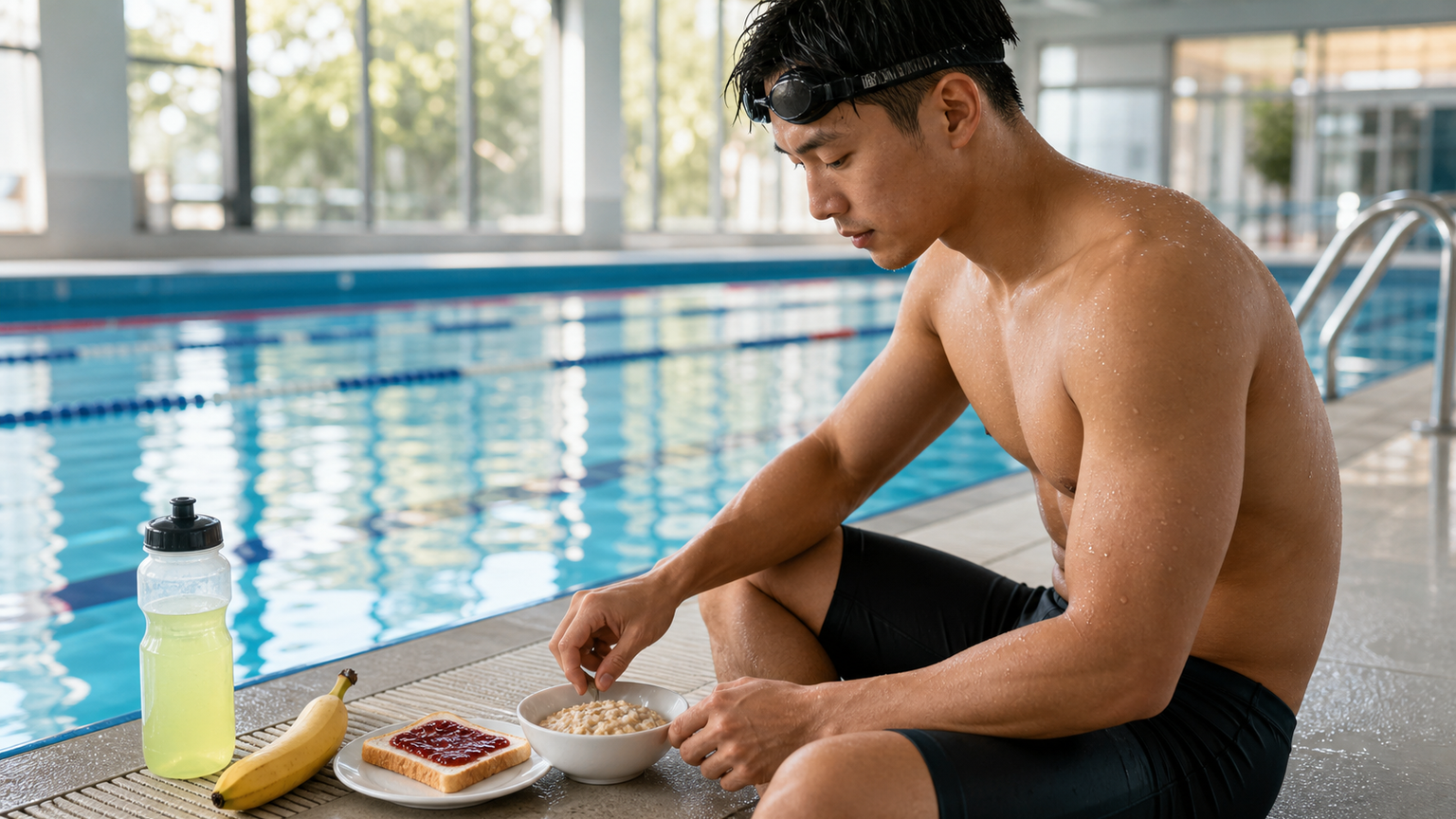
- 1 banana (27g carbs, soft and easy to digest, rich in potassium)
- 1–2 slices of white toast + a little jam (30–50g carbs)
- Low-fat oatmeal (50g oats cooked thinner, about 35g carbs)
- 300 mL sports drink (no solid food needed)
Avoid:
- Any fried foods (slow gastric emptying)
- Legumes, cruciferous vegetables (gas-producing)
- Carbonated drinks (gas expansion under water pressure)
- High-fiber whole grains
30 Minutes Before Training
Light supplementation or nothing at all, depending on individual tolerance:
- Half a gel (10–15g carbs)
- A small amount of sports drink
Fueling During Swimming
Competitive training typically involves refueling at the turn wall or during interval rest:
- Short-distance training (<60 minutes): Plain water is sufficient; replenish carbs after training
- Mid-distance (60–90 minutes): Drink 100–150 mL of sports drink every 30 minutes
- Long-distance (>90 minutes): Refuel every 20–30 minutes; keep gels ready at poolside
Open-water swimming: Use a round buoy bottle belt (Pull Buoy Bottle Holder), stopping to refuel every 30–45 minutes.
The Unique Post-Training Challenge: Appetite Suppression
Research shows that swimming (especially in cooler water) suppresses post-training appetite more than running at equivalent intensity, causing athletes to eat less and creating an energy deficit. Accumulated over time, this can lead to RED-S issues.
Countermeasures:
- Don’t rely on hunger to decide whether to eat; instead, set clock reminders: “Within 30 minutes of finishing swimming, always have a recovery meal”
- Choose liquid/semi-liquid recovery drinks: chocolate milk, protein shakes, soy milk + banana (easy to consume even without appetite)
- Recovery meal targets: 15–25g protein + 1 g/kg carbs
Convenient Meal Options for Taiwanese Swimmers
| Scenario | Food Choices |
|---|---|
| 90 minutes before morning swim | 7-11 white toast + banana |
| Post-swim recovery (no appetite) | FamilyMart chocolate milk 500mL + tea egg |
| 3 hours before a race | Breakfast shop near school/work: egg pancake + rice milk (low-fiber combo) |
| Long-distance training fuel | Sports drink + half a gel ready at poolside |
Practical Tips
- Swimmers especially need an “active fueling” mindset—don’t let hunger drive eating.
- Set a personal rule of “mandatory eating within 30 minutes after training.”
- You sweat in the water too; hydration needs after swimming are no lower than after running. Make sure to replenish electrolytes after training.
Conclusion
The core of swimming’s dietary strategy is “active management”: actively choosing the right pre-training meal, actively refueling after training (even when not hungry), and actively monitoring hydration needs. The ease felt in the water can easily make athletes underestimate their body’s fuel consumption, but that is an illusion of sensation—proper dietary support is what underpins swimming farther and faster.
Related Reading
- Dietary Strategy Before Swimming: What to Eat 1–3 Hours Before Training
- Energy Supplementation Before Swimming: Dietary Strategy 1–2 Hours Before Training
- Dietary Strategy for Swimmers: Timing of Carbohydrate Intake for Water Sports
- Breakfast Design for Swimmers: The Most Important Meal Before Training
CT暗黑廚房) 車友必備 宇宙無敵鮮蚵湯 幫助訓練恢復 天然食補 好市多 超肥鮮蚵 破PR
7 年前
靠單車減肥35公斤 心得分享與整理
7 年前
FTL 與 SYB 車隊專訪 西進武嶺 實用攻略分享! 2小時 如何練?!你不知道的眉角!新手準備武嶺必看 EP1 | 實力派女車友 | 精華版 | 公路車 | CTYeh
4 年前
西進武嶺 免費訓練分析服務 Intervals | 練不夠還是練過頭?你哪一種類型選手?AI模型告訴你! | 備戰神器 | 公路車 訓練 | CT Yeh
4 年前
一日北高前的高裝檢 | 北高 360 | 挑戰11小時的裝備 | 一日雙塔 | 補給
6 年前
水金九不厭五分 10度寒流冷到不願停!feat. 卡卡 / 公路車 / CT Yeh
6 個月前
一日北高/長距離團騎 常見問題補充篇 / 組團或跟團的眉角 / 壯車友容易被瘦車友慢性拉爆 / 原來屁股痛可能是這個原因...? / 風場配速法 / 公路車 / CT Yeh
2 年前
單車 一日北高 ( 雙城 ) 肥宅雙人瘋狂行 紀錄片 REACTO
10 年前