Introduction
The second half of a marathon is often called “where the real race begins,” and one of the biggest variables at that point is energy replenishment. Glycogen depletion (commonly known as “hitting the wall”) causing your pace to collapse is the nightmare of most runners. The energy supplement market is vast and diverse—liquid energy gels, semi-solid gels, chewable energy gels, solid energy bars—each performing differently in terms of digestion speed, portability, and stomach irritation.
Major marathon events in Taiwan (ING Taipei, Wan Jin Shi) are also increasingly offering energy gels at aid stations, but smart runners should know how to tailor their own fueling strategy rather than simply relying on race-provided supplies.
Core Differences Among the Three Main Types
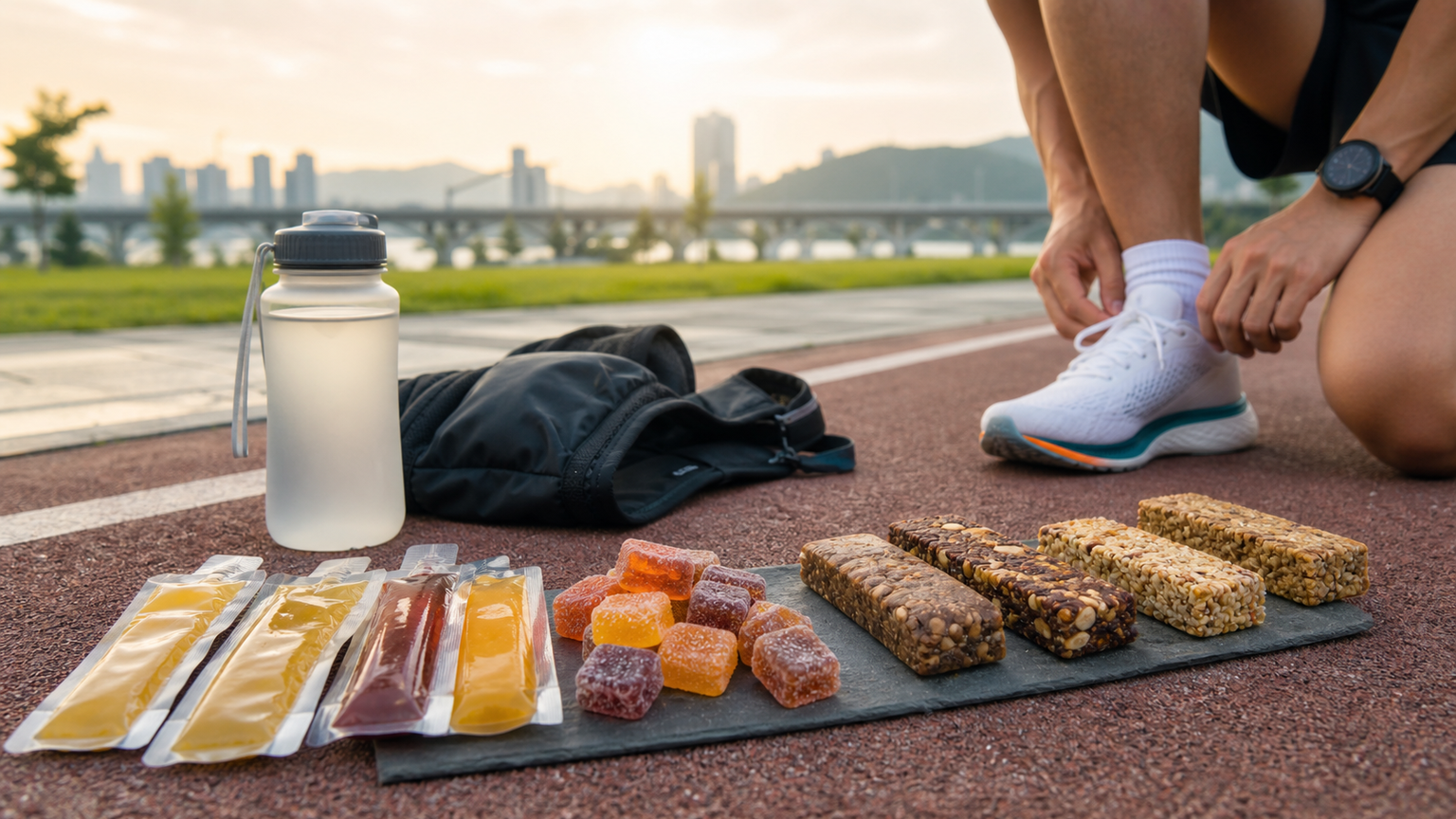
Liquid Energy Gels (Gel / Liquid Gel)
The most mainstream race fuel, each packet is about 20–25ml, containing 20–30g of carbohydrates. No chewing is required, and it can be swallowed quickly.
Absorption speed: Faster (takes effect in 30–45 minutes)
Stomach irritation: Some people are sensitive to concentrated formulas and need to take it with plain water
Portability: Excellent—can be tucked into a race belt or vest pocket
Mainstream options:
- GU Energy Gel (USA, multiple flavors)
- MAURTEN Gel 100/160 (scientifically formulated, hydrogel form, lowest stomach irritation)
- SIS GO Isotonic Gel (isotonic, no need to take with water)
- PowerBar PowerGel
Semi-Solid Energy Chews (Chews / Gummies)
Somewhere between solid and liquid, with a gummy-like texture that requires light chewing before swallowing. Each packet contains 2–4 pieces and can be consumed in batches.
Absorption speed: Moderate (slightly slower than liquid gels, as chewing and breakdown are required)
Stomach irritation: Relatively mild
Portability: Slightly bulkier than liquid gels, but still convenient
Mainstream options:
- Clif Bloks Energy Chews
- GU Energy Chews
- Honey Stinger Organic Energy Chews
Solid Energy Bars (Energy Bar / Real Food)
Contain more complete complex carbohydrates plus small amounts of protein and fat, suitable for fueling during non-intense phases of ultramarathons or long trail runs.
Absorption speed: Slow (takes 1–1.5 hours to be fully utilized)
Stomach irritation: Lowest, closest to normal food
Portability: Bulkier and heavier; difficult to eat at higher paces
Local Taiwanese options: Taiwanese ultramarathon runners often make their own fuel, such as bananas, red bean rice balls, and sweet potatoes—effectively localized versions of “real solid” fueling that perform just as well as commercial energy bars during long, low-intensity runs.
Comparison Table of Mainstream Energy Gels
| Brand/Model | Carbs per Packet | Caffeine Version | Taiwan Price | Features |
|---|---|---|---|---|
| GU Roctane Ultra | 21g | Yes | NT$100–120 | Rich in electrolytes, suitable for ultramarathons |
| MAURTEN Gel 100 | 25g | No | NT$180–220 | Hydrogel, most stomach-friendly |
| MAURTEN Gel 160 | 40g | No | NT$250 | 40g carbs per packet, reduces fueling frequency |
| SIS GO Isotonic | 22g | Yes | NT$80–100 | No need to take with water, convenient for road races |
| Clif Bloks | 24g/2 pieces | Yes | NT$120 | Chewable, top choice for those with sensitive stomachs |
| Honey Stinger Waffle | 21g | No | NT$80 | Solid, for intermittent fueling in long distances |
Fueling Strategy Recommendations for Taiwan Marathons
Full Marathon (42.195km) Fueling Plan
Modern sports science recommends marathon runners consume 60–90g of carbohydrates per hour. Targeting a 4-hour finish:
- Every 45 minutes, take one packet of liquid energy gel (about 25g of carbs)
- A total of 4–5 gels is needed for the entire race
- Pair with water or electrolyte drinks from aid stations
Special Considerations for Taiwan’s Summer Races
Taiwan’s summer heat accelerates electrolyte loss (sodium, potassium, magnesium). Pure carbohydrate gels are not enough—electrolytes need to be replenished:
- Choose gels that contain electrolytes (such as GU Roctane)
- Pair with electrolyte tablets (Nuun, Precision Hydration) dissolved in water
- Avoid drinking only plain water during the race, as this increases the risk of hyponatremia
The Importance of Digestion Testing
Never try a new energy supplement for the first time on race day. Everyone’s gastrointestinal tolerance to energy gels differs—some people are allergic to maltodextrin or fructose, and some cannot digest solid food during high-intensity running. You should fully simulate your race fueling strategy during training, including flavors and brands.
Strategies for Using Caffeinated Energy Gels
Caffeinated energy gels (typically containing 50–100mg of caffeine per packet) can enhance focus and alleviate fatigue in the latter half of the race, making them a secret weapon for many elite runners in the second half:
- Strategic use: Only take caffeinated gels in the latter half (around the 30–35km mark) for a more pronounced effect
- Daily caffeine consumers: If you drink coffee every day, reduce caffeine intake 7 days before the race to boost its effectiveness on race day
- Caution for the sensitive: Some people are sensitive to caffeine; taking caffeinated gels at high intensity may cause heart palpitations or gastrointestinal discomfort
Practical Tips
- Carry one more gel than planned for a full marathon; when the weather is hot or your pace is slower than expected, fueling frequency needs adjustment.
- Solid bananas are the most common solid food at Taiwan marathon aid stations. Runners at a pace faster than 6 min/km can usually eat while running, making them more convenient than energy bars.
- Although MAURTEN is expensive (over NT$180 per packet), it is worth the investment for runners with sensitive stomachs or those whose digestive systems tend to shut down at high intensity.
- Energy gels should be taken with about 200ml of plain water (except SIS Isotonic), so make sure to consume them near an aid station—don’t eat one between stations when there’s no water available.
Conclusion
Energy fueling strategy is the most overlooked aspect of marathon training. Understanding the characteristics of different supplements, repeatedly testing them in training, and finding the products and timing your digestive system can tolerate are the keys to confidently maintaining your target pace to the finish line on race day.
Related Reading
- Solid Food vs. Energy Gels During Races: How to Choose the Fueling Form That Suits You Best
- Energy Replenishment During Exercise: Comparing Gels, Bars, and Real Food
- Sports Supplement Buying Guide: Differences Between Energy Gels, Bars, and Electrolytes
- Road Running Fuel: When to Use Gels, Bars, and Chews
CT暗黑廚房) 車友必備 宇宙無敵鮮蚵湯 幫助訓練恢復 天然食補 好市多 超肥鮮蚵 破PR
7 年前
Garmin Edge 1040 重大韌體更新!! / 1050功能全下放!? / 坡度反應變快了嗎?/ 快速對比實測 / 公路車 / CT Yeh
1 年前
一日北高/長距離團騎 常見問題補充篇 / 組團或跟團的眉角 / 壯車友容易被瘦車友慢性拉爆 / 原來屁股痛可能是這個原因...? / 風場配速法 / 公路車 / CT Yeh
2 年前
大家都在開箱的...單車用藍芽對講耳機真的有幫助嗎? SENA BiKom 20 長距離旅遊 & 海鷗繞圈賽 實際體驗心得 / 公路車 / CT Yeh
9 個月前
一日北高前的高裝檢 | 北高 360 | 挑戰11小時的裝備 | 一日雙塔 | 補給
6 年前
單車 一日北高 ( 雙城 ) 肥宅雙人瘋狂行 紀錄片 REACTO
10 年前
2021 96聯賽 桃園市長盃 4K多視角實況 當天選手瓦數/推力比/均速/時間 即時數據分析 | 公路車 | CT Yeh
5 年前
#公路車 #Fitting 靠人工智慧APP 幫你調整單車
6 年前