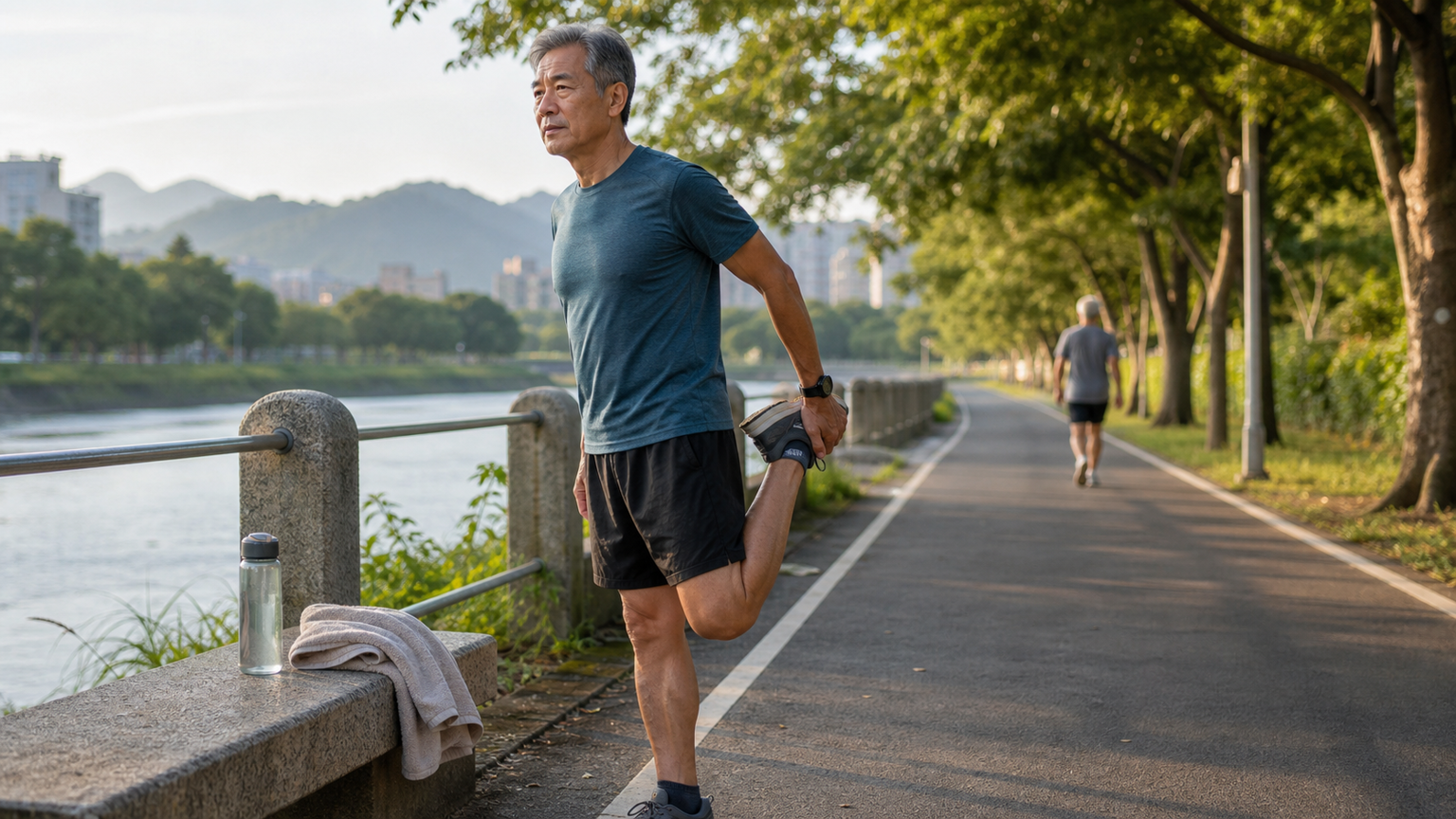
Introduction
Many runners begin to notice after age 40: the same training volume takes longer to recover from; high-intensity sessions that used to be recovered by the next day now require two days; leg fatigue that once cleared over a weekend now lingers for an entire week. This is not psychological—it is an aging phenomenon with solid physiological evidence. But the good news is: understanding the mechanisms allows you to find coping strategies, enabling middle-aged and older runners to keep improving.
Physiological Effects of Aging on Recovery
1. Changes in Hormonal Environment
- Testosterone (present in both men and women): declines by approximately 1–2% per year after age 40, and testosterone is a key hormone promoting muscle protein synthesis
- Growth hormone: secretion decreases with age, and HGH secretion during deep sleep declines significantly after age 40–50
- Estrogen (in women): declines after menopause, affecting collagen metabolism in tendons and ligaments
2. Reduced Satellite Cell Activation
Muscle damage repair relies on the proliferation and differentiation of satellite cells. Research shows that after age 50, both the activation rate and number of satellite cells decline significantly, prolonging the repair timeline for micro-damage in muscles.
3. Reduced Efficiency in Resolving Inflammation
Younger runners experience a rapid peak and quick resolution of acute inflammation; older runners tend to have inflammation that lasts longer—commonly referred to as “inflammaging.”
4. Decreased Connective Tissue Elasticity
The collagen synthesis rate in tendons and ligaments declines with age, as does the ability to repair micro-damage in ligaments. This is partly why middle-aged and older runners are more prone to Achilles tendon issues and iliotibial band problems.
| Physiological Change | Impact | Age When It Becomes Significant |
|---|---|---|
| Testosterone decline | Slower muscle recovery | 35–40 years |
| Reduced growth hormone | Lower deep-sleep repair efficiency | 40–45 years |
| Weakened satellite cell activation | Prolonged muscle damage repair | 50+ years |
| Reduced inflammation resolution | Muscle swelling lasts longer | 45+ years |
| Decreased connective tissue elasticity | Higher risk of tendon injuries | 40+ years |
Training Adjustment Strategies for Middle-Aged and Older Runners
1. Extend Recovery Intervals
Accept “72 hours between high-intensity sessions” as the new norm, rather than every 48 hours. Research shows that runners over 50 who reduce high-intensity training from 3 sessions per week to 2, while increasing low-intensity aerobic volume, actually achieve better long-term performance.
2. Optimize Protein Intake
Middle-aged and older runners experience anabolic resistance—the same dose of protein produces a weaker muscle protein synthesis response than in younger people. Therefore:
- Increase protein intake per meal to 35–40 grams (20–25 grams is sufficient for younger people)
- Distribute it across 4–5 meals throughout the day, avoiding concentration at dinner
- Prioritize foods rich in Leucine (whey protein, chicken breast, tofu)
3. Strengthen Sleep Quality
Since growth hormone secretion is already reduced, sleep quality becomes even more important than in younger years:
- Ensure 8–9 hours of sleep per night
- Consume 20–30g of casein 30 minutes before bed to supply amino acids needed for overnight repair
- Treat sleep apnea (prevalence is relatively high among male runners over 50 in Taiwan)
4. Increase the Proportion of Strength Training
For runners over 55, strength training should account for at least 2–3 sessions per week in the training plan:
- Focus: hip musculature (gluteus maximus, gluteus medius), hamstrings, and core stabilizer muscles
- Strength training helps combat “sarcopenia” and maintains connective tissue health
- Avoid weight training on the same day as high-intensity running sessions
5. Extend Warm-Up and Cool-Down Time
Tendons and joints in middle-aged and older runners need more time to reach optimal working temperature before training:
- Extend warm-up from 10 minutes to 15–20 minutes
- Extend cool-down time as well, including dynamic stretching and easy jogging
Mindset Adjustment: The Definition of Progress Must Evolve
“Progress” for middle-aged and older runners should not always use pace as the sole metric:
- Completing high-mileage training while staying healthy is itself an achievement
- Fewer injuries and better recovery quality are also dimensions of progress
- Training consistency (injury-free training streak) often holds greater long-term value than any single race result
Practical Recommendations
- Runners over 45 are advised to undergo an annual sports health check-up (ECG, hormone panel)
- Sports medicine clinics in Taiwan’s cities and counties offer running injury assessments—make good use of them
- Join middle-aged and older runner communities to share training experiences with peers of the same age, and avoid holding yourself to standards from your younger years
- Performing better in winter races than in summer is normal (heat tolerance declines more noticeably with age); Taiwanese runners can take advantage of the autumn and winter racing season
Conclusion
The age-related decline in recovery speed is a physiological reality, but it is not an insurmountable obstacle. By adjusting training structure, optimizing nutritional intake, strengthening sleep quality, and redefining what progress means, middle-aged and older runners can fully continue to enjoy the physical and mental benefits of road running over a longer athletic career.
Related Reading
- Age and Recovery: Scientific Recovery Strategy Adjustments for Runners Over 40
- Recovery Needs of Older Road Runners: Coping Plans for Extended Recovery Times After 50
- Age and Recovery Speed: How to Adjust Training-to-Rest Ratios After 40
- Recovery Getting Slower? Training Volume and Recovery Strategies for Middle-Aged Athletes
iPhone內建一秒變長腿🤣 車友必備#cycling
2 年前
西進武嶺 免費訓練分析服務 Intervals | 練不夠還是練過頭?你哪一種類型選手?AI模型告訴你! | 備戰神器 | 公路車 訓練 | CT Yeh
4 年前
一日北高/長距離團騎 常見問題補充篇 / 組團或跟團的眉角 / 壯車友容易被瘦車友慢性拉爆 / 原來屁股痛可能是這個原因...? / 風場配速法 / 公路車 / CT Yeh
2 年前
16/02/16 - 夜訪中社路 緩慢進步中
10 年前
靠單車減肥35公斤 心得分享與整理
7 年前
Garmin Edge 1040 重大韌體更新!! / 1050功能全下放!? / 坡度反應變快了嗎?/ 快速對比實測 / 公路車 / CT Yeh
1 年前
摔車後補裝備: 好市多新款單車安全帽& Specialized Romin 北高整路屁股都不痛的坐墊 | 一千元居然有MIPS | CT Yeh | 公路車
4 年前
Live) 備戰2019彰化經典百K 賽前攻略 (已完賽請看新影片
7 年前