Introduction
“Low-carb diets” are widely popular in Taiwan’s fitness community, but for swimmers, drastically reducing carbohydrate intake may be the fastest route to training regression. Swimming is a high-intensity aerobic-anaerobic mixed sport, and muscle glycogen is the primary energy source during training. Without adequate carbohydrates, training intensity cannot be maintained, recovery time is prolonged, and muscle protein synthesis is impaired over the long term.
However, the “timing” of carbohydrate intake is more critical than the total amount. This article will break down when swimmers should eat, what to eat, and how many carbohydrates to consume.
Energy Demands of Swim Training
A single 2-hour moderate-to-high-intensity swim training session expends approximately 600–1000 kcal (depending on body weight and intensity). Of this, 60–70% comes from carbohydrate oxidation. This means a 70 kg swimmer may deplete 80–120 grams of muscle glycogen in one session.
If training twice daily (one session in the morning and one at noon), muscle glycogen cannot be fully replenished between sessions, leading to a “cumulative energy deficit” that manifests as accelerated fatigue in the latter half of training, deteriorating technique, and reduced immune function (a precursor to overtraining syndrome).
Three Key Timing Windows for Carbohydrate Supplementation
1. 2–3 Hours Before Training: Glycogen Loading
Goal: Ensure full muscle glycogen stores and stable blood glucose
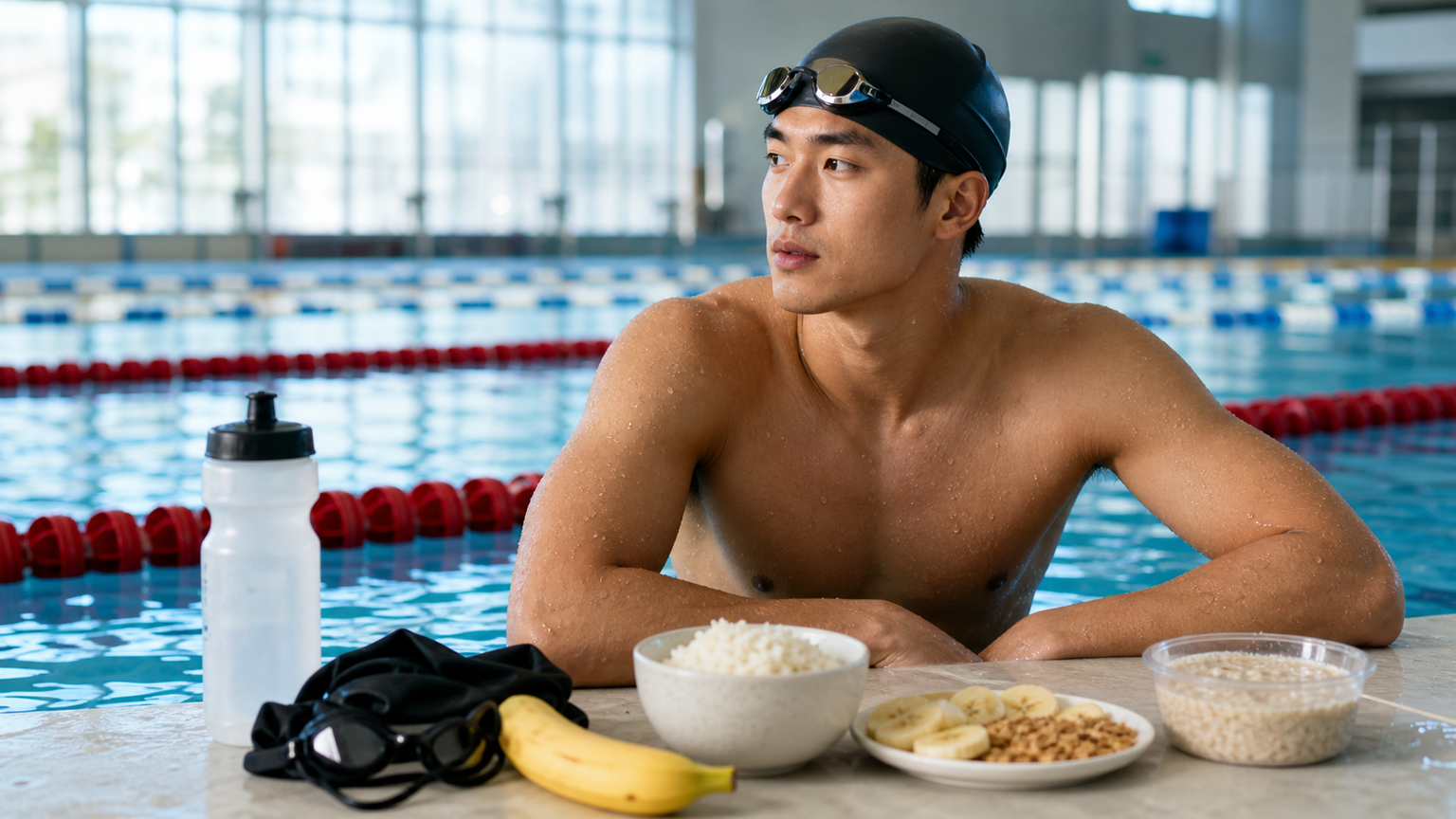
Recommended foods: White rice, oatmeal, whole wheat toast, bananas, sweet potatoes
Suggested amount: 1–2 grams of carbohydrate per kilogram of body weight
Example: 60 kg athlete → 60–120 grams of carbohydrate (approximately 1.5–2 bowls of white rice)
Avoid: High-fat, high-fiber foods (slow to digest, may cause discomfort during training)
2. During Training (Exceeding 90 Minutes): Maintaining Blood Glucose
When training exceeds 90 minutes, it is recommended to consume 30–40 grams of fast-acting carbohydrates every 30–45 minutes.
| Supplement | Carbohydrate Content | Advantages |
|---|---|---|
| Energy Gel | Approximately 25 g/packet | Easy to carry |
| Banana (medium) | Approximately 27 g | Natural, contains potassium |
| Sports drink (500ml) | Approximately 30 g | Also provides hydration |
| Gummy candies | Approximately 30 g/10 pieces | Cheap and convenient |
3. 30–45 Minutes After Training: The Golden Recovery Window
After training, muscle glucose uptake efficiency is at its highest (insulin sensitivity increases), making this the most effective time to replenish muscle glycogen.
Recommendation: 1–1.2 grams of carbohydrate per kilogram of body weight + 0.3–0.4 grams of protein
Example: 65 kg athlete → 65–78 g carbohydrate + 20–26 g protein
Recommended foods: White rice + chicken breast, banana + Greek yogurt, chocolate milk (a recovery drink supported by research)
Carbohydrate Strategy for Double Training Days
Athletes training twice daily must actively replenish carbohydrates between sessions (typically 4–8 hours apart):
- Replenish immediately after training ends (as above)
- 2–3 hours later, the main meal should be carbohydrate-focused (55–65% of calories)
- 2 hours before the afternoon session, consume another light carbohydrate snack
Daily Total Carbohydrate Recommendations
| Training Intensity | Daily Carbohydrate Needs per kg Body Weight |
|---|---|
| Light training (<1 hour) | 3–5 g |
| Moderate training (1–2 hours) | 5–7 g |
| High-intensity training (2–3 hours) | 6–10 g |
| Very high intensity (>3 hours) | 8–12 g |
Practical Advice
- Traditional Taiwanese cuisine (with white rice as the staple) actually aligns very well with swimmers’ carbohydrate needs—there is no need to deliberately purchase expensive sports supplements.
- Avoid trying new foods on race day; all pre-competition dietary strategies should be repeatedly tested during training days.
- If weight management is a concern, adjust carbohydrate intake during the off-season or base training period—never during the pre-season or in-season.
Conclusion
Carbohydrates are the most important macronutrient for swimmers. Master the timing of supplementation to ensure sufficient energy before training and rapid recovery afterward—this dietary strategy does not require spending a lot of money, only giving adequate attention to the right time points. Practice “when to eat” as diligently as “how to swim,” and the quality of your training recovery will improve dramatically.
Related Reading
CT暗黑廚房) 車友必備 宇宙無敵鮮蚵湯 幫助訓練恢復 天然食補 好市多 超肥鮮蚵 破PR
7 年前
靠單車減肥35公斤 心得分享與整理
7 年前
西進武嶺 免費訓練分析服務 Intervals | 練不夠還是練過頭?你哪一種類型選手?AI模型告訴你! | 備戰神器 | 公路車 訓練 | CT Yeh
4 年前
一日北高前的高裝檢 | 北高 360 | 挑戰11小時的裝備 | 一日雙塔 | 補給
6 年前
4K 東眼山 x 水蜜桃冰沙 百人單車約騎! 操完再吃冰 多爽快
7 年前
一日北高常見問題大集合 | 攻略 | 路線 | 訓練 | 補給 | 自行車 單車 | 一日雙城 | 雙塔 | TWB北高360 | 屁股痛
6 年前
一日北高/長距離團騎 常見問題補充篇 / 組團或跟團的眉角 / 壯車友容易被瘦車友慢性拉爆 / 原來屁股痛可能是這個原因...? / 風場配速法 / 公路車 / CT Yeh
2 年前
滑雪新手們慘摔學習全紀錄(請開字幕),滑雪好好玩 | Snowboard + Ski | 岩原 スキー場 | 滑雪APP使用 | GoPro Max
6 年前