Introduction
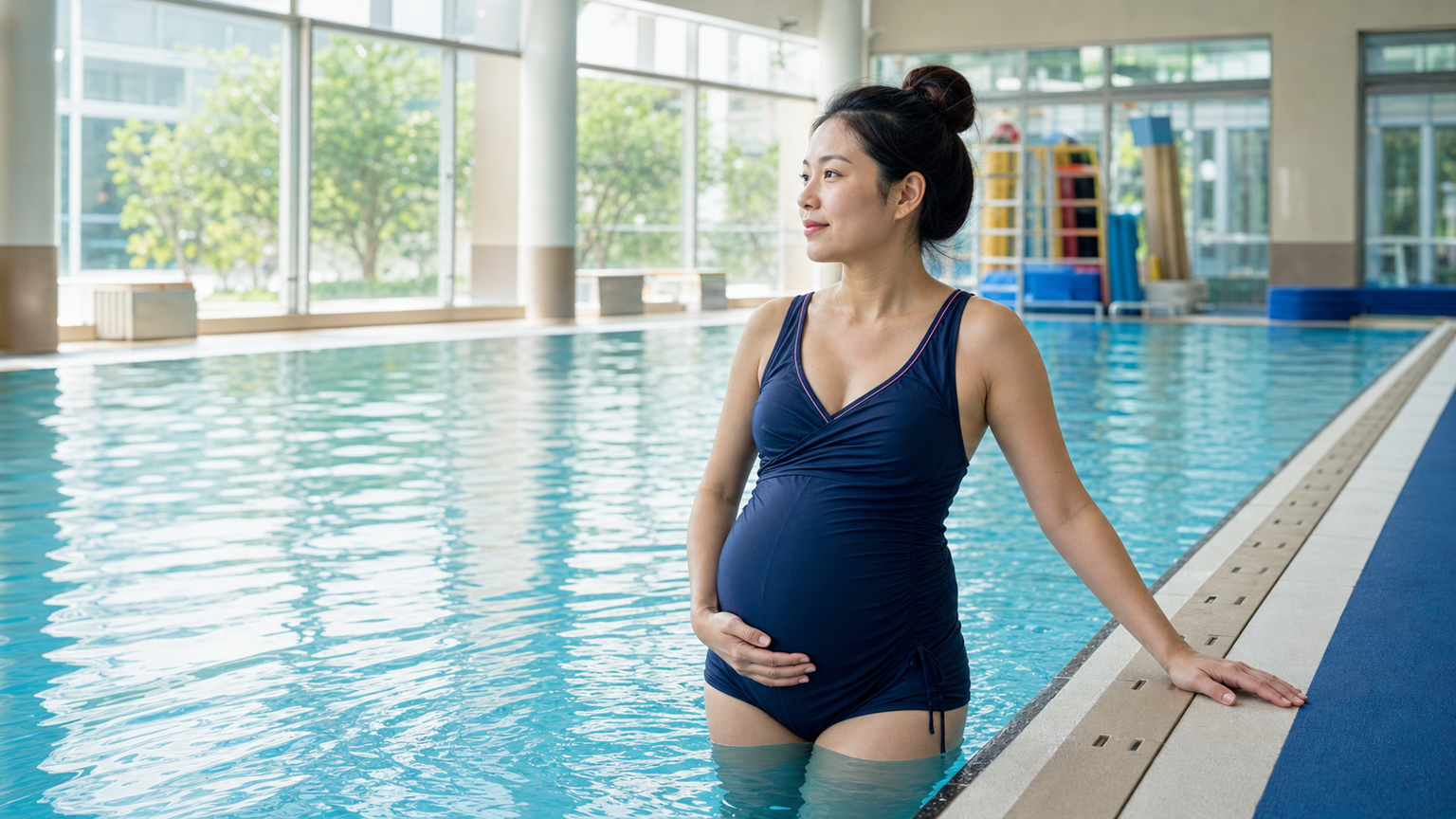
Maintaining moderate exercise during pregnancy has clear health benefits for both mother and fetus. The Taiwan Association of Obstetrics and Gynecology also recommends that pregnant women without exercise contraindications engage in at least 150 minutes of moderate-intensity aerobic exercise per week. Because of the buoyancy protection of water, its thermoregulatory effects, and its low impact on joints, swimming is considered the safest and most broadly beneficial aerobic exercise during pregnancy. This article provides detailed swimming safety guidelines for pregnant mothers in Taiwan.
Benefits of Swimming During Pregnancy
Benefits for the Mother
- Reduced joint strain: Pregnancy-related weight gain increases stress on the knees, ankles, and lumbar spine. Buoyancy in water can eliminate 70–90% of body weight, making exercise more comfortable for the joints.
- Improved lower-limb edema: Hydrostatic pressure applies uniform pressure upward from the ankles, promoting venous and lymphatic return and effectively relieving the ankle swelling commonly seen during pregnancy.
- Reduced back pain: Spinal loading is reduced in water, and the core stabilization training involved in swimming can improve pregnancy-related lower back pain.
- Weight gain control: Appropriate swimming exercise helps maintain a healthy weight gain range during pregnancy.
- Improved sleep and mood: The relaxation effect and endorphin release after swimming help alleviate pregnancy-related anxiety and insomnia.
Potential Benefits for the Fetus
- Moderate aerobic exercise improves placental function
- Appropriate maternal weight control reduces the risk of gestational macrosomia
- Studies support an association between exercise during pregnancy and better fetal neurodevelopment (correlation, not confirmed causation)
Contraindications to Swimming During Pregnancy
The following conditions require prior consultation with an obstetrician-gynecologist, and some require complete avoidance of swimming:
| Condition | Recommendation |
|---|---|
| Placenta previa | Swimming prohibited (activity may trigger bleeding) |
| Cervical incompetence | Swimming prohibited |
| Signs of preterm labor (regular contractions, ruptured membranes) | Stop immediately and seek medical attention |
| Gestational hypertension/preeclampsia | Requires physician evaluation; bed rest is usually recommended rather than swimming |
| Ruptured amniotic membrane (any fluid leakage) | Stop swimming immediately; risk of infection is extremely high |
| Multiple pregnancy (with risk of preterm birth) | Adjust according to physician’s advice |
| Severe hyperemesis gravidarum in the first trimester | Resume only after symptoms subside |
Swimming Adjustments by Trimester
First Trimester (0–12 weeks)
- Most pregnant women can maintain their pre-pregnancy swimming routine
- Be careful to avoid overheating (water temperature no higher than 35°C)
- If experiencing nausea or fatigue, adjust intensity or pause according to your body’s condition
- Avoid long-distance backstroke (the issue of supine positioning compressing the inferior vena cava is less significant at this stage, but preventive adjustments can be made)
Second Trimester (13–27 weeks)
- Morning sickness usually subsides and energy returns, making this the golden period for swimming
- As the belly grows, breathing rhythm may need adjustment (breathing every 2 strokes is recommended)
- Breaststroke kicking places pressure on the pubic symphysis; if experiencing symphysis pubis pain, switch to freestyle or backstroke
- Maintain moderate intensity using the “talk test” (able to speak short sentences but not sing)
Third Trimester (28 weeks–delivery)
- With a larger belly and shifted center of gravity, pay special attention to balance when entering and exiting the water
- Avoid backstroke (prolonged supine positioning may compress the inferior vena cava, affecting uterine blood flow)
- Aqua walking is a safer alternative
- Shorten each swimming session to 20–30 minutes, with a frequency of 2–3 times per week
- If contractions, bleeding, or a noticeable decrease in fetal movement occur after swimming, seek medical attention immediately
Pool Hygiene and Infection Considerations
| Consideration | Description |
|---|---|
| Regulated pools vs. natural waters | Strictly avoid open natural water bodies during pregnancy (risks include leptospirosis, E. coli, amoeba, etc.) |
| Water temperature | Avoid hot spring pools or hot tubs with water temperatures above 35°C (overheating may harm the fetal neural tube) |
| Showering after swimming | Rinse thoroughly to avoid chlorine residue irritating the skin |
| If abnormal vaginal discharge occurs | Seek medical confirmation that there is no infection before swimming |
Practical Tips
- Inform the lifeguard of your pregnancy before swimming: This enables rapid response in case of an emergency.
- Bring water: Fluid needs increase during pregnancy; drink 500 mL of water before and after swimming, and get out of the pool to hydrate immediately if you feel thirsty during the session.
- Enter and exit the water slowly: With an enlarged abdomen and unstable center of gravity, hold the handrails firmly at all times when using the stairs, and do not rush.
- Monitor fetal movement after swimming: After swimming, lie on your side and feel for fetal movement. If you feel fewer than 10 movements within 2 hours, seek medical attention.
- Returning to swimming postpartum: After a vaginal delivery, wait 6 weeks; after a cesarean section, wait 8 weeks. Once there is no wound infection, you may resume swimming with your physician’s confirmation.
Conclusion
Swimming is one of the best exercise choices for pregnant mothers in Taiwan during pregnancy, offering multiple benefits including maintaining physical fitness, relieving edema, and promoting psychological relaxation. Provided your physician has confirmed there are no contraindications, put on your swimsuit and goggles, and let the embrace of the water become the most comfortable exercise time of your pregnancy.
Related Reading
- Safety Guide for Swimming During Pregnancy: Precautions and Benefits for Each Trimester
- Safety Guide for Swimming During Pregnancy: Appropriate Swimming Intensity and Stroke Choices for Each Trimester
- Swimming During Pregnancy: Safety Guide and Benefits for Mother and Baby
- The Complete Guide to Swimming During Pregnancy: Safe Water Temperature, Stroke Selection, Intensity Limits, and Contraindications
靠單車減肥35公斤 心得分享與整理
7 年前
CT暗黑廚房) 車友必備 宇宙無敵鮮蚵湯 幫助訓練恢復 天然食補 好市多 超肥鮮蚵 破PR
7 年前
一日北高常見問題大集合 | 攻略 | 路線 | 訓練 | 補給 | 自行車 單車 | 一日雙城 | 雙塔 | TWB北高360 | 屁股痛
6 年前
CT 喇低賽) 武嶺牽車 才是王道 西進牽車四小時內秘訣 攝手位置 如何判斷 防抽筋小秘訣
7 年前
[教學] Premiere 影片 手震 修正 教學 防抖 單眼 影像 GoPro 穩定 Video Stabilization
8 年前
台北大雁西飛 約騎挑戰 feat. Doris | 公路車 | CT Yeh
3 年前
大家都在開箱的...單車用藍芽對講耳機真的有幫助嗎? SENA BiKom 20 長距離旅遊 & 海鷗繞圈賽 實際體驗心得 / 公路車 / CT Yeh
9 個月前
滑雪新手們慘摔學習全紀錄(請開字幕),滑雪好好玩 | Snowboard + Ski | 岩原 スキー場 | 滑雪APP使用 | GoPro Max
6 年前