Introduction
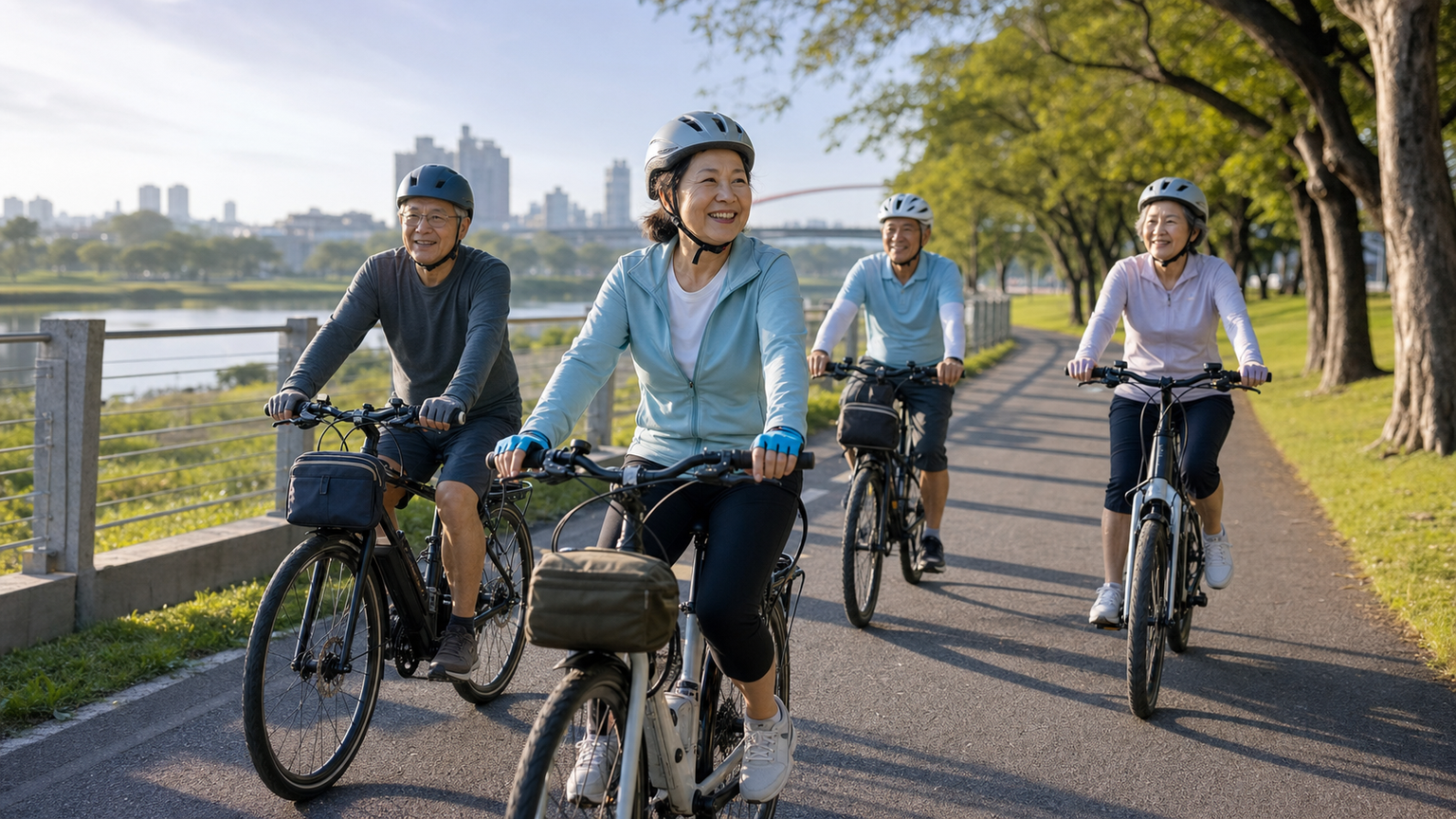
At the Houli Eco-Park Bikeway in Taichung, starting at six o’clock every morning, a group of grandparents gather here—they aren’t riding old runabout bikes, but aluminum or steel touring bikes, and some even ride e-bikes to easily handle the gently rolling terrain. After their ride, they gather to drink soy milk and eat sesame flatbread, their laughter louder than the wind.
This scene is becoming increasingly common in Taiwan. According to a survey by the Sports Administration, cycling is the third most popular sport among those aged 60 and above (after walking and swimming), and its participation rate has continued to grow over the past five years.
Why Is Cycling Especially Suitable for Seniors?
Among all aerobic exercises, cycling has one unique advantage: low impact. The pedaling motion does not subject the knee joints to repeated impact like running does, making it especially friendly for seniors with joint degeneration or osteoporosis.
Specific Health Benefits for Seniors
- Cardiovascular maintenance: Riding 3 times a week for 30–45 minutes each session can maintain or even improve cardiovascular function, reducing the risk of cardiovascular disease
- Muscle strength preservation: Pedaling primarily trains the quadriceps, glutes, and calf muscles—precisely the lower-body muscle groups that age and deteriorate the fastest
- Balance training: Cycling requires the core muscles to continuously maintain balance, helping to prevent falls
- Cognitive function: Aerobic exercise has been confirmed by multiple studies to slow cognitive decline and reduce the risk of dementia
- Social connection: Riding out with cycling companions combats loneliness, which is crucial for mental health after retirement
| Activity | Joint Impact | Cardiovascular Benefit | Social Aspect | Suitability for 60+ |
|---|---|---|---|---|
| Running | High | High | Low | Requires caution |
| Swimming | Extremely low | High | Medium | Very suitable |
| Cycling | Low | High | High | Very suitable |
| Brisk walking | Medium | Medium | Medium | Suitable |
| Weight training | Low | Low | Low | Requires guidance |
Key Considerations When Choosing a Bike for Seniors
1. Frame Geometry: Upright Over Aggressive
The low, hunched riding position of racing road bikes places tremendous strain on the neck and lower back, making them unsuitable for seniors riding for extended periods. Instead, choose:
- City bikes / Comfort bikes: Shorter top tube, steeper seat tube angle, allowing a nearly upright torso while riding
- Hybrid bikes: A compromise combining the lightness of road bikes with the comfort of mountain bikes
- E-bikes: Recommended for those with underlying cardiovascular conditions or knee joint degeneration
2. Step-Through Frames
Traditional diamond frames require lifting the leg high to mount, posing a fall risk for seniors with limited mobility. A “low-step” or “step-through” frame makes getting on and off easy and safe.
3. Handlebar Height
Handlebars should be adjusted to the same height as the saddle or higher, avoiding excessive forward lean to reduce strain on the neck and lower back.
4. Braking System
Disc brakes or roller brakes are recommended, as their braking force is more linear and requires less grip strength to decelerate effectively—ideal for seniors with weaker hand strength.
Special Safety Considerations for Riding
Pre-Ride Self-Assessment
- Are you taking any medication that affects blood pressure, heart rate, or balance? (Some blood pressure medications can cause hypotension after exercise)
- Does your knee condition allow pedaling? (Consult a rehabilitation physician)
- Do you have vestibular function issues (easily prone to dizziness)?
Precautions While Riding
- Always wear a helmet: Seniors have more brittle bones, making head impact injuries more severe
- Prepare emergency contact information: Set up emergency contacts on your phone; some Garmin watches have fall detection and automatic SOS features
- Avoid peak heat hours: In summer, ride before 7 a.m. or after 4 p.m. to avoid heatstroke
- Hydration is more important than when you were younger: Aging reduces thirst perception, so proactively hydrate on a schedule
- Start with short distances: Begin with rides under 30 minutes, gradually increasing each week based on your condition
Cycling Locations in Taiwan Suitable for Seniors
- Houli Eco-Park Bikeway: Taichung, gentle slopes, well-equipped facilities, one of the most active spots for the senior cycling community
- Tanyashen Bikeway: From Taichung city to Dajia, 24 km in total, entirely flat
- Kaohsiung Left Bank Bikeway: Along the coastline, scenic views, no climbing
- Huatung Valley Premium Section: A dream route for those physically capable; e-bikes or selecting partial sections are recommended
Practical Tips
- Find a riding partner: Beyond safety considerations, a riding partner is also the greatest motivation to keep going
- Invest in a good saddle: Seniors are more sensitive to comfort; a wider or gel saddle is worth the extra budget
- Maintain your bike regularly: Have the braking and shifting systems inspected by a mechanic every six months to ensure proper function
- Track your riding data: Even basic distance and time records can provide a sense of accomplishment from progress
- Discuss your exercise plan with your doctor: Seniors with chronic conditions should discuss with their family physician before starting long-distance riding
Conclusion
60 is not the finish line—it’s the starting point of another journey. Cycling gives seniors a way to stay actively engaged with the world amid a slower pace of life—engaging with the wind, with the road, and with fellow riders.
So many beautiful bikeways in Taiwan are waiting, and no matter your age, it’s never too late.
Related Reading
- Benefits and Precautions of Cycling for Seniors: A Guide for Older Riders
- Cycling Life After Retirement: Health Benefits and Safety Tips for Senior Riders
- Retirement Life on Two Wheels: How Seniors Use Cycling to Maintain an Active Quality of Life
- Retirement Life on Two Wheels: A Health-Centered Approach to Aging for Seniors Through Cycling
高雄綠園道鐵路自行車道 / 外地人能輕鬆駕馭 還是整路崩潰? / 2025 全線開通 春節實地探索一次!(附GPS連結)/ 公路車 / CT Yeh
1 年前
太平山單車員工旅遊 | 這樣玩CP值最高!| 公路車
5 年前
靠單車減肥35公斤 心得分享與整理
7 年前
4K 東眼山 x 水蜜桃冰沙 百人單車約騎! 操完再吃冰 多爽快
7 年前
北宜騎車⋯好刺激 差點被🐒尻 / 露營單車旅 / 公路車後背攜車架開箱!/ 百人大團露 / YAKIMA 設備開箱儀式感都來了 / 公路車 / CT Yeh
12 個月前
台中大雪山 膏王領騎 震到都沒畫面了 公路車
5 年前
白沙屯媽祖進香在家走!UREVO 坡度自調走步機 / 可連接訓練遊戲APP MyWhoosh / 邊看直播邊走起來 / CT Yeh
11 個月前
車隊介紹) 台北 一年開團365天 車隊 Apollo Ride 晨騎 好選擇 ( 陽明山 風櫃嘴 冷水坑 平等里 聖人 關渡 大稻埕 ) 找人騎車
7 年前