文章導覽
Properties of Carbon Fiber
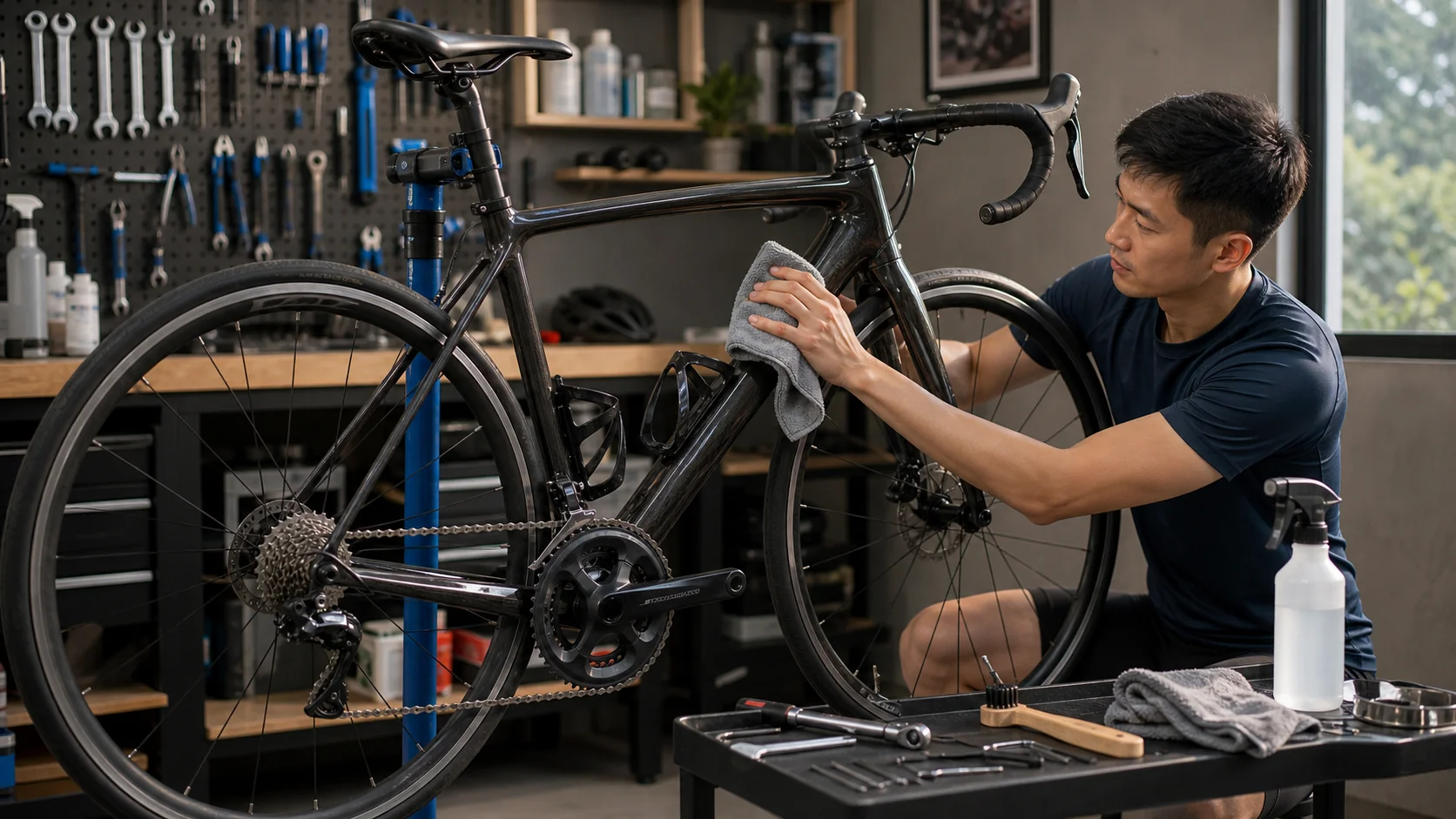
Carbon fiber composite has an extremely high strength-to-weight ratio, but it fails differently from metal:
- Metal: Usually bends and deforms first, then breaks (giving you a warning)
- Carbon fiber: May fail suddenly without obvious warning deformation
For this reason, carbon frame care is centered on prevention and regular inspection.
Daily Cleaning
Basic Washing
- Rinse the frame with low-pressure water (never use a high-pressure washer!)
- Use a neutral detergent and a soft sponge
- Avoid solvent-based cleaners (they may damage the resin)
- Dry with a soft cloth after washing
- A carbon-fiber-specific polish can help protect the paint finish
What to Avoid
- High-pressure washers: Water can force its way into bearings and the bottom bracket
- Abrasive cleaners: Can scratch the paint finish
- Organic solvents: Acetone and paint thinner can damage the epoxy resin
- Storing the bike upside down: Air bubbles may enter the hydraulic disc brake system
Damage Inspection
Routine Checkpoints
- Visual inspection: Look for cracks, dents, or abnormalities in the paint finish
- Coin tap test: Gently tap the frame surface with a coin
- Normal: a crisp, clear sound
- Abnormal: a dull, muffled sound (may indicate internal damage)
- Key areas to check:
- Head tube / down tube junction
- Bottom bracket (BB) area
- Seatpost clamp
- Seat stay / chain stay junction
After a Crash
Even if the bike looks fine, after a crash you should still:
- Carefully inspect the point of impact
- Check the handlebars and fork (the parts most prone to damage)
- If in doubt, have it checked at a professional shop with ultrasonic testing
- If you’re not sure, don’t ride it — carbon fiber failure is sudden and dangerous
Torque Management
Carbon fiber’s biggest enemy is over-tightening. Always use a torque wrench:
| Component | Recommended Torque |
|---|---|
| Seatpost clamp | 5-6 Nm |
| Stem bolts | 4-5 Nm |
| Headset top cap | Hand-tight only |
| Handlebar clamp | 5-6 Nm |
| Bottle cage bolts | 3-4 Nm |
Important: Always refer to the torque values specified by the frame manufacturer.
Carbon Assembly Paste
Use carbon assembly (friction) paste on carbon-to-carbon contact surfaces (such as the seatpost and seat tube):
- Achieves the same holding power at lower torque
- Prevents slipping
- Protects the carbon fiber surface
Storage and Transport
Storage
- Avoid direct sunlight (UV rays degrade epoxy resin)
- Avoid extreme temperatures (don’t leave it in a car in summer)
- Upright or horizontal storage are both fine
- Don’t let heavy objects press against the frame
Transport
- Use a hard-shell bike case
- Wrap the tubes after disassembly
- Remove or protect the rear derailleur
- Insert a spacer between disc brake pads
Frequently Asked Questions
Q: Does a carbon fiber frame have a lifespan?
With proper use and care, a carbon frame can last a very long time. In theory, epoxy resin can last for decades, but UV exposure and repeated stress will gradually take a toll. A professional inspection every 5-8 years is recommended.
Q: Can carbon fiber be repaired?
Yes. Professional carbon fiber repair shops can fix most types of damage, typically costing around NT$3,000-15,000 depending on the severity and location of the damage.
Q: What if the seatpost gets stuck?
Don’t force it out. Use a carbon-fiber-specific lubricant, or take it to a bike shop. In the future, apply assembly paste when installing the seatpost and remove it periodically for cleaning.