Introduction
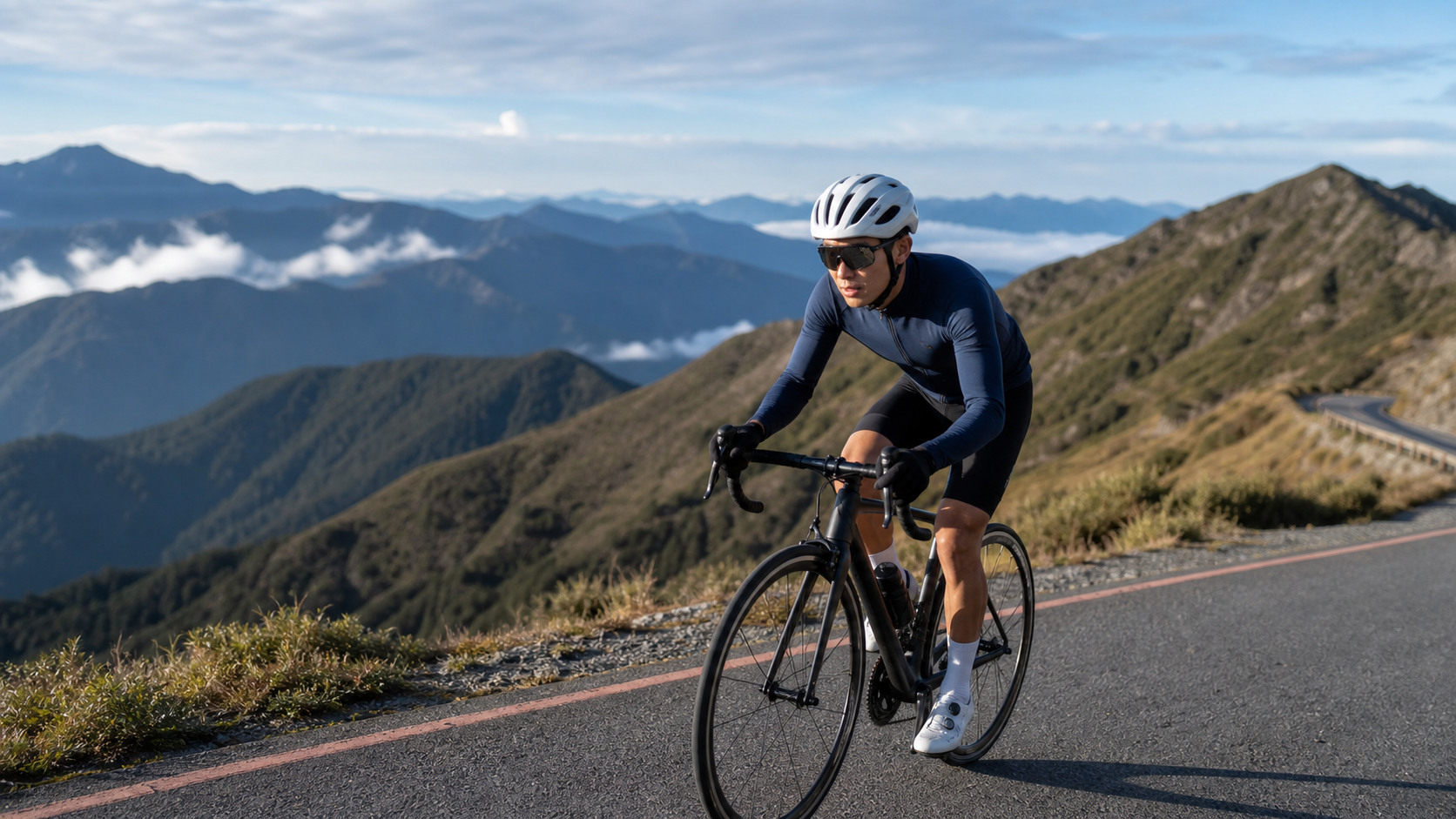
Altitude training is an important method for elite endurance athletes to enhance performance. The higher the altitude, the lower the oxygen concentration in the air. To cope with the hypoxic environment, the body initiates a series of physiological adaptation mechanisms, the most critical of which is increased secretion of erythropoietin (EPO), which in turn promotes red blood cell production and enhances the blood’s oxygen-carrying capacity. Taiwan boasts Wuling, the highest highway in the country (3,275 meters above sea level), offering amateur cyclists a natural advantage for altitude training.
The Physiological Mechanisms of Altitude Training
When the body is exposed to a hypoxic environment (typically above 2,000 meters), the following physiological responses gradually occur:
Short-term (1–3 days):
- Breathing becomes faster and deeper; heart rate increases
- Plasma volume decreases (appearing as higher hemoglobin concentration, but this is hemoconcentration rather than a true increase)
- Athletic performance temporarily declines
Medium-term (1–2 weeks):
- Renal EPO secretion increases
- Red blood cell production begins to accelerate
- Gradual adaptation to the hypoxic environment; exercise capacity partially recovers
Long-term (after 3–4 weeks):
- Red blood cell count and hemoglobin concentration truly increase
- Oxygen-carrying capacity per unit of blood rises
- The “altitude effect” persists for 2–4 weeks after returning to sea level
| Altitude Range | Hypoxic Effect | Suitable Activities |
|---|---|---|
| 1000–1500m | Mild hypoxia, barely noticeable | General recreational riding |
| 1500–2500m | Moderate hypoxia, adaptation begins | Endurance base training |
| 2500–3500m | Marked hypoxia, optimal training altitude | Elite altitude training |
| >3500m | Severe hypoxia, difficult recovery | Extreme challenges |
The “Live High, Train Low” Strategy
This is currently the most research-supported altitude training model. The principle is: sleep and live at high altitude to stimulate EPO and red blood cell production, while training at low altitude to maintain training quality.
At high altitude, training intensity is limited by hypoxia; if you force high-intensity training at altitude, training quality actually declines. Therefore, elite cyclists often descend during the day to altitudes below 1,000m for high-intensity training, then return to sleep at altitudes above 2,500m at night.
Practical applications in Taiwan:
- Stay at Cingjing Farm (1,750m) or Hehuanshan Lodge (2,600m)
- Perform threshold training in the early morning on the Wushe to Lushan section (900–1,200m)
- Do easy aerobic riding in the afternoon on the Cingjing to Hehuanshan section (1,750–3,200m)
Practical Recommendations for Altitude Training at Taiwan’s Wuling
Recommendations for amateur cyclists trying altitude training for the first time:
- First acclimatize for 1–2 nights at Hehuanshan Lodge (approximately 2,600m)
- Reduce training intensity for the first 2 days to let the body adapt to hypoxia
- From day 3 onward, you can attempt easy climbing training
- Watch for symptoms of acute mountain sickness (headache, nausea, insomnia)
Prevention of acute mountain sickness:
- Do not ascend too quickly; let the body adapt gradually
- Stay well hydrated (accelerated breathing at altitude increases fluid loss)
- Avoid alcohol (it worsens altitude reactions)
- If a headache occurs, acetaminophen can provide relief; if symptoms worsen, descend immediately
Timing Your Altitude Training
The effects of altitude training are typically most pronounced 2–3 weeks after returning to sea level. Therefore, it should be scheduled 3–4 weeks before your target event, so the EPO effect peaks on race day.
Practical Advice
- Amateur cyclists do not need long-term altitude training; 1–2 sessions of 7–14 days at Hehuanshan per year already yield significant benefits
- Taiwan’s Cingjing Farm, Wuling, and Lishan are all excellent bases for altitude training, with relatively convenient access
- During altitude training, you should supplement 20–30% more iron than at sea level (red blood cell production requires iron); consult a sports nutritionist
Conclusion
Taiwan is one of the few places where amateur cyclists can easily access altitude training conditions—Wuling’s 3,275-meter elevation is an ideal height for boosting red blood cell production. Leverage this natural advantage, combined with a scientific training plan, and your aerobic capacity will improve far faster than that of cyclists who train only at sea level.
Related Reading
- Benefits of Altitude Training for Cyclists: The Effect of Altitude on Red Blood Cells
- High-Altitude Cycling Training: The Hypoxic Effect and Adaptation Strategies at Wuling 3,275m
- High-Altitude Running Training: The Effect of Altitude on Red Blood Cell Production
- The EPO Effect of Cycling Altitude Training: Scientific Principles and Applications in Taiwan
FTL 與 SYB 車隊專訪 西進武嶺 實用攻略分享! 2小時 如何練?!你不知道的眉角!新手準備武嶺必看 EP1 | 實力派女車友 | 精華版 | 公路車 | CTYeh
4 年前
#北橫 + #北進武嶺 最硬的員工旅遊 EP1 | #公路車 #拉拉山 | 明池 | 武嶺 | 武陵農場 | 雲海 | Taiwan Cycling Route Wulin
6 年前
大禹嶺 到 武嶺牌樓 全程前後實況錄影 | 北進武嶺 | 東進武嶺 | KOM | 訓練台 | 坡度分析 | Taiwan KOM Last 10 km HARD | 公路車
6 年前
#公路車 #西進武嶺 配速配瓦實驗 坡度分析 四小時內攻略 建大盃 NeverStop #西進武嶺攻略
6 年前
CT趣訪 西進武嶺 2小時組 EP2 全村的希望 蔣緯緯! 訓練菜單&技巧公開 |公路車 |CT Yeh
4 年前
武嶺配速表最佳使用方式 #bike
1 年前
CT 喇低賽) 武嶺牽車 才是王道 西進牽車四小時內秘訣 攝手位置 如何判斷 防抽筋小秘訣
7 年前
#公路車 北部貼地飛行 週六特快車 黃文忠高鐵團 首次體驗! 石碇小七到公車站前 直接開高高
7 年前