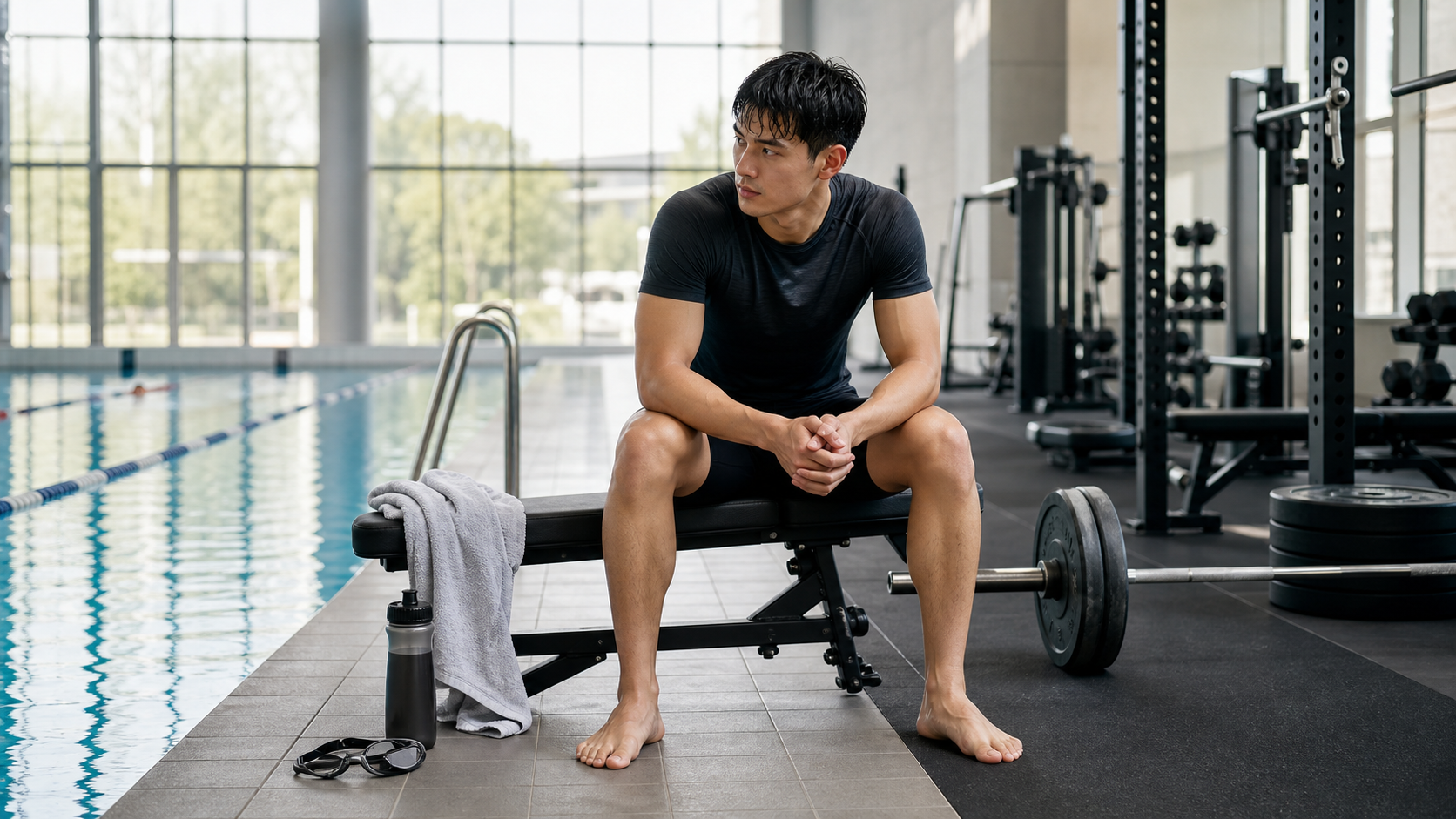
Introduction
For athletes with a structured swim training plan, “I have both swimming and weight training today — which should I do first?” is a real and important question. Choosing the wrong order can compromise both sessions: swimming before lifting may leave the muscles fatigued and hurt the quality of the strength session, while lifting before swimming may leave the muscles fatigued in a way that hurts stroke technique and speed. The right answer depends on the primary goal and intensity type of that day’s training.
Key Principle: Let the Primary Goal Decide the Order
Do the highest-priority session of the day first.
Both the energy systems and the neuromuscular system perform best when “fresh,” so whichever session comes first will always get the highest-quality physiological state. Therefore:
- If swimming is the primary focus today (e.g., during a pre-competition cycle) → swim first
- If strength development is the primary focus today (e.g., building strength during the base phase) → lift first
- If both are moderate intensity (e.g., a general maintenance phase) → decide based on personal preference or technical condition
Recommended Order for Different Scenarios
| Scenario | Recommended Order | Rationale |
|---|---|---|
| Technical swim training + supplementary dryland work | Swim first | Technical awareness requires a clear, alert nervous system |
| Speed/sprint session + power training | Separate by time of day (at least 4 hours apart) or do on different days | Both require the nervous system at its best |
| CSS aerobic swimming + muscular endurance lifting | Little difference whether you swim or lift first | Both are low-intensity, aerobic in nature |
| Maximal strength (3–6 reps) + easy swim | Lift first | Strength training places the highest demand on the nervous system |
| Long-distance swim + core training | Swim first | Doing core work after long-distance swim fatigue actually trains stability under fatigue |
Fatigue Interference When Training Both on the Same Day
Exercise science has a concept called the “Interference Effect”: when aerobic training and strength training are done on the same day, the aerobic session activates molecular pathways that antagonize those needed for strength adaptation, partially suppressing strength gains.
Practical impact on swimmers:
- Doing maximal strength training immediately after swimming (especially high-intensity intervals or long-distance swims) typically results in about a 10–20% drop in the weight you can lift
- Swimming immediately after weight training reduces stroke precision, making athletes prone to “muscling through” compensatory strokes
- The worst combination: heavy squats or bench press immediately after a long-distance swim
Mitigation strategies:
- Space the two sessions at least 4–6 hours apart (swim in the morning, lift in the evening, or vice versa)
- If they must be done in the same window, focus on core and supplementary strength work rather than maximal-strength sets
- Within the same session, start with a shorter “activation” block (15 minutes of core work) before moving into the main session
Special Case: Pre-Competition Cycle
In the 4–6 weeks before a competition, swimming takes on much higher priority:
- On any day with both sessions, swimming comes first
- Weight training shifts to a maintenance program (low volume, low intensity), without pursuing further maximal strength gains
- If time is limited, drop the weight session first to preserve the integrity of the swim program
Separating the Sessions by Time of Day (The Ideal Approach)
If conditions allow, the best arrangement is to separate swimming and weight training into different time blocks:
| Time Block | Training | Notes |
|---|---|---|
| 6:00–7:30 AM | Swimming (main session) | Peak mental focus and neural readiness |
| 12:00–1:00 PM | Light meal + rest | Recovery and refueling |
| 5:30–6:30 PM | Weight training | Prime time for strength training |
Research shows that 4:00–6:00 PM is when most people’s muscular strength and coordination peak, making it well suited for weight training, while mornings are better suited to technical training due to higher mental alertness.
Practical Recommendations
- When building a weekly schedule, first mark out the “high-quality” swim sessions (speed sessions, technical sessions) — these must be done when mental focus is at its best, and no fatiguing strength work should be scheduled on the same day
- “Easy swim + weight training on the same day” is a reasonable combination; “sprint session + maximal strength on the same day” is a combination that should be avoided as much as possible
- If an athlete has a clear personal preference for morning or evening training, scheduling the primary session around their individual physiological peak works better than rigidly following a “textbook order”
- Track how you feel after each double-session day to identify the order pattern that works best for you personally
Conclusion
There is no universal answer to whether you should swim first or lift first, but there is a clear decision logic: put the day’s primary training goal first. Understanding the interference effect, making good use of time-separated scheduling, and significantly raising swimming’s priority during the pre-competition period are the core strategies for getting the most out of both types of training.
Related Reading
- Scheduling Swimming and Dryland Training Together: Weekly Planning for the All-Around Athlete
- Designing Double Swim Sessions: Balancing Training Load and Recovery Between Morning and Evening Practices
- Ordering Strength Days and Long-Distance Days: The Art of the Training Week
- Designing Morning Swim Training: Maximizing the Efficiency of a 5:30 AM Session
戰略) Zwift Race 如何咬在第一集團 如何評估自己要開多少推力 (請開1.5倍速看)
7 年前
一日北高/長距離團騎 常見問題補充篇 / 組團或跟團的眉角 / 壯車友容易被瘦車友慢性拉爆 / 原來屁股痛可能是這個原因...? / 風場配速法 / 公路車 / CT Yeh
2 年前
西進武嶺 免費訓練分析服務 Intervals | 練不夠還是練過頭?你哪一種類型選手?AI模型告訴你! | 備戰神器 | 公路車 訓練 | CT Yeh
4 年前
CT 喇低賽) 武嶺牽車 才是王道 西進牽車四小時內秘訣 攝手位置 如何判斷 防抽筋小秘訣
7 年前
滑雪新手們慘摔學習全紀錄(請開字幕),滑雪好好玩 | Snowboard + Ski | 岩原 スキー場 | 滑雪APP使用 | GoPro Max
6 年前
福隆鐵人團練隨拍
8 年前
[教學] Premiere 影片 手震 修正 教學 防抖 單眼 影像 GoPro 穩定 Video Stabilization
8 年前
FTL 與 SYB 車隊專訪 西進武嶺 實用攻略分享! 2小時 如何練?!你不知道的眉角!新手準備武嶺必看 EP1 | 實力派女車友 | 精華版 | 公路車 | CTYeh
4 年前